CES2021 successfully moves online amid Covid-19
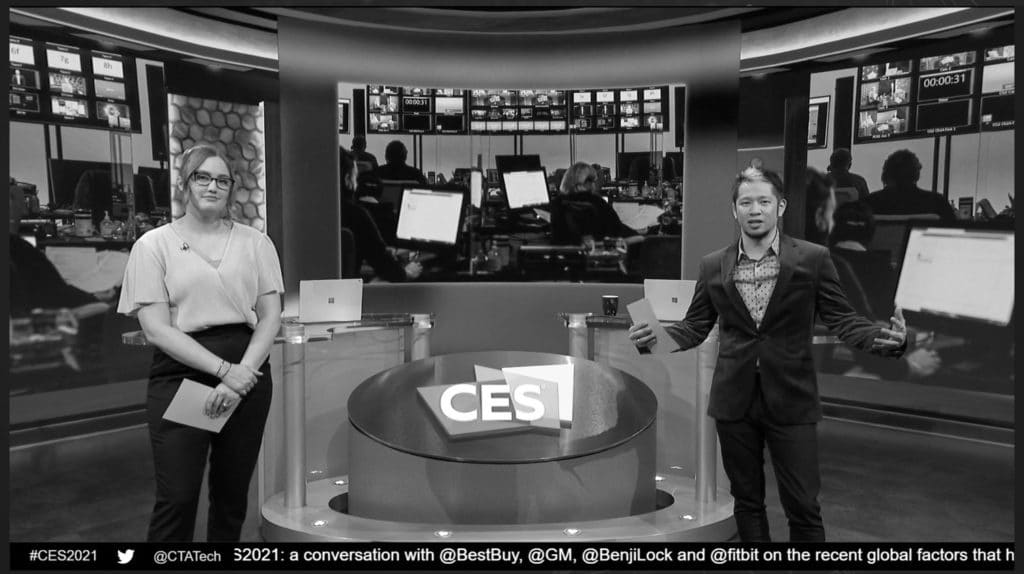
As most of the world still copes with the coronavirus pandemic, doing a massive event like the Consumer Electronics Show (CES) seemed impossible for now. This is why its organizers, the Consumer Technology Association (CTA), decided to move it online for the first time ever, allowing everyone to join no matter where they are.
Normally, CES welcomes more than 150,000 attendees to Las Vegas for a week-long event marked by keynote speakers, world premiere announcements, and hands-on demonstrations. This was replaced this year with fully-online sessions from January 11 to January 14, featuring more than 1900 exhibitors.
The presentations were split across a few different online channels, and some were exclusive to attendees, but CTA provided a free livestream of the biggest keynotes and general coverage of major CES announcements on YouTube. Some of the speakers included Microsoft President Brad Smith and Walmart CEO Doug McMillon.
“The pandemic forced us to take a step back from a traditional CES, throw out the playbook and transform how we’d bring the tech community together,” said Gary Shapiro, president and CEO of CTA. “CES looks different this year, but the foundation of the show – innovation, connection, collaboration – remains strong and consistent.”
CES is essentially a trade show, which means thousands of vendors participate with demonstrations and in-depth breakdowns of the latest technology to members of the industry and the media. This is where the world’s biggest brands do business and meet new partners, and the sharpest innovators hit the stage.
Almost 2000 companies launched products during CES, including almost 700 startups from 37 countries. Exhibiting companies included tech giants, such as Intel, LG Electronics, Panasonic, Samsung Electronics and Sony, as well as non-traditional tech companies, from Caterpillar to L’Oréal.
Like last year, 5G dominated the conversation. Verizon CEO Hans Vestberg was the first keynote speaker at CES, kicking things off with a talk about the next-generation cellular technology. Capping off the show was Samsung, unveil its Galaxy S21 family — 5G-enabled, of course — in a separate event that wasn’t officially part of CES.
Tech companies also discussed a variety of ways to fight back against COVID-19 through masks, disinfectants, air purifiers and touchless technology. They understood that no one technology can win the battle against the virus, which is why many of them are positioned as part of the new normal that life’s turning into
One such company, Plott, built a doorbell called the Ettie that can take people’s temperature before they’re allowed inside. Another, Alarm.com, created a Touchless Video Doorbell in an effort to cut down on transmission of bacteria and viruses that we otherwise often leave on places we touch.
There were robots that radiate ultraviolet light to disinfect high-traffic areas and sensors that stick to your body to detect flulike symptoms with near-hospital-grade accuracy. And there was mask called MaskFone that has a built-in microphone so you can still take a call and be easily heard when you keep your mask on.
Another way tech companies think they can help fight coronavirus is through air filtration. The Luft Duo, for example, is a battery-powered air purifier that claims to clean the air around you. Another, CleanAirZone, built an air filter that uses “natural biotics and enzymes derived from nature.”
Digital agencies also took an active role at CES, participating in different ways. Chelsea Anderson, associate creative director at Huge, gave a lecture on using insights and data to reimagine the future of brands and products. Meanwhile, Nexus Studios, took a trip down memory lane on their work for Google at CES2019.
We are using real insights & data to reimagine the future of products & brands. We’re excited to keep pushing the types of stories we tell & to keep asking ourselves, ‘How do we tell more emotional stories that feel true?’ Chelsea Anderson, @hugeinc #CES2021 pic.twitter.com/nyfroUJFfQ
— The Female Quotient (@femalequotient) January 13, 2021
As #CES2021 draws to a close, we’re taking a trip down memory lane on @Google‘s centrepiece coaster ride, created by @fxgoby. The immersive journey became a crowd pleaser due to its eye-popping set design and larger than life characters https://t.co/UIaSmptilP pic.twitter.com/FoAJfAISnn
— Nexus Studios (@nexusstories) January 14, 2021
From everyday AR use cases to robots cleaning your house, @WPP’s @S_a_nja discusses the long- and short-term trends at #CES2021 with @nytimes’s @SebTomich #WPPTV https://t.co/6XNNEbi0Er pic.twitter.com/wWjY8yadNu
— WPP (@WPP) January 15, 2021
Some of our favourite innovations from #CES2021 – including this slick self-driving party van from @Cadillac #digitalinnovations #thefuture #digitalagency #selfdriving #autonomousvehicles #marketing #digitalmarketinghttps://t.co/vFEaMcsZ6o pic.twitter.com/MoS1mhNTTc
— idea rebel (@idearebel) January 18, 2021
CES 2021 was truly a global event, with attendees joining from over 150 countries and over 1300 exhibitors coming from outside the United States, including more than 530 international startups. Whether the 2022 edition has to be online again or not, this year was clearly a success story that could be repeated.
brandsCaterpillarCESCOVID-19IntelLG ElectronicsmediaPanasonicpartnersSamsungSonyVerizon
Agency to watch

Best in Breed since 1998. Lounge Lizard is a Digital Agency that Specializes in Brand Strategy, Website Design, Web Development, Mobile APP Development, Online Marketing, Social Media, Ecommerce, and SEOdigital experiences that move brands and businesses from now to next.
Featured agencies

134758 Views

115352 Views

109201 Views

91630 Views

88088 Views

82925 Views

74559 Views

61394 Views