“Design for Reality, Not Theory” — Scolpta’s Team Lead James Maxwellson on African Brand-Building and Sustainability
The future advantage will belong to agencies that collaborate boldly, build proprietary thinking, and remain grounded enough to turn local insight into globally relevant work.
Accra, March 5th, 2026
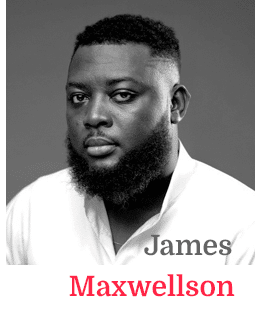 Based in Accra, Ghana, Scolpta is a strategy and brand experience design agency built on the philosophy of consequential strategy. Known for its distinctive “UpSideDown” approach, the agency looks in all directions—Up, Side, and Down—to solve complex business challenges through a holistic lens. By combining strategy, design, and experience, they move beyond surface-level aesthetics to build brands that prioritize people, innovation, and long-term impact.
At the heart of this creative engine is James Maxwellson, Scolpta’s Team Lead and a strategist whose creative DNA is deeply rooted in the resourcefulness of Ghana. James is a firm believer in designing for reality, not theory, a mindset that has led him to guide purpose-driven initiatives through the complexities of sustainability and climate transition. With a focus on cultural authorship, he is dedicated to defining a uniquely African design playbook that ensures brands remain culturally grounded yet globally fluent.
Thank you for taking the time to speak with us, James. Let’s start with your roots — what has it meant to you, both personally and professionally, to live and work in Ghana?
Living and working in Ghana has shaped both my perspective and my sense of responsibility. Ghana has been everything to me. It is not just where I am from. It is where my creative DNA was formed. Growing up here built my instinct for resourcefulness, sharpened my ability to tell stories that cut through noise, and trained me to design creatively within real constraints.
Over the years, I have witnessed a real progression and mindset shift across the country. From government posture to private sector confidence to the boldness of young creators, there is a growing sense of intentional movement. Ghana is increasingly positioning itself as the gateway to Africa, and initiatives like the Year of Return in 2019 reflected something deeper than tourism. They signaled identity, openness, and continental relevance. Even the physical and digital landscape is evolving quickly.
Professionally, this environment has trained me to design for reality, not theory. Here, brands cannot survive on aesthetics alone. They must work, deliver value, and earn trust. At scolpta, this has pushed us to build brands that are culturally grounded yet globally fluent. That balance sits at the heart of our work.
If a friend from abroad were visiting Accra for the first time, what local experiences would you absolutely recommend they try?
Accra is best experienced in layers.
A meaningful starting point would the Kwame Nkrumah Museum, which offers important historical grounding and perspective on Ghana’s independence story. From there, a visit to Dikan adds another layer, capturing the depth of African visual storytelling and the archival consciousness quietly shaping Ghana’s creative scene.
Next comes the rhythm of the city. A drive through Airport and Cantonments reveals the modern pulse, while Jamestown reflects the historic soul. And of course, no visit to Accra is complete without proper waakye or a solid plate of jollof from a trusted local spot. That part is essential.
Accra at night offers another dimension. The city comes alive with confident, youthful energy. The nightlife, the music, and the social scene reflect a generation that is globally aware yet deeply rooted. The experience closes beautifully with sunset by the coast at Labadi or Kokrobite, plus time in the markets for anyone seeking to understand the true engine of the city.
At Scolpta, you emphasise a holistic “UpSideDown” approach to branding. How do you apply that mindset when working with clients tackling big challenges like climate transition or energy access?
UpSideDown for us at scolpta is looking in all directions, up, side, and down. It reflects our holistic approach to problem-solving. Before design shows up visually, it must first make sense structurally, operationally, and humanly.
A significant portion of our work sits around green transition and climate-related initiatives. In that space, especially, design cannot be treated as surface work. The responsibility is to go beyond design for profit into design for impact.
At scolpta, there is a strong focus on relatability, breaking down complexity, and translating technical or policy-heavy ideas into language and systems people can actually engage with. Whether working with ecosystem builders, policy adjacent organisations, or sustainability platforms, the goal remains consistent. Make the complex clear. Make the abstract usable. Make the mission feel human and actionable.
That is what UpSideDown ultimately represents. Not just how something looks, but how deeply it works and who it truly serves.
In your experience, what makes a brand impactful beyond its logo or aesthetics?
A brand is a promise kept. Aesthetics are just the handshake. At the same time, for us at scolpta, aesthetics are non-negotiable. How a brand looks and feels matters because it shapes first trust and emotional connection. But aesthetics alone cannot carry the brand.
For a brand to endure, it needs a soul, a clear reason for existing that remains true even if the logo is stripped away. It is the strategy behind the visuals that gives the brand its weight.
Logos are the eyes and the reminder of everything the brand has delivered over time. When people see the mark, it should instantly recall the experience, the trust, and the impact that has been consistently built.
A practical example is our work around the GoTo Initiatives ecosystem. The focus was never just on visual identity. It was about clearly expressing their commitment to advancing sustainability and systems thinking in Ghana. Every brand decision had to reinforce credibility, clarity, and long-term intent. The visual layer simply became the signal of a much deeper promise already in motion.
That is when branding moves from decoration to real influence.
You’ve worked with purpose-driven initiatives like After Carbon and JUSTIS. How do you balance ambition and practicality when designing for systems-level change?
Balancing ambition and practicality means holding both vision and execution in clear view. Big systems change requires bold thinking, but it must also translate into something stakeholders can realistically carry forward.
With After Carbon, the task was to introduce vibrancy, warmth, and a more human outlook without alienating the institutional rigor expected by policymakers and technical stakeholders. The goal was to break the usual policy monotony without becoming an outcast. Making the transition conversation feel clear and relatable was both the challenge and the opportunity.
With JUSTIS, the focus shifted to equity within a very diverse ecosystem. A key priority was ensuring the informal sector could see itself within the convening and not feel structurally excluded. The design system had to carry institutional credibility while remaining accessible to green entrepreneurs, informal workers, policymakers, and investors at the same time.
In both cases, the approach remained consistent. Anchor the ambition clearly, then design practical pathways that make participation easier and adoption more natural. That is where real systems change begins.
What early signals tell you that a brand is ready to go beyond communication — and actually become a movement?
The first signal is clarity of conviction. Not just a nice statement, but a clear problem the brand is genuinely committed to solving.
The second is leadership behavior. When leadership decisions consistently reinforce the brand promise, momentum begins to build. The third is community response. When audiences start adopting the language, showing up voluntarily, or building around the idea, the brand is no longer just communicating.
This is something becoming visible through BrandUp, a community being intentionally built at scolpta to drive meaningful conversations for collective growth across founders, operators, and creatives. The shift became clear when participants began referencing the thinking in their own strategy rooms and actively bringing others into the ecosystem. That is when communication starts turning into movement.
Let’s talk about After Carbon. What were some of the unique challenges in branding a framework for Africa’s post-carbon transition — and how did design help unlock solutions?
Africa’s post carbon transition is politically complex because it often runs counter to the development narrative many countries still hold, the idea that industrialisation is the only path to prosperity. That reality meant the branding could not feel like a Western imposition of green ideology. It had to feel indigenous, urgent, and economically credible.
Design became the bridge. The focus was on grounding the visual language in African systems of ecological knowledge, not just at the level of aesthetics but at the level of philosophy. This helped translate a technically heavy transition conversation into something stakeholders across policy, finance, and implementation could engage with more confidently.
The result was a framework that felt rooted rather than imported. It strengthened legitimacy, improved relatability, and positioned the transition not as a constraint, but as an African shaped opportunity.
With JUSTIS, you tackled a complex ecosystem — green entrepreneurs, policymakers, informal workers, and investors. How do you craft a design language that feels inclusive across such diverse audiences?
The starting point was respect for the full ecosystem. JUSTIS brings together policymakers, green entrepreneurs, informal workers, and investors, all with very different entry points and expectations. The work was not about oversimplifying the story, but about creating coherence across real complexity.
The focus stayed on what these audiences already shared rather than what divided them. At its core, everyone in that ecosystem, from the informal market worker to the impact investor, is ultimately seeking economic dignity and a livable future. That common ground became the strategic anchor.
From there, the design language was built to be simultaneously aspirational and accessible. Simple enough not to alienate, yet sophisticated enough to signal institutional credibility. A modular system was developed so the same core elements could flex across different touchpoints and audiences without losing coherence.
That balance is what allows complex ecosystem brands to feel inclusive while still remaining structurally strong.
You’ve collaborated with nonprofits, private businesses, and civil society groups. What does each of these sectors most often misunderstand about brand design?
Nonprofits often treat brand as communication support. Private businesses sometimes reduce it to aesthetics. Civil society groups can underestimate the discipline required to maintain consistency.
At scolpta, the work is often about reframing brand as operating infrastructure. A clear example is the Lagos Urban Development Initiative. In building the identity, the goal was to capture the spirit of Lagos itself. The solution was what we called the Danfo Yellow, drawn from the city’s iconic transport culture.
That single move made the brand immediately urban, local, and highly recognisable, while still credible enough to engage policymakers. The result was not just visual distinction, but a stronger signal of LUDI’s mission around urban inclusion and inequality.
That is when branding moves from decoration to real strategic work.
How would you describe the current state of brand design and creative strategy in Ghana — and across West Africa more broadly?
Africa has the youngest population on the planet, and that demographic reality is already reshaping the creative landscape in very visible ways. There is a new generation of builders, designers, and strategists who are not waiting for permission. They are experimenting, collaborating, and raising the bar.
Across Ghana, platforms like DeX Ghana, BrandUp, and FidCon are creating important spaces for knowledge exchange and professional maturity. BrandUp, for instance, is a community we are intentionally building at scolpta to drive meaningful conversations for collective growth across founders, operators, and creatives. These kinds of convenings are helping shift the market from surface level creativity into more structured strategic thinking.
A similar energy is visible in Nigeria through ecosystems such as Design Week Lagos, The Future Awards Africa conversations, and the broader Lagos creative tech community. What is powerful is the shared continental momentum, even though each market expresses it differently.
What excites me most is the mindset shift. The creative system across West Africa is increasingly confident in interpreting local context and translating it into work that can stand at global standards. There is less imitation and more intentional authorship.
In many ways, the region is beginning to define its own playbook. The next phase will depend on deeper strategic discipline, stronger cross market collaboration, and continued investment in talent development. The raw energy is already here. The structure is catching up quickly.
As branding and digital disciplines continue to evolve, what kinds of partnerships or collaborations do you think African agencies should prioritise to remain globally competitive?
There is a strong case for partnerships that build shared intellectual property, not just project capacity. More African agencies should be co developing frameworks, methodologies, and tools that can be exported globally. The opportunity is not only to deliver services for international clients, but to help shape the global conversation around what great branding looks like.
African agencies must also lean into intelligent, cross functional collaboration. The problems brands face today sit at the intersection of technology, policy, culture, and behavior, so partnerships that bridge these disciplines will be critical.
Equally important is authenticity. As the cultural landscape continues to shift, the agencies that will stand out are those that understand local nuance deeply and translate it confidently into global standards. Across West Africa, there is already a visible move away from imitation toward intentional cultural authorship.
The future advantage will belong to agencies that collaborate boldly, build proprietary thinking, and remain grounded enough to turn local insight into globally relevant work.
What excites you most about the role AI can play in the creative process — and what aspects do you remain cautious about?
What excites me most is compression. AI can collapse the distance between idea and iteration. That frees up more time for the harder, more human work such as understanding clients deeply, holding difficult conversations, and making judgment calls that require lived experience.
At a practical level, it has significantly accelerated early stage exploration. A simple example is how quickly wireframes and product directions can now take shape. A rough product sketch can be mapped out and immediately fed into AI to express what is being imagined. That speed helps teams pressure test thinking earlier and refine with more confidence.
What I remain cautious about is the homogenisation risk. AI is trained on existing work, and existing work already over represents certain aesthetics, languages, and worldviews. If teams are not deliberate, AI could quietly push African creativity toward looking more Western rather than more distinctly itself.
There is also the broader risk of sameness. When everyone has access to the same tools and reference pools, the temptation is to converge toward what is easy and familiar. The real discipline now is intentional differentiation. AI should expand creative possibility, not flatten cultural identity.
Outside of client work, what are some of your personal habits, interests, or routines that help you stay grounded or creatively energised?
Spending time in malls and public places quietly observing how people move, interact, and make decisions is part of my regular rhythm. It helps me understand different kinds of people without needing direct conversation. That kind of observation feels surprisingly refreshing and often very instructive for strategy work.
Pinterest is another space I genuinely enjoy, along with scrolling through exciting new projects from global agencies to local studios. When used intentionally, social media becomes a living moodboard for me and one of the fastest ways to stay visually aware of shifts in craft, culture, and emerging patterns across markets.
Quiet thinking time remains essential in my routine. Space is deliberately protected for reflection and long range visioning, alongside studying patterns across industries beyond design. Faith and personal reflection continue to keep me grounded because the quality of my strategic decisions depends heavily on mental clarity.
From your personal standpoint, what do you believe is the greatest challenge of our time — and how can creatives contribute meaningfully to it?
One of the biggest challenges of our time is the widening gap between awareness and coordinated action, especially around climate transition, inequality, and economic inclusion. The world is not short on information. What is often missing is clarity, trust, and the structures that help people move from knowing to doing. To me, this is ultimately an impact question. Creativity has become democratised, yet the need for truly creative solutions has never been greater. The real task now is not just to create more, but to create for impact.
Creatives have a meaningful role to play in closing that gap. The work is no longer just about making things look good. It is about making complex ideas understandable, relatable, and actionable. When design translates policy, data, or technical thinking into experiences people can see themselves in, momentum begins to build.
At scolpta, much of the focus in ecosystem work has been exactly that. Breaking down complexity, building relatable narratives, and creating systems that invite participation rather than passive awareness. That is where creativity becomes truly consequential.
Lastly, could you share a fun or unexpected fact about yourself that most people wouldn’t guess from your title or portfolio?
I genuinely enjoy hanging out in the market, in the informal spaces, arguing over random things with everyday people. No agenda, no strategy session. Just real conversation. People expect someone like me to be in some sleek studio or at a rooftop event. But some of my most grounding moments happen over a bowl of waakye at a street side spot, debating something completely pointless with someone I just met. That is where I actually feel most like myself.
James’s Working Preferences:
Early Bird or Night Owl?:
Early Bird
Usual breakfast:
Waakye
Most quoted book, TV Show or movie:
Customer Service Management in Africa: A Strategic and Operational Perspective, co edited by Professor Robert Ebo Hinson, my lecturer during my masters
Last place traveled:
Lagos, Nigeria
Favorite sneaker brand:
Nike Low
Last downloaded app:
Blackmagic camera
What makes a good day at your job?:
When a client says something in a meeting that tells me they have genuinely shifted how they think about their own organisation.
If you could solve one problem in the world, what would it be?:
Inequality
Thanks James!
Follow James Maxwellson on social media:
Follow Scolpta on social media:
Agency to watch

Best in Breed since 1998. Lounge Lizard is a Digital Agency that Specializes in Brand Strategy, Website Design, Web Development, Mobile APP Development, Online Marketing, Social Media, Ecommerce, and SEOdigital experiences that move brands and businesses from now to next.
Featured agencies

134953 Views

115516 Views

109311 Views

91793 Views

88245 Views

83056 Views

74681 Views

61494 Views