“Right Now, Being Relevant Matters More Than Appearing New” — Zeta of DonZeta on the Future of Branding
“Right Now, Being Relevant Matters More Than Appearing New” — Zeta of DonZeta on the Future of Branding
The answer is not to compete with the algorithm in terms of volume. It is to have more clarity, more judgment, and a stronger editing instinct.
Buenos Aires, April 17th, 2026
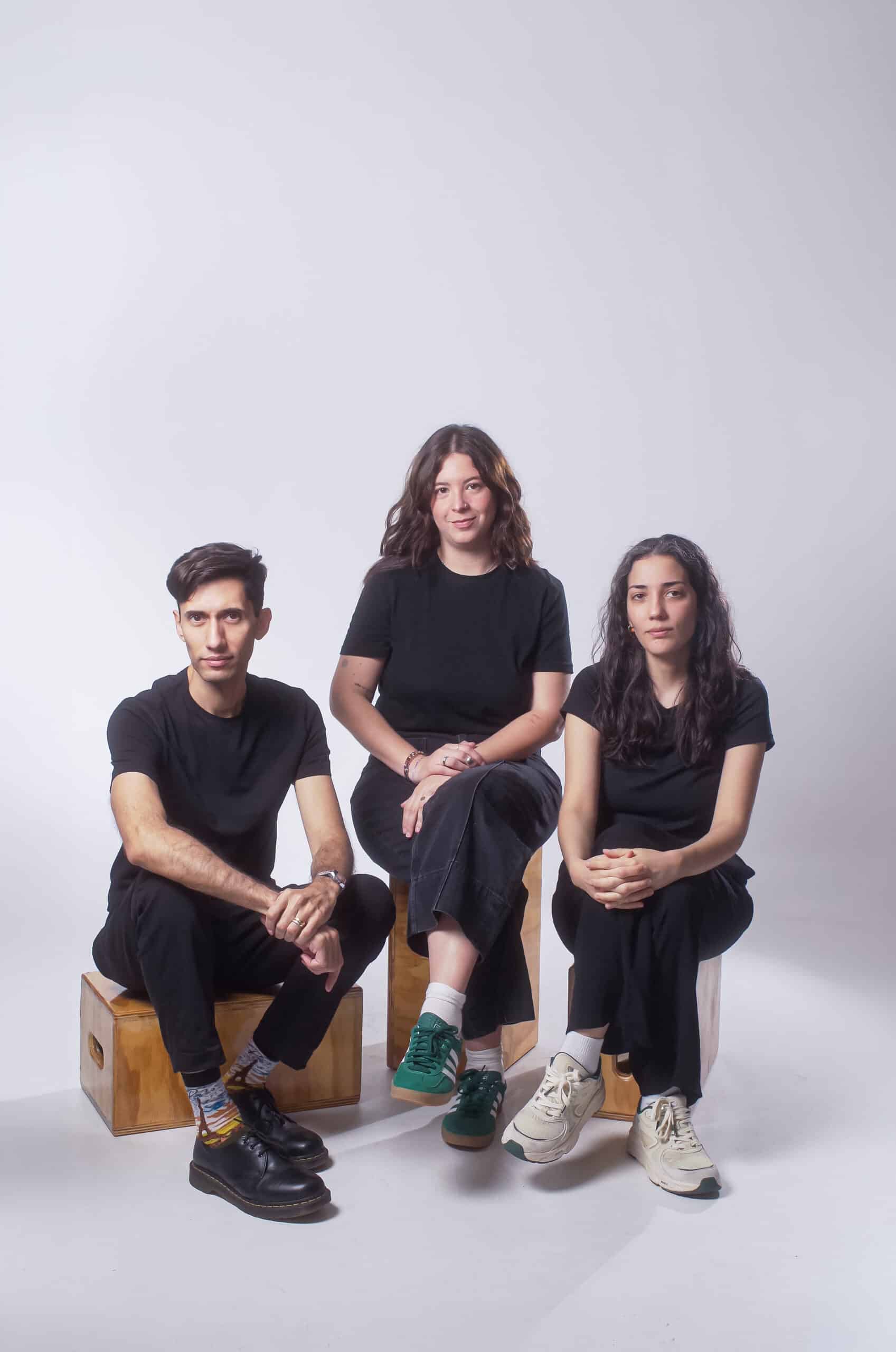
 Based in the design capital of Buenos Aires, DonZeta is a boutique creative studio dedicated to the art of building brands with soul in the age of automation. By operating at the intersection of high-level strategy and sensory experience, the agency specializes in creating cohesive visual languages and living systems that transcend the digital noise. DonZeta approaches branding as more than just a visual identity; it is a strategic construction of meaning, where detail, intention, and coherence are prioritized over the hollow speed of the algorithm.
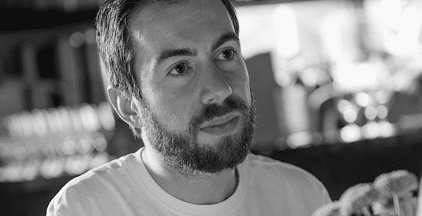
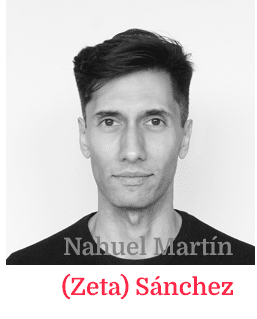
At the heart of this boutique approach is Nahuel Martín Sánchez (though as he notes, “everyone calls me Zeta”), Founder and Creative Director, whose perspective is shaped by the vibrant contrast between his roots in Argentina and his current life in Paris. Balancing the raw, emotional intuition of Buenos Aires with the rigorous visual culture of Europe, Zeta has spent his career refining the delicate art of human judgment. A firm believer that technology should expand possibilities rather than replace the “soul” of a brand, he focuses on transforming infinite possibilities into clear direction. For Zeta, the future of the craft isn’t about chasing the next trend — it is about the slower, deeper work of listening, curiosity, and truth.
Zeta, thanks for joining us. Where did you grow up, and were there any early experiences or influences in Argentina that shaped your passion for branding and storytelling?
I grew up in Buenos Aires, and to me it is a very intense, expressive city where everything coexists: emotion, chaos, popular culture, and aspiration. Even though I was not thinking about it in branding terms at the time, all of that shaped the way I see things.
From a very young age, I was drawn to the way objects and images carry identity: a graphic piece, a shop window, a package, a campaign, even a sign on the street. In Argentina, for a long time, image and presentation carried a lot of cultural weight. There is a very strong awareness around how things are said and how they are shown. I think that is where my connection to storytelling began, and where I started to understand that a brand is not just an image, but a way of creating meaning.
You’re based in Paris but work internationally — how does the contrast between Europe and Buenos Aires influence the “soul” you bring to your creative direction?
A lot. Buenos Aires gives me intuition, sensitivity, and street energy; Paris gives me perspective, editing, rigor, and a very strong connection to visual culture, form, and detail.
I still remember my first trip to Paris in 2007 and realizing that absolutely everything had been designed, even small things like metro tickets. That really stayed with me. In Argentina, at that time, design often still felt like an added value, something you paid extra for. In Paris, design already felt like part of everyday life. Living between those two very different worlds keeps me from getting too comfortable in a single logic. Traveling so much expanded that capacity in me, and I think that definitely shapes the soul of my creative direction.
If a friend from abroad were visiting Paris for the first time, what’s one “local secret” or experience you would absolutely recommend they try?
I would tell them not to experience Paris only through the version they have seen in Netflix series, because that version is a bit vintage now, and very idealized. For me, the best part of Paris appears when you let go of the anxiety of trying to see everything and start entering its real rhythm. Even when you begin noticing the less polished details, like little mice in the street, the city becomes more interesting. My recommendation would simply be to walk a lot, with no major plan. Paris works best when you stop consuming it and start inhabiting it.
With teams and clients spanning different continents, how do you typically structure your week to keep your creative energy and operations in sync?
I try to structure my week by clearly separating operational time from creative time. At the beginning of the week, I focus on decisions, meetings, and priorities. Then I try to protect real space for thinking, because otherwise everything becomes response and execution, and creativity needs a different quality of time.
I have also learned to protect my energy. When you work across countries and time zones, it is very easy to fall into a purely reactive dynamic. So I try to build a system without killing flexibility. For me, that balance is essential.
At DonZeta, you focus on “Building brands with soul in the age of automation.” How do you define “soul” in a digital context, and how do you protect it when using accelerated AI systems?
To me, a brand’s soul has to do with its point of view. It is what makes it recognizable, human, and meaningful beyond the tool or the format. I do not see it as something mystical, but as a combination of identity, intention, sensitivity, and coherence.
Today, technology allows you to do a lot, very quickly. But generating is one thing, and building something that actually has value is another. We do use AI, of course, but as a tool to explore, accelerate, or expand possibilities, never as a replacement for judgment. That is exactly where soul is protected: in who decides, how things are edited, and what is actually worth saying.
When it comes to brand strategy, what is the one thing that should never be forgotten in a brief — and what does a “perfect brief” look like to you?
The one thing that should never be missing from a brief is why this should matter to anyone. It sounds obvious, but very often it is not there. So many briefs are built around the company’s internal needs, and not around the real impact something might have on a person.
To me, a good brief is not the longest one; it is the one that makes the problem clear, shows where the tension is, and makes the real limitations visible. The perfect brief creates order without boxing you in. It gives direction without taking away your air.
When integrating emerging technologies into your creative process, where do you find the most friction — and how do you turn that into a moment of authentic connection?
The biggest friction appears when speed starts winning over meaning. We are a boutique studio precisely because we value personalized work, detail, and a certain closeness to each process.
I am very interested in noticing when something is becoming too easy, too polished, or too similar to everything else. That is usually a warning sign. Instead of avoiding that friction, I try to use it as a starting point to go deeper. Very often, the most authentic connection appears when you slow down a little and ask yourself again what you truly want to say.
As the industry fragments, do you see the future as a competition or a collaboration between the “global giants” and boutique firms?
I see it moving more toward collaboration than direct competition. Large structures have scale, resources, and global execution power. Boutique studios have a different closeness to ideas, to detail, and to the more sensitive construction of a brand. I think it will become increasingly clear what kind of perspective each project actually needs. Smaller teams have a strong advantage: we can be very precise, very agile, and very involved.
Looking at the global landscape today, which brands do you think are genuinely moving the needle through disruption rather than just following a trend?
There are several, but I am especially interested in the ones that do not just look different, but build a very clear position. Patagonia is a great example because there is consistency between its message and its operations. Liquid Death is very smart in the way it made a very basic category culturally relevant. And Jacquemus really interests me because of how clearly it builds universe, desire, and image. What I value most is when a brand is holding its own perspective over time.
We’re witnessing a “content collapse” of AI-generated noise. How does a brand survive without just becoming a louder version of the algorithm — and have we finally hit the ceiling of what is actually “new”?
Yes, I think we are at a point where producing more does not necessarily mean creating more value. There is too much content, too much speed, and too much sameness.
At the same time, more and more brands are turning toward physical experiences, pop-ups, and activations to reconnect with audiences in a more real way. You can feel this growing need for tangible, sensory, memorable experiences. So to me, the answer is not to compete with the algorithm in terms of volume. It is to have more clarity, more judgment, and a stronger editing instinct. Right now, being relevant matters more than appearing new.
In a future where AI can instantly generate entire digital ecosystems, what is the one “human” value an agency provides that will actually be worth paying for five years from now?
Judgment, without a doubt.
There will be tools for everyone, and more of them every day. What will make the difference is not who can produce more, but who knows what to do, why, when, and with what level of coherence. To me, that will be the strongest value an agency or a creative director can offer: transforming infinite possibility into clear direction.
For a small company just starting out: what’s your best advice for uncovering their “brand soul” without the budget of a global giant?
My advice would be: do not try to look big too quickly. Very often, in trying to appear “more like a brand,” small companies end up copying codes that have nothing to do with their actual reality.
I would tell them to start with something simpler and more difficult at the same time: really understanding who they are, what drives them, and what kind of impression they want to leave. Clarity matters more than budget.
Outside of DonZeta, what are the hobbies or interests that allow you to fully disconnect and recharge?
Travel recharges me a lot, because it changes my mindset and refreshes the way I see. I am fascinated by the contrast between a silent temple in Japan and the overstimulation of a connected city. Whenever I arrive in a new city, one of my first stops is usually an art museum. And something else that helps me a lot is simply slowing down. Stepping out of the constant logic of screens, production, and immediate response. Sometimes what recharges you most is returning to a slower kind of attention.
If you could fix one systemic issue in the world today that has absolutely nothing to do with branding or tech, what would it be?
I would choose inequality in access to opportunity. To me, it is one of the most unfair and limiting things that exists.
There are so many people with talent, sensitivity, and ability, but without access to education, context, tools, or networks. If I could change one structural issue, it would be that, because I think it would unlock an enormous amount of human potential that never gets the chance to fully develop.
For a student following your work: what is one “insider’s hint” about where the craft is heading that isn’t being taught in a classroom yet?
I think it matters less and less to think in isolated pieces, and more and more to think in living systems. I still see a lot of education focused on the final object: the logo, the campaign. But the real work today is about building languages that can sustain themselves over time, across formats, rhythms, and technologies. I would also say that we need to teach more judgment and less fascination with tools.
Finally, what’s an unexpected hobby or trait of yours that doesn’t quite fit the typical Creative Director profile?
I do not know whether it counts exactly as a hobby, but it is definitely a very strong trait in me: I take time to really listen and understand what the other person is saying. I think there is a lot of intensity today, and a lot of immediate reaction, but not enough time spent truly understanding the other person before responding. In my case, that pause matters.
I also think I have a somewhat unusual mix of structure and sensitivity. I can get quite obsessive about systems and order, but at the same time I work a lot from intuition and emotion. And maybe one more thing is that I genuinely enjoy continuing to learn. There is often an expectation that a creative director should perform certainty all the time, but I am much more interested in curiosity than in the character.
Zeta’s Working Preferences:
Morning ritual:
Coffee first, then priorities before noise.
Risk appetite:
High when there’s a real point of view behind it.
A quote you live by:
Clarity creates value.
Last place that inspired you:
Japan — for its contrast, precision, and silence.
The non-negotiable in my workflow:
Time. The amount of time available is directly tied to the freedom a brand gives us to do the work well. The less time there is, the more freedom there needs to be.
Habit you had to unlearn:
Thinking I had to do everything myself. I learned that good teamwork almost always leads to better results.
The lead indicator I watch:
When I share an idea with my team and the reaction feels like love at first sight, I know we’re onto the right direction.
Where you think best:
After a run. That’s usually when my ideas feel the clearest.
Agency to watch

Best in Breed since 1998. Lounge Lizard is a Digital Agency that Specializes in Brand Strategy, Website Design, Web Development, Mobile APP Development, Online Marketing, Social Media, Ecommerce, and SEOdigital experiences that move brands and businesses from now to next.
Featured agencies

135147 Views

115680 Views

109413 Views

91909 Views

88427 Views

83198 Views

74830 Views

61603 Views