“Motion Isn’t Decoration: It’s Where the Personality of a Brand Actually Shows Up Online” — Servin Nissen, Merlin Studio
“Motion Isn’t Decoration: It’s Where the Personality of a Brand Actually Shows Up Online” — Servin Nissen, Merlin Studio
People remember how a brand made them feel to use, and they come back to the ones that felt considered.
Amsterdam, June 3rd, 2026
 Settled in the Lowlands in 2018 to prove what’s possible, Merlin Studio is an elite Code Boutique from Amsterdam built for extraordinary brands and creative teams who refuse to settle. Operating on a strict “no layers” philosophy, the studio stays intentionally small, senior, and hands-on, ensuring clients collaborate directly with the specialists who design, build, and decide. By treating digital experiences as a long-term identity advantage, Merlin seamlessly unites deep design, code, and a motion-first methodology to transform complex technology into expressive, reliable, and deeply intentional digital systems.
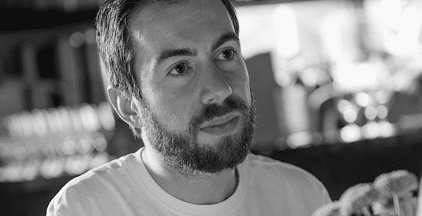
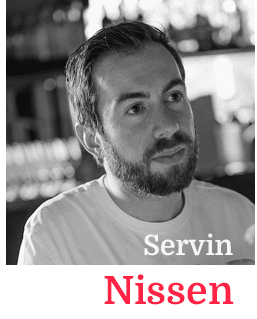
Anchoring this relentless commitment to craft is Servin Nissen, Co-Founder of Merlin Studio. While living in Alkmaar, Servin has spent over a decade immersing himself in the creative density of Amsterdam, evolving from early childhood web experimentation into a master of digital execution where design serves as a core component of code. An advocate for structural agility, he leads Merlin’s culture of continuous innovation through a recurring habit of rapid R&D and prototyping. For Servin, navigating the modern landscape isn’t about outpacing algorithmic volume, but about applying human judgment, accountability, and precise motion execution to ensure every digital touchpoint feels considered, functional, and remarkably alive.
Key Takeaways
- Zero Layers Eliminate Errors: Keeping a studio completely senior means the person who designs the code is the same person talking to the client. This eliminates translation friction.
- Motion Is Strategic Identity: Animation isn't a final cosmetic polish. Motion dictates the pace, attitude, and confidence of a digital brand, driving real user preference.
- AI Controls Scaffolding, Not Craft: AI drastically compresses the distance between concept and prototype, but the actual production layer relies strictly on human taste, empathy, and authorship.
Servin, thanks for joining us. To start at the source: you’ve lived your life in Alkmaar but have been “commuting” to the soul of Amsterdam since you were 16. What was the formative spark in those early days that convinced you that code and design were the tools you wanted to use to “prove what’s possible”?
Honestly, my journey into the web started before that. When I was around ten or twelve, a friend and I were already poking at how websites worked. Pure basics with no styling, just figuring out what each element did. We’d cut up Photoshop designs into slices and stitch them into a page, which felt like magic at the time.
It came back around at fourteen, when a friend and I tweaked a template into a redesign of our school’s own website. The existing one was outdated and we figured we’d just make a new one. That’s where the design side started to matter to me as well as the code.
At sixteen I had to pick a school. There was nothing in Alkmaar that fit, so I looked towards the big city and found the Media College Amsterdam with a course called Interactieve Vormgeving. The plan, at that point, was design. Code was something I’d done for fun.
Then I did an internship where I was only allowed to write code. My mentor pushed me hard on jQuery, which I didn’t know yet, since I’d only ever touched plain JavaScript. Somewhere in that frustration of learning a new way to do something I’d already been doing my own way, I realised: this is actually what I want to do. Not design with some code on the side. Code, with design as part of the craft. The first basic 3D scenes came shortly after.
The HvA’s Communicatie en Multimedia Design course was the natural next step from there. The rest, as they say.
You’ve spent over a decade traversing the path between the quiet of the north and the creative density of Amsterdam. For a friend visiting the city for the first time, what’s one ‘local secret’ or experience that perfectly captures the Amsterdam you know — the one beyond the tourist maps?
Oof, there are a lot. The Amsterdam I actually know isn’t the canal-tour version, it’s the small places. The Burger Bar in the Kolksteeg, where there’s just enough room to sit shoulder to shoulder. Final Touch, a cozy little café just off Leidseplein where you can talk or play a game, and when you’re done there, the beer garden across the water. Those spots say more about the city to me than any landmark.
If a friend wanted an experience, I’d send them to the Fabrique des Lumières in Westerpark. It’s an immersive projection space inside the old Wester gas factory, telling stories through visuals and music. I’ve seen a few, but the Salvador Dalí one set to Pink Floyd was something else. His trippy work and that music together was unreal.
And if they were only here for a night, I’d take them to see a film at the Tuschinski. The movie almost doesn’t matter, the building itself is the experience.
Merlin prides itself on having “no layers” — staying small, senior, and hands-on. How do you personally structure your rhythm to balance the high-level strategy of a co-founder with the deep, “elite precision” work of a specialist who still cares about the smallest interaction?
Honestly, the rhythm comes from accepting that those things aren’t separable. A finance question is also a strategy question. A piece of code I’m writing for a project is also a sales touchpoint with the partner we’re building it for. I don’t move between modes so much as I move between conversations that all touch the same studio.
What it looks like day to day: mornings tend to lean operational, finance, planning, conversations with the team. Afternoons more often go into the work itself, whether that’s a prototype, performance work on a current project, or pushing into something new on our Creative Friday. The team is small enough that I can stay close to the actual craft without having to schedule it. If I lose touch with what we’re building, I lose the basis for the rest of my role.
That said, I’m still figuring out the boundaries. My weak spot is guarding my morning time when things get busy. I have a habit of letting craft win over the less exciting work like planning and finance, even though I know those matter just as much to the studio. Recognising it is half the battle. Doing something about it consistently is the other half.
Merlin isn’t just a studio; it’s a “Code Boutique.” In an industry obsessed with scaling and “more,” how does your boutique size allow you to outmaneuver the giants and adapt to the rapid, AI-driven shifts we’re seeing today?
There’s a version of the studio business where “more” is the answer to everything: more people, more services, more layers. We’ve consciously gone the other way. We’re a small team, all senior, all working directly on the work. No account manager translating between client and creator, no junior reading specs and hoping for the best.
The advantage isn’t that we move “faster” in some abstract sense. It’s that nothing gets lost in translation. When a client tells us what they want, the person hearing it is the same person making it. That’s increasingly rare, and in an environment where AI is closing the gap on baseline production work, it’s also where the actual difference shows up. Anyone can generate something. Few can hold an entire project in their head from concept to performance budget to the final detail.
The shifts we’re seeing now don’t scare a boutique, they put pressure on the bigger model. We adapt by being clear about what we don’t do.
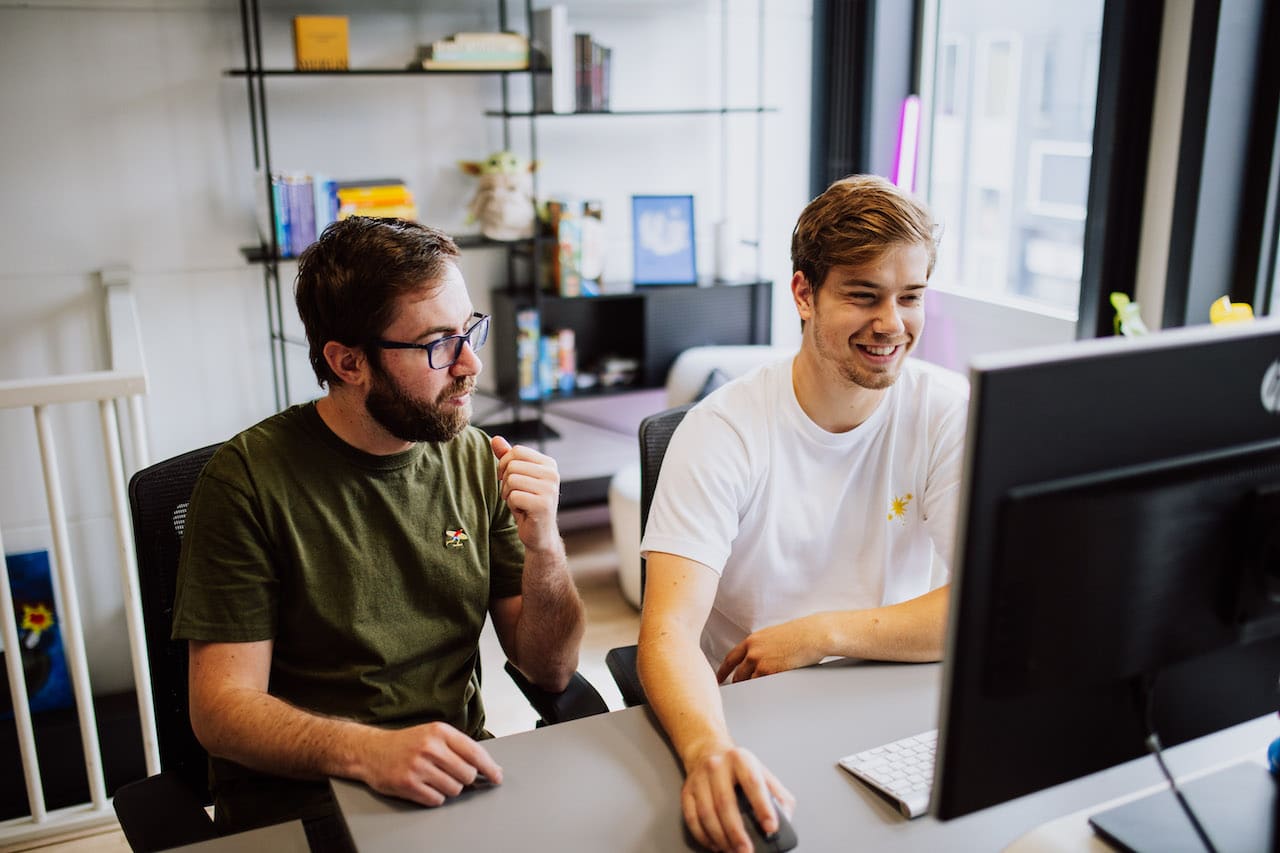
You mentioned that R&D and prototyping are ingrained in your culture. How do you ensure that “Innovation” doesn’t just become a buzzword, but remains a tangible, daily practice that creates real impact for your clients?
Innovation as a word does almost no work. What we actually have is a habit. Once a month, every one of us takes a day off from production work to make something we’re curious about. We call it Creative Friday, though, full disclosure, it’s usually on a Thursday, and the only rule is that you have to present what you made by the end of the day.
It’s small and it’s not glamorous, but over the years it has produced techniques and confidence that ended up in client work. The render pipeline we now reuse to record complex 3D scenes at 60fps started as someone’s curiosity. The custom wrapper we built around 8th Wall so we could use our own codebase for WebAR did too.
We also use real projects as a testing ground. When we spot a new technique, we’ll try it on actual work to see if it’s an improvement on what we already do, or whether it’s production-ready at all. On Pendragon, for example, we tested whether TSL was something we could already start using in production. Some of those experiments stick, some don’t, but either way we learn where the edges are. That’s how we keep it tangible. Not as a department or a quarterly initiative, but as a recurring habit of staying curious.
Merlin works “Motion First.” You’ve said motion is how “brands animate people.” Why is motion a strategic identity rather than just a final layer of polish in a digital experience?
Motion isn’t decoration. It’s where the personality of a brand actually shows up online. A brand can have the most carefully chosen typeface and palette, but if it lands on a static page that doesn’t move with intention, or worse, moves randomly, none of that translates.
We’ve seen brands fall flat for exactly this reason. Beautiful pictures, and then nothing. The visuals are there, but the thing doesn’t move, doesn’t respond, doesn’t feel alive. That gap between a brand that looks good in a deck and one that feels good on the web is precisely what we try to close.
The strategic part is that motion communicates things words and visuals can’t. Pace, attitude, confidence. A button that feels reluctant to be pressed reads completely differently from one that anticipates the click. That’s identity, not polish. It’s also, frankly, what builds brand preference. People remember how a brand made them feel to use, and they come back to the ones that felt considered. We treat motion the way good film editors treat cuts. It shouldn’t draw attention to itself, but it should always be making a choice.
We often talk about AI’s potential, but at Merlin, you’re using it to “stay ahead of the curve.” How has AI changed the way you prototype and test ideas before they ever reach a production environment?
AI has compressed the distance between “I have an idea” and “I have something to react to.” Where we used to spend a day or two getting a concept into a testable state, we can now have a passable first version of an interaction or a visual direction in an afternoon. That doesn’t lower the bar for production work, it just means we can have an informed conversation about whether an idea has legs much earlier.
How we use it has already changed a lot, and it’ll keep changing. Right now we’ve built up a stack of skills that helps our AI agents actually understand us, our conventions, what we value, the way we work. That plugs into a setup where one main agent orchestrates the work and spins up sub-agents for specific tasks. For the actual craft, the hands still matter most, but the scaffolding around the work has genuinely shifted.
You’ve set out to “redefine what good means.” When a client comes to you with a traditional brief, how do you convince them to refuse to settle and instead look at digital as a long-term identity advantage?
We don’t push back on traditional briefs. We try to expand the conversation around them. Most briefs we receive are written for a specific outcome, usually because the client has been burned before by being asked to think big and ending up with something they can’t afford or maintain. Our argument is usually that the brief they wrote isn’t conservative because they want a small outcome. It’s conservative because they’re protecting themselves.
The pitch we make is that digital is the most public version of a brand most people will ever see. A campaign runs for a few weeks. A website is up for years. If the site isn’t doing the work of representing the brand at the same level as the brand identity itself, you’re funding a beautiful identity that loses its energy at the most-visited touchpoint. And that touchpoint is where real brand engagement either happens or doesn’t. A site people actually want to spend time in is worth more than one they pass through.
When clients understand that, the conversation changes. Not always to a bigger budget, sometimes to a smaller scope done right rather than a larger one done halfway.
We’re witnessing a ‘content collapse’ of AI-generated noise. How does a studio like Merlin stay relevant without just becoming a louder version of the algorithm — and have we finally hit the ceiling of what is actually ‘new’ in digital craft?
I’d push back gently on the framing. The goal was never to be new, it was to be good, and those aren’t the same thing. A lot of what gets called innovation is just novelty with a short shelf life.
The flood of AI-generated work doesn’t worry me much, because most of it is forgettable by design. It’s made to fill space, not to be remembered. That actually makes the work with real care put into it stand out more, not less. When everything is loud, the thing that’s actually considered becomes the signal.
So staying relevant isn’t about adding to the noise faster than everyone else. It’s about being the studio that still sweats the details nobody asked us to sweat. That’s hard to automate, and it’s the part clients actually remember.
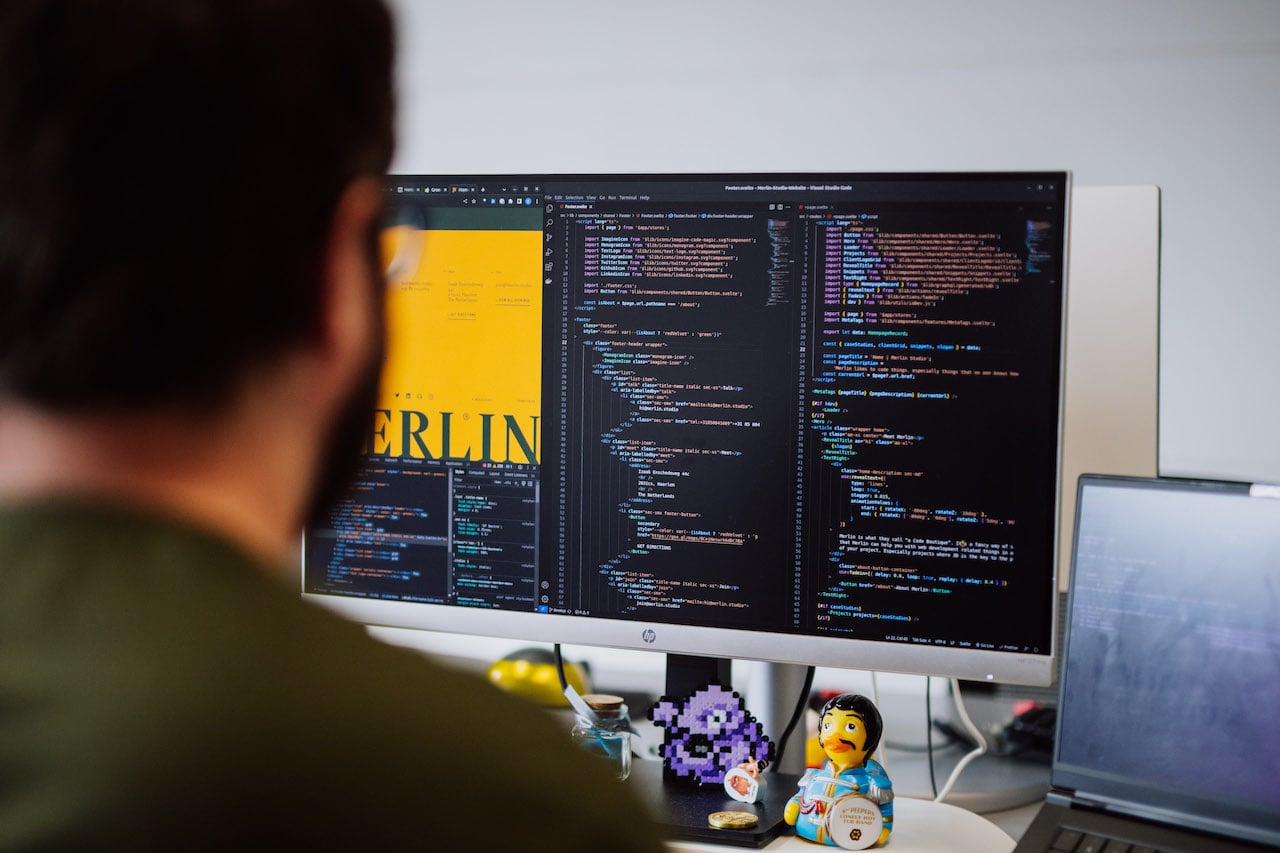
In a future where AI can instantly generate entire digital ecosystems, what is the one ‘human’ value a “Code Boutique” provides that will actually be worth paying for five years from now?
Judgment. Specifically, the judgment to say no. No to a feature the client wants but doesn’t serve the work, no to a technique that’s trending but doesn’t fit, no to a level of polish that isn’t necessary, and yes to a level of polish that is and is going to cost more. AI can produce; it can’t decide what’s worth producing.
The other thing is accountability. AI doesn’t carry the project. It doesn’t lose sleep over the launch, and it isn’t going to be in the room three months later when the client wants to discuss what worked and what didn’t. A studio is. That’s what you’re actually paying for. Not the labor of producing pixels but the responsibility of standing behind them.
In five years, the thing worth paying for is the same thing it’s always been. Someone you trust to care about your project the way you do.
Looking at your recent output, is there one project that you feel perfectly captures Merlin’s vision of “Imagine. Code. Magic.”?
The Pendragon Cycle: Rise of the Merlin, which we built together with Format-3. Aside from the on-the-nose overlap of building a website about Merlin, it’s the project that most clearly shows what we do at our best.
What made it special wasn’t just the execution, it was that we had real input into the overall design. That’s where both the Imagine and the Magic came in. We came up with ideas, and just as importantly, we shot down ideas we felt didn’t fit, all from our own expertise. A good partner doesn’t just say yes, and Format-3 gave us the room to actually shape the thing.
Technically it was ambitious in every direction. Fully accessible 3D, including the immersive sections, which is rare and genuinely difficult. An interactive map that pops, both figuratively and literally. Performance that had to hold across devices. And it all had to feel like the world it was selling.
The recognition followed: Awwwards Site of the Day, the Dev Award, and most recently our first Webby. But the part I’ll remember is that there was a real story to tell here, and we got to help tell it.
When you finally step away from the code, what are the interests or passions that allow you to fully disconnect and recharge?
For me, the journey home is the ritual. Sometimes that’s the train back to Alkmaar, but more often it’s the motorcycle ride. If the time and the weather allow, taking the scenic route is a must. Just take a left or a right somewhere and see where you end up, Google Maps in your back pocket so you’ll always find your way home eventually.
These days I’ll also go for a walk or a bike ride after dinner, usually with a podcast on, where I can forget everything for a bit and give my head a rest. That’s become its own kind of reset.
For a student looking to enter this world of elite digital craft: what’s one ‘insider’s hint’ about the future of code and design that isn’t being taught in a classroom yet?
A few things. First, taste matters more than technical skill, and they don’t teach taste. The how of code you can pick up in a week. The why behind good decisions takes years, and you can start building it on day one by looking hard at work you admire and being honest about why it’s good.
Second, get real experience as early as you can. I started freelancing in my second year at the HvA precisely because I wanted that exposure, the stuff the school version of the work hides. It teaches you in months what would otherwise take years.
And a word on the field itself: it’s always changing and it always will. Don’t cling to something that’s already bleeding out just because you know it well. Stay open. You don’t need to jump on every new wagon that rolls past, but you should always keep one eye on where things are heading.
From your personal standpoint, away from the digital world, what do you see as the most pressing systemic challenge facing our society today?
Loneliness. It’s something I’ve dealt with myself at times, so it’s not abstract to me. And while it affects every generation, I think it hits the younger one hardest, and a lot of that is tied to the digital world we’ve built. The same tools that connect us can quietly isolate us.
It goes hand in hand with mental health more broadly, which thankfully is becoming a more open topic than it used to be. That openness matters. The more normal it is to talk about, the less alone people actually are with it.
Finally, can you share a ‘hidden gem’ skill or a secret talent of yours — something that wouldn’t fit the typical ‘Co-Founder’ profile?
I tend to get hyper-focused. If there’s something I want to do or be good at, I’ll keep bashing my head against it until it’s solved or I’ve mastered it. The funny side effect is that I’ve fully mastered two or three cooking recipes while being barely able to cook anything else. Ask me to make fresh pasta and you’ll see me shine. Ask me to make almost anything else, and, well, good luck.
Servin’s Working Preferences:
Morning ritual:
Check the weather app, jump out of bed, open the blinds, and I need my shower, in that order. I'd rather get through all of it fast and earn myself five quiet minutes to sit before I have to leave, than take my time over it.
Risk appetite:
Calculated, always have been. Though I've learned over the years that too much caution, like too much of anything, can cost you more than it saves.
A quote you live by:
"Make the you of tomorrow proud by your actions today."
Last place that inspired you:
The STRAAT museum on the NDSM-werf. Huge street art murals that sent me home thinking about effects and composition for days.
The non-negotiable in my workflow:
Nobody here is here to do average work. If you see something that could be better, on a project or in the company, there's always room to bring it up.
The "noise" I filter out first:
Trends and industry hype. Worth keeping half an eye on, never worth chasing.
My "guilty pleasure" brand:
Five Guys and Salsa Shop. I know, I know.
The best piece of bad advice i ever got:
Early on, an internship mentor told me to learn jQuery and not worry too much about the fundamentals underneath it. Bad advice, the fundamentals are exactly what matter. But fighting through it is what made me realise development was the path I wanted, so I can't complain about where it led.
Thanks Servin!
- Learn more about Merlin Studio
- Follow Servin Nissen on social media:
- Follow Merlin Studio on social media:
Elite Digital Craft and AI: Lessons from Servin Nissen at Merlin Studio
- Zero Layers Eliminate Errors: Keeping a studio completely senior means the person who designs the code is the same person talking to the client. This eliminates translation friction.
- Motion Is Strategic Identity: Animation isn't a final cosmetic polish. Motion dictates the pace, attitude, and confidence of a digital brand, driving real user preference.
- AI Controls Scaffolding, Not Craft: AI drastically compresses the distance between concept and prototype, but the actual production layer relies strictly on human taste, empathy, and authorship.
- The Premium Value of Judgment: In an automated ecosystem, clients don't pay for the labor of producing pixels—they pay for accountability and the human judgment required to say "no."
- R&D Must Be a Habit: Meaningful innovation cannot be an abstract buzzword. It requires a recurring, structured habit of rapid experimentation to discover practical, production-ready technical edges.
AIWorkflowsDigitalCraftTechLeadershipWebEngineeringWebMotion
Agency to watch

Best in Breed since 1998. Lounge Lizard is a Digital Agency that Specializes in Brand Strategy, Website Design, Web Development, Mobile APP Development, Online Marketing, Social Media, Ecommerce, and SEOdigital experiences that move brands and businesses from now to next.
Featured agencies

135146 Views

115680 Views

109412 Views

91909 Views

88426 Views

83197 Views

74830 Views

61602 Views