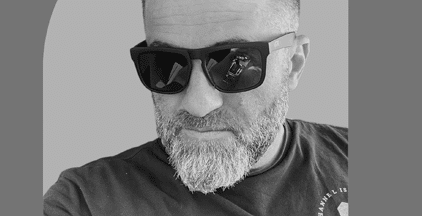
“An Idea on Its Own Isn’t Enough: It Needs a Clear Strategy and Disciplined Execution” — Paul Kim on Custom WordPress Engineering
When the strategy is clear and the execution plan is derived directly from it, the gap between strategy and development stops feeling so large.
Beijing, May 27th, 2026
 Based in the fast-evolving tech landscape, Maples Design is a premier design and development agency built to help mission-driven organizations engineer high-impact digital products. By marrying strategic depth with technical craftsmanship, the studio specializes in architecting scalable WordPress sites and custom digital systems that genuinely move the commercial needle. Maples Design approaches digital transformation with a sharp, dual focus: clarifying a brand’s core purpose on the front end, while building clean, future-proof frameworks on the back end to ensure bold ideas achieve brilliant execution.
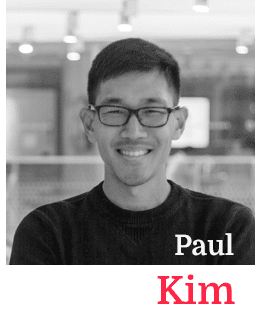
Leading this cross-cultural technical sprint is Paul Kim, Founder and Lead Developer at Maples Design. Born in Canada and currently directing operations from the energetic sprawl of Beijing, Paul brings a uniquely balanced perspective to practical AI integration and enterprise workflows. Blending the airy, minimalist visual rhythms of Western design with the high-density, hyper-integrated ecosystem of Chinese tech, he has built a leadership style centered on cross-border agility and absolute relationship-based trust. For Paul, true innovation isn’t about chasing fleeting, overstated technical hype — it is about utilizing automation to eliminate operational friction, leaving human experts free to focus on the high-level architecture, long-term performance, and core purpose that drive a mission forward.
It’s great to have you here, Paul! Let’s start personally — You were born in Canada and now lead Maples Design from Beijing — how has this international journey shaped your perspective on design, business, and innovation?
Growing up in Canada and building my career in Beijing has given me a deep appreciation for how culture lives in the details. Especially in design, I’ve noticed Chinese digital interfaces often feel dense and energetic, packed with features and information. Canadian and Western design tends to breathe more, with space around elements and a quieter feel. I think part of that comes down to language itself. Chinese characters sit evenly within their space, almost like building blocks. English letters have ascenders and descenders, with room above and below. That everyday visual rhythm likely shapes how we each expect a screen to feel.
Business has surprised me with how universal its core really is. The customs may differ, for example long client dinners with baijiu, relationships unfolding over shared meals and conversation. But underneath it all, business everywhere comes down to trust. The difference is just in how you build it. Learning those rhythms in China has made me more thoughtful about connection in general, no matter where I’m working.
When it comes to innovation, living between cultures has been my greatest advantage. It’s easy to get comfortable inside one way of thinking. But when you regularly move between different perspectives, you start to see alternatives others might miss. There’s definitely friction sometimes. But if you lean into it instead of avoiding it, that’s where the interesting work happens. You stop assuming there’s only one right answer and start finding new ones.
For someone visiting Beijing for the first time, what local experiences or places would you recommend that capture the creative or entrepreneurial spirit of the city?
If you’re coming to Beijing and want to feel the city’s creative pulse, I’d start with 798 Art District. It’s a former factory complex that artists gradually moved into years ago, and now it’s this vibrant neighborhood of galleries, studios, and cafes. You can still see the industrial bones of the place while walking past something completely new and experimental, the feeling of history and reinvention layered together.
For the entrepreneurial side, Zhongguancun is worth a visit. People call it China’s Silicon Valley, and you can feel that energy, the pace, the density of startups, the mix of students, founders, and investors all moving through the same spaces. It’s less about any one landmark and more about absorbing how quickly ideas move here.
But honestly, what defines Beijing’s spirit for me isn’t just the famous spots. It’s how every neighborhood has its own rhythm of making things happen. You’ll find small studios tucked into hutongs and incubators quietly supporting founders in communities. The city rewards curiosity, so I’d say wander a bit and talk to people. The real creative energy here often lives just off the beaten path.
Maples Design champions bold missions and high-impact products. What drew you to focus on mission-driven organizations — and how does that focus influence your team’s creative and technical decisions?
I’ve found that when a team understands why their work matters, rather than just what they’re building, the entire project becomes clearer. That sense of purpose isn’t limiting. If anything, it allows us to be more creative because we know exactly where we’re headed and what boundaries actually matter.
On the technical side, we try to think beyond the immediate project. We ask the questions to understand what a project might need in six months or a year from now, and we choose the tools and architecture that can grow with the project and the organization. It’s more about building something that stays useful with the mission.
In your words, “great ideas deserve brilliant execution.” Can you walk us through how your team bridges the gap between strategy and development — especially on complex WordPress or custom builds?
An idea on its own isn’t enough. It needs a clear strategy to give it shape and disciplined execution to bring it to life. We start by working with the client to sharpen the ideas into something actionable. What is the core problem? Who is the target audience? What does success look like? Creating a clear picture helps guide us in every design and development decision we make.
On complex WordPress or custom builds, we think about the people who will manage the site after we hand it over. If it’s a marketing team or content managers without technical backgrounds, we build interfaces that feel natural to them, workflows that mirror how they actually work. We want to hand over a tool that they can use confidently.
When the strategy is clear and the execution plan is derived directly from it, the gap between strategy and development stops feeling so large.
AI is rapidly reshaping how businesses operate. What are some of the most practical and high-leverage ways you’re seeing companies integrate AI into their digital ecosystems today?
I’ve noticed three practical ways AI is making a real difference for the businesses we work with.
The most obvious one is coding. AI excels at pattern matching, and a lot of development work is really about recognizing and writing patterns cleanly. It doesn’t replace developers completely, but it handles the repetitive parts very well, things like boilerplate, syntax, even debugging suggestions. This way, the team can focus on the architecture and logic that actually require human judgment.
Another practical case is using AI as a sounding board for creative work. Designers, writers, even business leaders hit blocks sometimes. Throwing a half-formed idea into a conversation with an AI model can spark a new angle or break the inertia, a way to get unstuck when you’re staring at a blank page.
The third area is for business operations. As companies become more digitally connected, there are lots of small tasks that don’t need human attention but still take time, for example sorting incoming emails, tagging documents, or routing support requests. Finding optimization points takes some digging to map the workflow, but once it’s running, it frees people up for work that actually requires their expertise.
AI isn’t a magic solution for any problem. But when businesses can think practically and look for targeted approaches to improve efficiency, these small gains can add up to something meaningful.
Are there common misconceptions you encounter when businesses approach AI integration? How do you help clients move from hype to real, usable value?
I run into two misconceptions pretty often when approaching AI integration. The first is that AI will slot right into an existing workflow without any adjustment. In reality, there usually requires a fair bit of adjustments to make the automation actually work. Every process is different, and each has its own nuances and requirements.
The second is expecting AI to deliver flawless output from day one. It’s often seen on social media AI working perfectly with just a couple steps, but in reality it still needs human review and adjustment. Nothing works right out of the box, especially when every business is different.
Moving from hype to real value comes down to starting small. Take one step at a time, confirm the results, and move onto the next step. Slowly build up the chain, and you can build meaningful value step by step.
Let’s talk about your own process. How is Maples Design using AI internally — in design, development, or operations — to streamline work or spark creativity?
We mainly use AI internally in development, writing boilerplate code, helping with technically difficult tasks, and debugging issues. We’re still slowly figuring out the best way to use it, balancing long-running tasks with short one-offs, and using skills and markdown files for context. It doesn’t replace thinking through architecture or solving complex problems, but it takes the load off of the repetitive parts so we can stay focused on the bigger picture.
For a small or mid-sized business looking to start with AI, what are the first questions they should be asking themselves?
They should look for low-hanging fruit first, tasks and workflows that take a surprising amount of time but are fairly simple to improve with AI. These could be things that are mechanical but usually fly under the radar because they’re “just part of the job”, things like categorizing inquiries or drafting routine emails. Or they could be brainstorming sessions for marketing campaigns or content, things that can often take hours of research and refinement. Using AI to generate a starting set of ideas can usually help get the ball rolling. It’s nothing polished, just raw ideas, but they’re not starting from a blank slate. Small or mid-sized businesses may not get the same efficiency boost as large businesses might from AI, but that doesn’t mean the possibilities aren’t there, it just might mean digging a bit deeper to find them.
Beyond the tech, your agency is known for its commitment to quality. How do you define “uncompromising quality” — and what does it look like in day-to-day project work?
To us, uncompromising quality means making thoughtful decisions at every step and not taking the easy way out. In our day-to-day project work, it shows up in small but consistent ways. For example, this could look like writing clean, well-documented code, building in proper error handling, and testing all the edge cases when building a feature. These things take extra time, but they prevent headaches later down the road when issues come up.
We also push back gently when we see scope that doesn’t help the main goal. Adding one more feature might not be a big deal, but we want to make sure all of our work aligns with the purpose. Quality is about having the discipline to focus on what actually moves the needle.
You work with clients who are building ambitious platforms and digital products. How do you guide teams through growth phases — from launch to scale — without sacrificing clarity or performance?
We start by aligning on what success looks like, not just at launch, but six months or even a year down the line. This goal-oriented approach shapes every decision we make, from the design to the technical foundation.
In the early stages, we focus on our strategy and implementation to achieve the project goals. At the same time, we build with scale in mind, making sure our designs and architectures are flexible enough to scale. As we move from launch to scale, we shift into more of a partnership rhythm. That means regular check-ins focused on metrics that matter to your business, things like conversion rates or engagement. Based on these metrics, we look for improvements or changes, always ensuring we’re working towards the organization’s mission.
Maples is based in Beijing, one of the most vibrant tech hubs in the world. What’s something about China’s design or tech ecosystem that outsiders often overlook?
In China, the line between content, community, and commerce is quite often blurred. A single interaction within WeChat, China’s main superapp, might include ordering a coffee, sharing with friends, and buying a train ticket, all without ever leaving the app. For companies used to Western user journeys, this integrated, fast-paced environment can feel unfamiliar, but it’s how China operates. So rather than doing something independently, companies will need to integrate. Trying to change over a billion people’s preferences and convenience is pretty much a losing strategy.
How do you approach collaboration within your team — especially across disciplines like strategy, design, and development — to keep ideas aligned and execution sharp?
We think of collaboration as just being a helpful person. Everyone brings a unique set of skills to the team, and if you are able to support someone else, why not? In practice, a designer might sketch a user flow while a developer might ask clarifying questions, either in real time or over messages. The spirit of mutual support is the foundation of how we work together.
The skill of asynchronous communication is also very important. Not everyone is at the computer at the same time, across time zones or in focused deep-work blocks. So when leaving comments or asking questions, it’s really important to provide as much context as possible. This way, teammates can pick up the thread and contribute meaningfully without too much back-and-forth, keeping everything moving forward smoothly.
What recent trends or technologies in the design/dev world are you personally excited about — and which ones do you think are overstated or misused?
As much flak as AI gets, I’m excited for the possibilities it can bring to those who know how to use it. AI won’t replace a senior developer (yet), but in capable hands, it can be a good tool to improve speed and technical execution. It can even help designers and other creatives generate raw ideas, a jumping-off point for further refinement. It’s yet another tool to help people do good work.
OpenClaw, previously called Clawdbot, is probably the technology I think is the most overstated. At least as of right now, its security is extremely lacking. For example, OpenClaw’s configurations are all stored in a plaintext file, and many OpenClaw instances are exposed to the public internet. This makes your instance, and anything connected to it, exposed to remote compromise. OpenClaw might give you some convenience in your life, but the risk of exposing much of your personal information to hackers is quite dangerous.
From your perspective, what’s the biggest challenge facing mission-driven organizations today when it comes to digital transformation?
There is constant noise in the tech world around the latest platforms, the next biggest trend. It’s easy to feel pressure to adopt something simply because it’s popular or fear being left behind, not because it actually servers your organization’s mission. Be picky, measure the results of a project based on the impact, and constantly review and assess. No matter how flashy the new technology is, it won’t help if it doesn’t align with the core purpose.
Outside of your professional life, what are some of your greatest passions or interests that you enjoy pursuing?
Outside of work, I like to recharge by getting out of the city and into the mountains. I love going for a hike, especially with my two corgis Tofu and Mocha. These moments in nature help me relax and clear my head, allowing me to return to work with a fresh perspective.
Finally, what’s one fun or surprising fact about you that most people wouldn’t guess from your title or your work at Maples?
I’ve represented Team China at the World Ultimate Club Championships.
Paul’s Working Preferences:
Early Bird or Night Owl?:
Night Owl
Usual breakfast:
Cereal and eggs
Most quoted book, TV Show or movie:
Friends
Last place traveled:
Shanghai
Favorite sneaker brand:
Nike
Preferred spot in your town:
Hutong coffee shops
What makes a good day at your job?:
A good cup of coffee
If you could meet anyone, dead or alive, who would it be?:
Cillian Murphy. I loved him in Peaky Blinders, and I think he’s a very grounded and well-spoken person.
Agency to watch

Best in Breed since 1998. Lounge Lizard is a Digital Agency that Specializes in Brand Strategy, Website Design, Web Development, Mobile APP Development, Online Marketing, Social Media, Ecommerce, and SEOdigital experiences that move brands and businesses from now to next.
Featured agencies

135111 Views

115649 Views

109392 Views

91889 Views

88390 Views

83166 Views

74792 Views

61585 Views