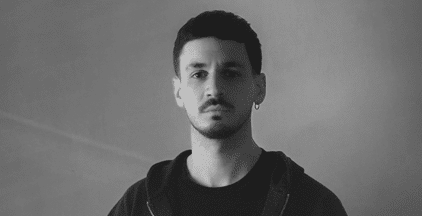
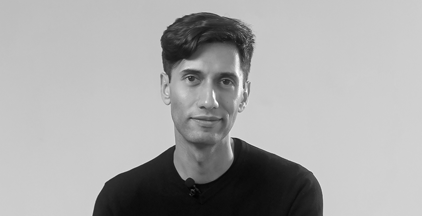
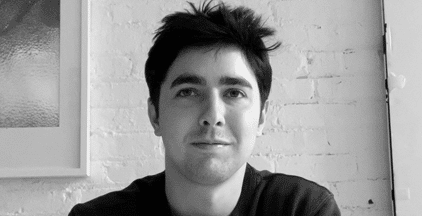
“What Makes Design Stand Out Today Isn’t Volume; It’s Conviction” — Martín Salvucci, Design Director at Monks
Consistency comes from purpose; you don't stay relevant by shouting louder, you stay relevant by making every interaction meaningful.
Buenos Aires, May 29th, 2026
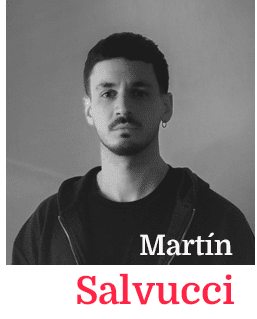 Operating as a global trailblazer at the intersection of marketing, technology services, and strategic consulting, Monks redefines how brands interact with the modern world. The digital-first company accelerates business possibilities through an extraordinary suite of services spanning unfettered content production, enterprise-grade software, data science, and AI-fueled digital media. By building robust, scalable ecosystems, Monks provides adaptable and intelligent technical infrastructure that helps ambitious global enterprises outmaneuver and outpace their competition.
Driving this transformation at the structural level is Martín Salvucci, a Design Director at Monks. Based in the creative powerhouse of Buenos Aires, Martín focuses on navigating the shift from traditional, static user interfaces toward context-aware adaptive systems—fundamentally moving the designer’s mandate from “crafting screens” to “shaping behaviors.” Grounded in a rigid foundation of system design built during his formative years at FADU (University of Buenos Aires), he advocates for interactive design as an operational infrastructure that scales across international markets. Seamlessly blending AI-driven workflows with a fierce defense of human intuition and authorial taste, Martín champions design driven by deep intentionality, proving that true visibility in an attention-driven economy relies on precision, clarity, and undeniable conviction.
Thank you for taking the time to speak with us, Martín. To start at the source: could you tell us a bit about where you grew up and share any childhood memories that have influenced your journey into the creative industry?
I grew up in the west of Buenos Aires, filling notebooks with characters and stories. But the real shift happened the day I discovered Paint and Flash. Animating stick figures frame by frame wasn’t just drawing anymore; it was my first taste of interaction. Making static pixels actually respond.
High school multimedia courses started connecting the dots, but studying Graphic Design at FADU (University of Buenos Aires) was the true turning point. It took pure intuition and gave it structure, meaning, and a voice.
For a visitor in Buenos Aires, what’s one local experience that perfectly captures the city’s vibrant, creative pulse?
I’m actually not much of a typical “city explorer.” But if you want to understand the real, visceral pulse of Buenos Aires, you have to go to a local fútbol match. You don’t even need to care about the sport. Just stand there and watch thousands of people singing, shouting, and breathing as a single entity. It’s chaotic, intense, and absolutely beautiful. Especially when it’s my team.
How do you structure your day to stay sharp while leading design in a high-velocity, AI-fueled environment?
I start my day by opening my calendar and mentally mapping what’s ahead. My work requires switching gears constantly between staying close to the craft, leading the team, and building client partnerships.
To keep things balanced, I structure my day into short blocks with highly specific, achievable goals. It helps me shift focus quickly, stay intensely present, and add value exactly where it’s needed. Towards the end of the day, things usually start to slow down. That’s my time to explore — testing new tools, rethinking workflows, and pushing ideas further without the immediate pressure of a deadline. In a space evolving this quickly, protecting time for experimentation is just as important as execution.
Monks aims to accelerate business possibilities. How does interactive design drive that acceleration for the world’s most ambitious brands?
Interactive design accelerates business when it moves beyond interfaces and starts operating as infrastructure.
For ambitious brands, digital acceleration isn’t just about shipping things faster. It’s about building scalable ecosystems that act as a single source of truth, where every touchpoint becomes a moment of engagement, conversion, and continuous learning. In practice, this means designing experiences that operate as strategic drivers rather than just visual layers.
Interactive design makes ideas testable, decisions measurable, and products capable of evolving. Through modular architectures, brands can expand consistently across markets while personalizing the user journey. The result is sustained growth driven by better interactions. At Monks, we think about design as an operational layer for the business — not just something customers see, but an engine that drives adaptability, intelligence, and long-term scalability.
You’ve said design is shifting from “crafting screens” to “shaping behaviors.” What does that shift look like in a real-world digital product?
We are moving away from defining single, fixed layouts to building systems that actually behave and evolve.
Interfaces are no longer passive canvases. They are active, context-aware, and increasingly shaped by user input. This requires designers to go beyond established patterns and focus deeply on how interactions feel, how they react, and how they grow as users engage with them.
Today, when I make a visual choice, there’s an immediate second layer to consider: how does this translate into a rule or structured context that a system can interpret and scale? We are literally designing how systems think and respond. AI expands our toolkit exponentially, but it also raises the baseline. The designer’s role in setting direction and defining human intuition is more critical than ever — a definitive shift from static outcomes to adaptive systems.
Looking at your recent output at Monks, is there one project that you feel perfectly captures this shift — one you’re particularly proud of?
While much of our most experimental AI-native work is still evolving behind the scenes, one project I’m particularly proud of is our work with LAIKA Studios. It reflects how we think about scalable design systems, storytelling, and branded interaction design in a way that feels both expressive and operational.
We started by deeply understanding the brand, building a bespoke visual language from the ground up to capture the meticulous precision of their films. But the real key was formalization — turning those custom patterns and micro-interactions into a structured architecture that scales seamlessly. Craft wasn’t lost in scale; it was encoded.
The project was also recognized with an FWA award, which was especially meaningful because it validated the exact balance between craft, interaction, and system thinking we were aiming for. What I value most is that it demonstrates how a strong foundation can create consistency without ever sacrificing personality.
How do AI-assisted workflows actually change the “manual” craft of your daily design process?
AI doesn’t change the core craft; it reshapes everything around it.
Before I even look at a blank canvas, I use AI to digest briefs and structure references into a solid knowledge base. I build lightweight agents to act as collaborators, helping me move faster with greater clarity. But the actual design layer remains strictly hands-on. That’s where taste, empathy, and authorship live. Once an idea is shaped, AI comes back in to compress the timeline. I can turn designs into interactive prototypes instantly, or expose our design systems to LLMs for seamless handoff. AI handles the scale; the designer handles the intent.
Ultimately, AI removes operational friction, giving us the space to focus purely on judgment, storytelling, and the quality of the experience.
In an era of adaptive systems, how do you keep a digital brand’s identity from feeling like a generic output of an algorithm?
What makes design stand out today isn’t volume; it’s conviction.
AI naturally leans toward the average. It produces work that feels correct and highly consistent, but rarely unique. To stand out in this landscape, you have to actively push beyond that baseline, making choices that go further than what’s expected. As systems become increasingly multimodal, those early human decisions carry all the weight.
But it’s not enough to just define those fundamentals. The role of design is not only to define them, but to structure them into patterns that can be interpreted and scaled automatically without losing their meaning. Staying relevant means caring deeply about those decisions, designing with purpose, and formalizing a point of view people can genuinely connect with.
Where do you find the most friction in modern UX, and how do you turn it into an authentic moment of connection?
Friction often appears when an experience feels too directed, forcing users down predefined paths that don’t reflect what they actually need in that moment. People expect intelligence from their interfaces, but they also want to feel represented, not just managed.
The way to turn that friction into connection is by designing anticipatory systems. It’s about giving users control where it matters, and letting the experience adapt in the background to feel personally relevant. Reducing friction is no longer about simply clearing the path. It’s about letting the user own it. The best experiences today feel less like funnels and more like conversations.
As AI-generated noise peaks, how does a brand stay visible and relevant without just being “louder”?
In a landscape saturated with synthetic noise, visibility is no longer about volume. It is about precision.
Brands need to operate on two levels at once: structuring signals so machines can interpret them, while maintaining a deeply human, recognizable voice that people can actually connect with. The brands that stand out bring clarity and direction. They reduce cognitive load instead of adding to it. That is where trust and authority are built. Consistency comes from purpose; you don’t stay relevant by shouting louder, you stay relevant by making every interaction meaningful.
Looking at the global landscape, which brands or products are genuinely moving the needle in interactive design right now?
I’m inspired by award-winning experiences that treat the browser as a stage for high-fidelity storytelling. The needle moves when a project transcends predictable layouts to create something truly cinematic, proving that digital touchpoints can be spaces for intentional craft rather than just functional containers.
In the product space, Arc is a masterclass in this new paradigm. They’ve turned utility into something tactile and delightful through sophisticated motion — like their “pinch” gestures — that make the software feel alive. They’ve proven that even the most functional tools can have a distinct, interactive soul.
Beyond tech, I’m interested in brands that merge timeless design principles with modern systems. I look to brands that evolve at the speed of technology while remaining fiercely loyal to their own voice — reinterpreting what’s new through an unmistakable identity that feels both contemporary and grounded.
What tools or software are essential to your daily creative work and why?
Software is a moving target; momentum is permanent. What matters most is having a central hub where ideas take shape and collaboration happens, which for me is still Figma.
Everything else I use is built around keeping that momentum going. I rely on custom Gems to unblock decisions, rapid prototyping tools like Figma Make or Google AI Studio for fast validation, and platforms like Are.na, Mobbin, and Fonts In Use to keep my references sharp. To push things further, I am currently exploring ways to connect these design environments with agentic tools, extending my everyday work beyond the static canvas.
But relying solely on external tools isn’t enough. At the same time, we are building our own internal frameworks. These are design-informed, grounded in real workflows, and built to adapt to different partner needs.
Tools will continue to evolve, but the goal remains: stay close to the work and protect the quality of what you put into the world. After all, the real advantage isn’t access to tools anymore; it’s knowing how to orchestrate them with intention.
What’s your favorite way to spend a weekend?
My weekends are all about slowing down and resetting. Best case scenario: an asado with friends. If not, I might get dragged into a brunch against my will. Either way, there’s always time for fútbol. Beyond that, I like to escape the city — grab the bike, find some open air, and fuel the whole thing with a solid amount of mate and facturas.
If you could have dinner with any historical figure, who would it be and why?
I’d choose Luis Alberto Spinetta. He might not be a historical figure in the conventional sense, but he’s an absolute giant for me.
I’d love to sit across from him and understand how his mind worked. He had this incredible ability to fuse heavy poetic symbolism with raw, deeply human emotion, always feeling natural, never forced. He wasn’t just writing songs; he was architecting entire worlds where emotion and meaning are completely intertwined. If you’re curious, I’d recommend starting with Invisible as a strong entry point.
Finally, can you share a little-known fact or secret talent about yourself?
I mentally snap reality to an invisible grid. I unconsciously adjust and align objects around me. It’s a very subtle quirk… right up until it isn’t.
Martin’s Working Preferences:
Early Bird or Night Owl?:
Early Bird for execution, Night Owl for ideation.
Usual breakfast:
Mate
A quote you live by:
“Sin prisa pero sin pausa.” Slowly but steadily.
My creative "Kryptonite":
Design without context. Empty by default.
Habit you had to unlearn:
Forcing everything into an 8px grid. I’m working on it.
What I'm a "total beginner" at right now:
Cooking salmon perfectly.
My legacy in one word:
Curiosity (hopefully).
Thanks Martín!
Follow Martín Salvucci, on social media:
Linkedin
Agency to watch

Best in Breed since 1998. Lounge Lizard is a Digital Agency that Specializes in Brand Strategy, Website Design, Web Development, Mobile APP Development, Online Marketing, Social Media, Ecommerce, and SEOdigital experiences that move brands and businesses from now to next.
Featured agencies

135110 Views

115648 Views

109392 Views

91889 Views

88387 Views

83166 Views

74791 Views

61584 Views