“Latin America Dances to a Different Beat: Why the ‘Move Fast and Break Things’ Attitude Fails Here” — Christopher Suttenfield, The New Standard
Some people still approach Latin America with a one-size-fits-all mindset thinking that they can copy and paste the same press release or campaign across multiple markets and expect the same results
São Paulo, May 20th, 2026
 Operating as a dynamic and experienced player in the international communication landscape, The New Standard delivers fully integrated, multi-platform communication campaigns tailored specifically for business growth. Driven by collective decades of expertise across Public Relations, Brand Activations, Social Media, Marketing Strategy, Crisis Communications, Media Training, and Influencer marketing, the agency specializes in helping international brands achieve a dominant share of voice across Latin America. By bypassing traditional legacy agency constraints, The New Standard creates agile, high-impact strategies that leave a lasting regional footprint.
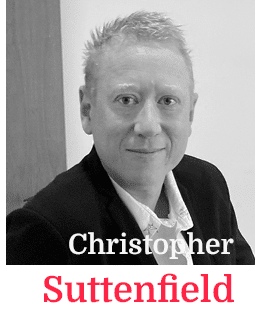
Bringing this cross-border vision to life is Christopher Suttenfield, Business Development Director at The New Standard. Originally from Australia and currently based in the electric market of São Paulo, Christopher possesses over 12 years of deep expertise navigating the Brazilian media landscape. His extensive background spans managing top-tier multinational brands like Sony and the Dubai Government as an Account Director for Publicis Groupe in Dubai, handling major clients including Nestlé, Nissan, and Pizza Hut for Action Global Communications in Oman, and consulting for various United Nations agencies (including UNICEF, FAO, and the UNDP) on critical development communication projects in East Timor. A firm believer that human connection remains an indispensable asset that cannot be replaced by lines of code, Christopher uses his masterclass in global human systems to help international companies build relationship-based trust, cut through AI-generated noise, and successfully navigate market expansion across LATAM.
Christopher, it’s great to have you. To start at the source: your career has been a study in disparate landscapes — from the arid markets of Oman to the mission-critical communications of the UN in East Timor. What was the original “spark” or formative influence in Australia that convinced you that navigating these complex, global human systems was your calling?
At the age of 22, I studied an undergrad BA course at Southern Cross University in Australia, majoring in creative writing. In my second year of studies, I was encouraged by my journalism professor to apply to become the editor of Pulp, the on-campus student magazine. I was successful in my bid to become Pulp editor and this subsequently led to an opportunity to edit the East Timor Sun as part of a professional placement program included in my studies.
This was in 2004, five years after East Timor had gained independence from Indonesian occupation. The transition back to Timorese sovereignty had been incredibly violent, with massive loss of life, intentional destruction of infrastructure and deliberate dismantlement of systems that would leave the country crippled post-transition. When I arrived, there was an active UN mission to support nation-building efforts, along with many international NGOs and UN agencies contributing to the recovery.
Initially, it was supposed to be a three month placement editing the East Timor Sun, which was the nation’s only English newspaper at the time. I always held the intention of returning to Australia and completing my course. However, I fell in love with the people, the culture and the language and ended up staying in East Timor for almost three years. I burned out in my role as editor for the Sun after about six months yet decided to remain in the country and work freelance on communication projects.
Over the course of the next few years I was incredibly lucky to work on various development communications projects. Among one of my most proudest contributions was designing and producing comms material for a national avian flu awareness and prevention campaign for the UN Food and Agriculture Organisation (FAO) in partnership with the East Timorese government. I travelled across the country developing and field testing communication material with our team, before producing TV and radio material, printed assets, press releases and other items. The official campaign launch (involving dignitaries, UN representatives and ambassadors), culminated in our team presenting the East Timorese Minister of Agriculture with a live chicken in the ballroom of a five star hotel of where we held the event.
I’d say it was these experiences that really gave me the hunger to pursue a career in communications. Being in East Timor opened my eyes at a very young age to the transformative power that messaging and media has to shape national conversation and shift people’s viewpoints. After returning to Australia from Timor, I studied a Master of Communications at The University of Queensland and promptly set off to the Middle East immediately after graduation to work in the world of corporate PR and communications.
You’re currently navigating the dense, electric sprawl of São Paulo. For a friend from abroad stepping into the city’s chaotic beauty for the first time, what is the one ‘local secret’ or experience you would insist they try to truly understand the Paulistano spirit?
São Paulo is an incredible city; for me, it’s the New York of the Global South. A true 24 hour city crammed with secrets and opportunities. No matter what your ‘tribe’ or social group you identify with, you can find whatever you want in São Paulo, if you just look hard enough.
I love the Liberdade neighbourhood in São Paulo. Originally populated by postwar Japanese immigrants, it’s evolved over the decades into a melting pot for Asian cultures combined with a unique Brazilian angle. From amazing Thai restaurants to KTV Karaoke lounges to hole-in-the-wall Japanese Izakayas and even Brazilian bars serving caipirinhas, Liberdade represents the very best of how Brazil embraces other cultures to make theirs even richer. As a gringo, I’ve always felt very welcome in Brazil and I think that’s reflected in most other foreigners’ experiences as well.
In a role that requires bridging the cultural gap between international brands and the idiosyncratic Latin American market, how do you manage your own daily rhythm to ensure you remain “deeply thinking” rather than just reactive to the noise?
Over the years, I’ve learnt the importance of taking a step back to look at the bigger picture. Hiring a bigger team recently to take over some of the operational tasks that I’ve been involved in has given me more time to develop strategies to grow revenue for The New Standard.
One of the things that I’ve built into my routine is ‘putting myself first’. Don’t get me wrong, I don’t mean this in a selfish way, I mean this in a sense of prioritising what’s important and making sure that what I need to accomplish in order to drive revenue for TNS comes at the top of the list. After 09:00am, once I step into the office, I’m usually being pulled in 100 different directions.
I make a list of things that need to be done each day and methodically work my way through it. However, the thing that really allows me to remain “deeply thinking” is making sure to set aside time for TNS every day and crossing off those TNS things on the list first.
Along with Thiago Carneiro, you founded The New Standard to “drive the conversation further” across eight LATAM countries. In an industry often weighed down by legacy habits, how are you redefining the “standard” for elevating a brand’s voice so it resonates with equal impact from Mexico to Brazil?
When Thiago and I were setting up TNS, we conducted deep analysis to determine where we would fit in an already crowded market. One of the things that sets us apart is that both myself and Thiago had previously worked on accounts with other agencies handling multinational brands. In my experience working for agencies in the Middle East, I handled accounts for clients such as Sony, Nestlé, Nissan, the Dubai Government and Pizza Hut. Locally in Brazil, Thiago had similarly worked on accounts for Budweiser, Colgate, Stellantis and Great Wall Motors. So it naturally made sense to draw on this experience when finding our place in the media agency landscape.
We identified that international and multinational brands face a dilemma when expanding into Latin America. They can either go with a big name global agency like Dentsu or Weber Shandwick (for example) and spend their budget very quickly, or they can work with a local agency which may not necessarily offer them the level of client servicing and strategic expertise required to successfully handle a large account.
This is where we really shine. At The New Standard, we have the decades of proven experience it requires to work with international companies. However, we don’t charge the same prices as a legacy global agency. The fact that we are a lean operation allows us to be agile, adapting to rapidly evolving situations without being weighed down by layers of middle management. This allows our communication campaigns to resonate with equal impact no matter what market we’re deploying in, maintaining consistent messaging across the board, while adapting the tone to suit the cultural climate of each different country.
You’ve managed accounts for global giants like Sony and Nestlé across the Middle East. Is there a universal “logic” to brand management that travels across hemispheres, or did you have to completely rewrite your playbook when you landed in the Brazilian media landscape?
We tend to work with international clients in Latin America, so the rules are pretty much the same; be professional, be polite, be flexible and bring solutions, not problems. Similar to the Middle East, commercial relationships in Brazil are based on trust which takes time to build.
Latin America is often treated as a monolith by outsiders. In your experience, what is the “hidden code” that makes a regional campaign at The New Standard a genuine success across eight distinct markets, rather than just a translated memo?
I think you’ve made a great point here. Some people still approach Latin America with a one-size-fits-all mindset thinking that they can copy and paste the same press release or campaign across multiple markets and expect the same results. Obviously, it doesn’t work like that. At TNS, we have local people on the ground in each market that we operate in. That means that our Chile account manager can craft messaging in a different way than our account manager in Mexico would for the same campaign and still have the content resonate. Having people on the ground who are native Spanish, Portuguese and English speakers and who have a deep understanding of how their local market operates allows us to deliver results that speak to the cultural, social and linguistic nuances of each distinct country.
Brazil is the global epicenter of the “Influencer Economy.” Why is weaving influencers into a Brazilian media strategy a structural necessity for growth, rather than just a tactical add-on?
Well, Brazil is at the epicenter of the Influencer Economy due in part to the fact that Brazil is one of the most online countries in the world. According to 2025 government census data, over 90% of the population uses a smartphone, with the average Brazilian spending about nine hours a day online. Factor in that the average smartphone user spends between three and half hours to almost four hours per day just on social media, and I think you’re beginning to understand why influencers play such an important role in PR and communication campaigns.
When international brands attempt to scale into Latin America, they often hit a cultural wall. As an expert in crisis management and market-driven strategy, what is the most significant “friction” they fail to account for in their expansion?
I think a lot of companies attempt to enter the market and scale in Latin America with a ‘move fast and break things’ attitude. That approach might work in Europe or Silicon Valley, but Latin America dances to a different beat.
People need to take into account that most countries in Latin America are what I’d call ‘low trust’ economies. This means people are inherently sceptical of newcomers, whether they be new commercial offerings or simply new corporate teams that they’re interacting with, it takes time to build (and earn) people’s trust. Similarly, I think that the nature of doing business in Latin America is much more relationship based, which of course takes time to cultivate meaningful connections.
One of the things that I’ve had to adapt to is being less direct. Culturally, Australians are very much ‘what you see is what you get’. We’re quite upfront when it comes to doing business and won’t hesitate to be blunt if things aren’t meeting our expectations. Brazilians take a different approach and are much more conflict averse. This doesn’t mean it’s impossible to resolve issues when they arise, but it’s important to be more diplomatic in your approach, rather than cause offence or alienating people by calling things as you see them.
We’re witnessing a ‘content collapse’ of AI-generated noise and repetitive tropes. How do you help your partners at The New Standard maintain a sense of “presence” when the digital environment is increasingly saturated with automated, low-stakes content?
When I started out in the corporate phase of my career, we were very much still of the belief that ‘content is king’. These days, with the advent of the so-called ‘AI revolution’, as you said, we’re swamped with a deluge of cheaply generated content that is disposable and often completely irrelevant.
At The New Standard, we always take the approach of quality over quantity. I’m still very much of the belief that good quality content that is funny, engaging and relevant to the target audience can cut through AI slop and capture people’s imaginations. In terms of social media, and in the context of the broader media environment, we very much are living in an attention driven economy.
We focus on creating content that is not only engaging to users, it’s also useful. By positioning content to have a tangible value, to give it a utility beyond just feed-filling fluff, we’re able to shape campaigns that are not only impactful, but also scroll-stopping for all the right reasons.
In a future where AI can automate the logistics of media buying and basic outreach, what is the one ‘human’ value a Business Development Director provides that will remain an indispensable asset five years from now?
Human connection. It’s a universal quality that’s programmed into the core of our DNA. That inherent desire to connect, to relate, to interact. By default, humans are social creatures and I don’t think that is something that can be replaced with lines of code.
Looking at your recent portfolio, is there one project that you feel perfectly captures The New Standard’s vision for the future of integrated marketing in LATAM?
I’m really proud of the work we did with Seequent. They’re a multibillion dollar mining software company with a global presence and their tools are considered the industry standard around the world.
We worked with them on an ESG campaign, providing PR, social content and media relations for a project that they had partnered with in collaboration with the Brazilian mining giant, Vale.
We created social content for Seequent that was engaging and useful, in addition to deploying messaging across traditional and digital PR channels, we also received radio, print and online coverage with a total generated media value of over $1 mi USD.
When the day is done and the screens are dark, where do you find your moments of silence, and do you have a favorite writer or artist who serves as an anchor for your perspective?
I’m actually at my happiest in the kitchen. There’s something about working with my hands that really allows my brain to switch off and disconnect from the distraction of the screen. I especially like cooking for the people that I love; inviting friends to share a meal cooked with care is one of the most universal things that has brought humans togehter since we invented fire. Good food and good company transcends time, language and cultures. It’s something that connects us all, no matter where we come from. We all need to eat and we all need genuine human connection.
For a student looking to navigate the intersection of international relations and media: what is one ‘insider’s hint’ about the global communications game that they won’t find in any syllabus?
People are busy, it’s important to know when to speak and when to wait.
As a Business Development Director of a public relations agency in Brazil and Latin America, I’m always focused on how we can bring in new revenue and continue to expand the presence of TNS. My priorities don’t always match the priorities of others. For example, getting a quick reply from a potential new client that we’ve pitched to and signing new business ranks quite high on my list of things that are important to me. However, it’s crucial to keep in mind that perhaps these objectives are not always the most important thing to the client.
Respect this and develop the habit of letting conversations surrounding new business evolve naturally. Sometimes if you push people too much for a response, you’ll end up pushing them away.
Also — and I’ll credit this to my sister Skye, who has run successful agencies herself — don’t reply to client emails immediately (unless it’s an emergency of course). This ensures that you don’t get dragged into a time consuming back-and-forth with the client and also avoids the tricky situation of communicating in some hybrid Frankenstein form of WhatsApp combined with Outlook. Even if you have the time to reply straight away, leave at least an hour between emails to help you remain focused on important tasks, without getting constantly distracted by things that can probably wait.
From your personal standpoint, having worked with the UN and global corporations alike, what do you see as the most pressing systemic challenge facing our society today?
Wow, what a question (laughs)! In the face of all the worrisome things that we’re faced with as a society today (AI jobs takeover, the erosion of democracies, wars, tech companies wielding more power than some governments), I would have to say I see the most systemic pressing challenge as climate change.
There’s no plan(et) B. Earth is the only home humanity has, and to me, it doesn’t look like it’s in good shape at the moment. The idea that we can simply repopulate on Mars or the Moon is absurd and offensive. The money and resources spent to develop such programs should be diverted into fixing the planet that we have, not discarding it once we’ve left behind a parched and ravaged husk.
Interesting PR side note; it wasn’t until around 2002 when Republican strategist Frank Luntz wrote a confidential memo to President George W. Bush, urging him to shift the tone of his language, that the phrase ‘climate change’ really entered into popular vernacular. Lutz’s advice to the G.O.P was instead of using the term ‘global warming’ (Scary! Bad!) that the party switch its messaging to instead use the term ‘climate change’ (Less threatening. More palatable).
Luntz’s research found that while “global warming” had “catastrophic connotations” and felt “frightening”, “climate change” sounded like a “more controllable and less emotional challenge”.
Finally, what is one ‘hidden gem’ skill or trait of yours — something you’d likely never list on a CV or LinkedIn — that you consider essential to your success as a leader?
I know when it’s time to roll up my sleeves and help out. I’ve never been afraid of hard work.
Bosses just tell people what to do, but leaders can see when their team is struggling and offer to help out when needed in order to lift everyone up. For me, this is the difference between a boss, and a true leader.
Christopher’s Working Preferences:
Morning ritual:
Wake, avoid email, coffee, newspaper, read email (in that order).
Risk appetite:
Much less now than a few years ago. Weighing up the situation with a more critical eye is something that’s been learned by (tough) experience.
A quote you live by:
Don’t be an asshole.
Last place that inspired you:
I’m inspired everyday just living in Brazil. Brazilians are some of the most hardworking, resourceful and creative people that I know, which in turn pushes me to do better.
The non-negotiable in my workflow:
No budget, no pitch.
Habit you had to unlearn:
You must reply to email straight away.
The lead indicator I watch:
I’m a hopeless news-addict. Online, traditional or broadcast; I’ve always got my ear to the ground looking out for the next big thing.
Where you think best:
Amongst nature.
Agency to watch

Best in Breed since 1998. Lounge Lizard is a Digital Agency that Specializes in Brand Strategy, Website Design, Web Development, Mobile APP Development, Online Marketing, Social Media, Ecommerce, and SEOdigital experiences that move brands and businesses from now to next.
Featured agencies

135041 Views

115592 Views

109358 Views

91842 Views

88322 Views

83118 Views

74744 Views

61550 Views