“We revolutionize the way brands communicate on the internet through gamification”
The level of gamification on a project increases the interest of the users on the platform and therefore the time spent
Paris, November 8th, 2022
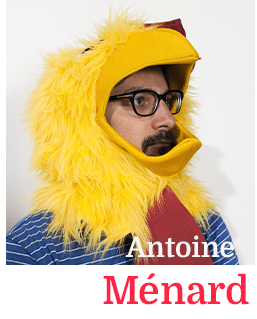
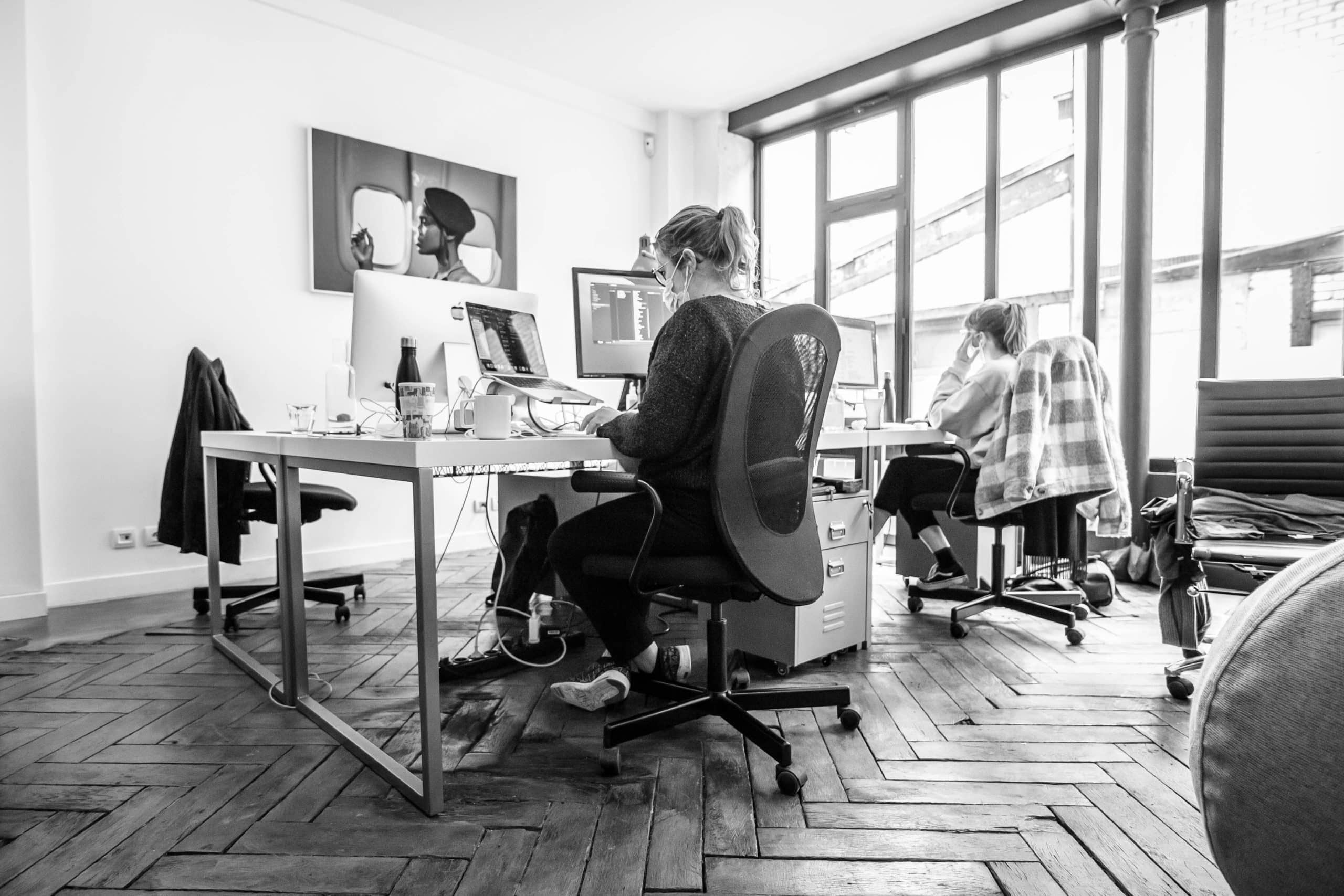
Based in Paris, Merci-Michel is a digital gamification and experience design studio. They create games, playful experiences, and generally speaking, any type of digital experience that intents to be surprising, emotional and immersive. They apply their expertise to many different types of projects, industries and targets, working with passion and dedication.
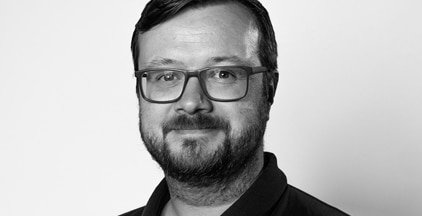
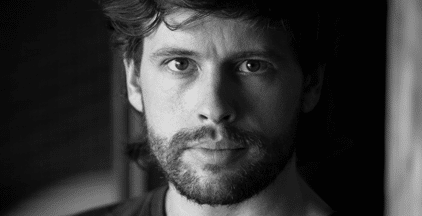
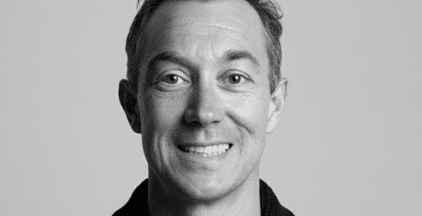
Antoine Ménard is the Co-Founder and 3D/motion Art director of Merci-Michel. In an interview with TIA, Ménard described his early starts in the industry and his current role at the agency. He also highlighted the importance of gamification for Merci-Michel and said he hopes for the shape of the agency to some extent be determined by its staff members.
To kick things off, as a Parisian, what would you recommend doing when visiting the city?
I live in Montmartre so of course I will say that Montmartre is the place to be. Eat at “la maison rose”, have a drink at “La petite dernière” and finish the night dancing at “le soleil de la butte” to the sound of « Ed Banger Records”.
How did you get started in the industry?
I started at Soleil Noir (a very famous digital production in the 2000s), I was recruited as a developer trainee at the time, and they soon realized that I was more of a graphic designer. At that time, we worked a lot with a software called Flash which allowed us to easily switch between graphic design and coding.
Soleil Noir was where I met my future partners Adrien and Pierre-François, after 5 great years there, I spent a year at anonymous and 84 Paris respectively.
84 Paris decided to become an agency and at the same time, Soleil Noir was bought by MacCann. Adrien, Pierre-François and I talked together and decided to create Merci-Michel. That’s when the adventure started. We had good references, and agencies quickly trusted us.
And now, 10 years later, we have a staff of 19 and work with clients from all over the world.
As a Co-founder, which have been up until now the key challenges in building the agency?
The most complicated thing was to have a child in the first year of Merci-Michel. It’s really something I don’t recommend. Once he was a little older, it was pure happiness, but I really suffered the first years. Then, I think the hardest is to accept the mistakes (a bad recruitment, a bad choice of projects, a bad decision…) and to transform them into strength. To be able to analyze them, and to tell yourself that these mistakes will allow you to make better decisions in the future. Today I can see things more in that perspective of growth and it is easier to accept those mistakes.
What do you want Merci-Michel to be associated with?
Revolutionizing the way brands communicate on the internet, through gamification.
We integrated the game designer’s job very early on as an important part of our projects. I think we’re one of the very few digital studios that work this way and that’s our great strength. I really want our potential clients to realize this. That they call us for consulting and also to design and produce their projects (This is more and more the case especially since the release of our latest project Coastal World).
How can leadership create and then cultivate an inclusive and stimulating workplace?
In the past, I’ve had bosses say all the time that “no one is irreplaceable”. It’s a way of thinking that you find a lot in consulting firms or executive coaching. It’s something I can’t stand, because its focus is on a component part (probably genuinely irreplaceable) that specifically fits into an existing vision of how a company should run.
We try to create a company where the shape of the company is to some extent determined by who’s part of it, a company where “everybody is irreplaceable”. We push everyone to express their individuality, to develop things according to their vision and look for projects according to what people like in the company.
We give everyone a chance try to make them progress constantly. We also try to find complementary and different people who fit with the company culture, and make sure that everyone in knows each other inside out and can trust each other’s skill 100%. With this way of thinking, we have created a really different company, I think, where people feel that they are there for a good reason. We also have an entrepreneurial project with a vision that everyone in the company shares and that attracts talent to us constantly.
You’ve worked with some brilliant brands. How does an agency “stay ahead”?
A French rapper that my associates and I like has this lyric « Jamais dans la tendance, toujours dans la bonne direction » which means never in the trend, always in the right direction.
Instead of looking for the trend, we have always focused our work on the user experience and I think that is what allows us to be ahead today. Our goal is that visitors have a good time on our platforms, and we just do things the way we think they should be done. This is what led us to gamification.
Of all the recent projects your agency has produced, which one are you most proud of?
Coastal World of course: great concept, fun to work on, great clients. You can visit it here: http://coastalworld.com/. For this project, we also developed an in-house engine that allows us to deploy interactive 3D environments relatively quickly. The team was huge throughout the production, almost all the company worked on the project, it really brought the team together. And on this type of project people show new sides of themselves. I love that.
How does gamification help engage customers to a particular brand?
There is a lot of talk about UX, but what many people don’t understand is that online platforms don’t work like TV ads or press. The audience is not captive, they have to be hooked into what’s on offer.
The level of gamification on a project increases the interest of the users on the platform and therefore the time spent. When we combine different elements well, we get an average consultation time on some of our platforms of around 15 minutes. Compared to the average time spent on a video ad or a classic product website, the benefit is considerable.
In addition to that, the feedback on brands’ social networks is often very positive when a gamified experience is well designed, so you can get a compounding effect on exposure.
Accessibility can be difficult to acknowledge. How do you make sure at Merci-Michel that your clients understand what you are recommending and the importance of it?
We have expertise based on 10 years of data. We can easily demonstrate why this or that recommendation will be more comfortable to view or use by more people, and it becomes self-explanatory why that’s in the interest of the final product. Most of the time clients are coming to us for our expertise, so they usually listen to us, but even when our recommendations are not followed, we always do our best to make the project as good as possible.
When looking at the technological landscape today, what makes you think “wow”?
I’m amazed at how fast creative work with AI is progressing. Some productions with midjourney or dall-e are absolutely beautiful. Of course, it lacks a bit of depth most of the time but it’s still very impressive. It’s obvious that we’re going to be able to integrate all of this into our creative process pretty soon – I’m both terrified and excited by these evolutions.
How would you describe the creative industry in Paris compared to other major cities?
I haven’t really lived in other capitals, but Paris is very dense in terms of creative people (developers and graphic designers). I have the impression that it’s much more concentrated than in the US for example. When I went to New York to meet US digital productions, they were surprised that there were many of us who knew each other personally.
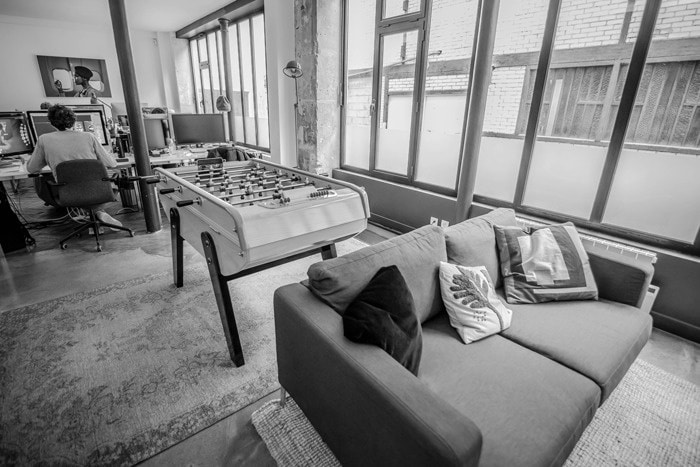
I’m actually a little sad that there aren’t more events where we all get together. Some people did that at one time (84 paris, Publicis net, Immersive Garden, William Mapan, Maki & Flo and Nicoptère with the Grow) but it’s all a bit quiet since Covid. Maybe we should just revive these great “creative” parties ourselves…
What is the best insight you can give to young creatives aspiring to move into a career in this industry?
In schools that prepare students to work in companies like Merci-Michel, students are often pushed to put themselves in professional situations, with client constraints. What I often tell our interns is to take advantage of school to work without these professional constraints to try to develop things that they will no longer be able to do in the professional world. I tell them to get away from the brief. They will have their whole professional life to work with constraints.
I have the impression that it works, they all have good grades overall and that makes good projects to add to their portfolios.
What are your favorite ways to decompress outside of work?
At the risk of saying platitudes, moments with family and friends. I also enjoy watching, listening, and reading about politics, economics and philosophy. Looking for solutions to improve the direction the world is headed in for my children is always something I find motivating.
From your personal standpoint, what is the greatest challenge of our time?
I am very worried about the current global instability (inflation, war, shortages) but I will try to get away from the worrying news. I talked about artificial intelligence earlier. I think it’s a major issue of the time. How the future generations will integrate all this in their lives. I can’t say what kind of world my children will live in, I don’t even know how we will live and work in 10 years. I don’t really believe in a future like the matrix or terminator but I’m sure that all this will bring about changes that are very hard to anticipate.
Please share a fun-fact that not many people know about you
I am an extremely talented actor – just kidding but I still have an IMDB page: http://www.imdb.com/name/nm3718364 (half of the refs are from a homonym).But I was really an actor in Raymond, directed by Bif for The Mill: https://vimeo.com/12878534
Antoine’s Working Preferences:
Home Office, Coffee Shop, or Coworking Space:
At Merci-Michel Office (best place on earth)
Wake up time:
When my upstairs neighbors start playing with legos on the ground
Usual breakfast:
Herbal tea
Most quoted book or film:
The Red Monkey Double Happiness Book from Joe Daly
Preferred Social Media Channel:
Twitter (They call me Community Manager at work)
Favourite Digital Brands:
Annapurna Interactive and Devolver digital
Preferred spot in your town:
Montmartre is my neighborhood, I love it.
If you could solve one problem in the world what would it be?:
I would say corruption
Thanks Antoine!
- Learn more about Merci-Michel at https://www.merci-michel.com/
- Follow Antoine on social media:
- Follow Merci-Michel on social media:
Agency to watch

Best in Breed since 1998. Lounge Lizard is a Digital Agency that Specializes in Brand Strategy, Website Design, Web Development, Mobile APP Development, Online Marketing, Social Media, Ecommerce, and SEOdigital experiences that move brands and businesses from now to next.
Featured agencies

134751 Views

115347 Views

109198 Views

91626 Views

88083 Views

82922 Views

74555 Views

61392 Views