“Digital inclusivity can impact other industries that are more traditional”
We are incredibly blessed in a sense that we can influence how decision makers craft digital experiences,
 Elstree, January 12th, 2023
Cyber-Duck is a leading digital transformation agency that works strategically with governments and global brands such as the Bank of England, Commonwealth Secretariat, Worcester Bosch, Cancer Research and Sport England. Since 2005, its mission has been to make the web more accessible through its expertise in service design and open source technology so organisations and their users benefit from robust, secure and easy to use systems, websites and applications.
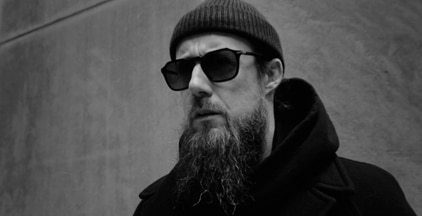
Danny Bluestone is the founder and CEO of Cyber-Duck, based in Elstree, United Kingdom. In an interview with TIA, Bluestone described a day in his shoes as the CEO and highlighted the features that make the agency unique. He also described why accessibility is so important for Cyber-Duck and listed the qualities an entrepreneur should have to succeed.
To kick off, what do you love the most about Elstree?
The proximity to London with the serenity and tranquillity of the countryside. The history and heritage of Elstree is mind-blowing: the first Star Wars was filmed here, it is the heart of British film and TV production yet it is also the site of the great Roman Road or the Watling Way, where the Romans would march from Dover all the way to St Albans and beyond. Elstree is in Hertfordshire, the county of opportunity and it has served as the base of Cyber-Duck since 2008. I am proud to run a business that hires people from local areas and all over London and the UK, that has also expanded both nationally and internationally.
What’s a regular day like in Danny’s shoes?
Typically, lots of multi-tasking and context switching but I wouldn’t have it any other way. My role as a CEO requires breadth and depth. Every day is different. On a typical day I might jump into contract negotiations, work on legal clauses and then jump to London on the train for new business meetings to ensure I add strategic value to a client’s digital transformation initiative.
Then in the afternoon I might find myself forming a new partnership with another agency or ‘hunting’ for new team members on LinkedIn to fast-track interviews. I also get involved in building-up The Cyber-Duck Way (TCW), a unique methodology on creating guides and toolkits to ensure successful service design and technology projects. As my background is a practitioner, I am very passionate about the craft, standards and compliance of our projects which is all about making the web more inclusive, accessible, secure and robust. Finally, I tend to get heavily involved in campaigns and lead generation for the agency through constantly evolving our brand mission.

Could you tell us the elevator pitch for Cyber-Duck?
The pitch always depends on the audience. My grandmother (god bless her) thought “I worked in computers” 😉 but to everyone else, Cyber-Duck is a digital transformation agency focused on delivering accessible and innovative websites across numerous channels. Our mission is not to just deliver high quality and exceptional experiences but to strategically add value to each and every client by moving their digital needles forward ensuring that whatever they do becomes more user focused and technologically advanced. We are always smart about what technology is used and why. One of the main objectives (besides making the web more inclusive) is to help clients reduce their digital carbon footprint and ultimately achieve the highest possible ROI for them by working with Cyber-Duck. Finally, Cyber-Duck is a business where we add value to the communities around us through mentoring and open source contributions. We dedicate our time to building up the next generation of entrepreneurs. I particularly enjoy working with the less fortunate or up and coming entrepreneurs through accelerators like 1K Black Voices (headed by Dr Elizabeth Shaw) or TeensInAI (led by Elena Sinel). I resonate with people from less privileged backgrounds as I myself faced similar challenges.
What key things have you learned about running the business since you started?
You have to have a distinct purpose behind running a business and it takes time to figure this out – whether it is done before you form the business or after you start it. A key thing to remember from my experience, is not to be motivated by money and profits as this is not a reason for running and spearheading a business. Yes, profits matter, but they do not get people out of bed in the morning as there is always a far more profitable business than your one.
Another key lesson is that success takes decades and during those decades you need to focus on seven things: a strong culture, growth ambition, focus on your people, key differentiation points and resilience. Resilience in particular is pivotal, as there will be moments when you feel like everything is falling apart so being innovative and adaptive to the market is very important if you are in the field of design and technology. This is where being relentless no matter what is a virtue – I have not met any successful entrepreneur that has scaled successfully that does not work all hours of the day and there is no shortcut to success. Finally, I would say that great ethics and philosophy play a key part here particularly when it comes down to other people. If the business is not ethical it will simply not survive in the long-term.
Why does Cyber-Duck put so much emphasis on accessibility?
Simply because the world as we know it is not fair yet and every human deserves an equal footing in their lifetime. We, the generation of digital producers, are able to influence the next generation of products and services, be it a car infotainment system, a shopping app or a local council’s proposition. We are incredibly blessed in a sense that we can influence how decision makers craft digital experiences. What we need to recognise is that everyone gets old, sick and will struggle with the design of everyday things (think Donald Norman for a moment). What excites me more is how digital inclusivity can impact other industries that are more traditional. For example, applying service design with a focus on user input in a train station – think about the experience of booking a ticket across different channels all the way to how a user is informed what station is next and even how to use a button in an internal train bathroom. Everything is informed by digital today and these ripples will only amplify in 2023 and into the next decade.
Could you tell us about the #AllIWantForDigital campaign you just launched?
Absolutely. We wanted #AllIWantForDigital to educate as many people as possible on personal stories of how users struggle with the simplest of online tasks that 95% of digital leaders and practitioners overlook.
By telling powerful people stories, such as those of former BBC journalist Rory Cellan-Jones who has Parkinson’s and Isaac Harvey MBE who has limb pelvic hypoplasia syndrome, we can open people’s minds to how even simple and inexpensive changes or a different approach, can yield huge benefits to billions of people who may be fortunate to have the abilities that you and I have.
Many organisations and agencies see accessibility as an afterthought, a bolt-on or even a plugin which is simply wrong and old school thinking. Some of the best technologies (think T5 or predictive SMS messaging) were originally invented for people with disabilities but eventually became mainstream products and services that made everyone’s lives easier.
Equally mass-market technologies like Amazon Alexa that were developed for financial gain eventually became products and services that benefited people who were disabled or neurodiverse.
What are the first steps towards implementing better training for accessibility within an organization?
There are three components: Leadership truly embracing accessibility and inclusive design, working and educating progressive clients and of course educating your team and the communities around us.
What is an accessibility barrier you would like to see solved?
There are three things I want to change:
Employability. Giving people with disabilities more employment options and making it easier for them to apply for jobs as they will become a key influencer in workplaces to make the world more inclusive. At the same time, we need to change employers’ perceptions that people with disabilities are less productive as this is simply not true.
Digital inclusion. Not everyone has the latest generation laptop and smartphone or a fast internet connection. Some societies, nations and people are excluded from digital. What I want to see is a fast web that is cheap and easy to use and more devices and better internet to marginalised communities and people.
Education. Once digital inclusion and employability is solved, knowledge and education is the third barrier. Ultimately, knowledge is power be it of a medical nature, financial one or societal one. By democratising knowledge, we will make all people, marginalised and disabled, a part of society and the conversation, which will help improve their and their family fortunes.
What do you believe are the most important qualities an entrepreneur needs to succeed?
I think the following is true:
- Be a listener and see every day as a learning day!
- Always hire people that are smarter than you (and listen to them).
- Have a purpose, put people first and profits second.
- Be mission bound, have a purpose and learn to inspire.
- Don’t be afraid to fail and when you do learn quickly.
- Have chutzpah so you can challenge the status quo.
- Read books to get inspired.
Are there any readings, podcasts or other resources that you enjoy or recommend?
There are a bunch of books and authors I have read followed over the years. One of my favourites is Ryan Holiday who is very much aligned with Stoic philosophies. In particular I loved The Obstacle is The Way. This book packs so much in and will help any entrepreneur to become more resilient.
Can you name the global issue you are most passionate about and why?
How we raise our kids. If children are raised with the right morals and values, everything else that I mentioned above including accessibility, equality, education, the planet and how we treat others will be sorted. This is an age-old problem but certain progressive societies are doing well, so I am an optimist!
How would you explain what you do for a living to a child?
Making the web better, easier and accessible to everyone.
Which unusual skill do you pride yourself in having?
I can make a duck sound that ‘hypnotises’ babies and toddlers.
Danny’s Working Preferences:
Early Bird or Night Owl?:
Night owl
Usual breakfast:
Shakshuka
Most quoted book, TV Show or movie:
“Nothing is f*****, you're being very un-Dude”
Last place traveled:
Tenerife
Last downloaded app:
Costco
Favorite ecommerce shop: :
Apple Business Store!
The game you’re best at:
Basketball
Preferred spot in your town:
Harrow Weald Nature reserve
Unusual Hobbies:
Krav Maga
What makes a good day at work:
Just seeing my colleagues face to face and listening to what they are up to
Thanks Danny!
- Learn more about Cyber-Duck at https://www.cyber-duck.co.uk/
- Follow Danny on social media:
- Follow Cyber-Duck on social media:
Agency to watch

Best in Breed since 1998. Lounge Lizard is a Digital Agency that Specializes in Brand Strategy, Website Design, Web Development, Mobile APP Development, Online Marketing, Social Media, Ecommerce, and SEOdigital experiences that move brands and businesses from now to next.
Featured agencies

134751 Views

115347 Views

109198 Views

91626 Views

88083 Views

82922 Views

74555 Views

61392 Views