“We help companies navigate their digital transformation”

Montevideo, October 25th, 2021
Based in Montevideo, Uruguay, Octobot is a software consultancy passionate about creating innovative digital solutions and transforming ideas into products that people love.
The mobile and web apps created by the agency continue to support the evolution of key industries in the United States and improve people’s daily lives.
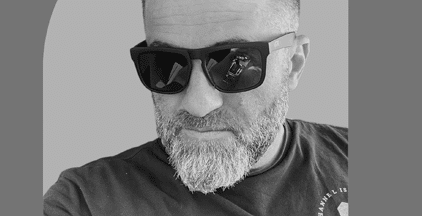
Guillermo Perez is the CEO and Co-Founder of Octobot. In an interview with TIA, Perez described his different roles at the agency over the years and the importance of diversity.
He also explained the developing process at Octobot, the challenges of the Covid-19 pandemic and the agency’s plans to remain relevant amid changing consumers.
To kick things off, what do you love the most about Uruguay?
I love the coastline, and the beach towns all over Uruguay’s coast.
What’s one must-do experience in Montevideo in your opinion?
I’d say visiting the Centenario, which is a soccer stadium that is among the stadiums that hosted the World Cup and was declared by FIFA as a World Football Historical Monument. In addition to the stadium, which is still used for matches to this day, there is also a soccer museum that displays the history of this sport in the country and historical objects (flags, trophies and clothing) from the Uruguayan teams that won the 1930 and 1950 World Cups.
Tell us about your personal journey. How did you find yourself being Octobot CEO?
Over the seven years of Octobot’s existence, I’ve had many responsibilities. I was a programmer, product owner, tester, recruiter, and much more. My business partners and I experimented with all the roles! And I guess I got something from each experience, and each one of them shaped the role I perform today, which will continue to evolve in the future also, I hope.
To be honest, I had no expectations of the CEO role. I believe my role has shifted over time, which is something positive in my opinion. I adapt in order to suit the organization needs. Nowadays, my main responsibility is to lead the sales area and foster a culture of understanding inside our organization, empowering the intersection between technology and design to deliver the solutions our clients are looking for.
As I had no expectations, I was able to transform my role and open myself up to different activities and ways of doing things. It’s been fun and dynamic, and it’s a privilege to be part of an organization that grew from three to 60 people.
Smart team drives agency growth. What efforts are key for companies to thrive in a world of perpetual change and transformation?
I have a set of tips I always give to anyone starting or growing a business. First, it’s important to have a long-term vision and don’t evaluate decisions based only on short-term results. You must invest in the organization’s future. Also, I recommend companies having a clear focus instead of dividing their attention among many areas. Prioritize the most important and impactful aspect of your business, your value proposition, and give your best to evolve this one focus before moving on to the next. For that, it’s important to surround yourself with the right people. True leaders know they can do everything by themselves, so they look for the individuals who complement them and elevate their game.
In order to foster a healthy, productive work environment, I recommend working on the organization culture. For us, setting our company values and a clear purpose was essential for making the team feel ownership towards our objectives. Last but not least, it’s important to see challenges as opportunities to improve and grow. Change is the only constant thing in a business life, so don’t get discouraged by the problems that arise. Instead, face them with the perspective they will help your company to re-invent and evolve.
How can leadership create and then cultivate an inclusive workplace?
For me, fostering a diverse culture is the only way to escape the status quo and make true change. If we are all the same, we’ll think of the same ideas and come up with the same solutions. There’s no room for creativity or whatsoever. Therefore, in Octobot, we strive to see beyond gender and focus only on people’s capacities and passions. We want to give opportunities to everyone who has something to contribute and wants to grow with us. That way, we’ll create innovative products that change people’s lives. Also, we’ll develop diverse code, more affluent code that makes more impactful products for those who will use them.
One of the diversity challenges we face in the software development industry is gender equality. I’m proud to say that Octobot has almost 100% gender parity since our team comprises diverse male and female colleagues in every area.
Attracting and retaining talent is one of the constant pursuits that every great agency faces. What is your approach to motivating and developing talent?
As I mentioned before, culture is key. As a leader, I try to put a lot of effort into setting up our organization’s purpose and values; this is the core that shapes everything. In Octobot, our purpose and values work as a lighthouse that we turn to every time we decide and prioritize our actions. They also represent the company’s foundation for generating a collaborative, positive work environment. And this environment is based on equal opportunities for everybody, permanent training, trust and fellowship.
Over the years, we’ve surrounded ourselves with amazing people interested in what they do, so it makes no sense if we decide to don’t listen to their ideas. If your organization depends on the CEO’s approval for everything, it will never scale. I believe in the opposite, in creating an environment where people feel welcomed to develop themselves and grow along with the company. We want to give opportunities to everyone who has something to contribute and wants to grow with us. Having a diverse company allows us to develop more affluent code that makes more impactful products for those who will use them.
Can you walk me through your developing processes? Do you handle all development work in-house?
As a software company, we help companies navigate their digital transformation, delivering top digital experiences, and turning problems into products people love. Our approach consists in:
Starting small
We’ve experienced first-hand that starting small allows our partnerships to establish positive foundations to get results as fast as possible before scaling up.
Setting up a dedicated team
Our teams are 100% dedicated to one project at a time in order to stay focused and engage fully with the client.
Owning the project
We challenge assumptions and push back on requirements if we see a better way, always with our clients’ best interests at heart.
Being transparent
Octobot was envisioned as an agile company and applying Scrum’s practices such as transparency and clear communication comes naturally to us. We continuously show our work and share our decisions to ensure they are in alignment with our clients’ business priorities.
More than vendors, partners
As a collaborative process, we work side by side with our clients, defining the roadmap, prioritizing features, and continuously testing and improving the product. Our developers collaborate with designers and other stakeholders at every stage, resulting in apps that are expertly built and offer a seamless experience.
Constant evolution in 1-week iterations
Our work is based on incremental sprints that last one week. Everything starts in a Planning meeting when we decide what we’re going to work on and divide responsibilities. By the end of the week, we present our advances to the client in a demo and discuss next priorities. At the end of each sprint, our devs validate their stories with a series of automated and manual tests, and later deploy the improvements.
COVID-19 has challenged us in many ways. When the pandemic reached our part of the world, we had to deal with clients shutting down projects and a general feeling of fear and uncertainty. Also, we had to close our offices and shift to a fully remote work modality. As our team is our core and we didn’t even consider the idea of letting people go, we decided to face the pandemic as an opportunity to put more focus on improving internal processes and tools. Therefore, our team members who weren’t in a project helped us improve our selection process steps and other processes, and also worked on evolving internal tools such as our Playbook and a custom Slack bot for internal communication. We also provided extra support to our clients. All of that allowed us to keep our team productive and sharp.
The 100% remote modality brought us many learning points. We had to adapt our processes and implement new communication channels in order to keep the team as efficient and connected as they were in the office. In addition, we started hiring people across Latin America, allowing us to expand our footprint in other countries and be more international in terms of talent. As a result, we decided to incorporate the work-from-home as part of our methods, implementing a hybrid work modality in which people are free to go to the office or work remotely as they please.
How do you plan to remain relevant with the changing nature of consumers?
The tech sector advances in the speed of light, so we know that if we want to remain relevant, we need to move as fast as the industry. For that, we’re always looking for new trends and trying out new technologies and tools. We are cautious, of course, and we don’t believe in hype-driven development: in order to implement any new tendency, we first make sure it makes sense to us and our clients. To do that, we encourage our team members to dedicate part of their time to experimenting with new technologies and using part of their working hours to study and learn. Also, we have a R+D team in charge of researching and developing new ideas to elevate our work. They detect opportunities and conduct experiments for identifying how we can improve our methodologies and tech stack.
Three top tools you can’t live without?
My favorite tools are Slack, Superhuman and Zoom. All of them are communication tools that allow me to stay in touch with the team and the clients in an organized and simple way.
What do you think is currently the biggest issue facing the digital and tech industry in Uruguay?
I think it is not an issue, it’s more of a challenge: hiring technical people and convincing more and more young people to be involved in technology. As a member of this industry, I can guarantee you, there are thousands of opportunities for everyone and this seems to never stop! In Uruguay we have 0 unemployment in the IT sector, so it’s important to foster younger generations to study and join the industry so we can keep expanding the sector.
Which artists from around the world are you currently most excited about?
I love the work of the digital artist Gal Shir. He represents the intersection between technology, arts and creativity!
Is it better to be good and on time or perfect and late with your work?
I can’t choose one, both of them are important. In Octobot we strive to deliver what we committed ourselves to, without compromising the quality.
Thanks Guillermo!
Follow Guillermo on social media:
Follow Octobot on social media:
Guillermo’s Working Preferences:
Early Bird or Night Owl?:
Early Bird
Usual breakfast:
Toasts with scrambled eggs and orange juice
Most quoted book, TV Show or movie:
I don't have one
Last place traveled:
Montevideo, Uruguay
Last downloaded app:
iFit
Favorite sneaker brand:
Adidas
The game you’re best at:
iRacing
Preferred spot in your town:
Castle Wood
Unusual Hobbies:
Photography
If you could solve one problem in the world, what would it be?:
Synchronize traffic lights. They make me crazy!
Agency to watch

Best in Breed since 1998. Lounge Lizard is a Digital Agency that Specializes in Brand Strategy, Website Design, Web Development, Mobile APP Development, Online Marketing, Social Media, Ecommerce, and SEOdigital experiences that move brands and businesses from now to next.
Featured agencies

134752 Views

115349 Views

109199 Views

91627 Views

88085 Views

82922 Views

74556 Views

61393 Views