“We’re not artists, we are designers thinking about how to solve issues”
I've always believed in the principle of experimentation, versatility, and a do it your way king of attitude
 Manchester, January 24th, 2024
ToyFight is an award-winning creative agency from Manchester specializing in design and development. They create beautiful experiences for consumers and brands with a team of designers, directors and strategists. Some of their areas of work include branding, visual design, illustration, web and app design and art direction, among many others.
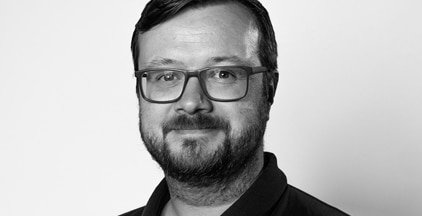
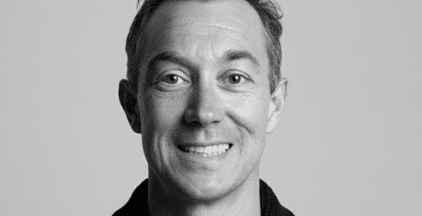
Jonny Lander is the co-founder and creative director of ToyFight. In an interview with TIA, he went through his early start as a designer, working on many diverse areas, and explained what makes ToyFight a distinctive agency. He also listed the principles he considers fundamental for a designer and explained how he delivers top-quality work to his clients.
If someone were to visit Manchester with a focus on design and creativity, what places or events would you recommend they explore?
Manchester’s music legacy, particularly from the 80s, and for me 90s rave era with iconic spots like Hacienda and Rock World, are things I remember fondly. The city still feels connected to its industrial past, and has always exuded a distinctive cultural identity, and for me, it was the music scene that first sparked my interest in design. It was always the night/experience first but then followed by the excitement of upcoming shows and raves, shown through flyers and posters often captivating me with their unique designs, typography, and artwork.
Manchester has always felt quite down-to-earth too, the tone and people are just way more straight-talking, you know, to the point. The city itself has lots of galleries dotted about the place, like the Lowry, Manchester Art Gallery, and the Whitworth. Neighbourhoods like the Northern Quarter (NQ) and Ancoats again feel really connected to something original and only found in Manchester, you find one-of-a-kind shops still and places like Afflecks are still around.
There are also tons of events like the Manchester International Festival (MIF), among others.

In your path as a designer, what design principles or philosophies do you consider to be fundamental to your craft?
Through my career as a designer, I’ve always believed in the principle of experimentation, versatility, and a do it your way kind of attitude. Early in my career, I didn’t confine myself to a specific type of design work. My work has spanned various areas – from graphic design for print and magazines, clothing and apparel design, branding, packaging, 3D, and digital product design.
This journey meant I never had a fear of trying new things. Staying within a single niche can be limiting. By venturing into new mediums, tools, and techniques, I found that my skills and understanding of design deepened significantly, as well as my understanding of who I was doing it for. It’s a mindset really, and I’m just building my toolbox, not just in terms of technical skills but also in conceptual thinking and creativity.
My core ethos as a designer is to remain open, curious, and unafraid of stepping into unfamiliar territories. I’d also say embrace imposter syndrome as it keeps you on your toes and means you won’t sit back and rest on talent alone.
You’ve been able to collaborate with so many brands in your career, but what mistake have you seen from companies trying to stay relevant?
An interesting one, especially from brands that are established, more often they are always looking for fresh ways to engage, but can, due to earlier success, be stifled by the sheer scale of the organisation now, so where they were that challenger brand at one point, coming through and disrupting the space, they now find maybe their brand DNA isn’t really carrying through within their teams as they have grown.
Unfortunately, this means that sometimes people can play for safety or the guarantee. I think this can be a real challenge for any brand to be honest as they grow and become more recognised. There are obviously always exceptions, but for the most part I see brands battling internally more than stepping out and being true to what put them there in the first place.
What do you want Toy Fight to be associated with?
Being distinctive and known for how we create solutions. I’d hate to be tagged with a certain style though – being distinctive maybe in our approach to the work. We’re not artists, we are designers thinking about how to solve the issues our clients face and give them hopefully something that works for them.
In your opinion, what distinguishes a piece of creative work as “world-class,” and how do you consistently deliver such work to clients?
I don’t know, I feel like work can be interpreted differently by so many different people now. I do feel there is a mis-alignment with what is coveted nowadays by designers and agencies. Obv. chasing the awards and being recognised by peers seems to be what most look toward (and indeed it is part of how an agency gets its work), but there just seems to be a disconnection with the real world. There are too many projects we see getting shipped/launched and winning awards that within a few weeks are completely re-designed, or the business has failed. I mean go see for yourself, hit up any of the award sites and maybe check out a site that from 6 months back and see if it’s still there or still the same innovative idea that was presented originally. You will be surprised (or maybe not) to see how many are completely different.
Why is that? I think it’s because a lot of agencies and brands are looking at the wrong metrics or maybe not even any real metrics, it’s all about that initial impression, but not much after that.
World-Class for me probably falls into seeing something so unique and different and then it paving the way forward and you see a dozen companies popup that are trying to emulate its success. That’s world-class.
When working with a new brand, how do you go about unraveling its underlying values and beliefs that set it apart from competitors?
We always do our own research right from the get go, looking at a new vertical / industry as well can often give us a little advantage on maybe spotting some more unusual things or areas that we can consider. But we always lean heavily into that brands personality and traits, that means really digging into the brand DNA and figuring out its TOV, then we start to apply that lens to everything from visuals, content, and structure of the application or business. We try and basically stick our noses into everything a brand is doing and even if we are not being paid for it, we will share an opinion and how it works alongside whatever it is we are being tasked with doing.
For those aspiring to enter the design experience arena, what crucial advice would you offer as they embark on their journey?
Don’t be afraid to just have a go, show willingness to experiment and explore new mediums, techniques etc. That kind of drive and determination cannot be taught in school/college/uni it can only come from within. Sharing that passion and love and making sure everyone arounds you can see that will be the key to you growing and being more successful… and try not to chase the money, the money will come in time when you are good at what you do.
What excites you most about the potential of artificial intelligence in the next decade, both professionally and on a personal level?
It’s a strange one, because well it could go crazy, and to some degree it feels like it is already. I’m excited about AI is enhancing the everyday (the things we find a grind or chore). If AI can help me spend more time on the craft and less time doing the bits in the middle, then its great for me. As for its future, I guess it’s still in the unknown, but i know for sure the genie is out of the bottle now and there is no going back, there is only how fast is it going to come.
Music often plays a significant role in people’s lives. Is there a specific genre or artist whose music you connect with on a deeper level?
This sounds weird, but I listen to the same tracks on repeat non-stop. I do not like to listen to audiobooks, podcasts or even albums in track order, I find tracks I love and then just hit them up over and over again. Moreover, I will probably have like 2-3 tracks per week that I repeat like this while I’m working. Typically, those tracks range from ambient (eno, burial etc), prog rock (godpseed you black emperor etc), moody electronic stuff, and composers like Max Richter, Trent Reznor and Atticus Ross. Maybe it’s the predictability of those tracks that I find productive and satisfying, but whatever it is I’ve done almost since day 1.
Jonny’s Working Preferences:
Early Bird or Night Owl?:
Early bird I think now, used to be the other way around, but prefer to just hit things early and get on with it
Usual breakfast:
Coffee - maybe a protein shake
Favourite color:
Orange
If you could be any fictional character, who would you be?:
Dr Manhattan
Last place traveled:
Santorini
The game you’re best at:
eFootball
Preferred spot in your city:
Home LOL
What is something on your bucket list that you haven't done yet?:
Built my own home, and a ranch for my adopted pack of abandoned dogs
Agency to watch

Best in Breed since 1998. Lounge Lizard is a Digital Agency that Specializes in Brand Strategy, Website Design, Web Development, Mobile APP Development, Online Marketing, Social Media, Ecommerce, and SEOdigital experiences that move brands and businesses from now to next.
Featured agencies

134751 Views

115347 Views

109198 Views

91626 Views

88082 Views

82922 Views

74555 Views

61392 Views