“Innovation occurs when you ask the right questions”
 Singapore, September 29th, 2022
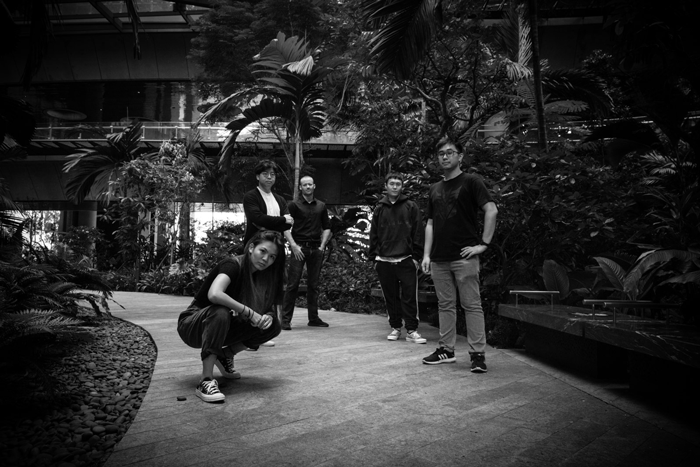
Based in Singapore, Eightfour is a human-first user experience agency comprised of a team of makers, thinkers and techies that build digital experiences driven by design, psychology and business. They are obsessed with building digital business and love to create digital products & platforms for companies, start-ups and ordinary people.
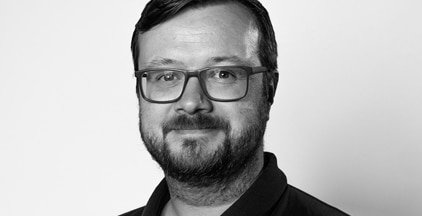
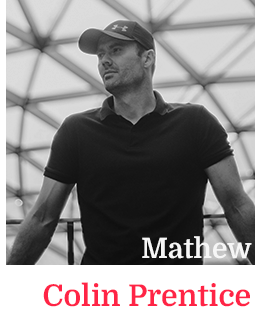
Mathew Colin Prentice is the co-founder and UX/Design Director at Eightfour. In an interview with TIA, Prentice described his role in the agency and the tasks he takes on every day. He highlighted the importance of getting clients involved as much as possible in all projects and said they only take on a few large-scale projects at a time to ensure highest quality.
To kick things off, what are some “Not to Miss” when visiting Singapore?
Skip the tourist traps like Gardens by the Bay and Clarke Quay (unless you’re forced to go) and buy a larger belt, because SG is all about the food. Make sure to try: Chilli Crab, Bak Kut Teh, Frog Porridge (trust me on this one) and anything Mala. Unfortunately, if you’re new to Singapore you’ll need a guide, so befriend some locals and ask them where to get the good stuff that doesn’t cost a kidney.
What’s a regular day like in Mathew’s shoes?
It starts with resetting my alarm 4 times, then stumbling to the bathroom, followed by a large glass of water to replenish the moisture sucked out of my body by the air conditioning. Once all is in order, I’ll make my way to work. We always start the day with a 15 min stand up, just so we know who’s doing what. After that, it’s some combination of meetings, presentations, proposals, talking with clients, guiding the creative team, prototyping, design work ‘etc’. Nights are usually spent annoying my wife, making jewellery or dismembering opponents in Mortal Kombat 11.
Where did the name Eightfour come from?
Couldn’t think of a name so it’s the year we were born. How’s that for creativity?
As a Co-founder, which was the toughest challenge you faced when growing a business?
Our biggest problem was that we didn’t know anything. Sure, we had a lifetime of experience working at larger agencies, so naturally we thought we knew it all. That’s almost funny now. When we started out it was just two of us – a UX boof and a tech nerd – so we had to do everything ourselves. The accounting, administration, proposals, pitch work, sales, presentations, networking, building client relationships ‘etc’. We spent very little time doing any actual work so the whole enterprise is wildly unprofitable. Thankfully we hired some rather brilliant project managers who saved us in our dismal state (shout out to Angru &Justin) and allowed us to focus on what we needed to. It’s always the hardest in the beginning but with good management and processes, you’ll eventually settle into a groove.
Can you describe Eightfour in three words?
User Experience Partner.
A fundamental aspect of business is encouraging innovation. What steps have you put in place to guarantee this happens in your agency?
Innovation occurs when you ask the right questions. How have things changed? What struggles are customers facing? How are they adapting? What can we do to help facilitate that adaptation? ‘etc’. That’s why we begin every project with a hefty research phase where we talk to everyone we can: clients, stakeholders, business leaders, current & prospective customers ‘etc’. We’ve always thought that innovation isn’t achieved by doing one or several things. It’s more a state of mind; a survival instinct. It has to be rooted in how you work.
Can you go into some more detail on your production process?
Without getting into too much detail, I can tell you what we do that helps keep quality up.
Firstly, everything we do we do in-house. It’s one of our selling points in an industry where nearly everyone outsources, and I think it’s the only real way to ensure quality.
Secondly, we make sure our clients are very, very involved in their projects. A collaborative working relationship is crucial for what we’re doing.
Thirdly, we do without politics. We purposely don’t have layers of bureaucracy and red tape to ensure all focus is on the work.
Lastly, we only take on a few large scale projects at a time. Spinning plates always result in a mess and we’re very careful about not overloading.
Are there any exciting projects at Eightfour that you can tell us about?
I guess I can give you a sneak peek. It’s been an exciting few years where we’ve moved into taking on transformation-based projects. We’re currently developing an application that’s designed to bring the DJ and nightlight industry online. We’re also working closely with the Monetary Authority of Singapore in bringing to life the GreenPrint platform that facilitates connection between green technology providers & investors. We’ve also just completed a white label platform that effectively automates the entire accountancy workflow.
Does the agency have its eyes on any particular new market?
I’d like to say yes but, actually, no. We’ve always said we’re market, industry and technology agnostic. We aim to solve problems wherever they may be.
What advice would you give to UX designers who’d like to progress?
That’s easy, and it’s nothing to do with the hard skills of design. It’s communication. Many designers spend years/decades honing their craft from behind a computer screen while a creative director presents it to the client. That may be great if you’re antisocial, but locks you in place. The best thing any young designer can do is to learn how to speak and push for opportunities to present their work directly to clients.
In an interview, Elon Musk said that while Tesla was a fantastic inventor (which he named one of his companies after), it was Edison that he admired most. Because unlike Tesla, he actually brought his inventions to market. Edison was also a salesman; a businessman. He could sell the dream.
The main difference between a design or proposal (or even process for that matter) that a client is willing to pay top dollar for and one that gathers dust is how you’re able to sell it. The greatest design in history is worth nothing if you can’t sell it. To be great at anything, learn how to speak with precision, persuade with reason and motivate others. Learn how to sell the dream.
What recommendations would you give to clients to help streamline the process between their vision and your process?
It’s quite rare for a client to come to us with a clear vision of what they want and instead come to us with a problem (or many problems) they need help solving. That’s what our process is geared toward – understanding our customers, the market & environment to solve the problem.
It may sound simplistic but to streamline the process, it’s really just communication. It’s natural to assume that what any agency has to “sell” is the end product. Actually, what we’re selling is our process. Our process is our product, and we’re very careful to explain in detail each step: how it’ll run, what we’ll need from the client, how long it will take, what will be delivered and why it’s important. If the client can clearly see how each step acts as a crucial cobblestone in a road leading to a product that’s designed to solve their problem(s), they’ll be on board.

What’s your research process like?
In a word: flexible. Every client and project has a unique set of objectives, so we structure our research based on what we need to know.
Usually, we start by listening. A lot of our clients have big, global, hugely complex businesses, so we need to learn everything about how they operate. We’ll talk to project stakeholders, business leaders & individual units to establish goals, objectives, challenges, KPI’s, vision & direction of the project.
Then we get to know our audience. Whether it be quantitative studies, or an in-person workshop, or a series of 1 on 1 interviews, talking to current or potential customers is key for us to determine their state of mind, perceptions, frustrations, motivations and triggers ‘etc’. It’s no overstatement to say on several occasions our findings have altered the direction of entire projects.
What advice would you give someone going into a leadership position for the first time?
That your job is no longer about you. It’s about mentoring and building those beneath you. If you practice that, all those that work for you will respect and revere you and be inspired to improve. If you don’t, you’ll be remembered as just another <insert pejorative> boss.
For those who aren’t familiar with Singapore’s creative industry, can you provide an overview?
It’s the main reason I’ve stayed in Singapore so long – pragmatism and business acumen is built in. There’s a huge appetite for new and creative things, but only if it’s effective and good for business. Whimsical creativity for the sake of it usually doesn’t get a pass.
We’ve always said we’re a business-first UX consultancy so this kind of environment is perfect for what we’re trying to do.
Can you say something about the collaborative nature of the digital industry?
Embrace it. This is one of the reasons why we’ve dropped the word “agency” from our vocabulary when talking to clients. The word is saturated with preconceptions of overworked creatives lined up in rows, frantically churning out client briefs, grudgingly awaiting endless revisions.
Now we use the word “partner” to embrace a new & collaborative way of working.
I can tell you that the closer the client is to the work, the better the project will run. In a sense, what we’re doing is bringing the client on a journey – all the way from initial hypothesis to finished product. If we’ve done our job, they will have learned just as much about themselves and customers as we have.
Also, taking a collaborative approach gives clients a tremendous sense of ownership, and the more they feel they own it, the more they’re invested and the more willing they are to take on the battles that may have been ours to fight had we taken a more traditional approach.
How do you explain what you do for a living to a child?
I design posters.
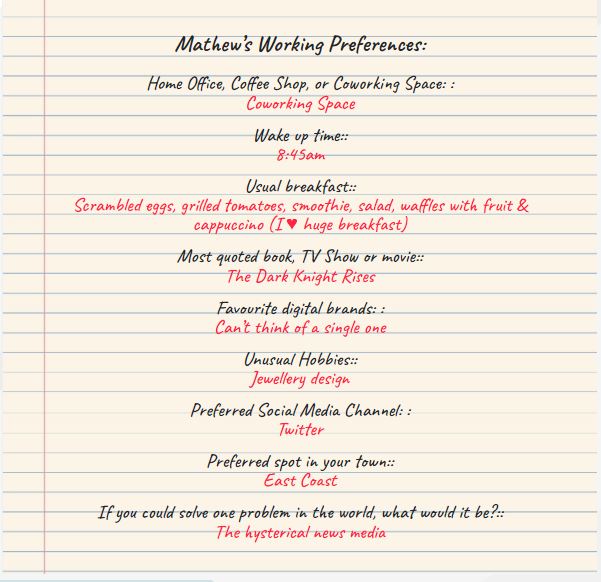
Thanks Mathew!
- Learn more about Eightfour at https://eightfour.sg/
- Follow Mathew on social media:
Agency to watch

Best in Breed since 1998. Lounge Lizard is a Digital Agency that Specializes in Brand Strategy, Website Design, Web Development, Mobile APP Development, Online Marketing, Social Media, Ecommerce, and SEOdigital experiences that move brands and businesses from now to next.
Featured agencies

134751 Views

115348 Views

109198 Views

91626 Views

88083 Views

82922 Views

74555 Views

61392 Views