“You can’t be an award winning graphic designer and a best selling rock star at the same time”
I strongly believe that, one should truly focus on what they do, to be really good at it
 Los Angeles, December 6th, 2023
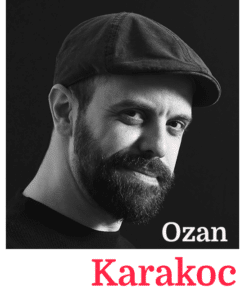
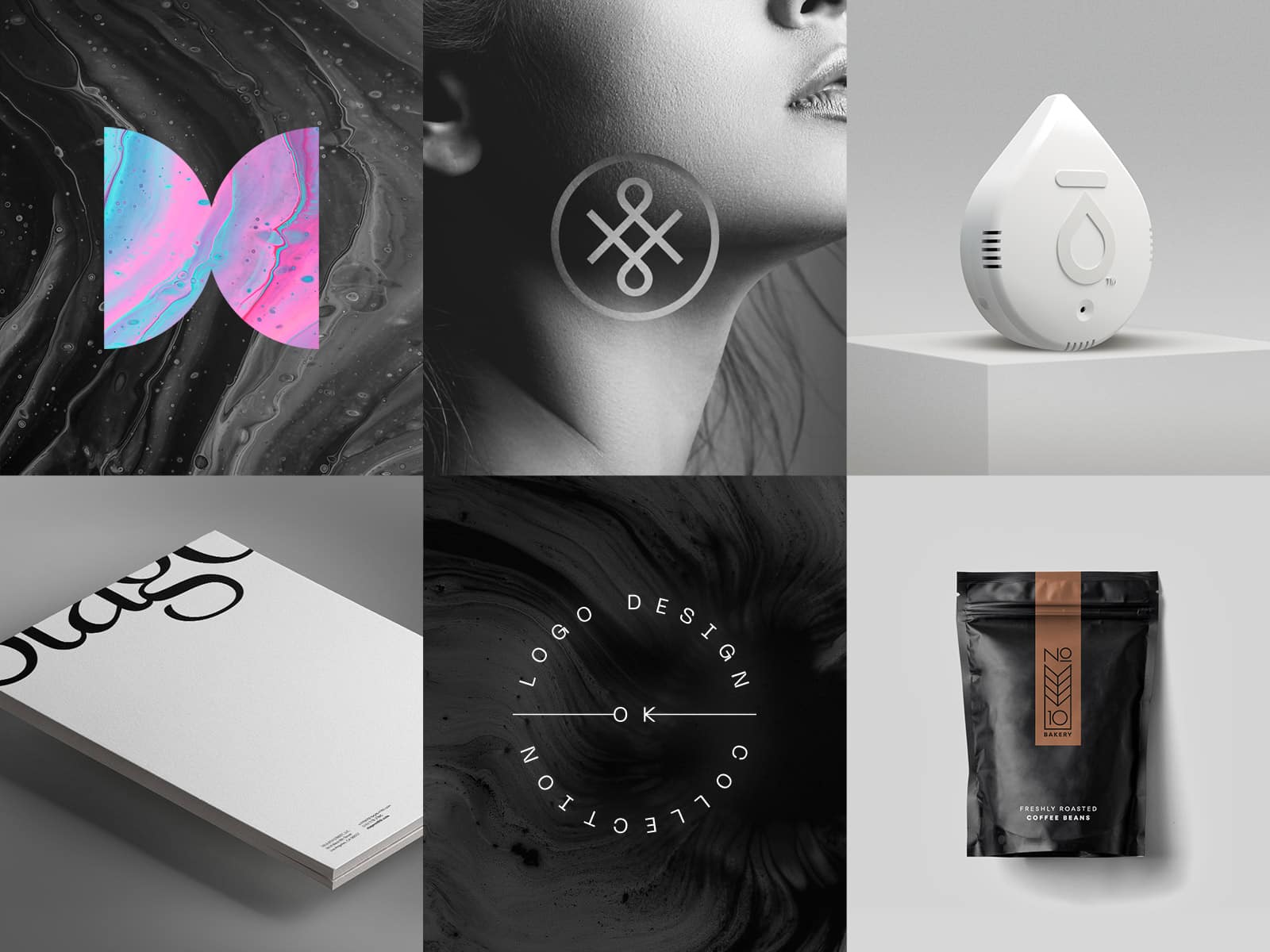
Ozan Karakoc Design Studio is a Los Angeles based creative house specialized in branding, print and digital design, helping brands unlock their potential. The agency was created by Ozan Karakoc, a designer originally from Istanbul, Türkiye, now residing in Los Angeles. They have worked with global companies such as Google, Toyota, VMware and Netflix.
In an interview with TIA, Ozan Karakoc explained from where he gets his inspiration when working on a new project and went through the step-by-step of his usual creative process. He also gave examples of some recent projects he has worked on, highlighted the importance of collaboration and gave details on his other personal projects related to education.
To kick things off,where are you originally from, and where do you currently reside?
I’m originally from Istanbul, Türkiye, and have been residing in Los Angeles, California, USA for the last 15 years.
Imagine we’re taking a journey through the streets of your childhood city. What sights, sounds, or experiences from those days do you remember fondly, and how do they connect to your current work?
I was surrounded with love, all kinds of art, and soccer!
First of all, I always felt the warmth and safety of a close family relationship. My mother, my father, and later, my sister, have always been my best friends. I owe them my interest in design and visual arts, as well as my overall happiness.
Art and design were everywhere during my childhood. My father was (and still is) a well known illustrator and I loved to visit him in his studio. One day, we were at one of his friends’ postcard store, where I browsed hundreds of different types of designs. Next day, I were gifted the next month’s issue of a children’s magazine before it was officially released thanks to his friend who worked at that media group. We used to visit museums and galleries together, as well as his artist friends’ studios and exhibitions. They had the weekly ‘Thursday Meetings’ and those were full of painters, designers, cartoon artists, architects, photographers, actors, actresses, etc.
My father’s and his friends’ influence helped me develop artistically, while my uncle’s enthusiasm in technology introduced me to computers and computer aided visual design at early ages, which, I think, are the main connections of my childhood to my current job.
And yes, soccer! It’s almost impossible for a little man to stay away from soccer in my home country, so I started playing as early as the age of 5. If you go back in time and visit me during my childhood, you’d either find me at home, drawing things and preparing fake newspapers, or playing soccer in the field in front of our apartment.
What does Ozan Karakoc Design Studio mean to you?
It’s where I belong. If you’re a professional designer, it’s likely that you’re obsessed with design in a way. You see the whole life from a different perspective. It influences the choices you make – from the products you buy to the restaurants you choose and even how you perceive yourself in the mirror. That’s why I don’t see my design studio as merely a place where I do my job and earn a living; it’s more like home.
Describe a typical workday in your shoes.
A typical workday is a beautiful one, as I’m guaranteed to do what I love the most! So, whether I’m swamped with multiple projects or the business is slower than ever, I’m at my desk at 9:00AM, sharp.
Then comes the daily routine: e-mails, 1-2 mostly short and efficient meetings, followed by hours of uninterrupted concentration on my work with very few breaks.
I stop working around 7:00-7:30PM, and the rest of my day belongs to my little 5-year-old Boss.
Your portfolio boasts a diverse range of projects, from branding campaigns to magazine publications. What would you say inspires you most when it comes to a new project?
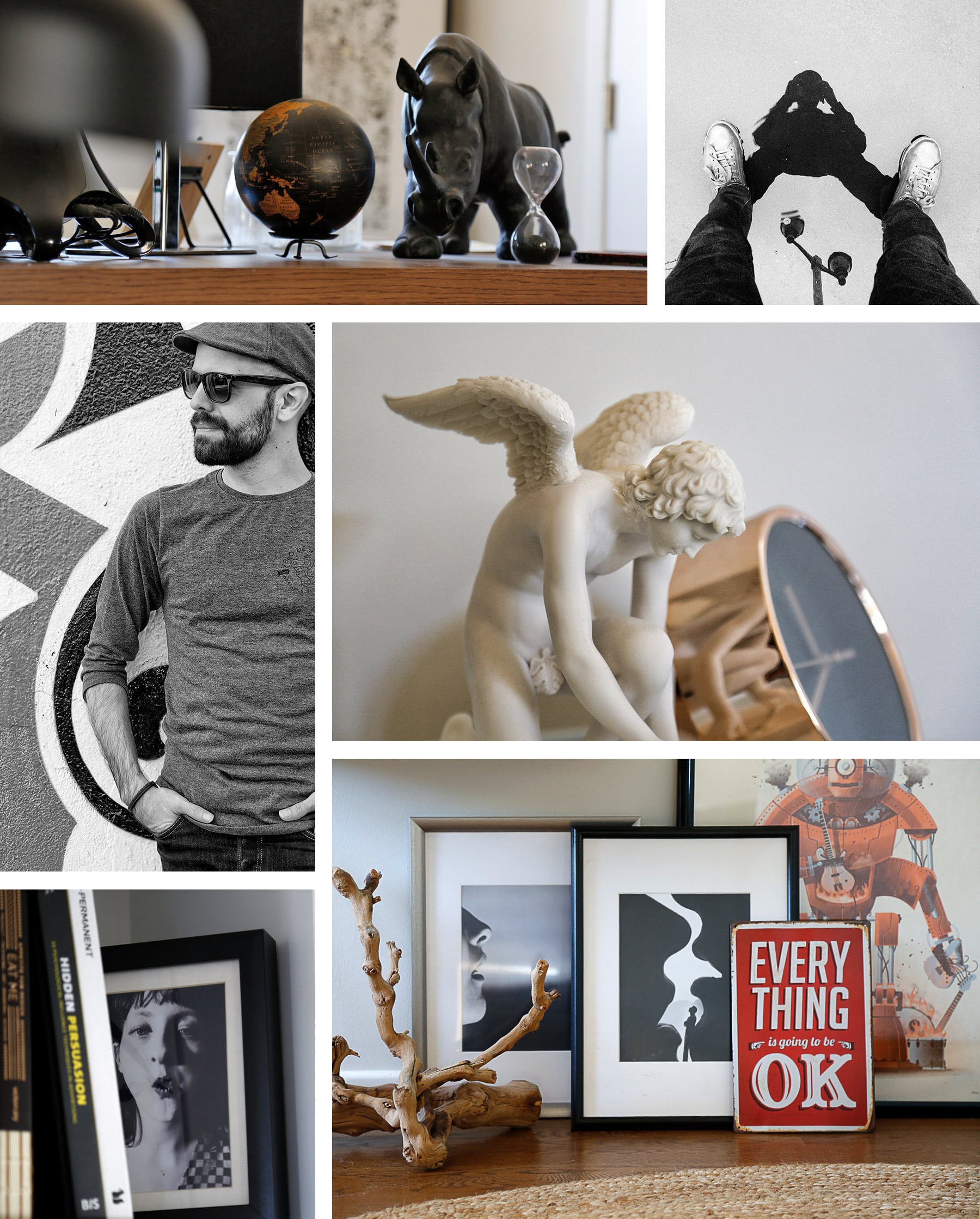
For my design work in general, I can get inspiration from anything in life. It can be a statue in a museum, a random poster on a wall, placement of the plates on a restaurant table, the hat of a pedestrian walking across the crosswalk, or even the smell of a croissant.
However, when it comes to the inspiration source for a particular new project, I get it from the project itself. I think it’s hidden in it already.
This approach forces me to make more comprehensive research about the project andunderstand it better.
Let’s say it’s a branding project for a new car. Looking at other car brands would be the very last thing I would do. Instead, I would strive to get every bit of information about this new vehicle. Why did the brand build it? What was the motivation? What value does it represent? Why did the world need a new car? What problem does it solve? Who is it for? Who isn’t it for? What is the one feature people would talk about when they test drive it?
There are so many questions to be asked in order to understand how it should be positioned and what the ideal visual representation of that would look like.
Hopefully with (and sometimes without) the help of a comprehensive brand strategy study, I get all the answers I need, and just like how Michelangelo brilliantly put it, I carve all I gain until I set the angel free.
That process doesn’t really require inspiration from other design work. The only time I refer to such pre-designed material is when I need to study the competition in the field.
It starts with understanding the actual need, and carefully studying the brand, product or service. If the executives are not able to answer some important questions about their vision and the way they want to position their asset, I recommend them to have a professionally built, well-thought-out, science backed brand strategy. If they accept it, we develop one, with my incredibly talented and highly experienced strategist business partner.
Then begins the visual phase, where I (or ‘we’, depending on the scale of the project) meticulously craft design work. I always create multiple options, and present each with the background story, and relatable custom made mock-ups.
As we prioritize the ‘listening and understanding’ phase, and get completely aligned before creating any visuals, the presentations are almost always successful, and definitely a lot of fun. If there is a need for further improvement, we do that together with the client, and finalize our project.
Which types of clients do you find especially interesting?
The approach of ‘finding the inspiration in the project itself’ makes every project equally interesting for me. I don’t favor one industry over another or prefer a certain scale of a company. However, I particularly enjoy working with clients who are eager to learn from us while receiving high-quality design services. This fosters a deeper understanding between us, leading to a partner-to-partner dynamic rather than an ordinary client-to-designer Relationship.
Ozan Karakoc Design Studio combines strategic thinking and visual design to build meaningful and valuable brands. Can you describe a project that best exemplifies this fusion?
Most of our projects fit in that definition, but one recent example can be what we have done for Elevation, the U.S. based energy solutions provider.
Elevation’s priority, when they reached out to us, was a new brand identity. Their existing logo was not distinctive enough, a bit outdated, and used inconsistently throughout various Mediums.
Our responsibility at that time was to understand the actual reason behind the need for rebranding. Was the issue completely visual? Could a beautiful logo and a strong brand system solve their problems.
In order to understand that, we had a detailed meeting, and asked them some vital questions. At the end of the conversation, we all understood that the first and most immediate need is to form a new brand strategy, and draw the right path for the brand to follow tomorrow and in the future.
Thanks to that approach, we had the chance to transition the brand completely and help it unlock its true potential. Now, their goal is not only to sell energy products and make profit. It is to change how people think about energy by informing, educating and empowering Homeowners.
After that, came all the design elements they needed, including a new logo, brand system, website(s), mobile app, collateral, brochures, posters, office decals, ads, vehicle wraps, apparel, ID badges and more.
Collaboration seems to be a recurring theme in your work, whether with global brands or fellow designers. How do you approach collaboration, and how do you ensure that diverse voices contribute to the creative process?
I strongly believe that, one should truly focus on what they do, to be really good at it. You can’t be an award winning graphic designer and a best selling rock star at the same time. So I never promoted myself as a brand strategist, or tried to become a software developer, even though that would be extremely helpful.
Instead, I choose to work with true professionals from each field. When the project needs a brand strategist, I work with one of the best people in the industry. When it needs software development, I work with exceptionally talented people who dedicated their lives to what they do. This approach ensures top-notch quality, allowing us to continually expand our portfolio with some of the happiest clients in the world 🙂
Which aspect of your work puts a smile on your face?
I love how diverse it is. One day, you design a brand identity for a local coffee shop. Next day, you create an outdoor ad campaign for Google. Another day, you make a brochure for a non-profit organization, and the other day you design a blockbuster movie poster for a Hollywood studio. This amazes me and definitely puts a smile on my face.
Your side projects, like Bak magazine and the branding education platform Go, demonstrate a passion for education and sharing knowledge. How do you see the intersection of education and creativity, and what role do you believe mentorship plays in the continual growth of the design community?
I always loved sharing knowledge, and that started before social media dove into our lives. Bak built a bridge between exceptionally talented creators from all across the globe and art students and young creatives. In the absence of social media and platforms like Behance, Dribbble and Pinterest, that was quite a big deal. I published 140 exclusive interviews and more than 5,000 pages of visual art content, absolutely for free.
Go also shares some valuable knowledge with people who love branding, this time, with the help of social media.
Design education is important for sure, but the right way of doing that has always been the subject of hot debates. Some art schools are great, some are just mediocre. Some teachers are life-changing, some you won’t even remember the name of when you graduate.
Self education is great, but only if you are determined, dedicated and disciplined.
Mentorship is another good way for sure, and I absolutely believe that it plays a big role in personal development, and therefore, the growth of the design community.
I studied graphic design at a good university in Istanbul for 4 years, but when I graduated and got my first and only internship, I immediately realized that the actual work environment was completely different. Education through mentorship wouldn’t make me feel the same way, as the mentor would most probably be a professional designer who had been working in the field for years. He would draw a much more realistic picture, and I would know what I should expect from working at an advertising agency or a design studio.
So, yes. I truly believe that mentorship plays a significant role in personal development. I wish, back then, we had options to communicate with multiple potential mentors as easily as Today.
What excites you most about the potential of artificial intelligence in the next decade, both professionally and on a personal level?
This is the most difficult question of all. Artificial Intelligence is incredibly promising and incredibly concerning at the same time, and its future is almost impossible to predict, even for people who spent their entire life developing it.
They asked Geoffrey Hinton, ‘the Godfather of AI’, what would be some effective ways to prevent humanity from potential future threats of AI, and he simply answered: ‘I don’t know’.
I have been using the text-to-image tools like Midjourney, Dall-E and Firefly from the first day they were publicly released, and I get amazed every single time I use each of them. They help me shape my thoughts on certain projects and give me inspiration, while other utilities like Photoshop’s Generative Fill, Remini and ChatGPT actively assist me to save significant amount of time and work more efficiently.
So far, it’s perfect! But what will happen next?
Can AI become a better graphic designer than myself? Absolutely yes. Can it be an amazing designer and an amazing brand strategist (and an amazing rock star) at the same time? Definitely yes. Would that cause all designers, all brand strategists (and maybe even rock stars) lose their jobs? Well, that sounds quite possible, as well.
This was the worst outcome I could have personally imagined before I was introduced to the concept of AGI, the Artificial General Intelligence.
That will be able to accomplish ‘any’ intellectual task that humans can perform, and in a faster and much more precise way. Use it for healthcare, and soon, we are all immortal. Use it for wars, and soon, we’re all dead 🙂
So, both professionally, and on a personal level, I’m enjoying every aspect of AI at this moment, but at the same time, I’m extremely concerned about the potential harm it may cause in the (near) future.
You’ve been part of prestigious design juries. When evaluating others’ work, what criteria do you prioritize, and how has this experience influenced the way you critique and refine your own creative projects?
My personal criteria, beside the ones set by each organization, is how much the designer knows about what he is doing during the design process. Creating a ‘beautiful’ design can be easy, especially with today’s technology and resources. But creating a ‘meaningful’ design requires a more unique and valuable way of thinking. I think ‘why you do what you do’ is extremely important in design.
I don’t think those experiences changed the way I critique my own work. Most of the time, you start getting invited to such events when you reach a certain level of professionalism. And at that point, you already know the importance of being open, criticizing yourself, valuing other people’s work, being gentle and constructive when commenting on projects, and so on.
Are there any personal mottos or philosophies that you live by, and can you share how they’ve influenced your journey?
I think every designer should highly respect (1) their clients, (2) their colleagues and fellow designers, (3) and the profession itself.
If you truly apply this in your life, the outcome of your design projects would be higher quality, your relationship with people would be more meaningful, and your impact on others would be stronger.
I believe that I owe every positive thing in my career to this mentality.
Do you have any creative outlets or artistic hobbies that provide a refreshing break from your design world?
It may sound a bit boring but I design something different when I need a refreshing break from design world! 🙂 Design is my hobby!
What are some lesser-known, personal favorites in Los Angeles that you would suggest to someone looking for unique experiences?
I’m not really sure if it may be called ‘lesser-known’ for Angelenos, but I really love Arcana in Culver City. It’s an art-focused bookstore that makes me feel great every time I visit it.
Can you name a fun-fact people would be surprised to learn about you?
One day, when I was four years old, I left my room in a rush, went to my mother, and started sobbing on her knees. My mother tells the rest of the story… ‘Then you raised your head slowly, looked at me in the eye, and asked: why do we live if we’ll die at the end?’.
I don’t know how she replied, but her answer should have been the thing that prevented me from being a philosopher and choosing to become a designer 🙂
Ozan’s Working Preferences:
Early Bird or Night Owl?:
Early Bird
Food you can’t live without:
Yoghurt
Most quoted book, TV Show or movie:
The Matrix
Next travel destiny in your list:
Istanbul
Favorite type of weather:
Sunny
Preferred spot in your town::
Soho House
Favorite design tool:
Photoshop, Illustrator, Figma. They are all my babies! :)
Last downloaded app:
Perplexity
Unusual Hobbies:
Designing my son's meal plates
What is something on your bucket list that you haven't done yet?:
Publishing a book
Thanks Ozan!
- Learn more about Ozan Karakoc Design Studio
- Follow Ozan on social media:
- Follow Ozan Karakoc Design Studio on social media:
Agency to watch

Best in Breed since 1998. Lounge Lizard is a Digital Agency that Specializes in Brand Strategy, Website Design, Web Development, Mobile APP Development, Online Marketing, Social Media, Ecommerce, and SEOdigital experiences that move brands and businesses from now to next.
Featured agencies

134750 Views

115346 Views

109198 Views

91626 Views

88082 Views

82921 Views

74555 Views

61392 Views