“We run our company as a collective of creatives”
Tokyo, August 19th, 2021
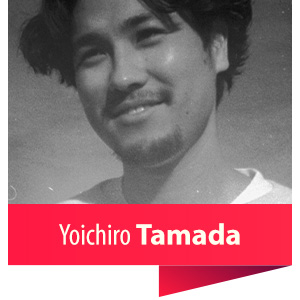
Y+L Project is a global creative and marketing agency based in Tokyo. The agency was founded by Yoichiro Tamada and Lucy Dayman and it is formed by a group of creative marketers, researchers, photographers, designers and illustrators.
They help brands of all sizes and conduct communication that speaks to today’s audience.
In an interview with TIA, Tamada described his life in Tokyo and the personal journey that led him to start the agency with Dayman.
He explained his multiple roles at Y+L Project as a creative director, producer and CEO and went through the main attributes that differentiate the agency from the rest of the market.
To kick things off, what do you love the most about your Tokyo and what’s one must-do experience?
It isn’t easy now to really enjoy Tokyo to its fullest because of COVID. But before, I loved how people from all over the world came to Tokyo to enjoy the city’s unique culture, excellent stores, restaurants, and bars. I think it’s a city where you can meet all kinds of people even if they’re just passing through. A must-do I’d say has to be enjoy the city’s smaller, more intimate bars. Some of the city’s bars are run by some of the most interesting people I’ve ever met. Don’t know where to go? Message me anytime; I’d love to show you around.
I also think that many of the international community in Tokyo are working in creative fields. In the international community, I feel like there’s a level of equality and lack of hierarchy (unlike some more traditional Japanese industries).
Tokyo is a big city, but it’s also a place where you can take your friends to local bars and restaurants and connect with people who have similar vibes. I think it’s important to have those kinds of connections that you don’t find in tourist brochures or books, and that’s how I like to travel when I go abroad.
Tell us about your personal journey. How did you find yourself Co-Founding the agency with Lucy Dayman?
Early in my career, I worked for a digital marketing company and then a creative agency, where I learned how to nurture creative ideas and solutions to company problems, and execute them.
After a few years, I started working as a freelance marketing director and producer, and I met Lucy through a friend. At the time, I was working on a collaborative project between Olympus, Brother, and a start-up. The project needed a foreign opinion, and I knew Lucy was a freelance writer, so I invited her to join the project.
We started sharing each other’s projects, and then we naturally formed a company. One day, Lucy wanted to go out for a drink, so we went to an underground bar in Shibuya, and she said, “let’s start a company!” I felt there was a lot of potential, so we worked out what we both wanted to achieve, and then we established the company. I’m in charge of creative and marketing in general, and Lucy is in charge of strategy, storytelling, and copywriting, our roles in the company just felt organic, we didn’t overthink it.
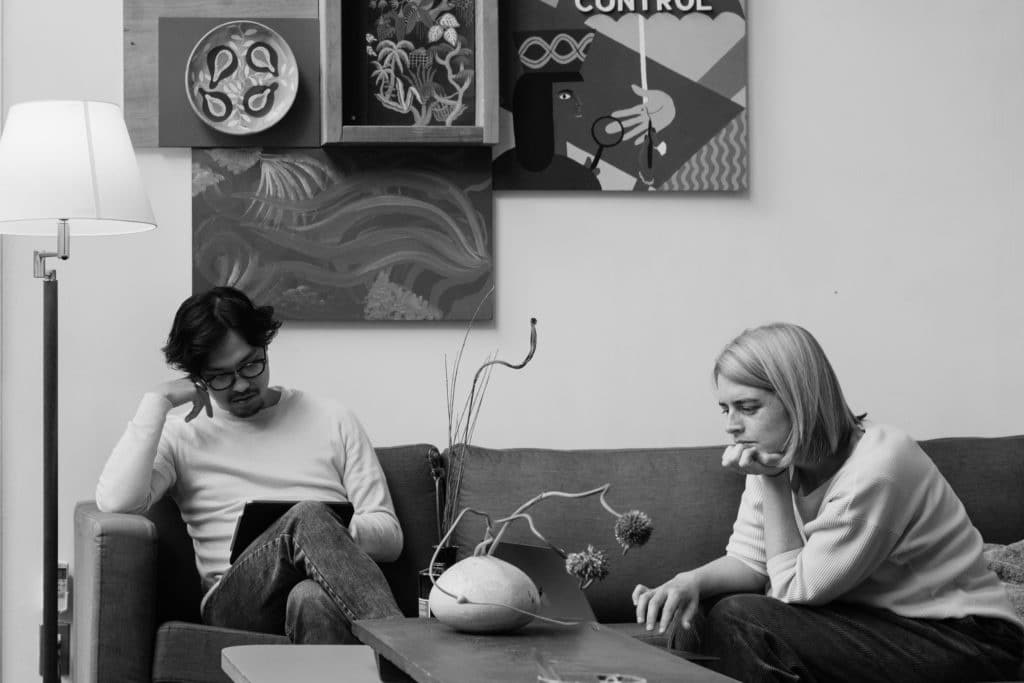
Could you explain to us briefly what’s your role as a CEO, Creative Director & Producer?
As the company’s CEO, I am conscious of instilling YL’s culture of creativity and respect into everything we do and the people we work with. I’m always working on creating a level of community and mutual inspiration. As a creative director, I have a background as a marketing director, so I need to ensure that the creative solutions we create maximize the brand’s value.
The first thing I do when we embark on a new project is always ask myself if what the client wants to do and whether the issues they want to overcome with us are really the essence of what they want to do. I ask, “is that really the essence of what the client wants to do?” Perhaps the actual problem lies elsewhere. As a producer, I have to meet with a wide range of people across industries and always look for collaboration possibilities.
Cultural diversity is an important part of the YL team, what would you say are the main benefits and challenges of it?
To begin with, I believe that as the Japanese population and thus Japanese-specific market shrinks, every brand and company must aim for a wider audience. This means that instead of exchanging opinions and providing solutions among people of the same backgrounds, nationalities, and experiences, we will inevitably be working with active members all over the world.
One of the advantages of working in a multiracial, international team is that ideas that have never been thought of before can come up and be given shape. In terms of challenges, I feel that we need to spread that kind of mindset more and more, regardless of the company’s size.
What attributes do you want people to associate YL with, and how do you align business decisions with your values every day?
For us, we’re an intimate company, we don’t have aspirations to be some mega-sized agency with layers of people and hierarchy. We want to ensure that our clients and creatives feel like they can communicate and work with us honestly, directly, and as peers.
We try to run our company as a collective of creatives. When we’re working on a new project or proposal, it’s not just Lucy and I coming up with ideas and project development, but we also rely heavily on the expertise of our wider team. We hire people we respect and admire, and want to ensure their talents can come to the forefront of every project.
In your opinion, what’s the most important factor that leads companies to create successful overseas experiences and to engage at a global scale?
I’m speaking here from a Japanese agency perspective, but the first step is to review the corporate structure. Create a system that is not afraid of failure. I often have the opportunity to participate in pitches, and I find that the older the company, the less likely it is to try something new, and the more likely it is that a proposal that does not fail will be chosen, simply for the fact of safety above innovation.
But when it comes to advertising, companies and investors need to understand the difference between sales promotion and advertising clearly. 95% of advertisements aired in Japan are sales promotion ads; they’re not reaching their creative and culturally-influential potential. The first thing to do is to be aware of overseas markets and create a brand that will make people become fans.
Of all the recent projects your agency has produced, which one are you most proud of?
In the early days of Y+L, I was in charge of a video project produced in Thailand with my friends and teammates, a video director, a video creator, and an art director who lives in New York.
The company didn’t ask us to do a project related to the SDGs, but we proposed this angle, and they loved it. Because it was a large company, it took quite a long time from the proposal to the adoption of the project, but we were really happy when we were able to actually realize the project after proposing from scratch why we needed to do it now.
With shopper behavior changing, what impact do you believe machine learning and big data will have on the world of creative production?
Looking at new developments like big data, I think it is important to use it in a way that’s both ethical and effective and good to the consumer.
Many companies are collecting big data, but I don’t think there are many companies that are making good use of that data while consulting with data analysts. I think that shopper data and the like can be shifted to produce more useful and relevant content and outcomes for consumers, but we need to look at it from a long-term branding perspective rather than an opportunity for fast, shallow, short-term sales.
In this industry or in life, have you had any particularly influential mentors?
Recently, I’ve been getting many calls from people who work in the same industry as me since we updated the company’s website.
We’ve also been contacted by representatives from some of Tokyo’s leading digital agencies and production companies, which is a humbling feeling.
The one that stands out in my mind the most these days is Mr. Demura, the head of Konel, the creative agency we’re currently working with on a BOMBAY SAPPHIRE localization project. He is from Kanazawa City, Ishikawa Prefecture, the same hometown as me. He used to work in the consulting industry, doing strategic consulting and then went to an advertising agency to gain experience before starting his own creative agency. I’m always thinking about how to incorporate technology into something feasible and how to collaborate with companies. I think it’s very important for Japanese society to think across the right and left brains, to think about how to make an impact on the business by taking the right brain initiative, rather than the left brain initiative (logical thinking) that has been valued in the past. Y+L Projects also wants to be an agency that can always surprise.
As a creative director, I respect Morihiro Harano, who was in charge of NTT Docomo Xylophone and OK Go – I Won’t Let You Down. His advertising work is truly inspiring and makes me want to watch it over and over again. Rei Inamoto is another good example of a creative director with a strong digital background.
If you could travel back in time and give yourself one piece of career advice, what would it be?
This is a hard one, but I’d say I’d just encourage myself to take risks, build connections with inspiring individuals, and always try to find the fun and excitement in every project I work on.
Can you name a fun-fact people would be surprised to learn about you?
I studied English as a kid and went to the University of Oregon for a short while, but really, to be honest, I learned how to speak English as well as I do now through skating! Meeting and bonding with fellow skaters from around the world when I was in university and early in my career really grew my international friendship groups, global perspectives, and English skills.
Thanks Yoichiro!
Follow Yoichiro on social media:
Follow YL Projects on social media:
Yoichiro’s Working Preferences:
Early Bird or Night Owl?:
Both (if it means getting up early to surf)
Usual breakfast:
I don't eat breakfast, but coffee is a must
Most quoted book, TV Show or movie:
Let My People Go Surfing by Yvon Chouinard, Extraction (Netflix)
Last place traveled:
Europe trip with my mom (England, Italy, Spain, Netherlands, Belgium, France)
Last downloaded app:
Call of duty mobile
Favorite sneaker brand:
Converse, Nike
Preferred spot in your town:
Natural wine shop (Liquor land Nakamasu)
Unusual Hobbies:
Bear Pond espresso in Shimokitazawa, Tokyo (The best beverages)
If you could solve one problem in the world what would it be?:
Obviously for the world: Solve world hunger / and looking more locally for Japan: Redo the nation's dated political system
Agency to watch

Best in Breed since 1998. Lounge Lizard is a Digital Agency that Specializes in Brand Strategy, Website Design, Web Development, Mobile APP Development, Online Marketing, Social Media, Ecommerce, and SEOdigital experiences that move brands and businesses from now to next.
Featured agencies

134751 Views

115348 Views

109198 Views

91626 Views

88083 Views

82922 Views

74555 Views

61392 Views