‘Site design should be based on the brand and its users’
Vancouver, August 13th, 2019
The World Wide Web was created over 25 years ago. The Internet, although not as we know it today, started 45 years ago. As it is usually the case with technological advancements, once companies were given entry into this world of the WWW that could provide them with commerce, a shop window, education and more for its clients, they hit the road running.
Today we have an incredible number of websites that have a legacy hierarchy, legacy systems, and that have been moulded by different brains and criteria. Web designers and developers often come across clients for whom they will have to adapt and work with other companies and teams.
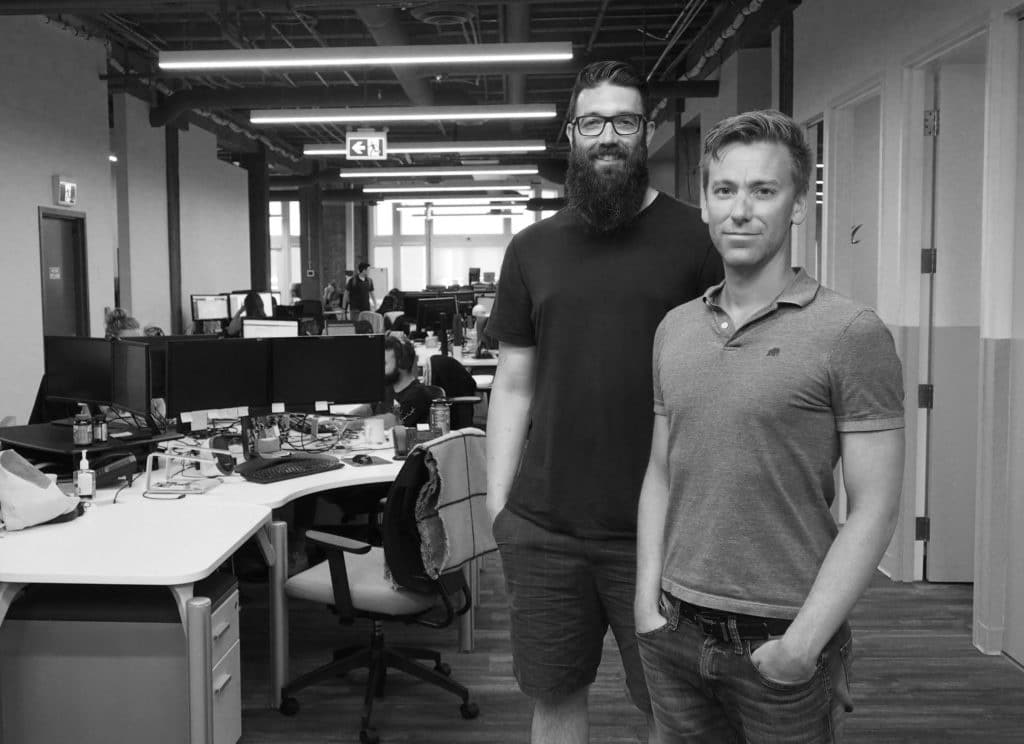
To find out how easy, convenient – or not, it might be to work with third parties and deliver ground breaking website designs and development, we talk to Digital agency Major Tom’s Creative Director and Senior account manager.
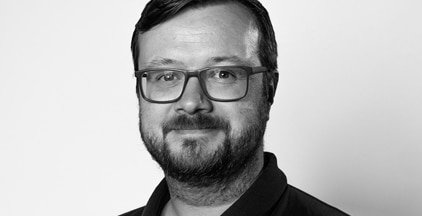
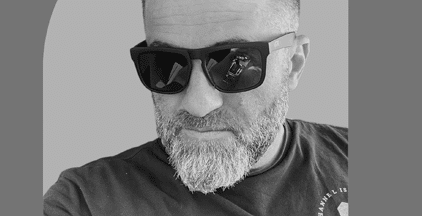
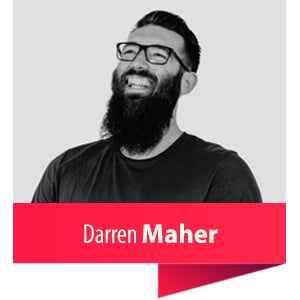
Creative Director Darren Maher, has five years experience at Major Tom; and Ben Van Exan, Senior Account Manager, has been at the agency for three years already.

They have talked to Top Interactive Agencies about what is needed to work with third parties. They also give us an insight on creativity, how to come up with new ideas and the future of UX.
Ben has a degree in Digital Media Design and takes on his design projects with a scientific approach. If he had the time, he confesses that he’d like to be a scientist – probably in astronomy or quantum mechanics.
Darren graduated as a Multimedia Applications Developer in Ireland. His aspirations, if he was to do any other job besides being a creative, are towards environmental issues, sociology or ‘some activism.’
Can you describe your agency in three words?
Ingenuity, data-driven, perspective.
What are the pros and cons of working with third party designs?
Ben: Occasionally, we do develop based on another team’s designs. This is often challenging.
It’s common for a web designer to over-design and over-complicate designs that end up creating a giant headache for our development team, either because the user flows weren’t adequately thought through, or design best-practices weren’t used in terms of a design system.
Another common issue with building a website with third party designs is the client’s expectations regarding pixel-perfection. By that, I mean some clients expect that the final site build will look 100% exactly like the designs.
In reality, that’s rarely the case. Subtle changes in fonts, colours, margins and padding, and even responsive design can all occur as the result of how different browsers render the site or the resolution or device the site is viewed on.
It has to be a pretty unique case and client for us to build a website that we didn’t design ourselves, but it has happened.
Is your content management system (CMS)/technology proprietary or open source?
Ben: We build the vast majority of our sites in WordPress. WordPress is the most widely used CMS system globally, but it’s also a good balance of security, user-friendly admin and open source in terms of plugins and third party integration functionality. I’ve also worked in Drupal – not a fan.
What visualisation method would you recommend?
Darren: We use wireframes. Building out wireframes is an opportunity to create a content and functionality inventory of the site.
Having a solid understanding of all of the functionality of the website will ensure the designer knows exactly what components and pages to design, and ensures the development team won’t have any surprises after the designs have been approved. It helps keep the project in scope and on time.
Our developers review all the wireframes and site designs along the way.
For instance, when we built the website for The Little Potato Company, a large chunk of the project was planning the filtering/search functionality of the Recipe Centre.
UX exercises like card sorting and tree mapping help us determine the best user experience, ensuring we plan for future growth.
Our designers and developers are all critical contributors in the early stages of UX, ensuring that what we lay out in the wireframes can be designed and built within budget and with optimal impact, considering best practices for SEO, user flow, and CMS management by the client long term.
Is it necessary to research what competitors do when designing/developing a new website? Or do you focus more on what users want?
Ben: We almost always research competitors, at least to get an idea of the landscape, and to ensure we’re not doing something that’s already been done. But not to the point where what our clients’ competitors are doing starts to inform how we design.
Clients tend to put too much emphasis on the importance of competitor research. If you focus too much on what others are doing, you’ll always be a follower. Senior Leadership teams love being presented with competitor research because they love to hear what they’re already doing better than their competitors.
For us, it’s more about the user’s objectives. If you design for the user well enough, your website will be successful. It’s better to understand the products or services that your users want to engage with than to build a site that does something better or different than your competitors. Site design shouldn’t be based on what the competition is doing; it should be based on your brand and your users.
How much input should a client have on the design of their website?
Clients who don’t have design backgrounds don’t realise the dozens of things a web designer has considered with every decision they make.
A bit of push-pull is healthy – I’m always more concerned when a client has NO feedback because it usually means they haven’t fully considered what we’ve presented.
That said, if a client is upset about multiple elements, we will only push back on the ones that have the most effect on the site and user experience. It’s essential to give the client some good wins too, especially if they’re passionate about something that matters more to them than it will to their users. It’s a partnership after all – give and take – that’s how trust is built.
How can one find originality on digital products?
Darren: Another part of our initial exploration process might surprise you – instead of looking within the client’s industry for a solution to user problems, we tend to look in completely different sectors, to avoid being influenced by the industry itself, or by what another agency has done to solve the same problem for a competitor.
When we use research to solve problems, the issues are all mostly the same, user problems are all the same: they can’t find what they’re looking for, they’re confused, too many clicks required, naming convention issues, filtering issues, navigation issues – these problems aren’t industry specific.
How do you come up with new ideas on a near-constant basis?
Ben: Lots of Red Bull, Smash tournaments, values that foster creativity, and Friday drinks.
Darren: I like to stay up late at night, and then lay down in bed, go into a lucid dream state, and repeat whatever problem I’m experiencing over and over until solutions appear.
Primarily, I look at the problem along with the research I’ve done and then connect the dots. Then I bring my solutions and ideas to my team for their input to make sure the solution meets all our (and our user’s) needs.
What’s an exciting trend you’ve observed in the industry?
Darren: Users are becoming more and more familiar with how websites work, especially around navigation and how to interact with familiar looking elements.
Browsers are also getting better at rendering seamless animations and dynamic “sizzle” as a result of the evolution of Javascript and CSS. Because of this, designers can push the boundaries – we call this Experimental Navigation.
We’re seeing a lot of crazy unique ways users can navigate through a website, or interact with content.
Who do you follow in the industry?
Darren: Futur, Awwwards, certain agencies like Locomotive, Huge.
Thanks Ben and Darren!
By Geny Caloisi.
Follow Ben Van Exan on social media:
LinkedIn
Follow Darren Maher on social media:
LinkedIn
Follow Major Tom on social media:
Facebook
Twitter
Instagram
LinkedIn
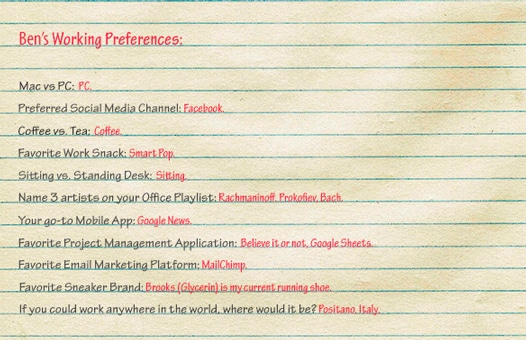
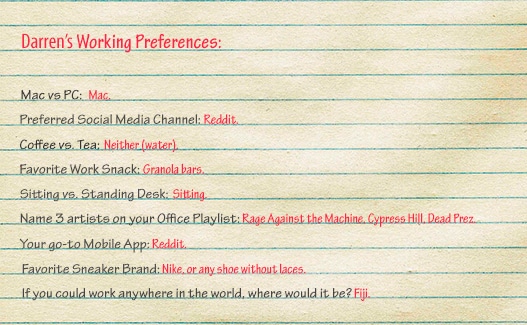
Ben’s Working Preferences:
Mac vs PC:
PC
Preferred social media channel:
Facebook
Coffee vs. tea:
Coffee
Favorite work snack:
Smart Pop
Sitting vs. standing desk:
Sitting
Name 3 artists on your office playlist:
Rachmainoff, Prokofiev, Bach
Your go-to Mobile App:
Google News
Favorite project management application:
Believe it or not, Google Sheets
Favorite Email Marketing Platform:
MailChimp
Favorite sneaker brand:
Brooks (Glycerin) is my current running shoe
If you could work anywhere in the world, where would it be?:
Positano, Italy
Agency to watch

Best in Breed since 1998. Lounge Lizard is a Digital Agency that Specializes in Brand Strategy, Website Design, Web Development, Mobile APP Development, Online Marketing, Social Media, Ecommerce, and SEOdigital experiences that move brands and businesses from now to next.
Featured agencies

134738 Views

115335 Views

109190 Views

91619 Views

88067 Views

82910 Views

74548 Views

61384 Views