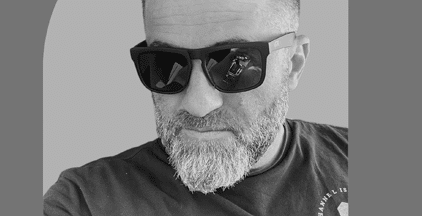
“Human Flaws Have Become the Trust Signal” — CAPSBOLD’s Andrey Donov on Strategy in the Age of AI
Strategy becomes even more important in the age of AI, because it allows your efforts to compound rather than just throwing more content into the feed and hoping something sticks
Belgrade, April 8th, 2026
 Based in Limassol, CAPSBOLD is an award-winning marketing agency that thrives on delivering bold, disruptive campaigns for a global stage. Specializing in high-impact AI content, CGI/VFX, and data-driven digital strategies, the studio approaches every project as a strategic journey where innovation serves as the primary driver for success. By merging cutting-edge technology with performance marketing, CAPSBOLD helps international brands scale through creative storytelling that doesn’t just cut through the noise — it commands the conversation.
At the helm of this “strangely fun” creative sprint is Andrey Donov, Creative Strategy Lead at CAPSBOLD. A battle-tested “AI Auteur” who turns blank briefs into live campaigns with lightning speed, Andrey brings a unique perspective shaped by his roots in a small Russian town and his current life in the free-transport energy of Belgrade. A firm believer that strategy is the thread that runs all the way through production, he focuses on protecting the “human dirt” and purposeful imperfections that machines cannot logically invent. For Andrey, “Strategy in the Age of AI” isn’t about automating the soul of a brand — it’s about using technology to amplify the radical authenticity that makes people feel seen, heard, and energized.
It’s great to connect with you today, Andrey. You were born in the USSR and are currently based in Belgrade — how has this transition shaped your creative outlook, and what role does the vibrant, cross-cultural energy of Belgrade play in your approach to global marketing strategy?
It’s awesome to connect with you, too, thanks for having me! I’ve worked in large cities like London, Shanghai, and Moscow, so I know the kind of energy big capitals generate — the speed, the scale, the sense that everything is moving very fast. But I actually come from a small town, so I’ve always appreciated places that feel a bit more proportionate to a person.
Belgrade has that balance for me. You notice the everyday rhythm — small talks with neighbours, long dog walks, recognizing the same faces on public transport every day (the transport is free for everyone, by the way,). Another thing I really love about Belgrade is that it constantly surprises you, but in very subtle ways. If you pay attention, you start noticing all these small pieces of creativity scattered around the city. Not just graffiti, but tiny sculptures, unexpected urban inventions — things like the Liquid Tree or the can-eating dragon — little gestures that show someone cared enough to make the city a bit more playful.
If a friend from abroad were visiting Belgrade for the first time, what local experiences or spots would you absolutely recommend they try?
The first visit can easily shape someone’s entire impression of the city, so I’d probably start with the classics. Kalemegdan Fortress is the obvious one — not just for the view where the Sava meets the Danube, but also for the small Ružica Church inside the complex. Its interior is made from pieces of weapons and ammunition, and to my mind it’s one of the most powerful anti-war statements you can see — without a single word being written on the wall.
After that, I’d suggest a walk along the Waterfront and a visit to Skadarlija. It’s a bit theatrical, yes, but it captures that old Belgrade atmosphere — music, slow dinners, people lingering over conversations. Food is another important part of the experience. Balkan cuisine can be quite intense, and not everyone immediately falls in love with it — which is perfectly fine. But there is one thing I always insist visitors try: Trileće. It’s a very soft, milky dessert soaked in three kinds of milk, and the best way to describe it is that it feels like a small kiss from an angel.
How do you typically structure your workday or week to manage the high-pressure demands and personal outcomes of a high-impact agency?
I’m definitely an early bird. Getting to the office before the creative team gives me a quiet window to read through briefs and do my strategic thinking before the meetings take over.
Honestly, becoming a dad completely shifted how I view my time and energy. I quickly realized that sleep and a solid routine aren’t optional. A rested brain is just better at weathering the daily agency storms. Plus, I have a strict rule: I show up for family dinner. I’ve mostly left behind that old-school agency culture of romanticizing all-nighters. When you’re 20, you think you’re being productive on zero sleep. But as you get older, you realize how much your critical thinking suffers. Good strategy needs a clear, functioning brain, which is exactly why I actively block out calendar time just to think. If you don’t defend that time, meetings will swallow it whole. Reflecting and connecting the dots is the most crucial part of my job.
As Creative Strategist at CAPSBOLD, how do you define what makes a strategy truly original and impactful today — especially in a time when digital noise is at an all-time high and attention spans are shrinking?
From where I stand, AI has not only made high-end execution cheap, it’s also made human taste and judgment the ultimate premium. True originality comes from using generative tools to orchestrate the “how,” while human creatives fiercely protect the “why” by leaning into radical authenticity. To cut through the digital noise, we need to “own our weird” and deliver raw, purposeful imperfections and “human” narratives that no machine could logically invent.
Furthermore, because mass culture has shattered into thousands of interconnected micro-fandoms, traditional demographic targeting can now be replaced by what we like to call “Vibe Marketing”. The ultimate goal is to stop interrupting what people want to watch and instead ensure the brand becomes the entertainment. To win, we shouldn’t try to broadcast to the lowest common denominator, but rather earn permission to join existing niche communities — by speaking their language, respecting their lore, and participating as an authentic cultural fragment.
Let’s talk about your “Strategy in the Age of AI” focus. What are some of the creative challenges involved in integrating AI into a brand’s core strategy so that it feels like a genuine innovation rather than just a passing trend?
Oh I can talk about it for hours. But here is the core of our philosophy, in short:
1. Escape the Slop Ocean via the AI Auteur
The biggest hurdle in adopting AI isn’t technical. It’s escaping the dreaded “sameness trap.” Because AI learns by averaging data, its default setting is generic perfection, which is rapidly filling the internet with synthetic fluff and “workslop”. To actually innovate, we have to stop hiring for software skills and start elevating the “AI Auteurs” — creatives armed with taste, intuition, and human empathy.
2. Engineer the “Pratfall”
Because algorithmic perfection is now a commodity, actual human flaws have become the trust signal. We literally have to engineer the “pratfall effect” back into our strategy — the psychological phenomenon where people and brands become drastically more magnetic when they show vulnerability, a raw edge, or a minor mistake. And yes, that’s what feels most challenging at client meetings nowadays: making them believe counterintuitively that their flaws are precious.
3. Encode the Brand DNA
If your AI isn’t explicitly trained on your brand’s unique DNA, community lore, and aesthetic friction, it will always default to polite, mathematical optimization. The true strategic art is treating your brand identity not just as a visual guideline, but as the actual operating system and instruction manual for the machine. We have to build weird, highly specific guardrails that allow AI to scale our wildest ideas, ensuring that every automated choice it makes feels distinctly you without castrating the brand’s soul.
Your team is known for high-intensity AI content and CGI/VFX. What’s your process when translating a brand’s identity into viral, tech-forward content that feels native to social media platforms?
It can get complicated, but here is the simplified version:
Teach the Vibe: We don’t just feed the AI a color palette. We break down the brand’s personality, how it moves, and its internal rules.
Fast Testing: The days of spending weeks agonizing over one “perfect” viral video are over. We brainstorm and push out a bunch of rough, crazy ideas at once. We let the audience tell us what works, and then we spend human energy refining the winners.
Adding “Human Dirt”: Perfect CGI looks fake. So, at the end, we intentionally mess it up. A blurry shot or some awkward lighting works wonders for engagement because it makes the content feel real and relatable.
Scalability and international growth are core missions at CAPSBOLD. From a strategic perspective, what does that look like in practice when taking a brand from a local concept to a global stage?
Ironically, going truly global means going hyper-local. Young audiences don’t care about bland, one-size-fits-all global campaigns; they want to see their specific lives reflected back at them. We don’t water a brand down; we translate it. It’s about adapting core messages to fit local aesthetics and community nuances.
Many agencies talk about being innovative, but CAPSBOLD emphasizes daring and disruptive campaigns. Can you walk us through how you use data-driven insights to back up your most ambitious creative decisions?
At CAPSBOLD, we have a central philosophy: Data isn’t a straightjacket — it is the safety net that allows us to jump off the highest cliff. When tasked with boosting attendance for the Reflect Festival — a B2B tech event in Cyprus — our market research revealed that tech professionals were burnt out and looking for a “workation”. Instead of using standard corporate event imagery, we used this data to confidently pitch an ambitious visual concept: treating the conference like a blockbuster spectacle. This combination of clear strategic planning and striking visuals delivered tangible results: a 57% year-over-year increase in ticket sales.

When starting a new project, is there a particular stage in the strategic journey that you personally enjoy most — whether it’s the initial research and analytics, naming, or seeing the final 3D motion execution?
Definitely the very beginning. That moment right after the brief lands is electric. You’re just sitting in a room throwing ideas at the wall, and suddenly a joke turns into a brilliant concept. The possibilities are wide open. The later stages — like polishing the motion design — are crucial, but that initial spark of discovery is the best part. Plus, it’s the magical window before the legal team and budget constraints show up to ruin the fun.
How do you balance “viral, high-impact creativity” with the long-term “brand positioning” required for global giants like Google or McDonald’s?
Balancing a global giant’s long-term equity with today’s demand for high-impact virality is about building a “Rigid Core with Flexible Edges”. Think of a brand as an operating system with open-source mods. The core DNA — the values, the distinctive assets — must remain ruthlessly consistent. But the execution must be totally flexible to survive the algorithm. We must shatter the brand narrative into “1,000 tiny pieces” and scatter those scraps across niche subcultures, subreddits, and group chats. To put it short, you have to let the internet play with your toys, but you design the sandbox.
What are some common misconceptions clients have about AI-powered marketing when they first come to you — and how do you help them reframe their understanding of “Strategy in the Age of AI”?
One common misconception is that AI somehow eliminates the need for strategy. Some clients initially assume you can simply generate content, add a logo, and let the algorithms do the rest. But what actually makes AI effective is still strategy — identifying the right niche, finding and validating a real insight, and positioning the brand clearly. Strategy becomes even more important in the age of AI, because it allows your efforts to compound rather than just throwing more content into the feed and hoping something sticks.

Collaboration is a key value at CAPSBOLD. How do you structure the synergy between your strategists and your 3D/CGI production teams to ensure the final output remains cutting-edge while delivering measurable performance results?
I always joke that I’m a weird kind of strategist because I refuse to leave the room once the strategy deck is done. For me, strategy isn’t something you hand over and walk away from; it’s a thread that should run all the way through production. That experience makes it easier to find a shared language with both the strategy side and the 3D/CGI production teams, so the final work stays ambitious creatively while still delivering on the original strategic intent.
You’ve worked with massive global brands like Barilla and Nokia, as well as high-energy events like the BEONIX Music Festival. How does your strategic approach shift when designing for an established household name versus a fast-paced, experiential event brand?
For me, the starting point is always the same: a brand doesn’t really exist without its audience. Strategy is really about understanding the experience people have with it. The scale and energy change, but the core question stays the same: what does the audience actually feel when they’re there? I also try to experience things firsthand whenever possible. Living the moment yourself is often the fastest way to understand what kind of idea a strategy should grow from.
AI is a favorite topic of yours. Beyond just a content tool, how do you see AI-driven “predictive strategy” influencing the creative field, and is CAPSBOLD experimenting with any “under-the-radar” AI tools in your current workflow?
What interests me more is how AI can help with pattern recognition — spotting signals in culture, behavior, or data earlier than a human team might. In that sense, “predictive strategy” isn’t about machines replacing creative thinking, but about giving strategists better instruments to understand where attention and culture might move next. AI becomes part of the thinking infrastructure, not just another flashy tool in the content pipeline.
Outside of work, what are some of your hobbies and interests that keep your strategic mind sharp?
Outside of work, I spend a surprising amount of time experimenting with AI tools. Arguing with AI pessimists in the comments has become a bit of a hobby of its own. I also run small creative side experiments — things like AI-generated music projects or testing new workflows with generative tools. It keeps the strategic mind flexible and curious, which is probably the most important skill in this industry.
To delve into your roots, who is one of your favorite writers, from your cultural background and which book would you recommend to our readers?
One of my favorite writers is Vladimir Sorokin. If I had to recommend one book, it would be The Blizzard. It’s a short, almost surreal journey through a snowstorm, but beneath that simple premise it captures something deeper about chaos, perseverance, and human stubbornness. Paradoxically, the story manages to bring a sense of hope precisely through all that confusion and darkness.
And to wrap things up on a lighter note — what’s one fun or unexpected fact about you that most people wouldn’t guess from your job title or your LinkedIn profile?
I once sang in a rock band on a stadium stage. It wasn’t a long career, but it was definitely loud enough to leave a memory.
Andrey’s Working Preferences:
Early Bird or Night Owl?:
Early bird, definitely.
Usual breakfast:
Coffee and the news.
A quote you live by:
“There will be more joy in heaven over one sinner who repents than over ninety-nine righteous people who do not need repentance.”
Last place that inspired you:
A bus stop in Belgrade with an old-school taxophone — a good reminder of how quickly technology changes.
Personal signature item:
Flipper Zero.
Habit you had to unlearn:
Smoking — quit 11 years ago and never regretted it.
Metric that matters most:
TOMA.
Where you think best:
Believe it or not, my office desk. I really hate working remotely.
Agency to watch

Best in Breed since 1998. Lounge Lizard is a Digital Agency that Specializes in Brand Strategy, Website Design, Web Development, Mobile APP Development, Online Marketing, Social Media, Ecommerce, and SEOdigital experiences that move brands and businesses from now to next.
Featured agencies

134737 Views

115335 Views

109189 Views

91619 Views

88067 Views

82910 Views

74547 Views

61383 Views