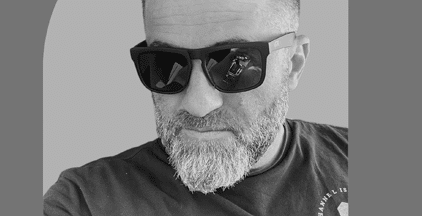
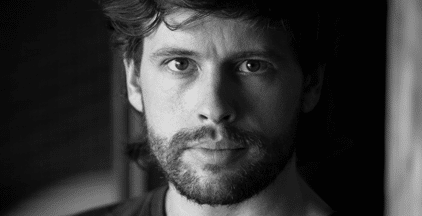
“We’re setting up a really unique and versatile team and process”
Toronto, September 30th, 2020

Working in the Toronto office, Ryan Johansen is a senior strategist at Jam3 , one of the world’s top digital production and design agencies.
He has been at the agency for almost two years, leading international projects for brands such as Facebook, Adidas, Levi’s and Google and taking advantage of his multidisciplinary academic background.
Ryan reflected on his personal journey in an interview with TIA, while describing the work flow when working with a new project. He also looked at the components of a good innovation strategy and at recent work carried out by the agency – bringing some light on the reasons behind the success of Jam3.
Where do you live and why is your city a great place to live and work?
I live in Parkdale, the greatest neighborhood in Toronto, Canada. Parkdale is fantastic and vibrant and it’s one of the few places I’ve lived that has really felt like home.
As a whole, Toronto is a great city. We’ve got a lot of great neighborhoods that each have their own unique feel and it’s pretty easy to navigate so (in the before times) you can string together lots of different kinds of nights with ease. Like Korean BBQ for dinner in one neighborhood followed by drinks at a seedy little dive bar in another neighborhood. Hopefully that will still exist post-pandemic.
When did you realize you wanted to pursue a career in design?
For me it’s always been about creating compelling stories and experiences. After undergrad, I worked and traveled for a while and eventually went to grad school for a MA in Media and Pop Music. That led to pursuing a PhD in Ethnomusicology where I really focused on deep research skills and started crafting my own theoretical approach based on what I’d learned from some truly brilliant profs.
That industry started really changing quickly and I wasn’t stoked about jumping from short term contract to contract so I decided to leave full time academia behind and just finish the PhD on my own time, rather than as a career path.
I was looking for opportunities to capture some of the same energy that made me love research and teaching at that level – mainly working closely with really smart, thoughtful people who bring their own diverse backgrounds and perspectives.
Please share some recent work from Jam3 that makes you really proud.
I loved the work we did for Levi’s in Wynwood in Miami. It was a great opportunity to connect their heritage with their forward-looking commitment to sustainability and create an experience that was really relevant to both the brand and their audience.
A lot of the work we’ve been doing for Facebook lately has been really awesome, too. We work with some brilliant teams there and they have a great appetite for creativity and for really pushing what’s possible using their tech stack. Our dev teams are super innovative in the way they can redefine those possibilities so it’s exciting to work with them to explore new ideas.
We also have a beautiful and thoughtful redesign launching soon for the Toyota Research Institute. They’re also truly brilliant and they exist in this really fascinating space between academia and industry. They have such a unique approach to research and it’s been interesting to work with them and it’s very rewarding to be able to bring their story to life.
Please name a challenge your team is currently facing.
As a department, as we build out our further upstream offerings, one of the key challenges we’re facing is demonstrating our capabilities beyond our sort of ‘production shop’ roots. That history definitely informs how quickly we work and how nimble we are so it’s an interesting opportunity to incorporate that approach with taking on longer term work and getting into deeper research-based planning.
I think we’re setting up a really unique and versatile team and process so it’s exciting times for us.
How do you start planning something from scratch? What are the different milestones in the design-planning process?
Maybe it’s cliché, but we always start with listening. We’re big on collaboration so we try to meet with clients early and often to gain trust and alignment. We ask our clients tons of questions and then we ask our target audiences tons of questions and from there we can identify the shared opportunity spaces in which our designs can have maximum impact.
So, to answer the second question, the high-level milestones for design-planning are alignment with the client and team, research and identifying relevant opportunities, and then crafting a creative brief that synthesizes all of that so we can facilitate the creative ideation process and set up a framework for evaluating the relevance of our concepts.
On a daily basis, do you use data to improve the design, the development of the project or both?
We use data throughout the design process, beginning with quantitative and qualitative research early on as we hone in on opportunity spaces and then through usability and user testing as we continually optimize a given experience pre-launch. Once a project is live, we continue that approach so we can keep learning from and improving our products, experiences, and services.
What are some of the core components of a good innovation strategy?
The key is understanding. Not just knowing something but truly exploring its every nuance which, as always, comes from asking the right questions and really listening. From there I think a good innovation strategy hinges on taking that understanding of the essence of people’s desires to guide the creation of intuitive new paradigms that provide them with what they always truly wanted or needed.
For example, think about automatic car headlights. Controlling and optimizing the lights of a vehicle is something we’ve always done with low beams, high beams, etc. But that’s not really a job for the driver, the driver’s job (and in many times, their desire) is to drive the car, the headlight’s job is to optimally light the path that the driver intends to occupy. It’s a simple example but it sort of sums up my thoughts on innovation – it’s about eliminating the unnecessary steps or processes that we take for granted to refocus on the essence of something. Arguably, getting automated driving right is a similar—albeit more complex— challenge.
So I think good innovation strategies are built on a foundation of deep understanding while always considering the context in which a product or service or practice exists.
What are your favorite digital brands?
I love investigating notions of authenticity so I really like Patagonia and how they’ve managed to create this entire ecosystem that comes across as totally genuine, which is no small feat. Lego is another brand that has embraced digital in a big way and I don’t know that I would’ve predicted that they’d be so good at it (although nobody asked me when I was playing with Lego…) Glossier comes up in these conversations with my colleagues quite often. Of course, as far as sustained impact, I still love and reference Apple pretty regularly.
Three things I wish I knew when I left school
1. You’ll miss it, and you’ll be back!
2. Some of this stuff will actually serve as the foundation for work you never could have imagined, and that’s pretty wild.
3. Stay in touch with your favorite profs, it’s easier than trying to get back in touch with them and there’s still so much to learn.
What profession other than your own would you like to attempt?
I love interviewing people for our pitches and projects as well as in my academic work and for articles I write. I’d love to be able to spend more time interviewing people so if anyone can hook me up with some kind of Oprah-type show, I’d take a swing at that.
Thanks Ryan!
Follow Ryan Johansen, on social media:
LinkedIn
Ryan’s Working Preferences:
Android vs IOS:
IOS
Preferred social media channel:
A tie between Instagram and Twitter
Coffee vs. tea:
Coffee
Favorite work snack:
Clif bars
Sitting vs. standing desk:
Sitting
Most quoted book:
Performing Rites by Simon Frith
Treasured TV show or movie:
I've been on a nostalgia kick so Stand By Me (beware of leeches!)
Name 3 artist on your office playlist:
The Clash, Otis, Dolly
Actual project management application:
We use Jira and Trello
Preferred business meeting restaurant in your city:
Ah remember meetings!? And restaurants!? The Skyline is the best all-around spot in town
Favorite sneaker brand:
Obviously Adidas, c'mon
If you could work anywhere in the world, where would it be?:
I've visited many times but I'd love to live in Copenhagen
Agency to watch

Best in Breed since 1998. Lounge Lizard is a Digital Agency that Specializes in Brand Strategy, Website Design, Web Development, Mobile APP Development, Online Marketing, Social Media, Ecommerce, and SEOdigital experiences that move brands and businesses from now to next.
Featured agencies

134752 Views

115348 Views

109199 Views

91627 Views

88084 Views

82922 Views

74555 Views

61392 Views