Next-Generation Innovation unveiled at CES Asia 2019
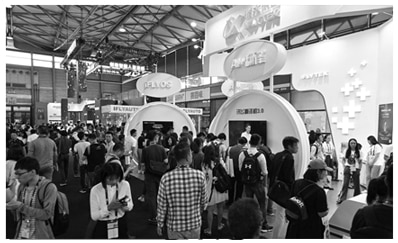
CES Asia 2019 showcased 20 product categories.
The latest connectivity technology, including artificial intelligence (AI), augmented, virtual reality (AR/VR), startups and automobile technology were among the emerging trends featured at CES Asia 2019 in Shanghai.
The three-day event is one of the main ones across the world where companies come to launch and showcase their latest innovations tailored to the growing Asian market, bringing the entire technology ecosystem under one roof.
With 50.000 gross square meters of exhibit space, 550 leading firms attended the summit showcasing 20 product categories. All eyes were focused on 5G hardware and 5G-enabled technologies, as well as machine learning, object recognition and self-driving vehicles.
“At CES Asia 2019 we saw a convergence of industries,” said Gary Shapiro, president and CEO of CES. “From global tech leaders to fashion, travel and tourism visionaries, it’s clear that tech innovation for the Asian marketplace is accelerating at a lightning speed and spurring new partnerships and growth on a global scale.”
More than 60 global auto brands including Audi, Honda, Hyundai, Kia and Nissan unveiled their latest innovations. Honda presented its user interface with augmented reality, Nissan its Invisible to Visible concept, where VR headsets are worn and used to present the interface and controls. And Hyundai its Mobis automated concept.
At the same time, CES Asia 2019 had a lot of augmented reality glasses and goggles scattered around its pavilions. From HiAR’s G200, to MadGaze, to Guangli Lightin1, Shadow Creator – and the list goes on with many other models that were featured from different companies.
In-home robots dominated much of what was on displayed in one of the halls. Ranging from small robots that can be used as a virtual concierge through to serving robots for restaurants that did a great job of not bumping into anyone in the 40,000 strong crowd registered for the event.
Visionaries from companies such as Huawei, JD.com, Baidu, Microsoft and LeVision Pictures use the CES Asia stage to share their vision of the future of tech. “We want to become the largest mobile phone company in the world, but the trade war with the US will make us wait,” said Shao Yang, head of strategy at Huawei.
CES Asia is owned and produced by the International CES (Shanghai) Exhibition company, a foreign-owned enterprise by the Consumer Technology Association (CTA). The fair is also co-organized by the China Chamber of Commerce for Import and Export of Machinery and Electronic Products (CCCME).
Artificial IntelligenceAsiaCESMachine LearningTechnologyVirtual Reality
Agency to watch

Best in Breed since 1998. Lounge Lizard is a Digital Agency that Specializes in Brand Strategy, Website Design, Web Development, Mobile APP Development, Online Marketing, Social Media, Ecommerce, and SEOdigital experiences that move brands and businesses from now to next.
Featured agencies

135268 Views

115780 Views

109486 Views

91981 Views

88544 Views

83290 Views

74929 Views

61670 Views