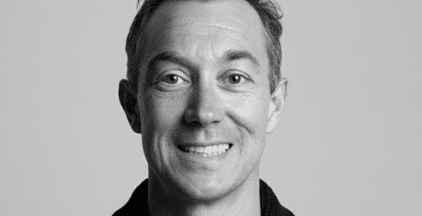
“As designers, no-code systems put us in a position of great power, and it’s crucial that we use it responsibly”
Our goal is to position design as the driving force behind technology in the workplace.
 Copenhague, February 23rd, 2023
Granyon is a design and creativity-first agency with offices in Copenhagen and Washington D.C. Its mission is to use creativity as a force for change and live up to this responsibility. Its team is dedicated to delivering top-notch solutions that exceed our client’s expectations, pushing themselves to think, design, do, and be better every day.
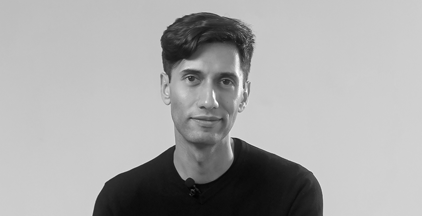
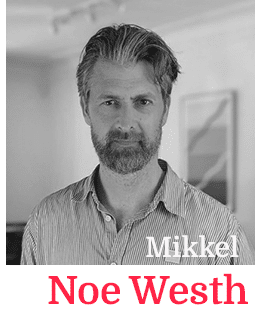
Mikkel Noe Westh is the CEO of Granyon, which he founded with his colleague Jesper Fagerlund after a road trip from Las Vegas to the Grand Canyon. In an interview with TIA, he went through his role as CEO and the vision behind the agency. He highlighted the importance of storytelling and described the creative industry in Denmark.
To kick things off, which “not so touristy” places would you recommend going to when visiting Copenhague?
Vesterbro and Værnedamsvej in the summer is vibrant, young and a great place to meet people.
For those who aren’t familiar with your career, can you provide an overview?
I am the CEO of Granyon, an award-winning design and creativity-focused agency. With over a decade of experience in the web industry, I have established myself as a leader who combines his passion for creativity and technology to drive growth and create impact.
Born and raised in Denmark, I began my career exploring glaciers and geography on expeditions in Greenland. I later received a degree in computer science and entrepreneurship from Copenhagen University, where I developed a keen interest in the intersection of branding and web design as drivers of business growth.
I co-founded Granyon after sharing ideas and discussions with Jesper Fagerlund during a road trip from Las Vegas to the Grand Canyon. As an active member of the Granyon team, I play a key role in helping clients develop branding and web projects to enhance their market position.
Granyon’s purpose is rooted in making a positive difference, as demonstrated through projects like The Illinois Prison Project, The Third Strike Campaign, Like You, and The Permian Basin. At Granyon, we are committed to using creativity as a force for change and fulfilling their responsibility to make a meaningful and positive impact. The mission of Granyon is to bring this goal to life and continue to drive growth and impact through innovative, creative solutions.
How has the Covid-19 pandemic affected the way you work?
Well, not too much, actually. We mainly have US customers, so we’re used to running the projects online. We missed the in-person meetings and workshops. It simply isn’t the same thing presenting concepts and design or sharing ideas over Zoom. Fortunately, the team could keep meeting at the office, which gave a high sense of stability and fighting spirit to get through a rough time together.
What are your main focuses at the moment?
Our attention is split between executing our current projects and devising a plan to enhance Granyon’s growth and cement our reputation as a design-driven creative agency. We’re currently juggling three major projects in the US and UK, set to launch this spring. We’re eager to showcase our work and are also dedicating time to pro bono initiatives, including supporting lifetime prisoners in the US and women in Afghanistan. These efforts will culminate in the launch of a website and online campaign in the spring.
A fundamental aspect of business is encouraging innovation. What steps have you put in place to guarantee this happens in your agency?
Guaranteeing innovation is challenging, but our experience shows that fostering it requires embracing experimentation and taking calculated risks. We differentiate ourselves from the competition by not relying on templates or conventional methods. Our approach involves thoroughly understanding the business and target audience, using that insight to develop unique solutions and concepts. We foster a culture of openness to new technology, ideas, and perspectives, and build an organization that values delivering value to clients over logging hours. Focusing solely on efficiency and speed would stifle innovation and encourage taking the safe route rather than seeking the most impactful and creative solutions for our clients.
Many of your projects are no-code and Webflow creations. You have described this as ‘a positive shift’- can you explain what that entails?
The rise of first open-source and now no-code systems has disrupted our industry. No-code provides more people with the tools to bring their ideas and creativity to life. The shift in power from IT departments to communication and marketing teams has been profound. No-code platforms like Webflow prioritize creativity over technology, and we’ve noticed a greater willingness among clients to experiment and try new things. The iterative and prototyping approach of no-code systems is well-received, and clients appreciate the flexibility and collaboration that it brings. As designers, no-code systems put us in a position of great power, and it’s crucial that we use it responsibly. Our designs have the potential to influence and impact thousands, and it’s easy to forget the impact we can have. If we use our power wisely, we can make a significant positive impact on the world.
Connecting with an audience has never been more challenging for businesses. What are the key components of a good story?
The Granyon methods heavily rely on story scaping and story branding, which are grounded in the principles of storytelling. When working with companies, we often observe that they tend to position themselves as the hero in their brand story. However, every customer view themselves as the hero in their own story, and if they encounter another hero instead of someone who is there to help them achieve their goals, the connection fails. Companies need to realize that their role is to assist customers in their journey to success. By retelling their brand stories from a customer-centric perspective, companies will experience a shift in customer perception and create a more positive narrative. This shift in perspective can also impact the internal culture of the organization, fostering a focus on how the company can make a positive impact on customers’ lives, rather than simply promoting its own superiority. This new outlook not only strengthens the brand but also inspires employees to see a greater purpose in their work and the company they represent.
Are there any exciting projects that Granyon is working on that you can tell us about?
In 2021, SEARCH and TRC archaeologists excavated ten archaeological sites in the Permian Basin, stretching from present-day southeastern New Mexico to Western Texas, and more than 15,000 artifacts were recovered. They wanted to share their findings with the public and give insights into the archaeological work.
In close collaboration with GROUND Media, as the lead agency, we helped create a website where users can dive into the breadth of stories and artifacts recovered from the fieldwork and the laboratory analyses. The result is an online museum that goes behind the scenes of the archaeological excavations. And pieces together fragments of the past to tell powerful stories of how people once lived. We designed and created a 3d experience where over 15.000 artifacts from people who lived their lives many years ago in this area. The artifacts gallery invites visitors and professional researchers to manipulate and explore the findings – almost as if they were holding them in their hands.
Link to the site: https://www.permianbasinhistory.com/
What trends do you foresee in the battleground to retain relevance for 2023?
Granyon will focus on solidifying our position as a design-focused and creative agency, leveraging technology to deliver unique solutions that bring value to our customers. In 2023, we will amplify our message about the advantages of no-code and its potential to empower organizations of all sizes to bring creative and innovative ideas to life. Our goal is to position design as the driving force behind technology in the workplace, demonstrating that even corporate communications can be fun, engaging, and boundary-pushing with the right approach. No-code principles are key to achieving this vision.
Where do you see the metaverse going?
At Granyon, we’re always interested in exploring new technologies and design possibilities, including the Metaverse. However, we believe that technology will only gain widespread adoption if it serves a clear purpose and solves a problem. While the Metaverse may have started off with a focus on technology and opportunity, it may have overlooked its potential to make a positive impact. Currently, we see potential for the Metaverse in fields such as education and art, and we are eager to see how it will evolve and discover its true purpose.
What are your thoughts on A.I?
Contrary to the Metaverse, where we’re still looking for the real purpose, AI immediately got used because it solves problems. AI is transforming our society and becoming an integral part of the creative process. No-code is a part of this AI revolution, but it’s important to find ways to use AI for the greater good. Rather than denying AI, we should explore ways to enhance our work with it and solve new problems. While it’s important to continuously assess the benefits and drawbacks of AI, I remain optimistic that it can boost creativity rather than replace it.
How would you describe the creative industry in Copenhagen compared to other major cities?
The creative atmosphere in Copenhagen is unparalleled. With numerous cutting-edge agencies and companies specializing in design and problem-solving, the city is a hub for innovative thinking. The strong tradition of Danish design and a unique educational system that prioritizes creative problem-solving over memorization have cultivated a culture that pushes boundaries and challenges the status quo. This willingness to question authority and push beyond standards greatly contributes to the dynamic and inventive creative environment in Copenhagen.
Tell us a few words about the “Little Fridays” and their purpose. What are you hoping to achieve during your time there?
The inspiration behind LittleFridays was the desire to exchange ideas and connect with like-minded problem-solvers. The concept is based on the Danish film “Another Round,” which explores the idea that a small amount of alcohol can enhance creativity. At LittleFridays, we bring this idea to life by serving a drink, hosting talks and discussions centered on creativity, and fostering a relaxed, lounge-like atmosphere.
LittleFridays is a manifestation of Granyon’s mission to make a positive impact through design and technology. The events provide a platform for sharing these ideas with a wider audience and promoting creative problem-solving. Our goal is to host four events a year at Granyon and also venture to different venues in Copenhagen.
Which unusual skill do you pride yourself in having?
Curiosity.
How do you explain what you do for a living to a child?
I work at a fun place where we get to be creative like when we were kids. Just like you love drawing and making up stories, I get to do that too, but now I help make companies and groups look even cooler with my imagination. It’s like playing, but for grown-ups!
Mikkel’s Working Preferences:
Early Bird or Night Owl?:
I’m a B-person that works as an A-person
Usual breakfast:
Coffee
Favourite color:
Spring green
Last place traveled:
Athens, Greece
Last downloaded app:
CapCut
The game you’re best at:
Basketball
Preferred spot in your city:
Vaernedamsvej (called little Paris)
What makes a good day at work?:
When we present work that exceed our customers
expectations
Thanks Mikkel!
- Learn more about Granyon at https://www.granyon.com/
- Follow Mikkel on social media:
- Follow Granyon on social media:
Agency to watch

Best in Breed since 1998. Lounge Lizard is a Digital Agency that Specializes in Brand Strategy, Website Design, Web Development, Mobile APP Development, Online Marketing, Social Media, Ecommerce, and SEOdigital experiences that move brands and businesses from now to next.
Featured agencies

134970 Views

115530 Views

109320 Views

91805 Views

88261 Views

83070 Views

74693 Views

61505 Views