“We create passion projects that extract as much value as possible”
“We create passion projects that extract as much value as possible”
As a human, discerning between what's real and what's fake will be the greatest challenge of our age
 Coimbra, October 9th, 2024
Bürocratik Studio is a branding and interactive award-winning agency with studios in Coimbra and Porto. They group designers, engineers, and coders driven by exceptional design and craftsmanship and with their hearts and soul on strategic branding. The agency works with brands far and wide, big and small, offering a wide array of services.
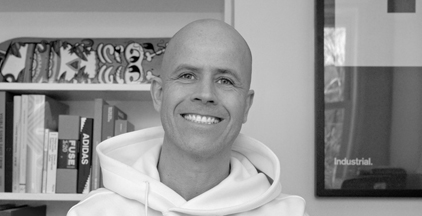
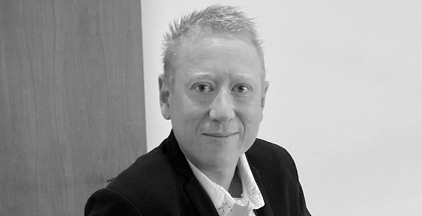
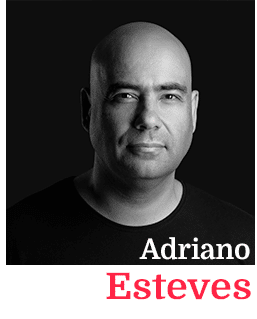
Adriano Esteves is the Founder and Creative Director at Bürocratik Studio. In an interview with TIA, he gave an overview of his career and his passion for music and design and explained what drove him to create Bürocratik Studio. He also described how the industry has changed over the years and gave some examples of recent work.
Can you describe your neighborhood in Coimbra and what makes it unique?
Coimbra is a small city in central Portugal with about 130,000 residents. It’s known for the University of Coimbra, the second oldest university in Europe, founded in 1290. The city boasts a rich history and is recognized for its academic and historical heritage. Nestled along the Mondego River, and close enough to the ocean, Coimbra is a charming and walkable city that’s worth a visit if you’re traveling between the two main Portuguese cities, Lisbon and Porto.
If someone were to visit Portugal with a focus on culture and creativity, what places or events would you recommend they explore?
For design lovers, I highly recommend Porto. The city is a hub of vibrant design agencies and studios, and it boasts iconic cultural spots like Casa da Música and Serralves (you should definitely look them up). Porto has so much to offer, from exploring the world of Port wine and Douro sightseeing to indulging in local cuisine—don’t miss the Francesinha if you’re up for a culinary challenge. Lisbon is also a must-visit, with its beautiful light, Fado music, and delicious food. Portugal’s beautiful beaches, friendly people, and laid-back vibe will make you want to return—or, like me, never leave.
Would you mind sharing a quick recap of your career path and accomplishments for those who might not be familiar?
In short, music keeps me alive, and design pays my bills for about 29 years now (1995-today). This is a somehow quirky story, so feel free to scroll if you get bored.
I’ve always loved everything about music—from the songs to the band logos, layouts and the rock star drama. Growing up in a extra small village, music fuelled my teenage years almost exclusively. In the mid ’90s, while studying Chemical Engineering in Coimbra, I discovered the internet, and it changed everything by connecting me with like-minded people. Obsessed with doom metal, and the band Anathema at the time in particular, I decided to create a website for them after scanning their logo onto a floppy disk (everything starts with the logo, right?). Later that month, I met the Portuguese band Moonspell while touring at my city, and offered to build their website to promote their fist album Wolfheart, despite knowing nothing about web design or coding. Six months later, in May ’96, I launched my first website and managed the band online community, I’m still here doing the same thing for brands and companies with approximately the same tenacity and grumpiness and quite a bit less innocence.
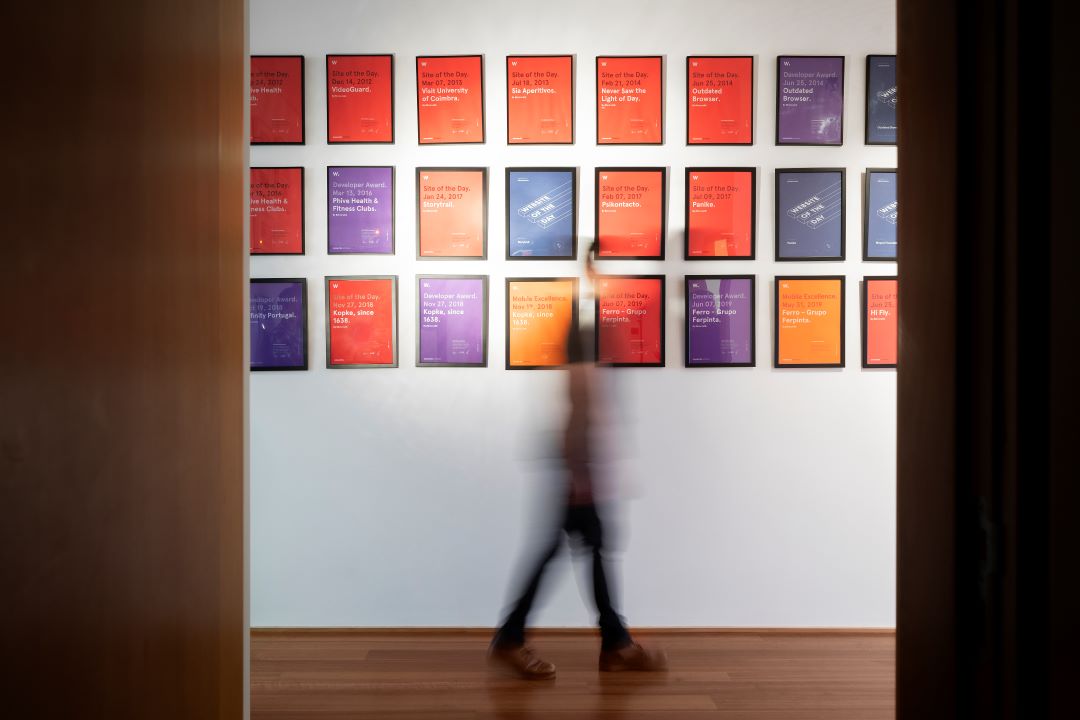
I started my first web design company in ’99 with 4 fellow chemical engineers who shared the university computer lab. After selling it a few years later, I launched Bürocratik in January 2005, fuelled by a decade of fearless 100% self-taught design trial/error and a drive to always create something as good as I could. It took me another decade to realise that design alone doesn’t win—you need an arsenal of tricks to make it succeed. Once we got that sorted, and got aboard awesome people that shared a common dream, we began producing award-winning work, with a decade of presence at the European Design Awards, Agency of the Year at CSS Design Awards 2022, and recognition as one of the most awarded studios at Awwwards with 34 SOTD. Now, 18 years in, we’ve remained proudly small, independent, and efficient, focused on creating great brands and websites, driven solely by our passion for excellent design.
What does a usual day look like for you at work?
I start my days at 7 AM in the gym, drop my kids (Matilde, 12, and Diogo, 8) off at school by 9 AM, and get to the office in Coimbra by 9:30. My workday is split between Slack, ActiveCollab (our project management tool of choice), Google Meet, Zoom, and the occasional stray WhatsApp message we try to avoid for sanity’s sake. I juggle projects like it’s an Olympic sport—balancing creative direction, design supervision, project and content management, and client handling. There’s little time left for accounting and the real bureaucracies, but I tackle those too, often with a clothes peg on my nose with plenty of coffee and an occasional Red Bull.
My favorite parts of a project are the beginning and the end—some take a year, others half that—but the journey is always worth it. We have a hybrid work schedule—two days at home and three in the office—but I’m in the office 100% of the time.
I leave at 5 PM to pick the DNA up, now loaded with the day’s learnings, and shuttle them to their various extracurriculars—volleyball, drumming, swimming and dance.
What does Bürocratik mean to you?
I really treasure what we’ve built at Büro. It’s my personal flag, the standard that has allowed me to do my best, put design above all else, and never compromise on the final results we deliver, always like I’m a Partner or advisor of the business, or brand. This is our bubble, our own hourglass, where everyone of the team can perform at their peak without business constraints or nonsensical orders from above. It’s the haven I wished existed but had to build from scratch in a country where design culture barely exists. It’s a safe place for those who understand the difference between the big corporate agencies and our fearless indie raft, charting a course to the secret island we call Büro. The name came from a Firefox Favorites folder I created to keep track of all the bureaucracies involved in starting a company—and it’s still, stubbornly here.
How has the business evolved since its founding in terms of team structure, service offerings, and the industries or sectors you primarily cater to?
When I left the company that bought my previous business in early 2004, I took a year to see if we could truly make it in the design industry. I started with a friend who shared my passion for design and had the business connections and charm I lacked—I was all about logos and typography at the time. We had a chemical engineer handling the coding, and since none of us could draw well, we brought in a sociology major as our fourth member. We started small, primarily selling identity and print services, and gradually expanded into web design, which required a larger team. In May 2005, my partner left the industry, and I officially launched Büro as a company. A web designer joined, and we began to grow, adding two interns over the next year, bringing us to a team of six.
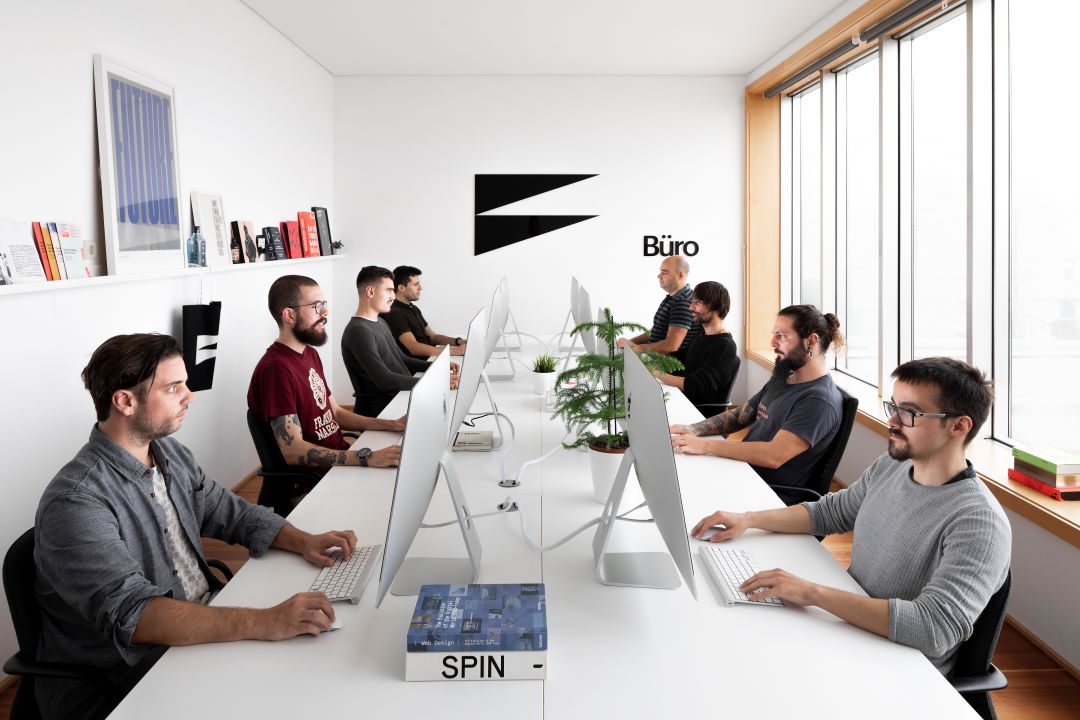
At our team size peak, just before COVID hit, we had 13 team members, but I’m a firm believer that a team of 10 is the ideal studio size—it avoids the layers of management that can bog down creativity. That’s been our target ever since. As for industries, we’ve never lingered too long in any one sector, as that can stagnate your offerings and design formulas. However, we’ve had a few regular clients in IT consulting, fintech, food & beverage and crypto.
Are there any specific industries or sectors that Bürocratik is particularly passionate about working with or contributing to?
We love working with established genuine brands, creating passion projects that extract as much value as possible. We’ve had the privilege of collaborating with brands like Kopke, Porto Cálem, Couro Azul (Automotive Leather), and currently Delta Cafés, Portugal’s largest coffee brand with an unmatched brand legacy. The challenges here are quite different from startups, particularly given the longer timelines needed to work our magic. It’s crucial to determine early on if we’re the right studio for the challenge, and passion is the key asset we seek on the client’s side once the budget is agreed upon. You can’t deliver a great website or brand if the client doesn’t view you as a temporary partner or advisor and give you some degree of ownership in the process.
When working with a new brand, how do you go about unraveling its underlying values and beliefs that set it apart from competitors?
We start by asking very few questions, getting to know the hierarchy of command, analyzing all the material and benchmarks the brand has delivered us. From there, we dive deeper with more questions and present our initial ideas during the first agreed week(s) of the project work. The bigger the brand, the tougher it is to discern what’s genuine, so we work to get inside that bubble and make it pop as much as possible. Having a motivated cheerleader on the client side is essential—someone excited to collaborate and eager to help us bring our vision to life. Without that person, you’re out of luck, and it’s better to move on to the next project.
How do you balance the need for innovation and experimentation with the practical requirements of meeting client expectations and delivering successful projects?
We can sort that balance as soon as we see the company industry/product and potential associated with it. Most of the time, it’s our own expectations that we have to equalize with the budget or time limitations; eventually, the client gets tired of the process along the way, and it’s our job to keep everyone motivated along with the cheerleader. If we have a tick on the essentials, we have a solid go.
Your agency emphasizes clarity and courage in doing things differently. Can you share a project where this approach made a significant impact?
Every single one of them really; we always bring to the table something that distinguishes the client into some new territories and try not to repeat formulas. Some demand specific craftsmanship, others just a fresh brand logo and universe (hi crypto), but if you eventually do what the client asks for, you end up repeating something they enjoyed from their competitors. One good example of a website that stirred some waters in the IT world was affinity.pt. We had our account of happiness and best place to work on previous IT industry websites, and we only accepted to make this one if we pushed harder, and the Company CEO trusted us. They’re still happy after these 7 years. Another one was couroazul.com, where we had a green card to make whatever we considered worthwhile; it was a pivotal moment for us, and to me personally, it’s still my favorite project as a whole (counting 6 years now). Finally, another aspect of how our projects stand the test of time differently is that we have websites with +10 years that still look great, just look at siaperitivos.com counting 12 years, that’s like a lifetime for websites and shows how much we strive for a longstanding impact.
Based on your experience, what’s the most important factor that leads brands to create successful overseas experiences and to engage at a global scale?
It’s all about increased visibility—that’s the main objective for a website. When done right, it becomes the brand’s mothership. Social networks are good measurements of how the brand interacts with their audience, but the website is their go-to place for any brand that wants to engage at a global scale. A bad website or brand is a missed opportunity to impress, and there’s no such thing as a great second opportunity to make it right.
Bürocratik has received several awards and recognitions. Can you highlight one or two projects or campaigns that you are particularly proud of and the impact it had on the client?
Our most awarded project was a print project we did for a local theatre, TAGV (Academic Theatre of Coimbra). They asked us for a new website, and we started revamping their brand identity, print collaterals, and the website was last (tagv.pt). The budget was low, but the project was exciting, so we exchanged that for decision ownership. For 5 years, we were partners of the marketing team of the theatre in a relationship of trust and results that makes me especially proud and still serves as a benchmark for what we aim to do. The three stages of the project were awarded at the European Awards (Gold—2018, Silver—2020, and Bronze—2021), and we won the Fedrigoni Award in 2019, ending with a trip to Berlin with the Client and the Printer. While we don’t work with them now, our job was done; I’m proud to say we are still friends, and the huge impact we had on the organization with our design partnership is notable. There’s something special about staying friends after the design is made. Design is not Tequila, as I say: it doesn’t make everybody happy, but this is something I’ve experienced over the years when clients understand they can trust the design ship captain. Conversely, we are finishing a brand and website for a client that, after one year, still has no clue about what we bring to the table. It all depends on the company culture, trust, and the bonds you are allowed to form.
As technology continues to advance, what do you see as the biggest challenges and opportunities for creative digital agencies like Bürocratik in the next decade?
The biggest challenge right now is understanding how AI can impact our work and learning to integrate it into our processes beyond the buzzwords. Those who stay informed and adapt AI to their workflows will have a significant edge over those who don’t, especially as brands begin to embrace what AI can create with or without our design agencies. As for opportunities, I have no idea, but I hope we can continue doing what we do best for another decade.
Can you offer any advice to young creatives who are interested in pursuing a career in this industry?
“Never quit” has always been my motto. It’s not easy to navigate this industry, and creatives need both resilience and excitement to thrive. It’s crucial to stay updated on new technologies and trends—you can’t afford to ignore what’s happening around you. After nearly three decades in the field, I’ve seen it all: from basic HTML and Verdana websites to Flash, smartphones (which effectively killed Flash), JavaScript, and WebGL. Through it all, design is still what drives me, more than the technology itself. The key is to always blend creativity with purpose.
Having experienced all these phases of interactive design, I have to admit I don’t get the nostalgia for Flash websites. The web today is far more exciting than what we had 15+ years ago (if you can overlook the cookie warnings, of course).
As someone who enjoys challenges, is there any lesson you’ve had to learn multiple times?
Design (alone) never wins. Bring good design to a table where strategy, politics, and personal and cultural beliefs are on the same level, and design will never win an argument. You need to learn that as soon as possible if you want to make a living out of design. Understand how the game works before getting frustrated about why your design proposals are always put aside. If they are good and relevant to solve the problem, fight with the full social arsenal and not just pick up typography to someone who will never understand what you are saying or trying to explain. Call that manipulation if you must, but to unleash great design under the client’s approval, you need to learn a bit about hypnotism and politics right after grids and typography.
You’ve mentioned that music keeps you alive. What kind of music do you enjoy, and how does it influence your creative process?
I enjoy all types of music, from the sparseness of minimal electronic, chamber music, and modern classical to the heaviness of metal and noise, and everything in between, as long as it’s genuine and soulful. I’ve always had a fondness for final album tracks and B-sides that embrace experimentation. Whether in music or design, you create your best work when you’re free from constraints and just let the process flow.
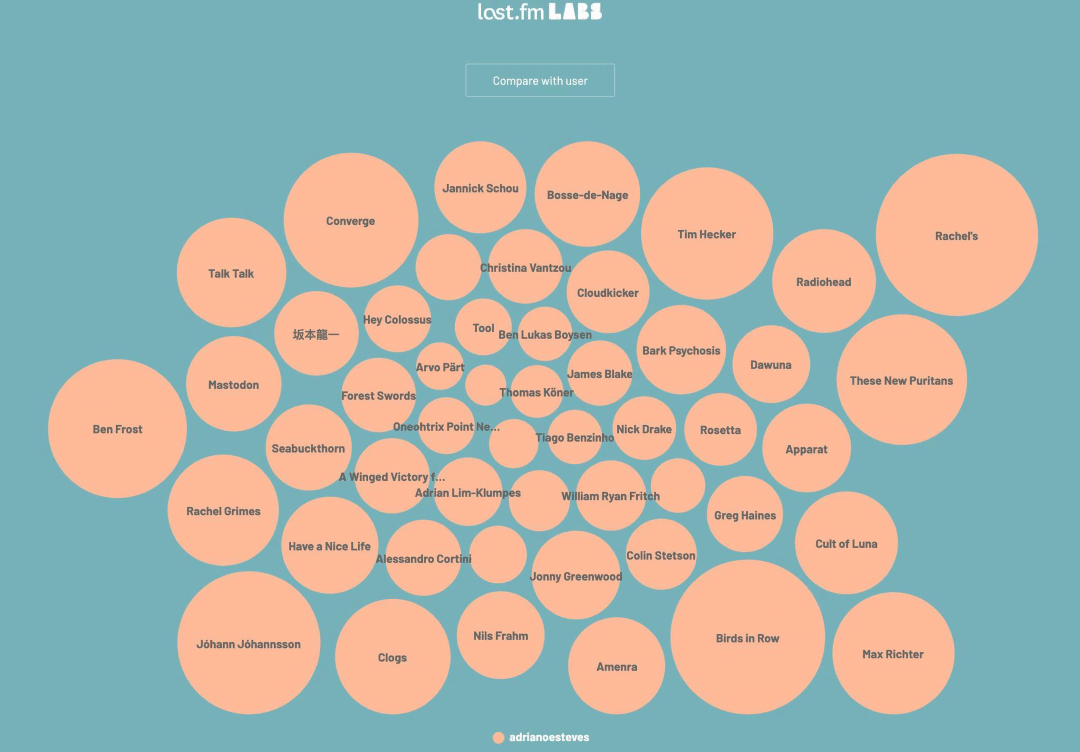
I’ve been tracking my listening habits through last.fm since 2009, averaging about 30 tracks per day. Analyzing this data has taught me a lot; I wish I had all my life music tracked.
Music has influenced my creative process at various stages. In the ’80s and ’90s, it was all about metal logos, which sparked my interest in branding, and the iconic 4AD Vaughan Oliver and Dave McKean album layouts that drew me into layout design. My first client was the Portuguese black metal band Moonspell, for whom I crafted several logos and album layouts (Darkness & Hope, Antidote, Memorial) and made their website in ’96, giving me international exposure from day one.The second stage began 15 years ago when I started my music blog, Collectables, where I attempted to compile highlights of my daily listenings. This eventually led me to start my own YouTube channel (as Untitledesigner first and Collectables later on) to share the modern classical and minimal electronic music I loved, which wasn’t available on the platform at the time.
From there, I embarked on an exciting journey of discovering new artists and promoting them daily on my channel with improvised layouts, always with the same typeface to maintain the channel’s visual consistency. For the next decade, I consistently used the same font and design, leading to around 650 uploads of carefully curated sonic poetry. Now that everything is available on YouTube, I’ve stopped doing it on YouTube and embraced Spotify playlist. This influence extends beyond just listening while I work—it has become a visible part of our Büro DNA. We often collaborate with talented musicians I’ve connected with along the way, integrating their work into our creative projects, from reels to custom sonic experiences.
As unpopular as it may be nowadays, audio on websites has been a consistent feature for us since the Flash era, especially in more experiential designs. Recently, this approach has led to the creation of custom music specifically tailored to enhance the user experience. You can see this in our projects: Kopke, where we used music to introduce content in chapters; Hematogenix and Kategora, where each section features a minimal soundtrack crafted to match the website’s ideal pace; VOS9x, which offers a more cinematic experience; and recently Kozowood, a wood construction brand, where we mixed music with nature field recordings. Each of these projects carries a unique musical fingerprint that I identified early in the process and helped shape the design, which is immensely important to us.Our upcoming website will feature a custom soundtrack, which we plan to release on vinyl as a collectible.
Music has always fuelled my passion for design, and I consider audio design just as essential as typography or hierarchy. It keeps me alive and inspired, as reflected in my playlists on Spotify, curated by year and mood and on my blog with the highlights of my daily findings. Phew!
From your personal standpoint, what is the greatest challenge of our time?
As a human, discerning between what’s real and what’s fake will be the greatest challenge of our age, along with the mental health struggles that come with it.
Professionally, understanding the role of AI in our daily lives is crucial. Beyond that, it’s mandatory to learn how to slow down our lifestyles and, as a parent, help our kids manage and avoid screen addiction (while gracefully accepting the persistent failures).
Finally, on a lighter note, can you share a fun fact about yourself that not many people know?
I’ll give you three: my favorite fruit obsession is Passionfruit and Figs (directly from the fridge). I absolutely love wind; it’s my secret passion, and I plan to visit Iceland someday.
Adriano’s Working Preferences:
Early Bird or Night Owl?:
Early bird
Usual breakfast:
Fresh water only when I get up, yogurt & coffee 2 hours later.
Favourite color:
Klein blue and black
Favourite music genre or band:
Talk Talk/Mark Hollis (late 89-98), Rachel’s, These New Puritans, Grew Haines, Jóhann Jóhannsson, Radiohead, Kyuss, Bach, Arvo Pärt, Clogs, Ben Frost, Forest Swords and Tim Hecker, and more recently Dawuna. All here and here.
Last place traveled:
Porto Santo Island (Madeira)
Last downloaded app:
Life Progress
The game you’re best at:
Patience
Preferred spot in your city:
Green Park (Parque Verde)
What makes a good day at work?:
When you don’t feel the time passing by, ideally with just one call.
Agency to watch

Best in Breed since 1998. Lounge Lizard is a Digital Agency that Specializes in Brand Strategy, Website Design, Web Development, Mobile APP Development, Online Marketing, Social Media, Ecommerce, and SEOdigital experiences that move brands and businesses from now to next.
Featured agencies

135265 Views

115780 Views

109484 Views

91980 Views

88543 Views

83289 Views

74927 Views

61669 Views