“We bring the same problem-solving ethos that underpins great design”
Design transformation is the missing piece that makes digital transformation a success or an expensive failure
 Brighton, September 11th, 2024
Clearleft is a design transformation consultancy based in Brighton, UK. They apply the power of their design expertise to transform organisations, products, design teams and individual careers. It was the first UX agency in the UK and has since grown to work with design leaders across multiple sectors.
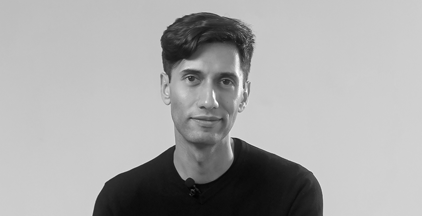
Richard Rutter is the Co-founder and Managing Director at Clearleft. In an interview with TIA, he described the process through which he founded the agency and explained how he balances his multiple responsibilities. He also detailed their methodology process and highlighted the importance of being curious.
What do you enjoy most about living and working in Brighton?
I love living in Brighton and we’re proud of being a Brighton-based company. There’s a vibrant independence to Brighton – an anything goes kind of attitude – there’s always things going on not least of which is the Brighton Festival in May. Music is a big passion of mine, and there a loads of great record shops as well as some really good and popular venues for bands (big and small) and clubbing (although I’m very much a retired clubber now). The design scene is huge, with loads of other agencies, freelancers and contractors who know each other well. Taking in the creative sector as a whole, it’s now the biggest contributor to the local economy, even more than tourism. It’s also close enough to London for clients, gigs and other events that don’t make it to Brighton.
Our studio is right in the centre of the city, really close to the beach, but in terms of hidden spots, during the summer the trick is to avoid the section of beach between the piers as it’s always heaving. Head east towards the Marina and there’s the fantastic Bison Beach Bar as well as Yellowave Beach Volleyball and Café (on actual sand not stones).
Can you tell us about your journey and what led you to co-found Clearleft?
I founded Clearleft in 2005 with Andy Budd and Jeremy Keith. Part of my motivation for that was to avoid the commute to London – the easiest way seeming to create a job for myself here in Brighton. The other main motivation – and one which drives on Clearleft still – is to work alongside fantastic teammates, doing great work for good people, choosing to tackle challenging problems that make a positive difference in the world.
What are your main focuses at the moment?
Since 2020 we’ve been an employee-owned company, so an ongoing focus is running the business in a transparent way that harnesses the vast experience (and opinions) of everyone here. Employee-ownership does not equate to a cooperative or even a democracy, and we run the company with a relatively conventional structure. However, it vital to ensure that the owners of the company – that is to say all current staff – are fully behind the way the company is run.
In terms of business focus, this is the year of ‘internal service design’ for us. Behind every great customer experience is a great employee experience – we like taking on the tricky challenges behind the scenes. This is what we mean by internal service design: designing the not-so-glamourous tools and process that make a successful organization really tick.
How do you balance your responsibilities of running a design business with multinational clients and your passion for design?
We’ve had international clients right from the very beginning. One of our first clients, back in 2005, was a Slovenian social media company. We’re still friends with them now, and without meaning to get overly political, it was the kind of super-straight forward business arrangement possible before Brexit came along and made things harder. All of us – me included – bring our passion for design to everything we do. Whether it’s curating our Leading Design conference for an international audience of design leaders, working with a modest British charity or a gigantic multinational corporation, we bring the same problem-solving ethos that underpins great design.
Clearleft describes itself as a design transformation consultancy. Can you elaborate on what this means and how it differentiates Clearleft from other design agencies?
We view design transformation as the missing piece that makes digital transformation a success or an expensive failure. It’s about equipping a client with the knowledge, skills and processes to succeed and thrive with what happens afterwards. This means we form a strategic design partnership with our clients. This means we involve them in all the phases of our user-centered design process, from user research through analytics, customer-informed information architecture and content design, product prototyping, iterative hypothesis-based improvement with usability testing, design language and design system development and accessible, responsive and performant practices. If we’re simply redesigning a website, or if the client has a root and branch redevelopment of their technology, we’ll support the client in ensuring user-centred design plays a fundamental role in that process and that they are set up to have design as an embedded function of their organization into the future. Sometimes this takes months, sometimes years, but ultimately we’re aiming to get the client to a point where we do ourselves out of a job!
When working with a new brand, how do you go about unravelling its underlying values and beliefs that set it apart from competitors?
Conversations and curiosity. The answers are always in there somewhere, we just need to draw them out. Sometimes those conversations will be in the form of structured workshops, but ultimately those are just a way for us to ask the right questions of the right people.

Clearleft offers a wide range of user-centred design services, from research to design systems. How do you ensure the quality and consistency of these services across different projects?
It’s down to the people. We hire experienced, talented people who come to Clearleft to do the best work of their career. That’s provides enough intrinsic motivation to do a good job. On top of that is the knowledge that good work brings new work, and new work keeps the company going – something as partners we all have an extra vested interest in. Ultimately we have some massively experienced senior leaders who oversee all the work we do for clients, but their job is mostly to guide and nurture. A final piece of the Clearleft picture is the events we run – notably UX London and Leading Design – which all of staff can attend and learn from – even those who are themselves speakers or workshop hosts.
Collaboration seems to be a key aspect of Clearleft’s approach. How do you foster a collaborative and creative environment within your team?
A current Royal Designer for Industry famously said “Don’t’ work for assholes”. While I agree with that sentiment, I’d add “Don’t work with arseholes”. Being surrounded by enthusiastic, talented, nice people who are given enough space to do their work is pretty much all you need. Given those circumstances colleagues will want to work together and with our clients and are given the autonomy to make that happen.
Do you have a particular methodology to help others achieve their goals?
We have a toolbox and a user-centered approach to our work, but each opportunity brings its own unique challenges, so we adapt accordingly (including during a project). In terms of helping staff achieve their goals, we have a structured professional development framework we use for everyone in the company, which we use periodically in our 121s. This helps us identify strengths, weaknesses and next steps in a career.
Clearleft has been a pioneer in the UX field. How have you seen the UX industry evolve since you started, and what trends do you foresee shaping its future?
Over the past twenty years we’ve seen an increased understanding of what UX design brings to a website, product or service. However, we’ve also seen a dispiriting whittling away of what user experience design really means, what it should encompass, and what the reach of a UX designer should be. For us UX design should – and still does – encompass the realms of user research, information architecture, content strategy, product ownership, 360 service design, interaction design, usability testing, analytics and iterating across all of those roles. That’s not to say one single UX designer could or should perform all those roles, but there’s an isolation and tight definition of what in-house UXers in particular are expected and allowed to do that does go anywhere near having a fully realized impact on the user’s experience.
What role does design-focussed training and conferences, like UX London and Leading Design, play in Clearleft’s mission?
A huge part. Our mission for a long time now is “to advance the practice of design to transform organisations and impact people’s lives for the better”, and our events are a key part of that. We’ve run conferences right since our beginning – the first dConstruct was only 3 months into Clearleft’s first year – so they are a fundamental part of what we do and how we give back to a community that has always supported us.
For aspiring designers and entrepreneurs, what advice would you give to help them navigate their careers?
Be curious. Keep looking for opportunities to learn new things so you can find the aspects of design you love, that follow those with a relentless passion. I’ve never had a plan for my own career – in fact I used to design bits of oil rigs before the web came calling. I’ve always been happy to stay loose, change direction and follow my instincts, and it’s something we try to enable for staff at Clearleft. Our industry is exciting and broad enough that somewhere in there is an area you’ll love, putting you in the privileged position of being paid to do a job you enjoy. Few people have that luxury in the grand scheme of things.
How has your passion for service design and typography shaped your professional career
Typography is something I picked up in my early days as a UX designer, before Clearleft, and it was a passion I just ran with. I chose to write about it and speak about it, and there were enough people interested in reading and listening to what I had to say to give me the confidence to keep doing it. Again our wonderful industry encourages and enables that kind of thinking. I can’t imagine how something similar would manifest itself if I was still a chemical engineer.
Outside of work, what are some of your hobbies and interests?
Typography is a hobby outside of work as well as in it. I wrote most of my book Web Typography in the evenings. Beyond that cycling, running and listening to music provide a fantastic mental break from the trials and tribulations (and stress) of running a business.
Are there any causes or initiatives that you are personally passionate about and actively support?
We actively encourage and support diversity of all sorts of people at our conferences – both on stage and in the audience, and this year we’re participating in the 10,000 Black Interns initiative. It’s incredibly important to widen the appeal of design to as broad an intake as possible, especially as we see the damage that biased AI and algorithms can and does create. Clearleft also gives colleagues the time, and some financial support, to run local chapters of UXup and UX Camp, both of which are community events helping new people into the industry.
Finally, on a lighter note, can you share a fun fact about yourself that not many people know?
I mentioned designing oil rigs (which did include working on rigs in the North Sea). I did that for 6 years right up to when I became a professional chartered engineer, at which point I jacked it in and turned a hobby (making web sites) into the career I still have now. Also I’m red/green colour blind, which is actually more of a help than a hindrance from an accessible design point of view.
Richard’s Working Preferences:
Early Bird or Night Owl?:
Short answer: Early bird. Longer answer: both, because afternoons are my weakness
Usual breakfast:
Tea with toast and peanut butter, immediately followed by a pot of coffee.
Favourite music genre or band:
I’m still a 90s indie kid at heart
One word that best describes your approach to business?:
Supportive
Last place traveled:
Amsterdam for work, Mallorca for holiday
A tech gadget you can't live without?:
iPhone, although I wish I could
Favorite sneaker or shoes brand:
I’m really not that bothered about brands. So Decathlon because they are cheap but good.
What makes a good day at work?:
Smiles. That and the satisfaction of solving a thorny problem, but mostly smiles.
Agency to watch

Best in Breed since 1998. Lounge Lizard is a Digital Agency that Specializes in Brand Strategy, Website Design, Web Development, Mobile APP Development, Online Marketing, Social Media, Ecommerce, and SEOdigital experiences that move brands and businesses from now to next.
Featured agencies

134982 Views

115543 Views

109328 Views

91813 Views

88272 Views

83081 Views

74702 Views

61513 Views