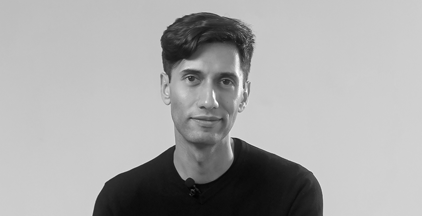
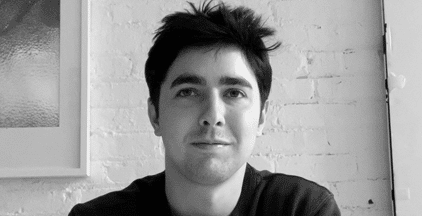
“UX/UI isn’t window dressing — it’s business strategy disguised as design.” — Tighe O’Connor on Verve Studios’ Growth Mindset
I always jump to the end and think about how it is going to be consumed, thinking about it in the context of its final state.
Charlotte, 12th November 2025
 Verve Studios is a motion and design studio that partners with agencies and companies to bring their ideas to life through 2D animation, UI/UX design, and brand identity. Known for its blend of agency-level expertise and freelancer-like speed, Verve offers senior-quality creative output with clear communication, right-sized budgets, and a culture that prioritizes quality over profit.
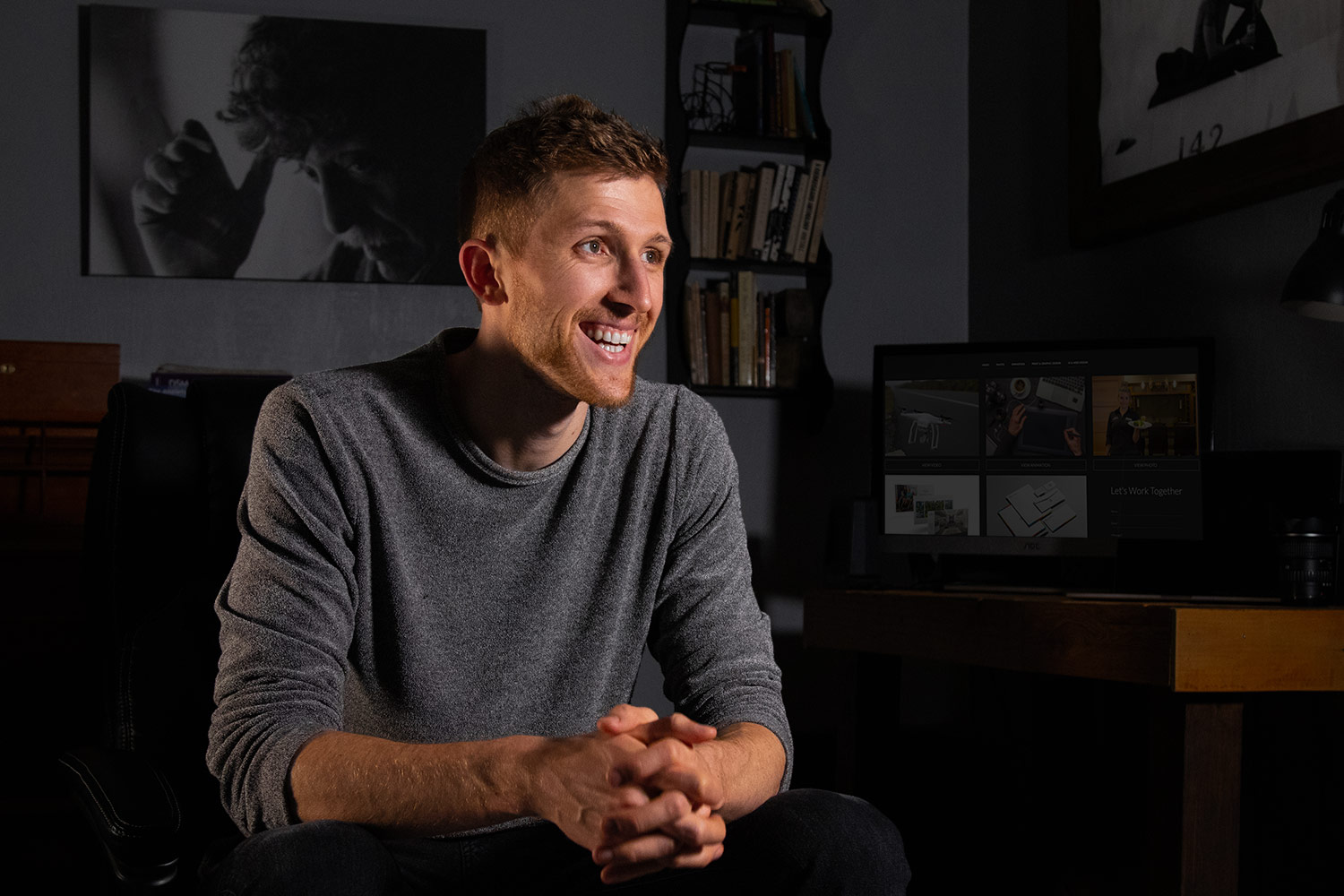
At the heart of Verve is Tighe O’Connor, the studio’s Founder and Owner, who launched the company in 2015 after transitioning from agency life to full-time freelance. Over the past decade, he has grown Verve into a trusted, award-winning creative partner that consistently delivers portfolio-worthy results. In this conversation, Tighe shares his journey, his philosophy on design and storytelling.
It’s nice to have you here. Let’s kick off with your origin story — what led you to found Verve Studios, and what were those early freelance years like back in 2015?
I was working as a Creative Director at a marketing agency and simultaneously working with my own freelance clients. Eventually, it got to the point where I had too many clients and working too many hours, so I decided to make the switch to freelancing full time. I had no intention of creating an agency, but with more and more word of mouth recommendations, great companies came to me for help that I didn’t want to turn down. That forced my hand and I had to hire great people to help me, from that Verve Studios was born.
What’s one spot in town you’d recommend to a foreign friend visiting Charlotte for the first time?
It’s a little north of the city. But in the small suburb of Davidson, there is a restaurant called Kindred on the main drag. It’s absolutely one of the best restaurants I’ve been to and is often a spot for my wife and I on special occasions.
How do you typically structure your workday or week to manage both creative and business demands?
I often start the day with the administrative. Working through emails, notifications, and scheduling all my meetings. It’s in the late afternoon/evening that I like to block off time for focused creative work. I have a block on my calendar every day starting at 3pm so that I can close out my email and project management system to truly dive into a creative project I’m excited about.
Verve has grown into a specialized team focused on animation and UI/UX. How do you balance both disciplines within your studio’s creative process?
It is a bit of a strange mix, but it only comes from what I love to do. Working before as a creative director in a marketing agency I did all sorts of creative projects. When I started my agency I started narrowing down what we did solely based on what I enjoyed doing. Sometimes I think small creative businesses can focus too much on what makes sense on paper and that can leave out factors like motivation and passion. So for me, choosing the types of creative projects that get me excited is one of the best ways to be successful. To balance both disciplines we have specialists for each side of the company, animators and designers, who are all great at what they do.
You’ve described your studio as small but highly collaborative. What do you think makes for a successful long-term partnership between a studio and a client or agency?
It’s a studio that’s able to feel like a member of the leadership team. A company really just wants someone that they can trust to get the job done. So the more that you can integrate into their company and advocate what’s best for them not only makes their lives easier, but their company better. This means being flexible in your process, but strict in your end result; honest with what the client needs, even if it’s not in your studio’s best interest; and helping push their company to the next level, without coming across as salesly.
When it comes to storytelling — whether for a brand, a product animation, or a website — where do you begin?
Conversations always seem to uncover this the best. You could have a written brief and that maybe gets you 75% of the way, but when you hear someone explain in their natural language their problem, needs, or story you catch so much more detail than you ever could on paper. To put it another way, when I have a conversation with someone about their project I’ll come away with a much deeper, truer understanding of what they need than I ever would with a brief.
In branding projects like Riverside, how do you translate abstract ideas like tone or values into visuals that resonate and feel cohesive?
I think this is where the ‘art’ comes in. I think you could break down the reason why we feel the way we do when we look at branding, design, or video with cultural, historical, or physiological reasons. But sometimes it’s just simpler to know “it doesn’t feel right” and follow your gut to uncover the right approach for the project. But to get to the point where you trust your gut, you have to have the right context, for me this is achieved via research. Before ever opening Adobe Illustrator we spent lots of time researching the geographical and cultural aspects of the location of this development project. That is what guided our gut in what we created.
Your Fall Prevention Program video shows how animation can convey clarity and emotion. What makes 2D or 3D animation effective in tackling complex or sensitive topics?
Animation is great because you’re able to do anything. With live video you are able to capture reality well, but with animation a whole new world opens of being able to communicate concepts and ideas in the abstract, and possibly a more true way. Like how fiction can sometimes feel more real than non-fiction. With animation, you’re able to remove anything that distracts from the point you’re trying to make and hyper-focus on what matters the most.
For a UI/UX project like CertainlyCX, how does your approach differ from a full branding or animation assignment?
Website projects are definitely the most information-heavy things we work on. Of course it takes creativity to make a great website, but the other half comes from well-executed information management. We try to capture and strategically organize that information from the very start. Then from there the job is to carefully move that information from words on a page to an interactive online experience; careful not to drop anything important and translate it to the visual and interactive experience that a website is.
How do you determine the right format for a message — whether it calls for motion graphics, a 3D build, or something more minimal like logo animation?
I always jump to the end and think about how it is going to be consumed, thinking about it in the context of its final state. When you understand the purpose of the message and put yourselves in the shoes of the person receiving the message, often the format reveals itself pretty easily. I simply think about how the message would make the most sense to me if I was the consumer.
How has your approach to animation evolved with the rise of AI tools — and what excites you most about how these technologies are shaping the future of the medium?
We aren’t using AI tools much within animation, it’s not quite useful yet in creating quality & editable animation products. But it’s getting close for voiceovers and we offer that as a budget alternative to a real voiceover actor. In regards to the future, I think new tools will be invented that can definitely help us create more effective animations. I imagine asset creation will be a natural next step for that technology.
Can you walk us through a particularly rewarding project where design, motion, and storytelling came together seamlessly?
A project that comes to mind was a great non-profit we worked with, “Pedal for Alzheimer’s”, they partnered with a brewery to create a beer to help raise awareness and funding for Alzheimer’s research. They needed about every service we offered to make it come to life. We created a branding, packaging design, and promo animation. It was a lot of fun to come up with a concept and bring to life this brand for such a good cause.
What’s one lesson you’ve learned from growing a boutique studio while maintaining high quality and personal attention?
It’s critical to clearly and consistently make clear your values to your team. My team is judged primarily on 2 factors: “Quality” and “Details & Requirements”. As long as everything we create is of high quality and high attention to detail, the rest will take care of itself. Hours to complete a project is an explicit secondary factor. We have an easy and transparent process of deducting hours we bill clients for some projects we work on. Because sometimes it takes more time than we expected to finish it to our standards. And my team understands that if we need to deduct the hours that we bill, that it’s worth it in the name of quality.
Outside of Verve, what do you enjoy doing in your free time?
I love morning walks, they’ve always been an important aspect of my day. My son, dog, and I go out on a greenway near my house and spend 45 minutes enjoying nature and starting our day in this relaxing, beautiful way. It sets the right tone for the rest of my day.
And finally — can you share a fun or surprising fact about yourself that most people wouldn’t guess from your professional bio?
My wife and I took the opportunity to travel, live, and work remotely for a little over a year and a half. It was an amazing experience living 6 weeks at a time in different countries working during the day and experiencing new cultures via normal life.
Tighe’s Working Preferences:
Early Bird or Night Owl?:
Both. It’s the early afternoon when I’m at my least productive.
Usual breakfast:
Yogurt and Berries
Favorite book, TV Show or movie:
East of Eden by John Steinbeck
Last place traveled:
Buenos Aires
Favorite sneaker brand:
Adidas
Last downloaded app:
Huckleberry, with a new baby it’s critical.
What makes a good day at your job?:
Being able to work start to finish on one creative project for the majority of the day.
If you could solve one problem in the world, what would it be?:
The ability to have a productive and open conversation.
Thanks Tighe!
Learn more about Verve Studios
Follow Tighe on social media:
Linkedin
Follow Verve Studios on social media:
Linkedin
Agency to watch

Best in Breed since 1998. Lounge Lizard is a Digital Agency that Specializes in Brand Strategy, Website Design, Web Development, Mobile APP Development, Online Marketing, Social Media, Ecommerce, and SEOdigital experiences that move brands and businesses from now to next.
Featured agencies

134970 Views

115530 Views

109320 Views

91805 Views

88261 Views

83070 Views

74693 Views

61505 Views