“We implement new technologies that stretch the boundaries”
We have Front End, Back End, and Creative Developers all in-house working on every platform we create, making every website some art piece
 Mexico City, November 29th, 2022
Dogstudio is a multidisciplinary creative studio at the intersection of art, design and technology. With headquarters in Chicago but staff all around the world, the agency is on a mission to explore, create meaning and provoke emotions through design and storytelling. Its goal is to deliver amazing experiences that make people talk, and build strategic value for its clients.
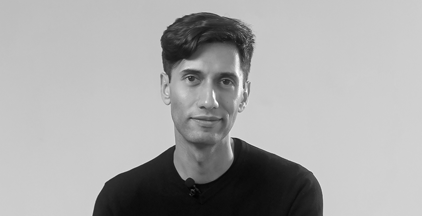
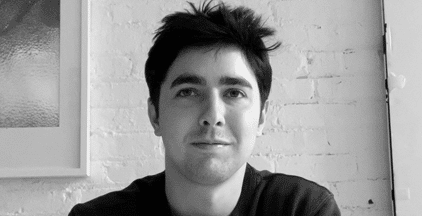
Rodrigo Orozco, is the Executive Producer Americas at Dogstudio, based in Mexico City. In an interview with TIA, he described his day-to-day routine, working remotely with producers from around the world. He also highlighted the features that make the agency stand out and explained the Dogstudio’s production process.
To kick things off, what do you love the most about your city?
Mexico City is a surreal, fun, busy, amazing fast-paced city that will always have something to offer that will surprise you. There’s always something to do, no matter the time. It can be 4 am, and you will find a party, a place to eat, or someone looking for the next adventure.
As a local, I recommend two things. First, visit the Roma-Condesa-Juárez neighborhoods to try some of the best food offerings in the city. The restaurant scene there is fantastic, and you’ll always find a new place trying to push the boundaries of the tasting experience. But the actual real Mexican food experience is on the streets. Always pay attention to the little food tents. If they’re busy, the food will be great.
Second, visit the museums around the city. We have some fantastic art and history museums. My favorite is MUAC (the National University’s Museum of Contemporary Art).
Where do you spend most of your time, and what does a typical day for you entail?
I spend most of my time at home and around my neighborhood. The pandemic changed my everyday activities considerably, and I learned to enjoy the little things close to my apartment.
Most of my days start at 7 am with me, a cup of coffee, my computer, and a call. Our team is spread worldwide, so early morning meetings are critical to the rest of my day. After my first call, I always write down a To-Do list for the day. That’s the only way I can focus and feel productive. Then, when I’m done with work, I read, watch something inspiring, play/listen to music, and go for walks to remind myself that there is a world out there.
Could you explain to us briefly what’s your role as Executive Producer at Dogstudio?
I lead a remote and internationally distributed team of producers and see that we complete diverse digital projects on time, to specifications, and efficiently. I also collaborate closely with the Account Management team to ensure all sales have preliminary planning, resourcing, and scope definitions. Finally, and most importantly, I build client relationships and make sure that communications are good and conflicts are avoided when possible.
What are your main focuses at the moment?
Teamwork is constantly evolving. And as teams grow, the way of doing things needs to change, develop, and be optimized. I’m currently working with the team on better understanding how all the different disciplines connect and work together and making improvements to our processes and documentation to make our day-to-day more efficient and effective.
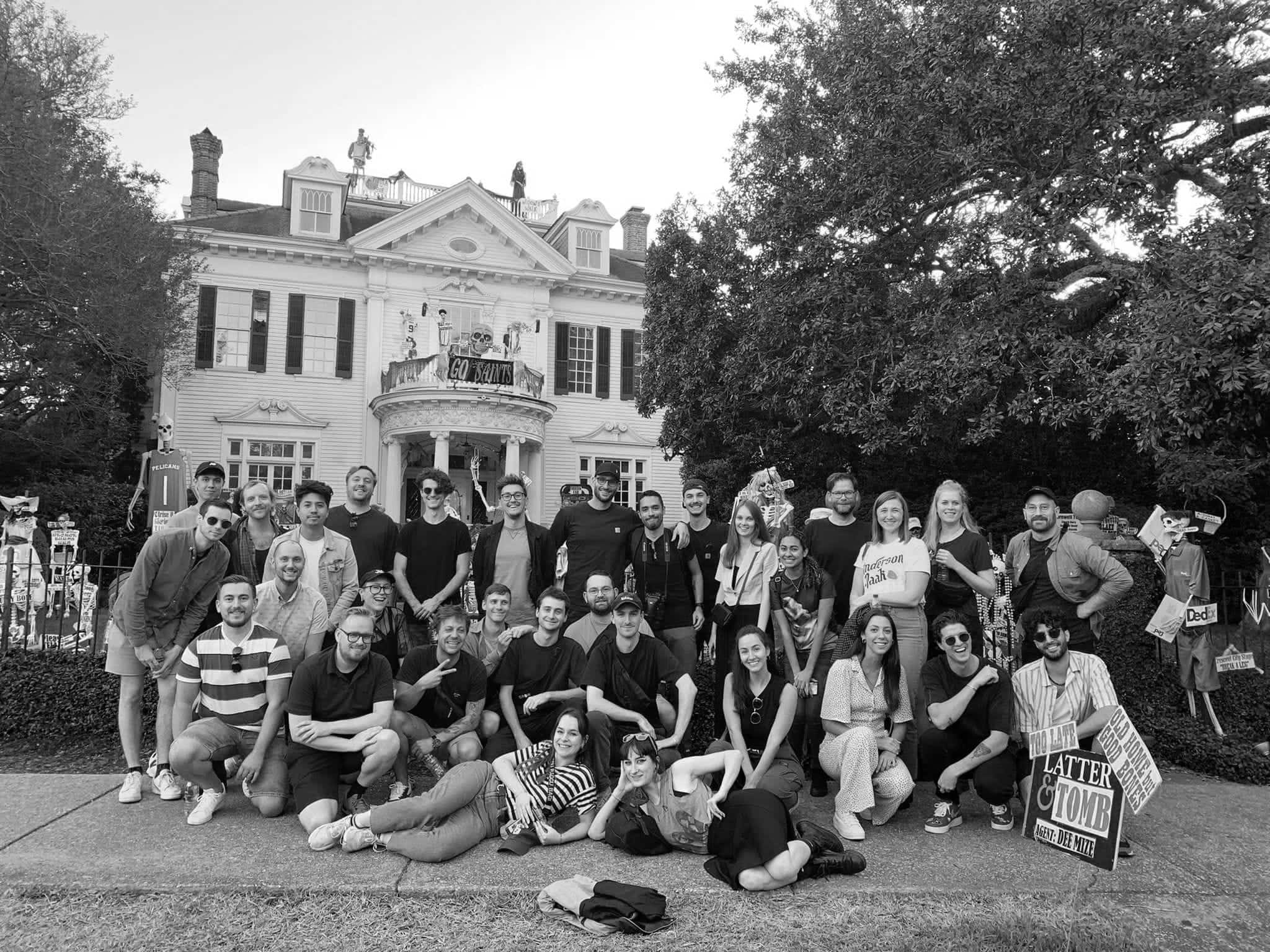
Dogstudio claims to be a multidisciplinary creative studio at the intersection of art, design and technology. Can you tell us a bit more about this?
There’s something different about the people working at Dogstudio and those I’ve worked with at other agencies. The product designers, developers, 3D artists, and even the producers love the craft, value the importance of design and look to implement new technologies and frameworks to constantly stretch the boundaries of digital experiences for massive audiences and our clients. This effort is led by our CEO, Henry Daubrez, who always pushes everyone beyond and above and thinks of new ways to bring life to projects. And having a leader that believes this way creates a unified approach to our actions.
Can you go into some more detail on your production process?
All development is made in-house. The production process starts 99.9% of the time with a Discovery phase, where we get together and try to unveil the mysteries of the project, the client, and the most important person for any project: our users. We do workshops with our clients as often as possible to integrate them into our process and conduct Personas, User Journeys, and other helpful exercises.
After we have a clear path forward and have defined/validated the functionalities, user stories, and Creative approach with the client, we move to the Production phase, starting with UX design. First, our UX team ensures that all requirements are expressed in accurate wireframes to help the UI designers bring color and life to the envisioned experiences. Next, the UI design team works closely with our 3D and Motion designers to get everything in the perfect place for development to take over.
We have Front End, Back End, and Creative Developers all in-house working on every platform we create, making every website some art piece, manually crafted and put together by these “artisans” we call developers.
Tell us about a recent project you’ve worked on that you’re proud of, what particularly brought out the best in you?
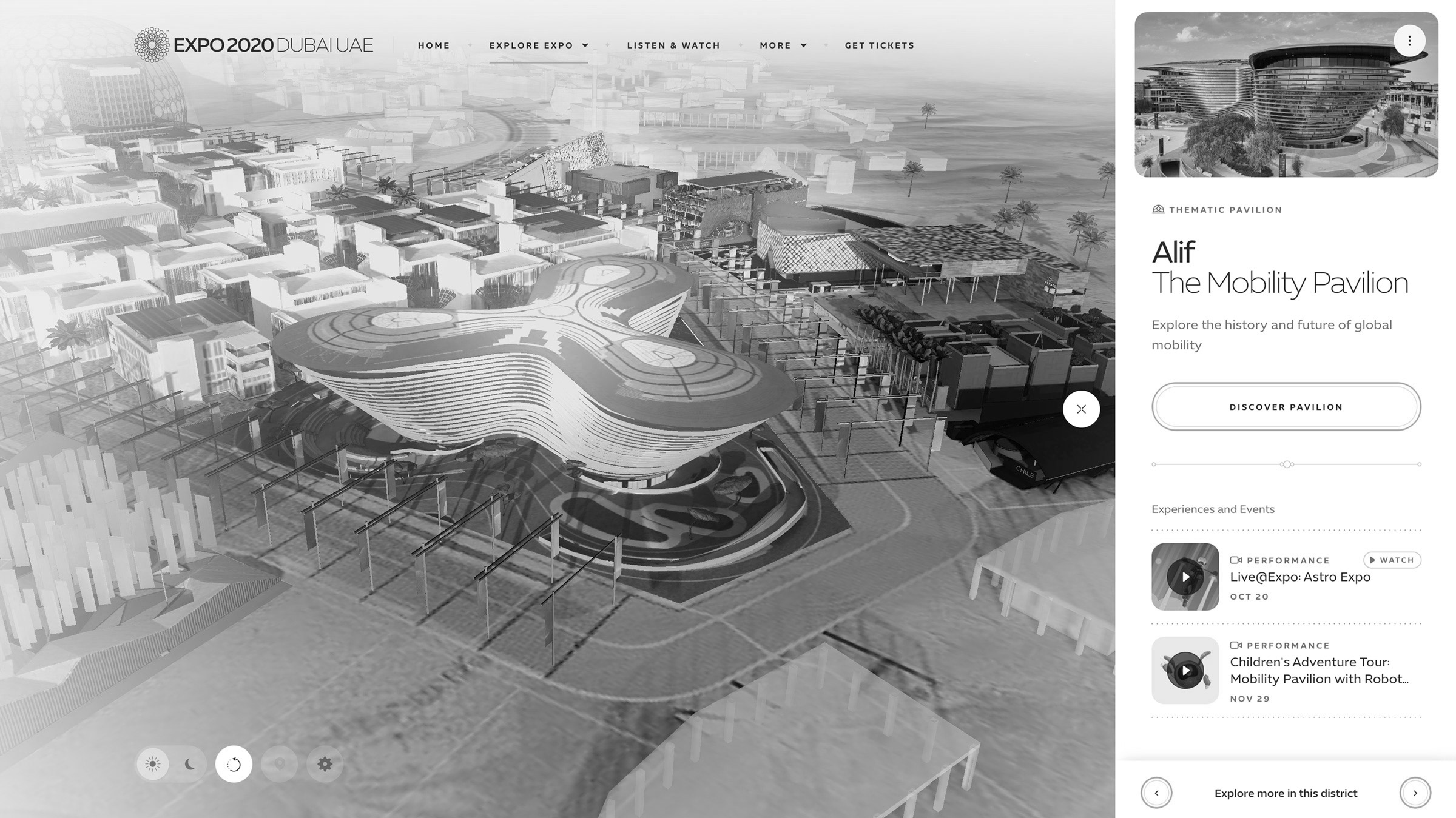
I feel very proud of the Expo Dubai 2020 website project. It has been one of the most demanding but engaging projects I’ve ever been involved in. I had the opportunity to work with most of the team at Dogstudio to bring this “monster” to life. For this one, we had to coordinate an army of a team: 5 Product Designers, 4 Front End developers, 4 Creative Developers, and more than 10 3D artists. I coordinated mainly our Product Design team and the Front End development bit of the project across time zones.
To be helpful, I had to organize and try to put all my Producer skills at their availability to support the production process and the relationship with the client. The team spirit brought out the best in me: we all worked together, comprehending that our work was essential for the project launch. The results were fantastic, and it has earned us multiple awards, including the People’s Website of the Year at the FWA and many more.
You are a truly international agency, how do you manage different cultures?
We are open about the differences and make the most of them. Although, of course, it is always challenging to have such different views influenced by diverse values and educational backgrounds. But I think that is one of the things that makes us stronger. We celebrate differences and share knowledge. And the styles and cultures are reflected in the craft, colors, and creativity. With a team like this, you can see how visual references from LATAM or northern Europe are shared between designers, devs, or 3d artists. They build upon the commonalities of visuals and history, helping create a unique narrative that speaks to the client and the users.
How do you ensure you and your team deliver or exceed customers’ expectations?
I think the first step to exceeding expectations is understanding the actual expectations. And from there, we try to push them as far as we can. There are limitations always, of course (budget, client needs or views, timeline), but I think it’s in our DNA to not settle for what’s in the brief only. So we deliver the brief, but we always add something extra –always informed by the Discovery and the research.
This was the case for one of our latest projects for Yuga Labs and their Meebits NFT Collection. The team saw an opportunity to include an Easter egg on the new drop site we did for them. We kept it from the client until one of the last reviews before the launch. When our Lead Creative Developer, Dorian Lods, showed what we did, the client lost their minds and was extremely happy. You can figure out the easter egg if you’re into video games by going to https://turnon.meebits.app/.
What metrics do you track, and how do you define success in your role?
For me, success in my role is defined by two significant indicators: one, the project is released on time, manner, and within budget, and second, the team is happy and fulfilled because of the work they delivered. Of course, sometimes being a Producer requires you to focus on the essentials of Project Management, but most time, we’re doing a lot of therapy work with the team.
Naturally, client satisfaction is critical, and getting visits, page views, time spent on site, and a low bounce rate or conversions are also indicators of a successful project. But there’s nothing more satisfying than looking at a motivated team, happy with what they can achieve.
Can you give me an example of when you have worked with multiple clients at the same time and how you managed?
As an Executive Producer, I work with many clients daily. It is challenging cause every hour you need to take off your “Client A” cap and change to your “Client Z” one with everything that it entails: coming back to planning, challenges, changes, etcetera. But to not lose sight of what needs to be done and manage many clients simultaneously, improving your organization skills is the only way to go. There are many tools and paths for doing it. I personally prefer writing down everything, pen and notebook style.
The perfect client brief: Does it exist?
I don’t think there is such a thing as a perfect brief. The brief in itself is imperfect always cause it starts from many assumptions, and as we frequently learn, what the client needs at first can evolve and change radically during the Discovery phase. However, there are specific recommendations I would give to clients out there that can streamline the process between their vision and any agency process:
Provide as much documentation as possible when starting a new project. Give yourselves time to gather it all together. I know sometimes the timeline pressure can consume our minds but taking a step back and collecting everything you think can improve your agency’s work will save everyone from future headaches.
Get really involved in the Discovery/Strategy definition phases. When the clients get involved and actively participate in Discovery, the Production goes smoother and faster. The reason for this is I think we all feel like we own the project, and that can be a defining mindset for success.
CONTENT CAN’T BE AN AFTERTHOUGHT. If you don’t have the content and are unsure when the content will be ready, don’t try to push the project forward. Save yourself and your agency from excruciating pain.
In your view, what is the biggest challenge the interactive sector is facing right now?
I think we’re living in an “inflection point” type of moment. AI, the Metaverse, the post-pandemic, and the current recession are gonna push the brands to be more cautious about their investments and try out new cherry-picked things. But, on the other hand, these factors are also gonna make the industry keep evolving creativity, campaigns, websites, and experiences to connect with this new chimera of a user. Rising slowly from their caves and coming back to some old ways of living life, users are thirsty for new, more interactive, and exciting ways of living in these uncertain times. And digital plays a decisive part in our new normal.
Three things I wish I knew when I left school…
- UX strategy
- How to be an adult
- School is only the beginning
What do you like doing in your free time?
My favorite thing to do in my free time is travelling and taking pictures. Photography has always been around me so I try to spend as much time as I can with my camera, although sometimes it’s hard. Currently I’m working on a lifelong passion of mine and I’m building my own photo studio in Mexico City together with my girlfriend and a close friend. I love photography, and I’ve always wanted to spend more time meeting interesting people and taking pictures of them.
Can you name a fun-fact people would be surprised to learn about you?
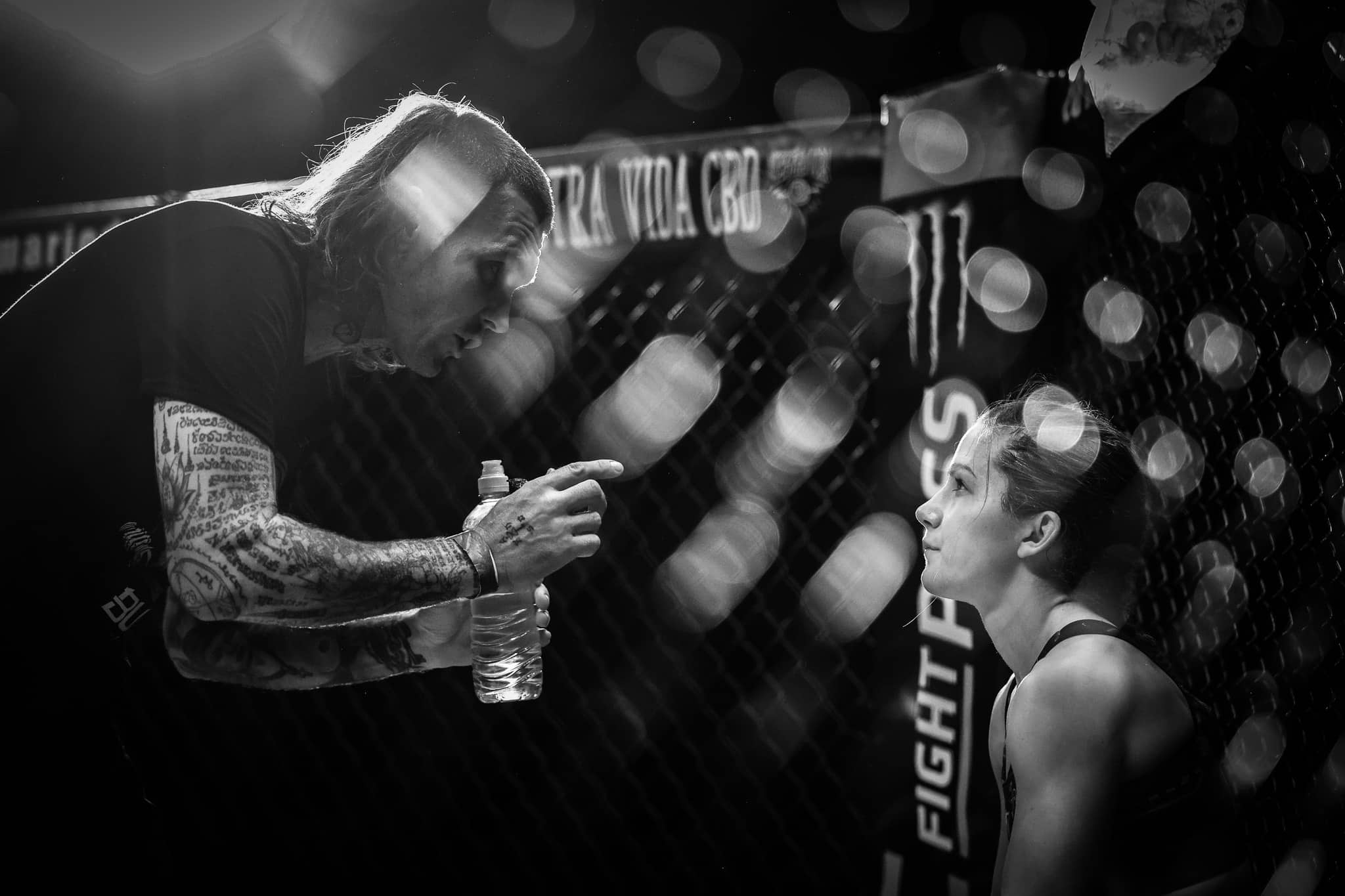
I have dreamed of playing hockey since I was 10 years old. But unfortunately, hockey was not an accessible sport in Mexico City in the ’90s. The academies were very expensive and there was only one ice ring in the city. So, at 25, with my first big bonus, I purchased all my gear, joined an academy, and started playing hockey. I must say, I’m not as bad of a player as I thought I would be.
Rodrigo’s Working Preferences:
Home Office, Coffee Shop, or Coworking Space:
Coffee shop and Coworking
Wake up time:
6:30 am
Usual breakfast:
Omelet of some sort
Most quoted book or movie:
not a movie or book, but a TV Show: The Office
Last downloaded app:
Vopero, very cool app to sell clothes and donate what you don’t use anymore
Favorite digital brands:
Cowboy, A24, Nike, Leica
Unusual Hobbies:
do people impressions (especially my coworkers)
Preferred spot in your town:
The Nezahualcoyotl concert hall
If you could solve one problem in the world, what would it be?:
Gender and race inequality
Thanks Rodrigo!
- Learn more about Dogstudio at https://dogstudio.co/mx/
- Follow Rodrigo on social media:
- Follow Dogstudio on social media:
Agency to watch

Best in Breed since 1998. Lounge Lizard is a Digital Agency that Specializes in Brand Strategy, Website Design, Web Development, Mobile APP Development, Online Marketing, Social Media, Ecommerce, and SEOdigital experiences that move brands and businesses from now to next.
Featured agencies

134970 Views

115530 Views

109320 Views

91805 Views

88261 Views

83070 Views

74693 Views

61505 Views