“Ideas communicate best when they feel, and are genuine”
Anything which is rather ‘fluffy’ in terms of ‘what’ it is trying to say becomes a lot more tricky
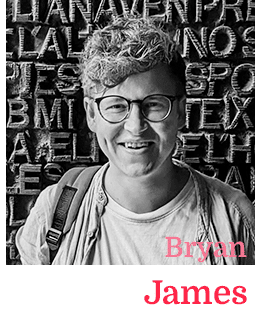 Köln, September 6th, 2023
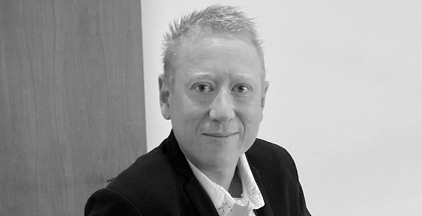
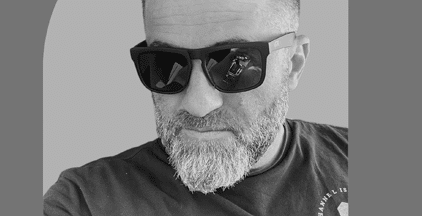
Currently based in Germany, Bryan James is a freelance interactive creative, designer and animator. He first studied graphic design but then got involved in web design, leading to some early successes in his career. He likes working on projects where quality editorial information is being presented, with statistics you can articulate through design.
In an interview with TIA, James described his life in Germany and the process of starting as a freelancer, from creating his own brand to finding clients. He also gave examples of projects he has worked on and feels proud about and went through his approach of selecting or creating sound effects that complement the visuals in animations.
To kick things off, what do you like the most about Köln?
Perhaps it’s a cliché but this is easy to answer; the people. I first visited Köln back in 2017 and the first thing which struck me was how seemingly easy it was to make friends here. For someone who then moved without a single friend or connection, this was a vital part of that decision. Chatting to people you don’t know is quite commonplace here, and it makes a big difference when you’re getting used to a place. Inviting, friendly, open to talking on a beyond-paperthin level.
Aside from that, the street art scene here is pretty amazing and this rugged heart to a place is something I really appreciate. When I first moved here and walked around the city, turning a corner to some of the wall-covering pieces was spine-tingling.
What is a typical working day for you?
I wake up bright and breezy, full of energy at 6am, drink a Kale smoothie and get right to it by six thir… who am I kidding. I get up around 9ish, and start working about 10am, but this fluctuates depending on the intensity of the projects or other commitments I have on at the time. Unfortunately I’m a slave to tobacco, so this addiction can sometimes be what drags me from my nightmares about typography. No, but in seriousness I’m not a structure-holic, it’s a pretty casual start to the day as my energy tends to peak around lunch time, and rather annoyingly sometimes in the evening.
What are your favorite spots to work or take a break?
I’ve tended to be a café-goer while working in the years I have been a freelancer. I know it’s not for everyone but I prefer to be in a place where a bit of life is happening around me, it helps me focus and avoid the feelings of isolation and ‘what am I doing with my life’ which can sometimes arise when working from home.
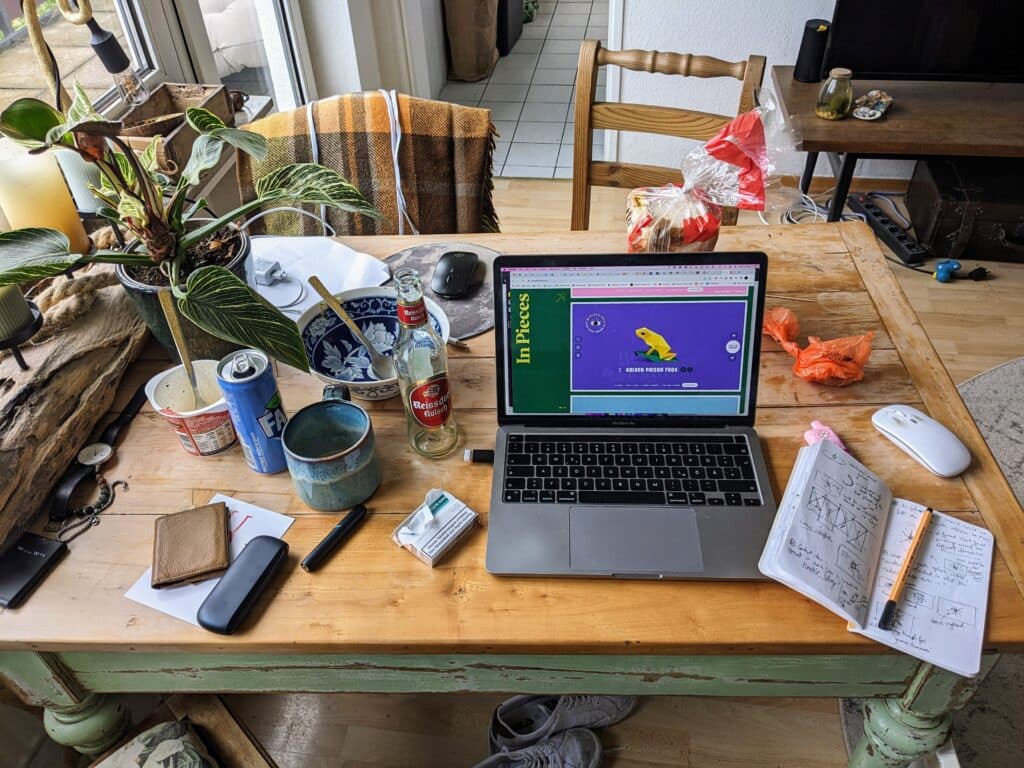
In terms of taking a break, it’s still work-related but I find sketching ideas to be very therapeutic. If I have no plans and no work on, cracking open a beer and some dusty cigarettes while sketching on the Rhein is my go-to habit.
How did you get to where you are now, career-wise?
Well, it feels a little awkward to answer as I still have a lot of ground to cover in order to get to a place I would feel happy about, but…
I made some good decisions quite early on in my career. My study many Moons ago was in Graphic Design rather than anything digital-related but I enjoyed Flash while I was doing print material work. It became evident pretty early on that you could apply a traditional graphic design approach to websites and create something rather surprising as web design was still quite fresh and ‘innocent’, with some amazing Flash projects but a lot of tat as well. So I saw a little bit of an opportunity there.
This approach resulted in some successes in the first years of my career, and this maybe instilled both a winning mentality, but also a taste, a thirst for that visitor’s first response to seeing something you’ve created and feeling interested, surprised, amazed or just something they didn’t expect to feel when they clicked the link.
How does the process of creating your own brand as a freelancer go?
I can only really speak from experience, it’s been rather gradual but underpinned by what it was back in 2010 and crucially based on what I directly like in my core design taste. I feel there is normally a big difference between your client-facing taste and your core design taste.
There was never a big marketing plan behind my personal branding, but I know inside what core taste and philosophy I have in design, creative, colours, illustration and so on (I ended up internally naming this my ‘design manifesto’, which I would send out to companies I wanted to work for in the past). Personal branding pieces, your own website and so on are one of the key opportunities to express yourself the person through the design work. Client work in design shouldn’t really be about what is within the spectrum of your own taste, so generally an approach which feels true to you in your own stuff perhaps brings a level of honesty. This I feel does breathe through and I like the idea that someone experiences my personal visual identity and grasps a piece of me, the person.
Tell us about a recent project you’ve worked on that you’re proud of. How was the development process and end-result?
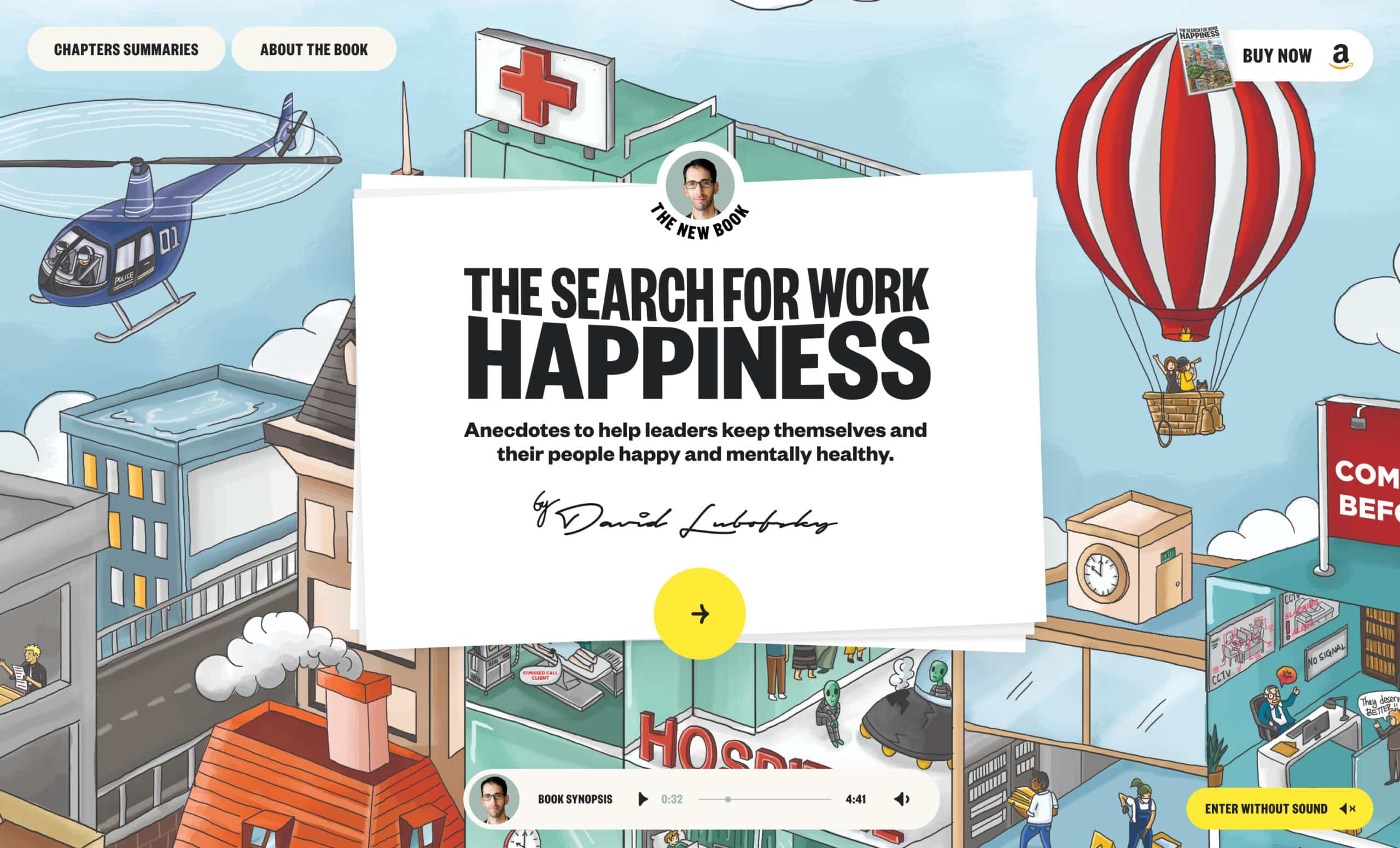
A website called the Search For Work Happiness from this year. Team: Myself, David Lubofsky and Jesper Landberg.
This is, I believe, the best project I’ve been a part of in many years, as it encapsulates many of the different things I like to see in a digital project. It has a core idea, ‘searching’ around the Wimmelbilderbuch style illustration canvas via the interaction to find synopsis pieces of the book content. But there are many ‘mini-ideas’ sprinkled around the site, such as allusions to books within iconography, smiles (from the logo-form) placed within curves & audio timelines, and so on. I feel these kinds of little winks and touches add a lot to a digital project, and it was a lot of fun to work on such a great cause as the book itself. It also uses yellow, which is always nice.
Can you provide examples of how you’ve used animation to solve problems or effectively communicate complex ideas?
I will talk about one recent project and one oldie here.
A recent one was for the website davidlubofsky.com. Team: Myself, David Lubofsky and Jesper Landberg.
The top level communication line the website begins with is ‘helping nice people build nice products’, and David’s ‘DL shapes’ logo felt immediately like something which could be interestingly toyed with. He also wanted something serious, but playful in terms of tone of voice. So we (David Lubofsky, Jesper Landberg and I) mixed these three elements together and came up with an animation scene which is used throughout, containing the three shapes falling from above.
The analogy of ‘building’ is there through the shapes playfully pinging off of one another and in the intro to the site, the preloader gives the direct nod to the fact that these are derived from the logo because of the way the falling ‘join’ is composed. We then take that concept further in other areas of the site.
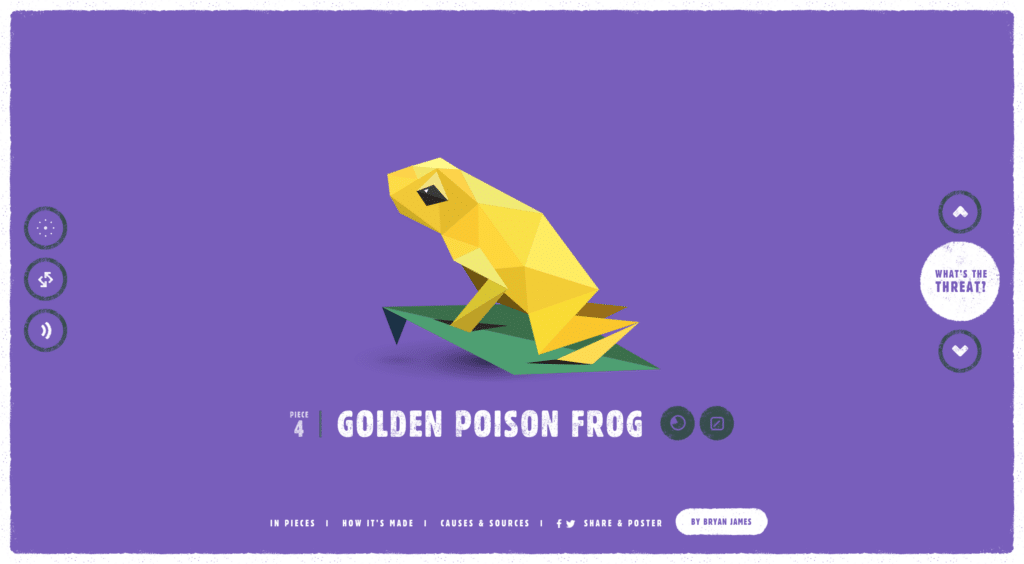
The oldie is a site from back in 2015, In Pieces. Communicating a set of 30 endangered species and their threats, 30 animating triangles visually flow from animal to animal. With the tech which was used at the time, the visual effect hoped to result in something rather dramatic which could create an emotional reaction. But the key part underpinning everything was that the species’ survival is threatened, in turmoil – ‘in pieces’ – and that is the key anchor point of why the triangles form and flow between the different species. They are quite literally and metaphorically, In Pieces and without this element and the animation it inspires, the project would have fallen apart or seemed like visual frivolity.
How do you approach the process of selecting or creating sound effects that complement the visuals in your animations?
I don’t really consider myself an expert in this area at all, but when sourcing sound for the kinds of digital experiences I create, the key thing is to be unintrusive. Something which goes almost unnoticed. Anything with a strong melody or very strong ‘vibe’ in itself can completely change the tone as a whole so one has to be very careful in this area.
The approach is rather unstructured, but I think when you have a project which is nearing it’s mid-late stages, you start to get a real impression of what it is really feeling like. And it’s pretty much just experiencing the site as though you are a first time user, and imagining a sound in your head which feels right. This is difficult to answer as it’s something I feel which comes down to instinct; what just ‘feels’ right. Only then do I go about sourcing potential material, and often this can be quite arduous as many sounds on the market to purchase from stock sites are just like if you are searching for stock imagery; they feel like stock, or ‘cheesy’.
Which types of clients do you find especially interesting?
Well as an unlikely scenario answer, anything where very playful visuals and colours are a potential avenue to take are absolutely the dream scenario and come up seldomly. So if you’re seeing this, theme park owners, toy producers, etc… 😉
But back in the real world; not so much a type of client, but I really appreciate projects where quality editorial information is being presented, often with statistics you are articulating through an interesting design which allows that information to be absorbed in a clearer manner than paragraphs of text would. I feel these are the areas which give the best platform to bringing more quality and better value ideas into a digital project. Anything which is rather ‘fluffy’ in terms of ‘what’ it is trying to say becomes a lot more tricky, and when creating ideas for that kind of thing it can feel a bit like crafting a lie. Ideas communicate best when they feel, and are genuine.
What steps have you put in place to guarantee innovation on the projects developed?
Try to keep to my root taste, philosophy and values in design and potentially attempt to morph them with a piece of tech I may have seen around over the years. Importantly, trying not to be too influenced by modern trends.
Are there any specific industry trends or developments that you find particularly exciting or interesting in the field of animation?
Absolutely, Rive. This is an animation tool I have been using for just under a year now and it has revitalised the potential for detail in the projects I’m involved in. Directing animations through to dev is a fun process, but it can sometimes get very intensive when fine-tuning. Rive basically gives back some element of the animation control to the designer of the project and a lot can be done with interaction, whilst it’s also brisk to create in. I feel the surface has only been scratched with how Rive will impact digital work in the coming few years.
Do you have an inspiration routine when you start working on a new piece?
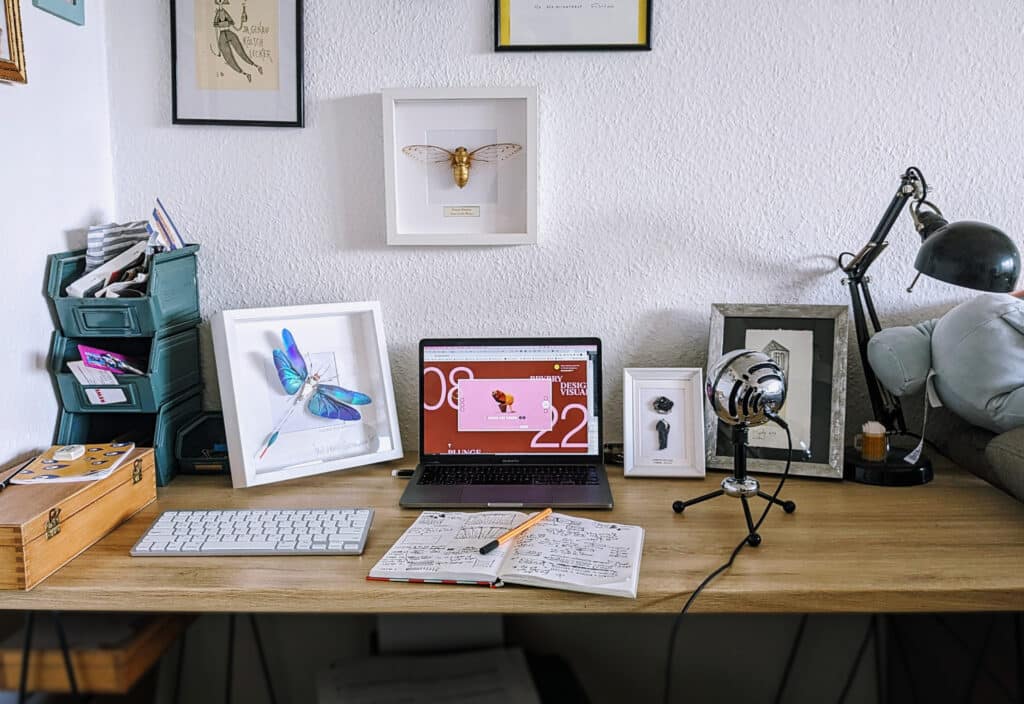
For me it’s really just about spending a good solid few day (normally 2-3) inside my head and my sketchbook only. I try not to look at other design work out there in this period; the idea should be something completely unique and this needs to come from within. I think you cannot fully trust in and commit to an idea which didn’t go through this process or feels too influenced by what you see on the outside.
The beginning can be daunting, that ‘I will never have a good idea ever again’ feeling when that seemingly-expanding blank canvas stares consumingly back at you. I sketch, and sketch and sketch until I find a breakthrough. I also personally find giving the ideas phase about a week or two to ‘land’ can be helpful to crystallizing an idea. Often an idea comes which two days later is the most chaotically rubbish thing you’ve ever thought of. Being in the shower, taking a dump, being on a plane where brainstorming is all you can do to avoid the feeling of terror of being 35,000 feet in the sky are some of my favourite situations for this phase.
That period can also be great for exploring a specific idea further. Most good ideas have a lot of different branches they can crawl onto, and if they don’t then the idea is more often than not, questionable.
What is the best advice you can give to young creatives aspiring to move into the industry?
Try not to be too influenced by modern trends, and focus on areas of design history which interest you. They might not be the styles of today but they can have a great impact on honing a style or approach which can be seen as modern and innovative today. Design aesthetics flow around and around.
Are there any readings, podcasts or other resources that you enjoy or recommend?
The books A Smile in The Mind by Beryl McAlhone and How To Be A Graphic Designer Without Losing Your Soul by Adrian Shaughnessy are two of the cornerstones of design curriculum. More recently I’ve enjoyed the books of my two favourite visual artists, Malika Favre’s self titled book and Camille Walala’s Taking Joy Seriously. I also recently discovered the Twitter account Design Reviewed, which is an amazing curation of design work from the past.
What’s the next skill you plan on learning?
Continuing to improve and advance my knowledge of the tool Rive. In my out of work life, my German skills are becoming a bit embarrassing after so long here, so getting back on track with that is the current goal.
Where do you relax?
Not really a place, but sketching. Normally along the Rhein or in a café called Einbrand in Köln.
Can you name a fun-fact people would be surprised to learn about you?
One of my main hobbies is Japanese Professional Wrestling, and… I used to be a professional (using this term very lightly) wrestler. When I was about 16 (so around 2003), myself and two friends had a wrestling ‘promotion’ where we recorded the matches with an old camcorder. This was actually my first foray into design, as the shows started with terrible Powerpoint presentations which I put together, featuring goofy logos for each wrestler, text-to-speech voice-overs, horrific full-bleed imagery backgrounds and so on. I was touching on design in my art classes at the time, but this was probably my first attempt at actually making designs which were for a (semi) real entity. I have the videos, for anyone interested (you shouldn’t be, they’re awful).
Bryan’s Working Preferences:
Early Bird or Night Owl?:
Night owl, absolutely
Food you can’t live without:
Squid, goats cheese, beetroot, baked beans
Most quoted book, TV Show or movie:
Peep Show
Next travel destiny in your list:
Japan in September :)
Favorite type of weather:
When the sky is ‘synthwave pink’ in the early evening
during the summer; Red sky at night… or, heavy rain whilst being a passenger in a
car
Preferred spot in your town:
Südstadt in Köln, it’s beautiful
Favorite design tool:
At the moment, Rive. But generally, a Figma and Adobe Illustrator mashup
Last downloaded app:
Universal Studios Japan
Unusual Hobbies:
Japanese Pro Wrestling
What is something on your bucket list that you haven't done yet?:
Create a unique visual style which becomes iconic in some way. I think it should be the goal of a designer to move things forward in a valuable way in design, move the industry forward. It’s very difficult, but one can dream.
Thanks Bryan!
- Follow Bryan on social media:
Bryan’s websites:
Agency to watch

Best in Breed since 1998. Lounge Lizard is a Digital Agency that Specializes in Brand Strategy, Website Design, Web Development, Mobile APP Development, Online Marketing, Social Media, Ecommerce, and SEOdigital experiences that move brands and businesses from now to next.
Featured agencies

135037 Views

115590 Views

109357 Views

91839 Views

88318 Views

83115 Views

74742 Views

61549 Views