“We’re craftspeople at heart, so we care deeply about the quality of the work we deliver”
Brighton, October 21th 2020
Clearleft is one of the most influential and respected independent design consultancies in the UK.
The agency is formed by a multi-disciplined team of designers, technologists and strategic digital thinkers with a worldwide reputation. Since 2005, they have helped over 100 clients across 5 continents embrace digital to become more efficient and competitive.
The agency was co-founded by Andy Budd, Richard Rutter and Jeremy Keith, helped shape and communicate the building blocks of the Web: HTML, CSS and Javascript.
In an interview with TIA, Budd described his professional path since the beginning of Clearleft. He looked at the challenges of the agency and the industry and gave examples of some of their recent work.
To kick things off please can you tell us a little bit about your city and why it’s a great place to work?
I live in the city of Brighton, an hour’s journey south of London, on the Sussex Coast. Brighton has been an escape for Londoners since Georgian times, attracting a range of musicians, artists and other creative types. It’s a fairly young and affluent city with two universities, a world-renowned arts festival, and a thriving music scene. It’s also a very liberal city, with the UK’s largest LGBQ+ community (outside London) as well as the UK’s only Green MP. US friends say it has a bit of a Portland vibe.
As you would imagine for a town like that, it’s chock full of cafes, bars, independent shops and restaurants. It’s a super walkable city, and its position on the coast and proximity to the South Downs national park means it’s a great place for hiking, biking, kayaking and other outdoor pursuits. Being so close to London also means it’s easy to pop up for meetings, or day trips, while attracting talent down is a doddle.
Back in 2005, you founded Clearleft with Rich and Jeremy. Tell us about the day the idea was born.
Like a lot of agency founders, we were frustrated by the way many agencies treated their customers, and felt that we could do better. At the time the design industry was really in its infancy, and a typical project started by throwing some ideas on a blank Photoshop canvas. Coming from a more scientific background we felt there had to be a better way, which is why we were immediately drawn to the UX movement. At the time we only knew one other UX agency, and they were based in the States, so we set about starting what we believed to be the first dedicated UX agency in the UK.
Scaling up is difficult, maybe more than starting up. What was the toughest challenge you faced when growing a business?
I guess that’s true if your goal is to scale up. But we’ve always been about helping clients unlock the power of design, so we’ve never really been about chasing scale. For us the work—and the impact we can have on our clients, their customers, and their business—has always been the bigger reward. So it’s never really been something that’s bothered us.
We are living the most important pandemic in recent world history. What challenges were you facing before the spread of COVID-19 and how are you dealing with them right now?
I think the challenges Clearleft face are fairly typical of any agency our size. They essentially revolve around two key tensions:
1. Finding great clients with interesting problems to solve.
2. Finding and retaining a talented team of individuals.
I generally believe that if you have great clients with interesting problems, you attract and retain great staff; and if you have a great team that does outstanding work, you’re going to attract the best clients. So it becomes a self-sustaining system.
When COVID-19 first hit, we were obviously concerned about the effect it may have on our project pipeline. However while inbound leads slowed at first, the size of our projects actually went up. It seemed like clients were holding off some of the smaller, more exploratory projects—like a 6-week sprint to conceive a new product idea—in favour of bigger, more guaranteed wins.
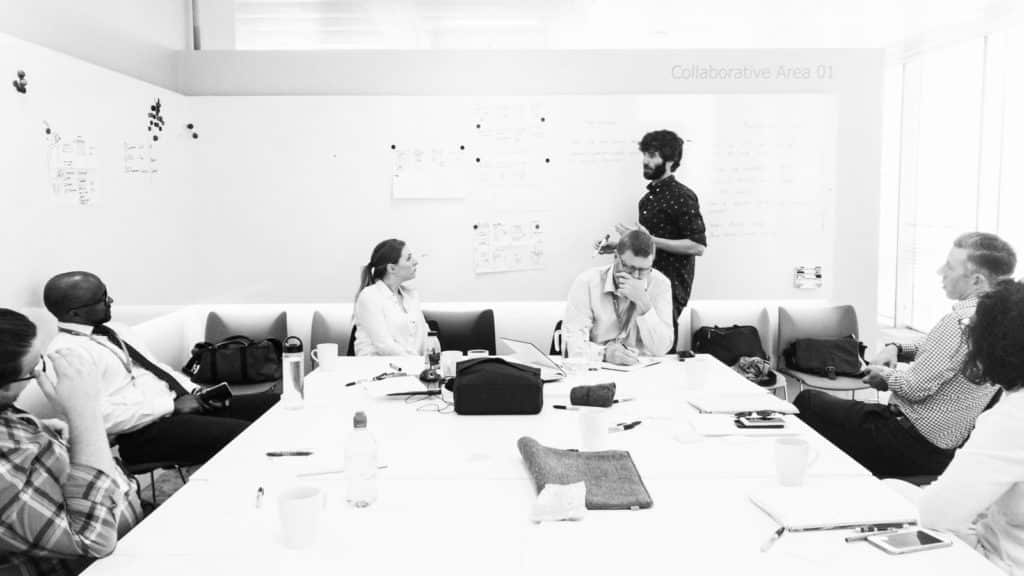
We also found that while the volume of leads dropped, our win rate actually went up. I think this is because Clearleft is always seen as a dependable choice. When times are good, clients feel comfortable taking a risk on cheaper, less experienced agencies. But when the chips are down, you want to work with a team you know are going to deliver the goods first time.
On the work front, our team pivoted very easily, running remote collaboration sessions, exploring new techniques, and embracing the benefits of asynchronous work. I’m please to say that we barely missed a step, and a lot of our clients actually prefer this way of working.
Culturally it’s been a bit more of a challenge, as we had a very strong studio culture before lockdown. At the start of the pandemic we made our expectations around working from home clear. We realised it was going to be a tough slog, so we sent our team a couple of personalised care boxes to show we were thinking of them. We’ve tried to arrange more online socials, including things like company quizzes.
We’ve also built a little Slack bot that puts people together for more random, water cooler type chats. I think the mood in the company is as good as you can expect considering the current circumstances, but it’s a little more subdued and introverted than it was before lockdown.
Working with the right agency can be a valuable partnership. What attributes do you want people to associate your agency with?
I believe there is a big gap between strategically-focused consultancies and delivery-focused agencies. This is where Clearleft comes in. Quite often we’ll inherit a well-thought our strategy that’s been gathering dust for the last nine months because it feels overwhelming and the executive team can’t figure out where to start. So rather than trying to boil the ocean—which is what a lot of the larger consultancies try and do— we’ll help our client’s chip away at their strategy so that it gradually becomes more tangible over time. We do this through innovation sprints, exemplar projects, process improvements, and slow but steady culture change.
That being said, we’re craftspeople at heart, so we care deeply about the quality of the work we deliver, often going above and beyond what’s expected. But that means little if the work doesn’t move the dial for our clients. So we’re incredibly pragmatic and focus on delivering the biggest bang for the buck. I think it’s this tension that makes Clearleft so successful.
What does it mean for Clearleft to be employee-owned?
When boiled down to its fundamentals, the design industry is a talent-driven business. Great design agencies find the best talent, and clients pay for the benefit of working with that talent. So anything you can do to find and retain the best people is good for your clients and good for business.
Sadly a lot of agencies don’t see it this way, hiring juniors, changing them out as seniors, working them to burnout, and pocketing the profits. At Clearleft we felt there had to be a better way, so we decided to move to an employee-owned model. This way our clients know that they were working with engaged owners, rather than a bunch of freelancers pretending to work for the agency, and our team see the benefits of their hard work and talent. There’s a tonne of research that shows employee-owned businesses are happier, healthier, more profitable and more efficient, so it makes sense all round.
Of all the projects your company has produced, which one are you most proud of?
That’s a super common question, but one I always find hard to answer. It’s fun working with established brands like Virgin, John Lewis, Mozilla or Spotify. However it’s often the lesser known companies like Their World—and education charity we worked with a few years back—where you make the biggest impact.
In truth my favourite projects are usually the ones we’ve just shipped, as the experience and value is at its most visceral.
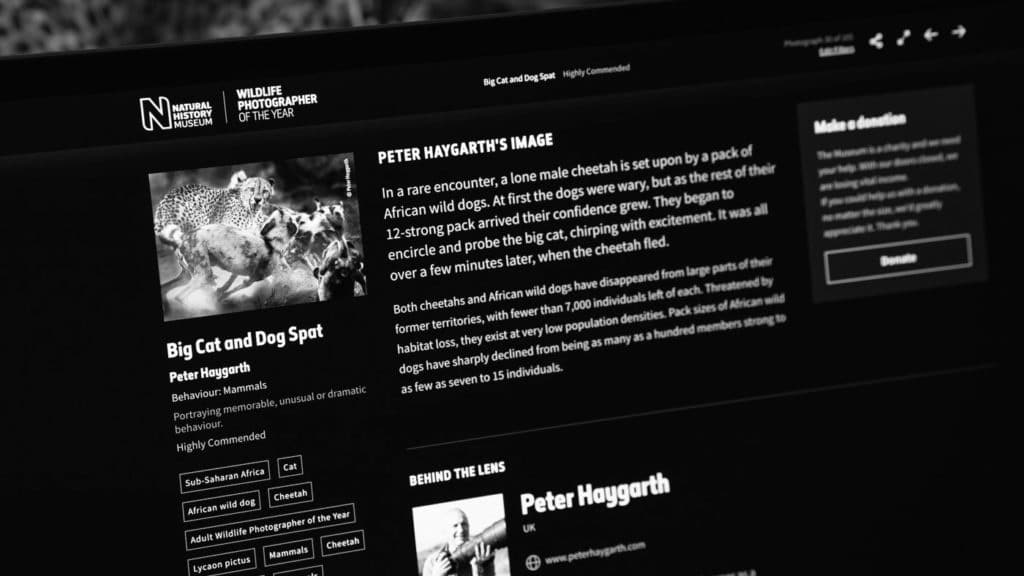
For instance we’ve been working on a wonderful project for the Natural History Museum over lockdown; helping them bring their Wildlife Photographer of the Year exhibition to life online. On the surface it looks like a simple design and build job, but even that presented some wonderful design and technology challenges. However the real payout was the journey we went on with our clients, the value were were able to deliver below the service, and the friendships we made as a result.
COVID-19 is a first-of-its-kind disruption, one that leaves no community, government or business untouched. What’s the most exciting part of working in digital at the moment?
In modern times, that’s definitely true. So we’re very lucky to be living through a highly networked period of history where so many people can work from home. However we also need to realise that not everybody is quite so fortunate, and a lot of folks are having a very challenging time right now. So I’m just glad that we’ve been able to pivot, to keep everybody employed, provide them with interesting meaningful work, and support them as best we can.
Considering the context, I’d probably avoid using the term “exciting” but it’s definitely interesting seeing companies go through six years of enforced digital transformation in six months, and helping them deliver changes they genuinely didn’t think were possible.
In this industry or in life, have you had any particularly influential mentors?
I’ve always been inspired by the team behind Adaptive Path, an influential but now defunct agency in the US. I’ve become good friends with a few of their founders, like Jeff Veen, Peter Merholz and Jesse James Garret. So I’ve have had many conversations with them on the challenges of running a small, passion-driven agency in the UX and SD space.
Can you name a fun-fact people would be surprised to learn about you?
I’m not sure how fun or surprising it’s going to be as it’s on most of my social media bios, but I spent around 6 years travelling the world as a dive instructor after university, and one of my jobs was as a shark safety diver on the barrier reef. So that was kind of interesting.
I also started learning to fly when I was 16 and at one point was flying solo before I was legally able to drive. I never quite finished my PPL as I ran out of both time and money, but recently picked it up again and am a few flights shy of being qualified. In fact the weather is looking good, so I may pop off for a flight now 🙂
Thanks Andy!
Follow Andy Budd on social media:
Twitter
Instagram
LinkedIn
Andy’s Working Preferences:
Android vs IOS :
IOS
Preferred social media channel:
I'm a Twitter OG
Coffee vs. tea:
A first flush Darjeeling Tea, if you please
Favorite work snack:
I'm not a big work snacker. I'm afraid. At home I'll probably settle for a slice of buttered toast
Sitting vs. standing desk:
Sitting
Most quoted book:
Oh crikey, I dunno? Something silly like Hitchiker's Guide to the Galaxy probably
Name a treasured TV show or movie:
Spaced
Name 3 artist on your office playlist:
Tycho, Tame Impala, Khruangbin
Actual project management application:
Email and Slack
Preferred business meeting restaurant in your city:
More a breakfast meeting person myself so Trading Post Coffee Roasters by our studio does mean full English
Favorite sneaker brand:
Veja
If you could work anywhere in the world, where would it be?:
I'd prefer to move around rather than stay in one place
Agency to watch

Best in Breed since 1998. Lounge Lizard is a Digital Agency that Specializes in Brand Strategy, Website Design, Web Development, Mobile APP Development, Online Marketing, Social Media, Ecommerce, and SEOdigital experiences that move brands and businesses from now to next.
Featured agencies

135036 Views

115589 Views

109356 Views

91839 Views

88317 Views

83115 Views

74741 Views

61547 Views