“We want to do good work for good people”
Being flexible in our approach and listening to our clients is at the heart of our longevity
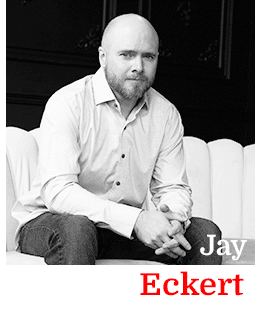 Toronto, December 11th, 2024
Parachute Design is a leading web design agency based in Toronto, specializing in creating handcrafted, innovative digital solutions. Since its inception in 2003, the agency has evolved from a small design practice into a full-service creative team, known for its expertise in web design, development, and branding. With a focus on client success and growth, Parachute Design has built a strong reputation by delivering tailored solutions to businesses across a wide range of industries. Over the last 18 years, the agency has become a trusted partner for companies seeking high-quality web design services.
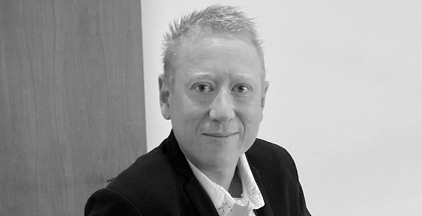
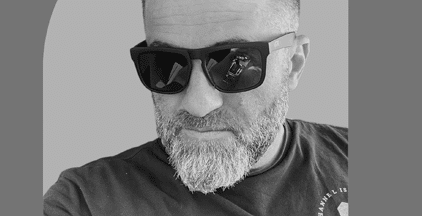
Jay Eckert is the Founder and Creative Director of Parachute Design, Jay has led Parachute in delivering innovative solutions across branding, web design, and development. In an interview with TIA, Jay discusses the key elements behind Parachute’s success, including their focus on client collaboration, flexibility, and a commitment to staying ahead of trends. He also shares insights into the impact of AI on the creative industry, the challenges of custom web design, and the importance of brand evolution.
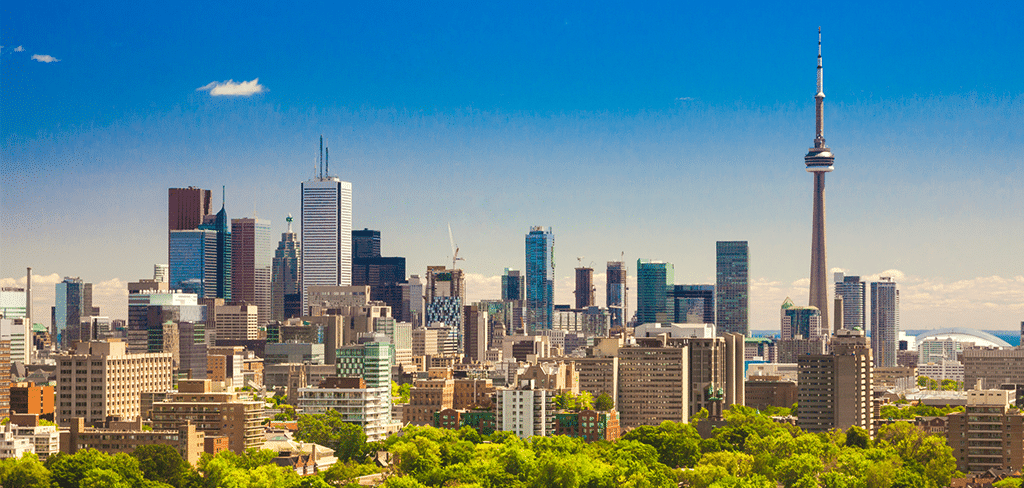
Thank you for joining us, Jay! Let’s kick off with a bit about your roots. What do you love most about Toronto, and what keeps you inspired in the city?
What I love most about Toronto is the accessibility at our fingertips. Whether you want to take in an event, visit a world-class gallery or museum or experience exceptional food from virtually any culture around the world it’s readily available.
Where do you spend most of your time, and what does a typical day entail?
Our team has been virtual since 2009, so I spend most of my day at home. I have young kids still so I’m fortunate enough to be able to do school drop off, pick up, help with homework and manage after school activities while maintaining balance with running Parachute.
Typically, I’m at my desk by 8:30am and keep the wheels turning until late afternoon when I switch back into Dad-mode. Once homework is finished I’m back to work until early evening, usually prepping for the next day’s meetings.
What are your main focuses at the moment?
Family-aside, I’m looking at expanding our team in 2025 to explore some new technologies and that have come up in conversation with leads throughout the last year. We’re always looking at ways to improve and evolve year over year and incorporating growing requests, whether it’s a new service or technology that can be folded into our workflow is a great way to do it.
With over 20 years in the industry, what do you think are some of the key elements that have kept Parachute Design relevant and growing in the ever-changing web design landscape?
Being flexible in our approach and listening to our clients is at the core of our longevity. We’ve been around for a while now and established a certain level of trust in the industry that certainly affords us great opportunities, but also carries with it some responsibilities to stay on top of what’s coming next and staying committed to delivering meaningful results for our clients.
Part of our job has really focused on educating our clients over the years as they aim to grow their business and use the tools we create for them to their full extent. This could include everyone from understanding search engine optimization to proper media asset management.
Custom WordPress design and development is a core strength of Parachute Design. What is it about WordPress that makes it the right choice for so many of your projects?
We’ve worked with WordPress for 20 years now and there’s really very little we haven’t been able to do with it. WordPress powers nearly 40% of all websites that exist today – for good reason! It’s a highly flexible, open source platform that allows us to shape and mold it to suit the unique needs of each client, while giving the backend the same amount of attention to ensure it’s incredibly intuitive and easy to use.
As an open source platform, anyone with open source experience can take the platform and run with it which gives our clients an added level of freedom as well.
We hear a lot about different platforms today, particularly for enterprise use. How do you see WordPress standing up against other popular web platforms, especially for larger businesses?
There was a time when enterprise organizations shied away from WordPress and we had a tough time convincing them that the platform offered everything they needed and more. That time seems to have faded away over the last several years and more and more enterprise businesses approach us requesting WordPress specifically.
Our client list helps showcase the level organizations we’ve created incredibly powerful custom WordPress website for that range from levels of government, to enterprise-level technology firms and nation-wide entertainment brands.
Parachute Design works across branding, web design, and development. How do you ensure a cohesive brand identity when translating a client’s vision across these different facets?
Crafting a consistent brand identity across different media stems from our team’s strength as a creative group. Parachute began as a multi-disciplinary graphic design studio, so our team has the background required to create a solid design system and carry it forward. Working together and relying on a shared vision ensures everyone is consistently working on-brand.
Having worked with clients from a variety of industries, what are some of the common challenges you see when starting a new project, and how do you tackle them?
Some of the most common challenges we see in starting new projects are typically around gauging each client’s experience and knowledge of how a brand should be developed and deployed as well as figuring out when to push and when to pull back. Depending on each individual’s role or experience in the creative world, a slightly different approach is required to communicate strategy and design concepts to ensure all stakeholders buy in.
When you’re dealing with larger groups of decision makers that are not as close to the brand personally, it can be easier to communicate and execute a design strategy, but there is a little extra finesse required at times to rein in all the different personalities and viewpoints to get the group on target.
You mentioned the importance of brand evolution. Could you share an example of a client whose brand transformation you are particularly proud of?
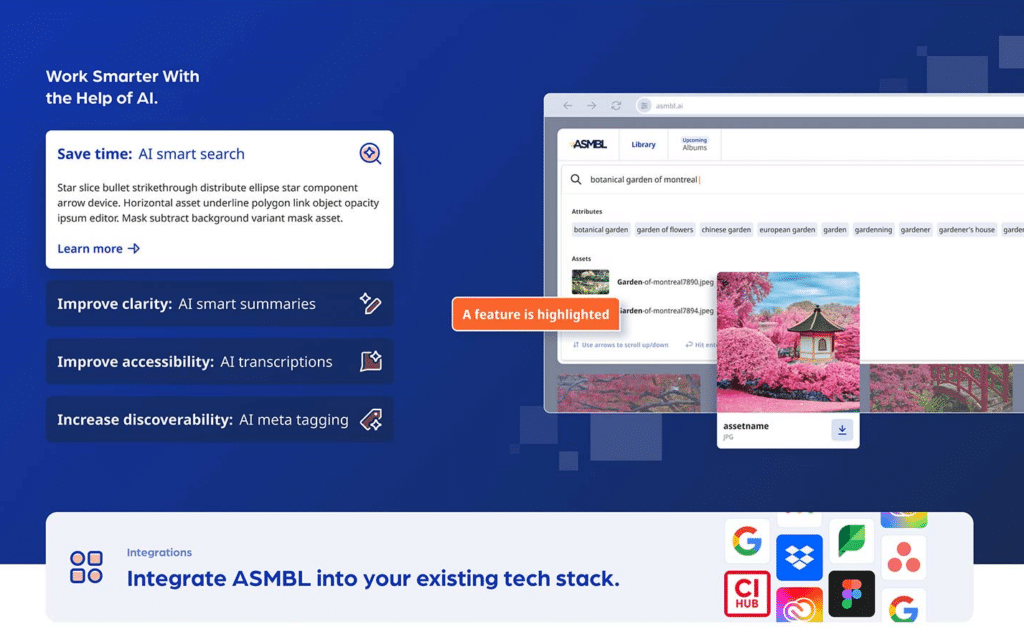
That’s a tough question… most recently, we deployed a website and brand refresh for ASMBL AI, as their parent company DCM, broke into the DAM market with a new AI-powered platform. The ASMBL brand is an evolution of the DCM identity that is well known in the space, and our role was to help craft a sub-brand that stayed true to the trusted DCM brand, but bridged the gap into the high-octane tech space. The website features some fun interaction design and more than 200 custom graphics to really showcase the wide array of services the new platform offers.
The ASMBL identity offers a very graceful transition into the tech space, while staying true to its roots as a company that’s been around for decades.
In addition to web and branding work, you’re also known for your skills in logo design. How do you approach logo creation to ensure it resonates with both the brand and its target audience?
Logo design is such a fundamental piece of the brand identity. It’s a very personal experience for many business owners and a vital component for enterprise-level marketing teams. The key to great logo design is simplicity. Our team works up many different ideas and iterations before sharing a few of the strongest concepts with our clients. From there, our approach is to simplify and refine to the point that the mark still speaks clearly to the viewer while remaining instantly recognizable, but stop just before we lose what makes the mark unique.
The simpler the identity is, the more versatile the brand will be across all media, big or small. The better the identity translates across the marketing gamut, the more successful it is at communicating and supporting the brand.
You’ve worked with numerous clients across multiple industries. What is one of the most memorable projects that has challenged you creatively?
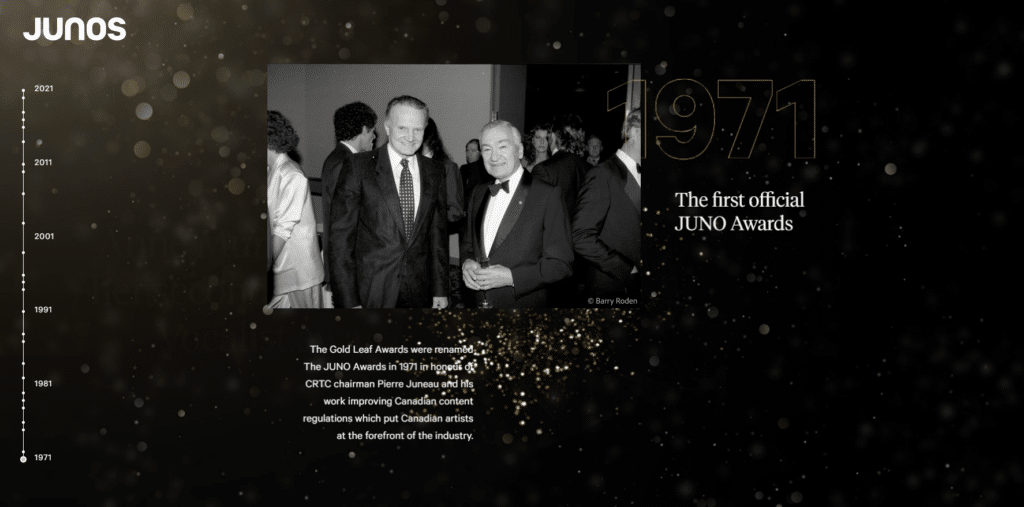
One partnership that I come back to often is our long standing relationship with the JUNO Awards. It’s special to be part of a national brand with a long history and passion behind it. Everyone loves music in some form or another and working with the JUNOS year over year to celebrate other Canadian Artists that bring something unique to all Canadians is a rare treat. For the JUNO Awards 50th anniversary we were tasked with creating a timeline to celebrate the history of the awards and wrestled our way outside the box to move away from a linear timeline and create more of an experience. The timeline we designed creates a sense of dimension and space as the viewer scrolls that are transported into their screen as they travel back through time highlighting features from previous awards seasons, all the way back to the first official awards in 1971.
This isn’t a big project, nor is it highly visible in the public domain, but it’s a moment that our team really had a lot of fun with a rare opportunity to explore something unique and special.
Photography has been a personal creative outlet for you. Do you find that it influences your approach to design, and if so, how?
I would say that design influences my approach to photography actually. I’m a designer first and foremost. When I look at something as a subject, beyond capturing that moment in time, I can’t help but consider how I’m framing a shot and how that will dictate how it could be used or portrayed later on. Cropping, lighting, composition; it all stems from design and how I may end up using the image as part of something larger one day in the future. Old habits I guess…
How does your creative process differ when working on a website versus a brand identity or logo project?
I don’t think our creative process differs much, if at all between web and logo design. Every design project always starts in the same place – with discovery. It’s important to understand who you’re designing for, why you’re designing something and what their preferences and tendencies are. Whether that’s a website, mobile app or a brand identity, the approach remains the same.
The key difference is that with digital design, there’s a technical aspect to keep in mind as you work through the strategy and creative process. Once the design is complete, the developers take over, whereas with a logo design project, the design team has full ownership of the project.
Can you share a project that you feel best exemplifies Parachute Design’s philosophy and approach to client work?
My sincere hope would be that every project we do exemplifies our design philosophy! Each project and relationship is unique and driven by many factors, including client preferences and feedback so there are naturally some we feel more strongly about than others, but at the core, I believe every project we do focuses on our fundamental approach.
We want to do good work for good people. We’re not aiming to think so far outside the box that we’re going to disrupt an industry – that’s not our role. People entrust Parachute to guide them through the creative process and deliver highly functional design that communicates clearly and effectively with their audience and delivers measurable results.
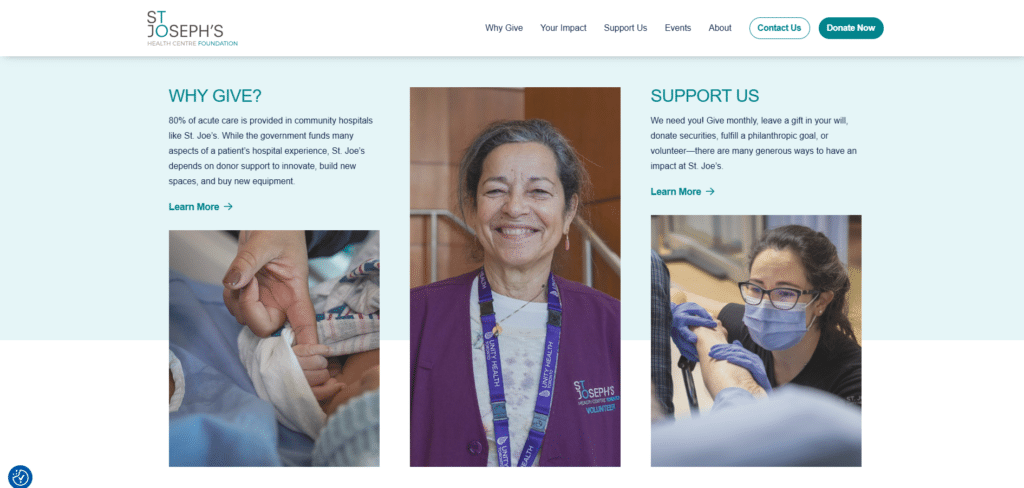
We recently completed a brand refresh and website redesign for St. Joseph’s Health Centre Foundation in Toronto. This project really exemplifies our approach and fundamental goals as it’s a community-driven organization that provides care, comfort and dignity to people in our own community. The goals for this initiative were largely focused on revitalizing the brand identity and drastically transforming the online experience to showcase difference makers in the local healthcare community as well as provide the marketing team more powerful tools to launch fundraising campaigns throughout the seasons to support the foundation and adjoining hospital. We’re really proud of the outcome and made some new friends along the way – it was a win-win.
The design landscape is constantly evolving. How do you keep your skills sharp and stay updated with the latest trends and tools in web design?
I read a lot to stay on top of trends. Design trends tend to weed their way in and out of our life organically. I don’t think I make a significant, or at least a conscious effort to keep exploring new design ideas, they seem to form naturally and take inspiration from bits and pieces that I see online and in the real world day-to-day.
On the technical side however, I’m always following stories, blog articles, forums when I face a challenge. AI has really introduced a lot of new technologies and tools for designers and developers and we’re in a significant growth period as an industry learning how to harness the power of AI to enhance and add more value to what we do.
With the rise of AI in creative industries, do you see it impacting the work you do at Parachute Design?
I’ve really seen AI take hold in the design industry over the last year. Initially, I believe there was a lot of concern that AI would replace designers and developers, but I don’t believe that’s the case. AI has brought many amazing tools to the table including imagine generation, content writing and SEO optimization that have proven to be incredibly valuable.
We’ve already had a couple projects that required imagery that we just couldn’t find in stock libraries or go out and shoot on the spot. Using generative AI to create custom images for these projects offered a fast and effective solution to this challenge and ultimately helped the project be more successful.
On the technical side, AI is now a core tool in our SEO toolbox. The software can search the web and make recommendations on the spot that empowers us to help our clients improve their online visibility without needing to spend days or weeks sifting through competitive analyses.
I can certainly see AI becoming an even more valuable tool as it continues to evolve.
How would you compare custom WordPress design with No Code projects, such as those built using platforms like Webflow?
Webflow and other “no code” platforms are great for savvy DIY’ers or businesses with a savvy creative team in-house that doesn’t have the development expertise to really harness the power of a custom site.
Custom development, like WordPress offers more SEO power and flexibility when it comes to building features and solutions for larger enterprise-level sites, portals, e-commerce and interactive calculators. There’s a time and place for many different solutions and there’s no right or wrong answer, necessarily. I find that many successful companies start with platforms like Webflow as it’s faster and more budget friendly out of the gate. Once they’ve established their business and outgrow Webflow, they engage agencies like ours to develop a custom web solution that goes well beyond the limitations of a no code platform.
You’ve been a part of Toronto’s graphic design scene for over two decades. How have you seen the community change, and what are your hopes for the future of design in the city?
The design community in Toronto has changed a lot over the last two decades. When I first entered the industry it felt much more like the wild west – firms were opening and closing as fast as you could blink with a few notable stalwarts sticking around.
Today, there seems to be more consistency, but a wider range of specialization in roles within design itself. 20 years ago there was no such thing as a UX designer for example, whereas now, that role is crucial to our business.
Technology has grown leaps and bounds with the advent of responsive design for mobile devices and open source web development empowering more people to create custom web experiences that continue to push the envelope.
Is there a lesson you’ve learned throughout your career that you think every designer should take to heart?
There’s too many to count to be honest. I think the hardest lesson most designers have to learn early on is how to take criticism and keep going. You have to realize that everything you’re going to create will indefinitely be critiqued, analyzed, broken down and there’s always someone with a better idea. The important thing is to remember who you’re designing for and to put everything you have into it. Take the criticism (positive or negative), learn from it and carry it forward into the next project.
When you have some downtime, what hobbies or activities help you recharge and stay creatively motivated?
When I have downtime I try to avoid being creative as much as possible. Over the years I’ve found that it’s just as important to give your mind a rest. Recharge, relax, engage yourself in something other than what you do all day. That way, when you’re back at it, you’re feeling fresh and ready to go.
If you could preserve one element of today’s design world in a time capsule for future designers, what would it be?
I think capturing the advent of AI would be a very interesting phase to look back on. The introduction of AI has made big waves and changed the way we work, and it’s only just begun. I’m sure looking back on this moment in 10, 20 or 50 years would be incredibly insightful and likely a little nostalgic for those that were a part of the design community before the invention of AI. It’s not going away… there’s much more to come.
Jay’s Working Preferences:
Early Bird or Night Owl?:
At this point in my career, I’d have to say neither. I am at my best mid-day
Usual breakfast:
Protein shake and a bowl of fruit
Last place traveled:
Europe
Favorite music genre or band:
Rock
Favorite sneaker brand:
Vessi
Preferred spot in your town:
My backyard
What's something that always makes you smile?:
My kids
If you could solve one problem in the world, what would it be?:
Right this moment, affordability. After the pandemic it seems like the divide between groups and classes has only grown and continues to introduce more challenges for families already under pressure
Agency to watch

Best in Breed since 1998. Lounge Lizard is a Digital Agency that Specializes in Brand Strategy, Website Design, Web Development, Mobile APP Development, Online Marketing, Social Media, Ecommerce, and SEOdigital experiences that move brands and businesses from now to next.
Featured agencies

135037 Views

115590 Views

109357 Views

91839 Views

88318 Views

83116 Views

74742 Views

61549 Views