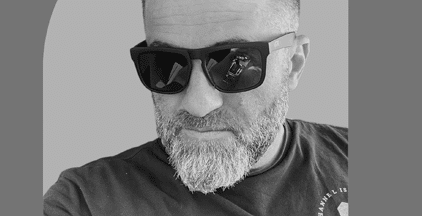
“We have a spirit of constant curiosity, wanting to create and experiment”
Telling the oldest stories with the newest technology is our ideal. An arcade version of Secret Cinema feels like it would be our perfect combination.
 Liverpool, March 22th
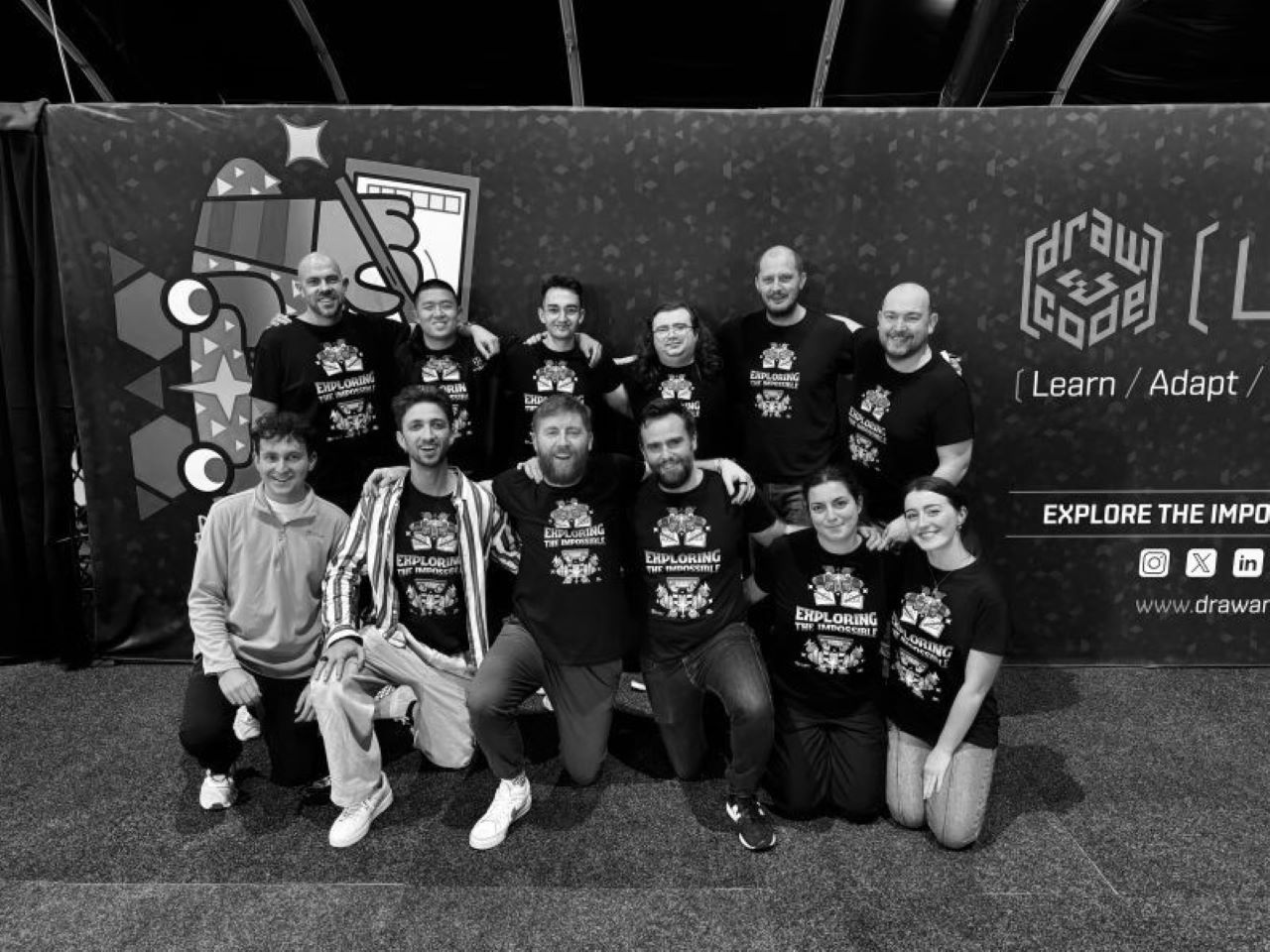
Based in Liverpool, Draw & Code is a digital creative studio that provides immersive and interactive design and development. They work with immersive technologies including VR, AR, games and installations with clients from around the world, from Sony Music to Nokia. All their work is completed in-house by a team of creatives and developers.
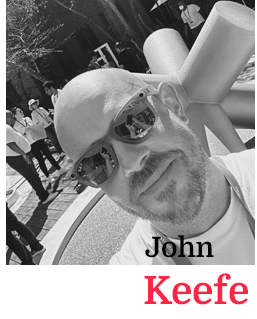
John Keefe is the Co-Founder and CTO at Draw & Code. In an interview with TIA, he walked us through his two-decade career in immersive and interactive technology and explained his current role as CTO. He also listed the services offered by the agency and the challenges faced by the company when adoption emerging technologies.
It’s a pleasure to meet you. To start, could you share what you believe is the best thing about Liverpool?
A single best thing? I can’t choose between the atmosphere and history of the city overall and then on a more personal level I’m thinking about what our excellent video game industry represents. Maybe they are all linked and it’s that spirit and swagger that I really like. You’ll hear this echoed all over Liverpool, but its transatlantic connection has given it a rich history and a degree of cultural diversity. It’s a creative melting pot; everyone knows about how this impacted the music scene in Liverpool, but the video games and tech side feel similar in some ways and have creativity culturally embedded. From the early days of UK video games to Sony’s arrival in the city and on to today’s rising star studios, Liverpool is a city that has a lot of belief. It won’t stay down and forever punches above its weight. Like the football club, I guess. I think Eurovision showed this ambition, vision and execution we have when we put our minds to it.
Where do you spend most of your time, and what does a typical day for you entail?
The more successful we’ve become the less time I get to spend in Liverpool! As we work globally, we need to be out in the world telling our story and finding new projects and partners. There is a degree of serendipity to our work, we are about being on the cutting edge, trying new things and working with new people. If Meta calls we head to Menlo Park to try new tech, if a new client emerges in London we head down there to meet them.
I’ve been heavily involved in setting up our EU R&D base in Malta so that is where I’ve put in the most hours lately. This off-shoot of the business is called Draw & Code Labs and is all about R&D, product development and consulting.
The only thing typical about my day is that there is no typical day! While much of my work is managing the bigger picture of the business, travelling to conferences or providing a tech and partnerships angle on business development, I’m a developer at heart so I relish getting my hands dirty on the technical side and working with our brilliant team.
You have an impressive two-decade career in immersive and interactive technology. Can you share some key milestones or experiences that have shaped your journey as a CTO?
I started in web development which gave me an understanding of how to build complex, large-scale products for global companies. I carried that into games and immersive technologies – I was excited about how tech works as a creative medium but the web allowed me to grasp how large organisations and their audiences work. In the earliest days of Draw & Code, a project called Lava Bud was a milestone. This was a hybrid theatre, projection mapping and augmented reality research project that felt like the culmination of the various technologies and techniques that both myself and my co-founder Andy Cooper were interested in. It was our first proper foray into augmented reality. While that project benefitted from Arts Council funding, our first paying client looking for AR was the church!
The release of the Oculus DK1 was a watershed moment for our whole sector as it kickstarted the consumer VR industry and led to today’s Meta Quest. Starting work on projects utilising the DK1 was all about getting first mover advantage but we nearly missed it – VR was less on our radar at this point than AR and projections. Once we’d quite literally got our heads into VR we were sold and one of our first projects with the device was with the late Will Alsop, a visionary and bold architect. We were a small team and this project presented us with such a challenge it made me physically sick, but we learned a lot.
More recently our work with Sony Music and Pink Floyd was a coming together of web, AR, music, creativity – all things that I love and have impacted my life, so that felt like a microcosm of my interests right there.
A project that symbolises how Liverpool is a great place to create and do business has to be our work with Mercedes-Benz. A global brand that found everything it needed to deliver a multi-faceted XR project featuring virtual, augmented and mixed reality project right here in Liverpool. Alongside Draw & Code were PR and events teams, specialist XR project consultants, set builders, A/V installers and a maker space while a local university got involved to help deliver independent research too.
Sometimes it’s not the work itself that is meaningful but the relationships you build along the way. I’ve always looked up to the US tech scene so becoming a partner of Magic Leap, Meta or Vuforia were all key moments for me.
How does Draw & Code operate, and what are the key services or solutions the company provides?
Draw & Code is a work-for-hire studio providing immersive and interactive design and development. This is most commonly working directly with brands to use XR to engage their audiences or working directly with innovation-minded organisations to build products or features that use immersive and games technology to solve a problem or create value.
We recently devised our company values and one of them is ‘constant curiosity’. This spirit of wanting to create and experiment is something that has driven us since day one and has ultimately led us to go deeper into exploring our ideas via two new dedicated departments alongside our core studio. Scallywag Arcade is our games studio that is in the latter stages of producing its first title – a VR interpretation of the Taskmaster TV show. Draw & Code Labs is a ring-fenced product and R&D team that works on our IP.
Could you provide an example of a project that showcases the seamless integration of physical and digital experiences, emphasizing the storytelling aspect that brings them together?
We’re biased but for us, the final stanza of National Museum Liverpool’s smash hit China’s First Emperor and The Terracotta Warriors exhibition is a great example of when digital thinking and a physical space comes together. Draw & Code were brought in to work on immersive elements of NML’s interpretation of the Terracotta Warriors and there were key challenges such as throughput, accessibility and reliability. This meant that while we aimed for the most immersive experience possible, we had to think way outside the box. The ending of the exhibition features a physical recreation of the Emperor’s tomb. It is passive but deeply immersive. It started life as a digital 3D model based on what little is known about this unearthed tomb. We then transferred it into a physical space that uses projections and animations on every surface to bring it to life. The actual build was a false perspective set, similar to movie-making techniques that try to make a small space or object look a lot larger than it is. It was quite a mesmerising effect and all without a headset in sight.
Are there any specific industries or sectors that Draw & Code is particularly passionate about working with or contributing to?
We work across so many sectors. The whole gamut of entertainment fascinates us as we are creative folk. Movies, music, theatre – something that tells interesting stories or conveys emotions. Telling the oldest stories with the newest technology is our ideal. An arcade version of Secret Cinema feels like it would be our perfect combination.
What are some of the common challenges and limitations faced by company’s when adopting emerging technologies and how does Draw & Code target them?
Understanding cost is the first one. Immersive technology is often about moving assets and communications from 2D into 3D. That can be expensive but it does make the content far more useful. There are areas where you can dip your toe in and experiment, but many businesses should dive into this head first. For entertainment, we see 3D used in so many ways – games, CG animation and design. Telling your story in 3D makes sense in so many ways. We help organisations navigate the right platforms and mediums for their audience and usage. If you want engagement, go for VR but you may not have the reach. With the Pink Floyd project, we had to reach older audiences so doing it via the device in their pocket using a mobile web browser ticked every box.
We have seen an appetite for this technology from every area possible but some are prepared for it and others are not. In linear media, the experience is tightly controlled, but in immersive there is a move from storytelling to story-living – it’s a mindset shift.
How do you balance the use of off-the-shelf software and custom-built solutions in your projects to achieve a unique and compelling immersive experience?
Sometimes a lot of prototyping experiences and iterating is required so off-the-shelf components are needed to do this quickly without going all-in on a unique solution. With game engines and 3D asset stores, we can always find ways to build something quickly. We’ve always been very conscious of low-cost solutions, we sometimes need to work closely with technology providers to understand the true potential of their platforms and their roadmap. Recently we’ve worked with new software platforms very early – Move.ai, dolby.io and YouAR – and we sometimes get to feedback our input that can help them too. Studios like ours act as bridges between the brands and the tech platform.
Immersive projects often require collaboration among diverse team members. Could you describe the key roles and responsibilities within your production team for such projects?
As our name suggests we bring together creatives and technical people. But it’s the producers, UX designers, game designers and others who glue it together. We even have team members with architecture and physical set and prop building experience – as we work with mixed reality and installations it’s about bringing the physical and digital together. A typical project will always involve a lead producer, 2D and UX designers, 3D artists, an audio producer and a software developer with the right specialisms for the job.
With multiple patents granted in Extended Reality (XR), could you tell us about one of these patents and how it contributes to the XR landscape?
SwapBots is an augmented reality toy and game that we developed. The project is on hold but we Kickstarted it and received UK Games Fund backing. It proved the patent and technology, it stimulated interest in our industry. We’d seen AR toys before, but its innovation lay in being able to customise the toys to create many, many possible combinations and for the app to still recognise, animate and assign specific in-game attributes and abilities to the toys. We took it to AWE (Augmented World Expo) and ended up in a secret Silicon Valley lab. Here we met someone who has championed us ever since and she is now doing sterling work in XR at Meta where she has connected us to various teams and projects. Real recognises real! It certainly proved to be a project that showed both our technical and creative chops.
Draw & Code now have nearly 13 years of XR development under our belts and we are proud of working on innovative projects, but it’s not just about the patents. We’re adding to our industry’s pool of talent by allowing our brilliant team members the opportunity to flex their innovation muscles. That’s what’s important – who knows what else they will go on to achieve?
What emerging trends and technologies do you see shaping the future of XR, and how might they impact the industry?
It’s hard not to mention AI, it’s impacting everything for better or for worse. When we talk about transferring 2D into 3D, I’m sure that will help. In terms of the agency required in truly immersive and interactive non-linear content, AI could prove transformative in this regard. For example, Anything World have just released their new AI skeletal rigging and animation tools that help smaller studios to fill virtual worlds with more content than ever before. This is AI working on your behalf rather than for a company that is trying to seditiously understand you.
Spatial computing and mixed reality have always been things on the horizon for us – they are here for all now thanks to Apple and Meta.
Robotics in storytelling fascinates me. Disney are innovating in this space as it fits well with animatronics but I think computer vision and other technologies will enable this space to improve. It’s better to see this tech used in theme parks than on robotic death dogs!
When you have free time, what hobbies or leisure activities do you find most enjoyable and rejuvenating?
Sport with the kids, basketball, walking. The physical world still entices me! I play video games whenever I can, the latest VR titles are my jam but our house is full of Gameboys and Segas too!
Weekends often involve great meals. Do you have a favorite dish or restaurant that you love to indulge in during your downtime?
I cook a mean roast dinner with all the trimmings. I’ve mastered Yorkshire puddings and the whole family eats it which is a plus! When I’m not the one cooking it has to be tacos. I recently tried Dishoom and it was as good as the queue suggests – after being stranded in London due to train strikes I indulged in it and was impressed.
How would you explain what you do for a living to a child?
I’d show them Who Framed Roger Rabbit and say we want to put people inside cartoons and vice versa – that’s what mixed reality is all about! To be honest, kids understand new tech better than many adults so my children know exactly what I do!
Which unusual skill do you pride yourself in having?
I can juggle one-handed. Knowing all the words to Turtle Power.
John’s Working Preferences:
Early Bird or Night Owl?:
Night owl.
Usual breakfast?:
Coffee.
Most quoted book, TV Show or movie:
Twin Peaks.
Last place traveled:
Barcelona for ISA.
Last downloaded app:
Overbeast - a fantastic AR game.
What was your favorite subject in school?:
Design and Technology. Come to think of it, that subject has a name a lot like Draw & Code!
The game you’re best at:
Table Tennis in either VR or real life is my jam. The game I’ve played the most is Minecraft; had it in alpha, still playing it.
Preferred spot in your town:
Crosby Beach and Anthony Gormley’s Another Place. I love to be by water.
Unusual Hobbies:
Robotics and electronics. I also like to collect and modernise old tech.
What is something on your bucket list that you haven't done yet?:
Visiting the Great Barrier Reef.
Thanks John!
Learn more about: Draw & Code
Follow John Keefe on social media: https://uk.linkedin.com/company/drawandcode
Agency to watch

Best in Breed since 1998. Lounge Lizard is a Digital Agency that Specializes in Brand Strategy, Website Design, Web Development, Mobile APP Development, Online Marketing, Social Media, Ecommerce, and SEOdigital experiences that move brands and businesses from now to next.
Featured agencies

135037 Views

115590 Views

109357 Views

91840 Views

88318 Views

83116 Views

74742 Views

61549 Views