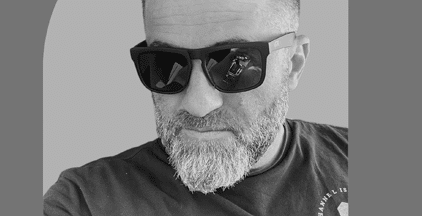
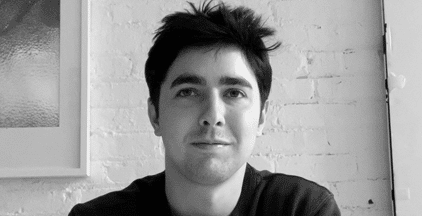
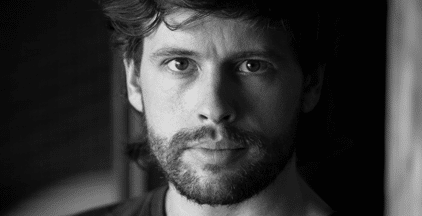
“We continually push ourselves to be better”
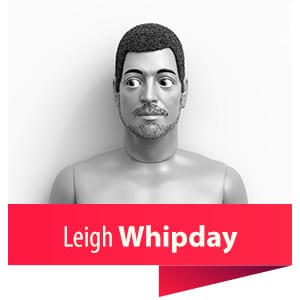 Manchester, February 10th, 2021
ToyFight is an award-winning creative agency specializing in design based in Manchester, UK.
With a team of designers, directors and strategists, they partner with global brands and emerging businesses to create exciting and meaningful experiences, whether digital or non-digital.
They’ve worked with Adidas, We-Work, Coca-Cola and Google, among many other clients.
The agency was founded by Leigh Whipday and Jonny Lander in 2015, who back then were working at different agencies.
In an interview with TIA, Whipday described daily life at ToyFight’s offices in Manchester. He highlighted the high-standards of the agency and described its creative process.
To kick things off, what do you love the most about your city?
The thing I love about Manchester is the people here. They’re down-to-earth, hard-working and usually have a good sense of humour. There’s also a great creative community here, with lots of talent too.
What’s one must-do experience in Manchester in your opinion?
Right now, there’s not a lot you can do, but once lockdowns are eased there are loads of things to do here. If you’re into football, go to a Manchester United game. Or you could call by the ToyFight office and bring us gifts.
Back in 2015, you founded ToyFight with Jonny Lander, tell us about the day the idea was born.
Between 2010 and 2012 we both worked at different agencies in New York. We didn’t get the chance to meet up very often, but when we did we would get ridiculously drunk and talk about setting up our own thing when we came back to the UK.
Could you explain to us briefly what’s your role as Creative Director?
Myself and Jonny have actually both removed the Creative Director title to create opportunities for our team to grow. That said, we do still creatively direct and are very much hands-on with the work running through the studio.
Our role covers everything from new business, planning, resourcing, hiring, strategy, design, motion, prototyping, content creation, crying, and oversight of the team.
How would you describe the creative culture of ToyFight?
Pretty tough. We have high-standards and like to continually push ourselves to be better. However, we are supportive and encourage personal development for our team through various skills courses. We also involve our development team in the creative process, which we think is really important.
Attracting and retaining talent is one of the constant pursuits that every great agency faces. What is your approach to motivating and developing talent?
Finding the right talent is one of the hardest parts of our job. Being based in Manchester, as opposed to London, means it’s a bit harder attracting people who don’t already live here. For the team we have, we do think we offer good incentives in terms of helping them develop their skills and learning on the job.
Please walk me through your creative processes, do you handle all development work in-house?
Our creative process always begins with a discovery and strategy phase so we have a really solid plan of what we’re trying to achieve before we get into the design work.
After that we work on a couple of concept directions, with a clear conceptual idea, moodboards, designs at desktop and mobile sizes and an animatic, or prototype.
Once the client has chosen a direction, we take feedback and roll it into weekly design sprints with a client check-in at the end of each sprint.
From there we move into development (all done in-house) and have a couple of check-ins and do our internal QA before we hand it over to the client for user acceptance testing.
Once launched we generally forget to tell anyone about it and miss the chance for self-promotion, as usual.
COVID-19 is a first-of-its-kind disruption, one that leaves no community, government or business untouched. What challenges were you facing before the pandemic and how are you dealing with them right now?
Before the pandemic, our biggest challenge was finding the time to work on a new site for ToyFight. We still haven’t found the time.
Tell us about a recent project you’ve worked on that you’re proud of. What particularly brought out the best in you?
We recently worked with the Los Angeles Philharmonic on a site (laphil.com/soundstage) for a series of weekly streaming concerts, as people are unable to visit due to Covid.
The real challenge was planning for the long-term and creating enough flexibility for varying amounts and different types of content for each weekly episode, which usually came 1-2 days before it was due to go live.
We built a modular system which allowed us to drop in whatever content type we had, and build each episode page through the CMS, without the need to go back into design or dev.
The development was pretty complicated with a lot of technical considerations, but our dev team is really strong and did a great job.
How long did it take to research and make the project?
The project started around July last year and was finished in November, although we’re now working on a second phase, with more concerts and additional content.
We got involved when the client found a project we’d worked on previously and got in touch, which is how we get most of our work.
Three top tools you can’t live without?
Probably no surprises here, but Figma, Slack and the Google Business suite. Figma has actually been a real game changer for us as a studio.
We used to do almost all of our design work in Photoshop, but since we switched to Figma we’re so much faster, more collaborative and can create flexible design systems without gigantic file sizes like in PS.
What new ideas in immersive experiences are you excited about?
Obviously, AR is really exciting and becoming much more accessible through browsers, not just native apps.
Is it better to be good and on time or perfect and late with your work?
Good and on time as long as you make it perfect after the deadline.
Can you name a fun-fact people would be surprised to learn about you?
I collect guitars and rarely play them.
Thanks Leigh!
Follow Leigh on social media:
Follow Toy Fight on social media:
Leigh’s Working Preferences:
Home Office, Coffee Shop or Coworking Space:
Home Office
Wake up time:
7am
Usual breakfast:
Porridge
Most quoted book, TV Show or movie:
The Office (UK)
Last downloaded app:
Tweetbot 6
Favorite digital brands:
No idea
Unusual Hobbies:
Baking (badly), running (slowly)
Preferred spot in your town:
Home
If you could solve one problem in the world, what would it be?:
Inequality between rich and poor
Agency to watch

Best in Breed since 1998. Lounge Lizard is a Digital Agency that Specializes in Brand Strategy, Website Design, Web Development, Mobile APP Development, Online Marketing, Social Media, Ecommerce, and SEOdigital experiences that move brands and businesses from now to next.
Featured agencies

135035 Views

115588 Views

109356 Views

91837 Views

88316 Views

83114 Views

74740 Views

61546 Views