“It’s important that everybody feels creatively fulfilled”
London, April 5th, 2021
Born in Tokyo and raised in London, monopo is a creative agency that delivers design-driven solutions through digital experiences, branding, advertising and video production.
Its collective of globally-minded people mobilizes creative communities, breaking down barriers of language and culture.
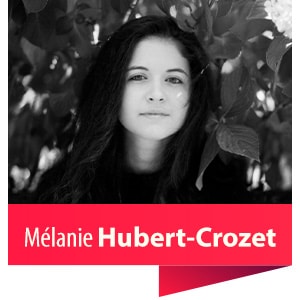
After working in the office in Tokyo, Mélanie Hubert-Crozet helped the agency take its first steps in London, where she currently works as the creative director.
In an interview with TIA, Hubert-Crozet described monopo’s expansion, its creative culture, and the elements that make it different from the rest.
To kick things off please can you describe us a little bit about London and why is a great place to work?
I live and work in East London. Even though London is one of the biggest cities in the world, it can be very laid-back and has this village feel. At the same time, there is so much going on all the time, it’s the best of both worlds.
For a creative agency, there is of course a lot of competition but also endless opportunities. Within Europe, London is by far the most international and diverse city. There is such a wealth of talented people to work with, both on the brand side and talent side.
The UK’s heritage in design and creativity is so strong. The design culture here has so much character and it attracts people who look for that. People and brands who want to try things out, take some risks and want to make a difference. After all, punk was born here.
In 2019, you started to co-run the London branch of the Japanese creative agency monopo. Tell us about the day the idea was born.
I started to work as an interactive designer in France and London before moving to Tokyo. In Tokyo I joined monopo and was there 2,5 years before starting monopo London. Europe still felt like home so I knew I would return at some point.
After 2 years, I mentioned to Yoshi (co-founder of monopo) that the time was nearing and immediately Yoshi asked me if I would be interested in opening a monopo office in London. This was actually something that my partner (Mattijs) and I had talked about before, so I knew what my answer was going to be.
I realized a place like monopo is very unique and has a lot to offer in London. I also knew I would not find the same environment in London even though there are hundreds of agencies here. My answer was yes.
Mattijs (co-founder) and I pitched our vision for the London office to monopo’s founders Yoshi and Shun in a small and messy Japanese bbq restaurant, discussing paper print-out slides while cooking our meal. We had an amazing discussion and it was very inspiring to see that our vision aligned perfectly with that of Yoshi and Shun.
The rest of the roll-out happened in a very organic way. The entire approach of developing the London branch has been done in a start-up way actually, taking baby steps and growing when it feels appropriate. We’ve treated the London branch really as our baby.
Could you explain to us briefly what’s your role as Creative Director at monopo London?
My job as a creative director is to create an environment where the best possible creative work can happen. Sometimes that’s on specific projects but oftentimes it’s about making sure that everybody feels safe and inspired to take creative risks.
My most important objective is to make sure that people can be 100% themselves, feel inspired by every project, enjoy new challenges and bring all their own creativity to work.
Practically, my role is a mix between managing the company and the team and leading projects creatively. Sometimes it’s about taking care of PR, sometimes it’s about finding and hiring the right people, sometimes it’s having creative discussions with clients where a project could go.
We are living the most important pandemic in recent world history. What challenges were you facing before the spread of COVID-19 and how are you dealing with them right now?
When the pandemic hit, we had started monopo London just one year earlier. We were just finding our groove and then we had to rethink everything. The biggest challenge was to build a team and a culture with the monopo heritage baked in.
Before the pandemic we often had colleagues from Tokyo visiting us in London but that became impossible, so we had to find other ways to instill the monopo spirit into the London team.
We have monthly digital meetings with the Tokyo team where we share project updates and news (called Shimekai). It is something we did before but it became even more relevant during the pandemic to stay in touch between the two offices and create a culture of celebration. It works pretty well except that this meeting would usually end in a karaoke party – something we definitely miss.
How would you describe the creative culture of monopo?
Monopo is a space where everybody can bring their own perspective and ideas into the process even if it’s not their core skill.
We operate a flat hierarchy as much as possible and give people responsibility over the work they do. That also means we work very collaboratively and create this space where we don’t judge each other and respect each other’s opinions. We also love to bring external partners into the mix. We call all this “collective creativity”.
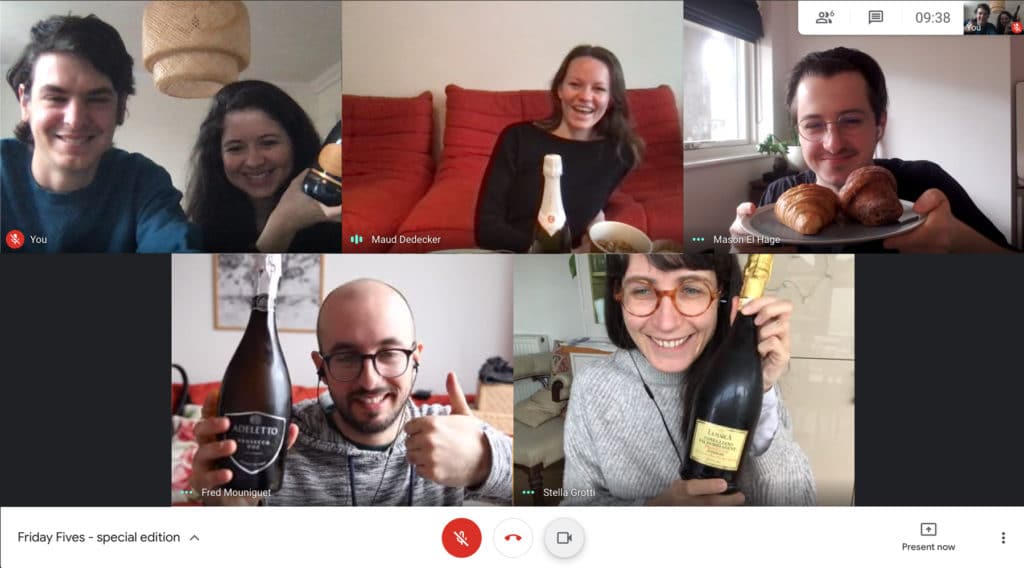
We also do “Friday Fives” every Friday at 5pm, to end the week. Here, the team shares their work-in-progress as well as one piece of inspiration. It’s really a great way to get diverse inspirations that we wouldn’t see on our own. This becomes our collective pot of references that we often go back to during client projects.
Attracting and retaining talent is one of the constant pursuits that every great agency faces. What is your approach to motivating and developing talent?
Everybody in our team is very passionate so it’s important that everybody feels creatively fulfilled. At the end of each year for example, we do a year-in-review where we look back at our projects, discuss what we liked and what we didn’t and then ask everybody’s wishes for the new year.
That way we know what everybody would love to do more of (or try out) and we do our best to find opportunities to do so. This actually focuses our new business efforts a lot. It really influences which opportunities we look for to fit with the direction of the team.
Of all the projects your agency has produced, which one are you most proud of?
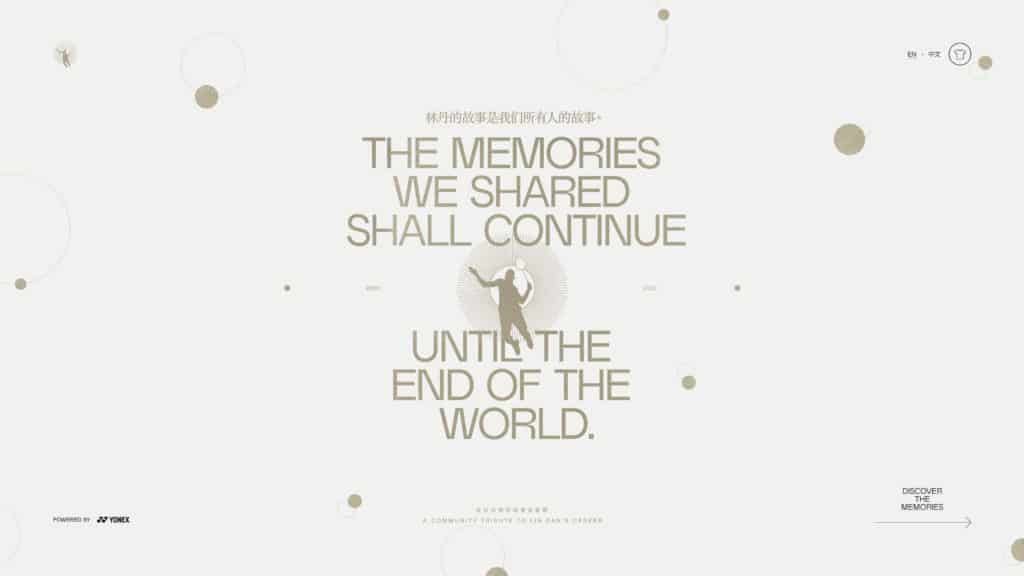
I think the one I am the proudest of is “The Memories We Shared” for Yonex because of the way the project was born.
Yonex (the Japanese sport brand and world leader in badminton) is our main client and we have a great on-going relationship with them. It allows us to think proactively rather than just within the limits of a given brief.
When Chinese badminton legend Lin Dan suddenly announced his retirement, the brief was to make a post on Instagram but we felt like this was such a great opportunity to bring the badminton community together.
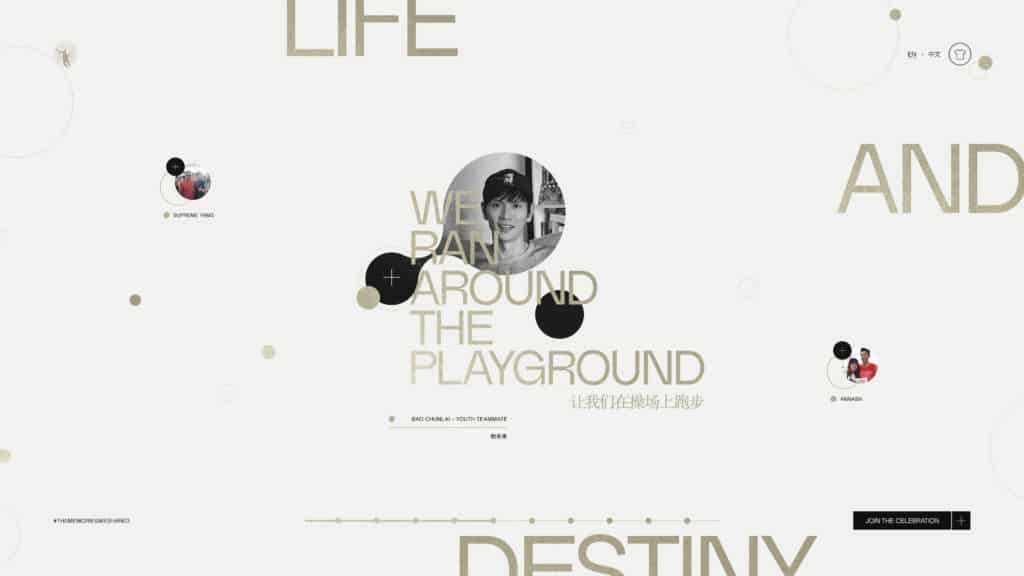
We had the idea to get fans to share their memories of Lin Dan through social media and collect them on an interactive website. Famous athletes also joined the campaign and recorded video messages sharing personal memories they shared with Lin Dan.
I felt so proud when I heard those famous athletes sharing such personal memories, it’s like we got to discover a very human side to these athletes. It felt very emotional. It was nice to do a non-commercial project, something for the community.
We were limited in budget as it was not something initially planned by the brand, but I’m very proud of what we achieved with the passion from everybody. We felt such partnership, working closely together with Yonex to make this passion-project happen.
Please walk me through your development processes, do you handle all development work in-house?
In London, we don’t have developers in-house at the moment as we are a small team of 6 and different projects require different types of development skills.
We love working with freelance developers that we can bring into our team to have this on-going conversation and work collaboratively on the creative output.When the projects are bigger we work with development agencies.
Of course, sometimes we also work with developers from the Tokyo office, but everything depends on the specific requirements, time zones management and everybody’s resources.
What would be your dream design project or collaboration to be a part of?
My long-term dream has always been to do branding for a restaurant. I love going to places and being immersed in a full experience, with a mood and a vibe of its own.
Designing for a restaurant is unique because your design is there to accompany the experience being created, a moment of life and pure enjoyment. It’s also so down-to-earth, something everybody can access and enjoy.
As a Creative Director, do you find that you notice little elements that others don’t?
Initially, I never pictured myself being Creative Director one day, this was not even my goal. I thought I was at my best designing.
But in recent years, I came to realize that my main skill was not in design craft (so many designers are better than me) but that I can see creative opportunities beyond just the craft of it. I think I am obsessed with mixing styles and disciplines – bringing people together.
I love to explore such a variety of techniques and influences and knowing that I don’t have to be an expert craftsman in all disciplines is a huge relief.
What new ideas in immersive experiences are you excited about?
I was quite skeptical about virtual events and venues at first, but what we’ve seen emerging during the pandemic, like Dreamwave developed by Active Theory or Travis Scott in Fortnite, was actually quite exciting.
I don’t think it could ever replace a real festival but it could lead to a different kind of experience and being able to join more events, without having to travel every time.
In this industry or in life, have you had any particularly influential mentors?
One person that mentored me twice was Kishi (Takayoshi Kishimoto). He was our creative director at UNIT9. He hired me when I was freshly graduated, moving from France to London, not speaking English as fluently yet. We had such a great team and it was him who created it. This has forever been an inspiration to me to try and create a similar team.
When you are a young designer, you don’t always realize how much the team vibe is influenced and created by the person leading it. The designers I worked with at UNIT9 all had a big influence on me as well and I’d consider all of them mentors in their own right.
When I moved to Japan a few years later, Kishi had coincidentally also moved there so he could share his wisdom with me even in Japan. This time not at the office, but in izakaya and karaoke.
What advice would you give to a new nonprofit startup that is looking to establish a brand from scratch?
We’re surrounded by negativity, with people, brands, institutions and NGO’s all eager to point out the problems in our world. I’d advise a new NGO to instead be a force of optimism.
Help people believe that solutions are possible instead of focusing only on the problems. It’s important to find ways to make people feel engaged and motivated to help by showing them that better is possible.
How often should an agency encourage positive change?
I believe this should be a natural reflex in everything we do. It should be an on-going process. Always improving and questioning ourselves and finding ways we could do things better.
Can you name a fun-fact people would be surprised to learn about you?
When I was 10, I often did fashion photoshoots with my guinea pig. If TikTok had existed back then, I feel like he would’ve become a TikTok influencer.
Thanks Mélanie!
Learn more about Monopo London
Follow Mélanie on social media:
Follow Monopo on social media:
Mélanie’s Working Preferences:
Remote Working vs Office Working:
Office working
Wake up time:
8:00
Usual breakfast:
Coffee and pain au chocolat
Guilty pleasure:
TikTok
Most quoted blog, book or movie:
Master of None (Aziz Ansari's series)
Last downloaded app:
Weezy
Favorite sneaker brand:
Veja
Preferred spot in your town:
Millennium Bridge
If you could solve one problem in the world, what would it be?:
Plastic pollution
Agency to watch

Best in Breed since 1998. Lounge Lizard is a Digital Agency that Specializes in Brand Strategy, Website Design, Web Development, Mobile APP Development, Online Marketing, Social Media, Ecommerce, and SEOdigital experiences that move brands and businesses from now to next.
Featured agencies

135036 Views

115589 Views

109356 Views

91839 Views

88317 Views

83115 Views

74741 Views

61547 Views