WebAR technology is going to be a game changer for marketing and AR alike
San Francisco, April 29th, 2020

With offices in San Francisco and Copenhagen, Rock Paper Reality (RPR) is an Augmented Reality (AR) design agency that helps startups and Fortune 500s in marketing, education, entertainment, and retail harness the full value of AR.
The agency’s leadership has over a decade of experience working in the trenches of AR product and content creation, working with a team that has delivered dozens of successful AR products and applications and won Best-In-Show at the Augmented World Expo.
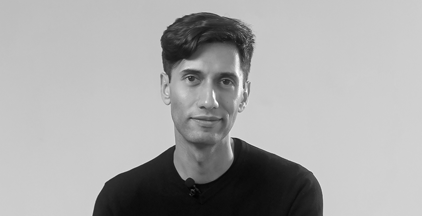
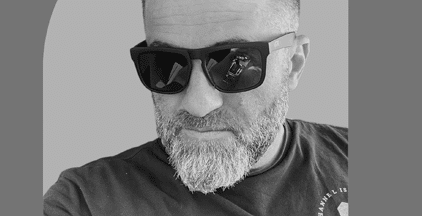
Alongside Bobby King and Preston Platt, Patrick Johnson is one of the founders of the agency and its current CEO.
In an interview with TIA, Pat described the main concepts behind AR as well as the agency’s building process and research methodologies.
He also reflected on the current challenges amid the coronavirus outbreak and looked at what’s coming for the agency.
Let’s start with the basics. What makes your city an attractive place to do business?
RPR is based in San Francisco and Copenhagen. The Bay Area is the global center of technology and allows us to keep a strong pulse on the latest AR developments as well as stay connect to best-in-class talent. Since many of our customer-base regularly travels to the Bay, it makes it the ideal place to have regular face-to-face meetings.
In-person meetings are incredibly important for us to build new working relationship that would otherwise be mostly digital, which is one reason RPR has a satellite branch in Copenhagen to make it easy to meet clients in Europe and maintain a presence in the same time zone.
How do you define Augmented Reality (AR)?
My definition of AR is pretty broad. Whether it’s touch, sight, taste, smell, or hearing, AR is an enrichment and enhancement of your perception and understanding of the real-world through computer-generated means. I even hesitate to limit the definition to “computer-generated” since I consider the 4D theaters that pump in smells that corresponds with what you’re seeing on the screen as essentially AR, but you have to draw the line somewhere.
Do you think AR is at the core between creativity, marketing and technology?
I don’t believe AR is necessarily at the core of creativity, marketing and technology, but it can check all of those boxes when done right. AR can make flat product representations on 2D screens and materials come to life in the real-world with 3D content, interactivity, and animation. This boosts buyer confidence and increases user engagement and positive associations with the brand.
But AR alone can’t achieve this. It’s what you do with the technology and how you deploy it that matters. Day after day I see AR gimmicks that are clumsily crafted and poorly executed. At RPR, we have a team of AR experts and content creators that have been working in AR for 12+ years. We have seen what does and doesn’t work. But deep AR experience is not enough, which is why we have an A-Team of seasoned professionals in marketing, creative design, and strategic consulting. By combining these respective talents together, we create exciting AR content that delights users and engages them to brands in ways traditional marketing simply can’t.
Could you please describe your building process?
On a high-level: our approach identifies both technical and brand requirements, sets stakeholder expectations, and assures our AR program delivers demonstrable ROI.
Our development methodology is a 5-step process for proven success:
Discover – RPR ensures that the vision for the AR experience is preserved and objectives are identified by ideating on the functional use cases of each feature.
Design – RPR’s UI/UX team will produce the wireframes and creative compositions for the application to review with the client before development.
Build – RPR’s development team builds the core features of the AR experience according to the defined scope. This corresponds with weekly check-ins with the client for rudder guidance.
QA Testing – RPR undertakes rigorous QA testing to assure all features of the experience work properly and are resolved before deployment.
Delivery –RPR deploys the experience on the defined platforms and, depending on the experience, will maintain software updates, server-side maintenance and scaling, and ongoing customer support.
Can you provide one or two examples of your experience in dealing with usability studies, eye-tracking study, field study, or focus groups?
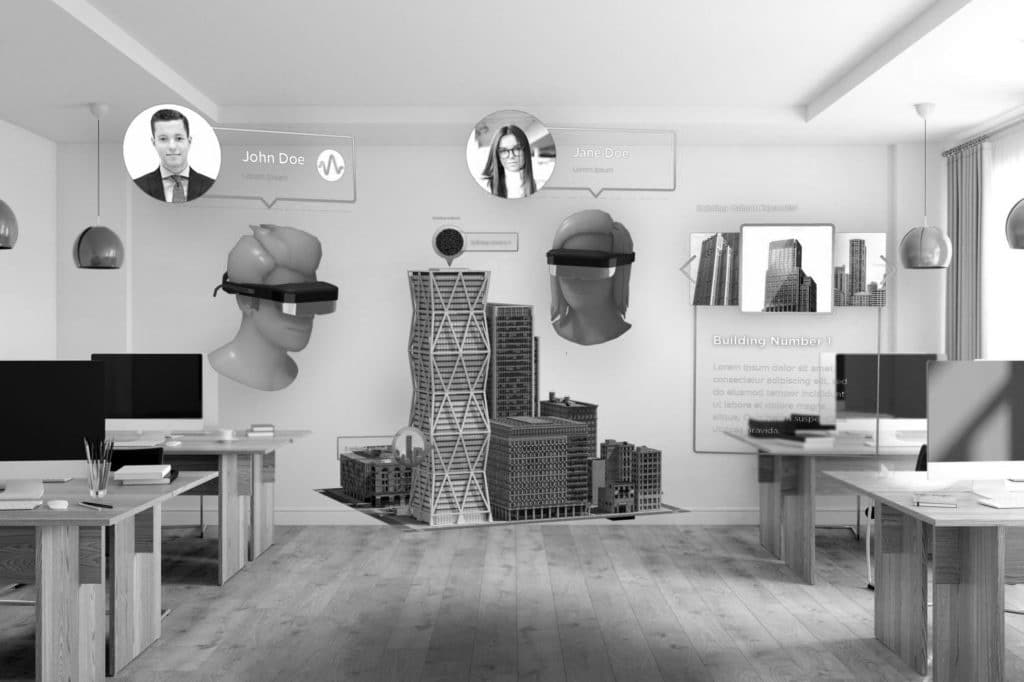
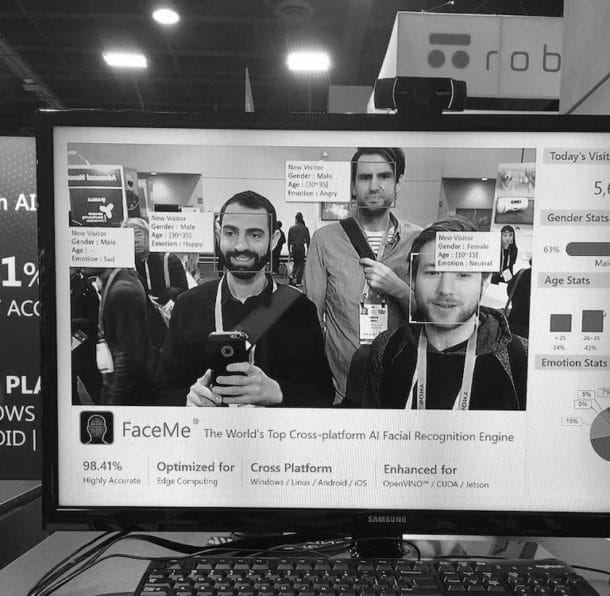
Consumers have very low patience for learning new technologies before they lose attention and interest. For the past 3 years, RPR has been consulting Lenovo on their new AR Think Reality headset and software platform and developed their AR experiences that were showcased at the Augmented World Expo and CES 2020.
Creating AR content for shows poses an even greater challenge because events are high-stress environments that must move people through the demo assembly line as quickly as possible. Before developing the AR experience, we always create user profiles that help us understand the intended user of the technology, how they will use it, and what their use case is.
After validating the profiles with a sample of the intended users for validation, we refine and get to work. Once an MVP is created, we conduct recorded user testing where we observe the user while capturing user analytics on any steps that cause friction. We then interview the users using a point system to score usability and performance.
As an end result for the Lenovo demos, we developed self-guided experiences for the events that required no external support from onsite staff. This reduced the need for Lenovo staff support and allowed the greatest number of attendees to engage with the product with as little friction as possible.
Can you outline the research methodologies that give you greater insight?
Along with usability studies, we always recommend that our clients in marketing and advertising include our AR launch strategy services when deploying a new AR program. Some of these services include:
Competitor interviews— this is one of the most powerful services that we offer. We work with a company that helps us source knowledgeable stakeholders from competitive companies that have deployed comparable experiences and have insider knowledge. This helps us identify potential blind spots and ancillary opportunities before development. Ultimately, this allows us to incorporate successful solutions with proven success and steer clear of missteps on comparable AR programs.
Customer interviews – before launching a project we like to speak with the primary source (i.e our customer’s customers) to help us verify our assumptions and guide our approach. Receiving customer profiles, demographic reports, and general buying behaviors from our stakeholders is always valuable. But what we have found is equally as important is speaking directly with the customer to ask the right questions that will help us inform our development and deployment strategies. Customers are often more willing to speak freely to us about what is and isn’t working since we are a 3rd party agency and they don’t have to worry about offending us.
Customer Journey – after in-depth interviews with our clients and their customers and competitors, we develop a comprehensive customer journey map that looks across common customer touchpoints to identify where AR should be used to enhance the customer experience—from Awareness to Planning to Shopping to Loyalty.
Since the epidemic began in China, what are the challenges you’ve been facing as an AR agency?
Since RPR has created a company infrastructure and culture that encourages remote work and self-starters, working from home has had little impact on our communications, productivity, or efficiency. The biggest challenges we are facing are, in some cases, clients have delayed milestone payments; others have requested to move project kick off dates a few months out, delaying our invoicing and cash flow. But luckily, since we are still working with client budgets that have been earmarked for 2020, new business for us hasn’t been impacted. In fact, we’ve seen an uptick in demand for some of our services such as Web AR. But it’ll be interesting to see how the rest of this year shakes out and if some marketing budgets will be slashed in 2021.
RPR founders at CES (Pat, Bobby King and Preston Platt.
What would you say will be the next big trend in the interactive industry?
The next big trend for marketing, the interactive industry, and AR is a new technology called WebAR. This is going to be a game changer for marketing and AR alike.
Essentially, WebAR (also known as web-based or app-less AR) allows users to initiate AR experiences through a simple hyperlink or QR code—no downloads or apps required. No friction.
Everything is launched through your mobile browser. This means that companies in Consumer Package Goods can simply add a QR code to their product packaging or physical marketing materials that prompts the user to open their camera on their phone, scan the QR code, and then launch the experience. That easy! Or, if you’re advertising online, simply embed the clickable hyperlink into your ad or online store and users can now be directed to AR facefilters, AR games, or a product visualization experience that prompts your users to interact with your brand in exciting new ways.
Can you outline a few most crucial skills any Augmented Reality specialist should possess?
There is no one underlining skill that is absolutely crucial for Augmented Reality developers. That said, 3D content creation is huge for AR so being experienced with 3D software such as Maya is an advantage.
The biggest creative platform for AR development is Unity. Over 60% of all AR content is developed in Unity. If you’re on the business side of AR, keep abreast of AR trends and best practices by reading sites like AR Insider.
Are there any AR app or websites that are worth mentioned?
Our friends over at 8th Wall are the most robust development platform for Web AR development.
Along with RPR, I co-organize the largest AR MeetUp group in the world: AWE Nite SF. We obviously won’t be having any events until the Covid-19 storm passes, but you can attend the Augmented World Expo online. For discount passes, email me (pat@rockpaperreality.com) directly and I’ll set you up.
You should also visit our friends over at Artillery Intelligence for all the latest AR analyst reports and trends. Mike Boland is the senior Analyst and your man when it comes to AR insights.
And of course, visit Rock Paper Reality’s site and contact us for a free demo or to explore how AR can impact your business today.
3 things I wish I knew when I left school
– A diploma does not make you smart. In fact, I will hire freelance developers and self-starters any day over college graduates if I have to choose.
– There’s a high likelihood whatever you major in you will not end up doing for your career so study whatever fascinates and excites you.
– Library cards are cheaper than diplomas. If you’re not lucky enough to get a scholarship or have someone to pay for your school, you might be better off getting an entry level job to gather practical experience on your subject of interest and a library card (or good ol’ fashion Google works too). Or, I’m a big proponent of DIY, tinkering, and learning while breaking things.
Can you share a fun fact that people would be surprised to learn about you?
I am a novelist and have an M.A. in Fiction Writing.
Thanks Pat!
Learn more about Rock Paper Reality
Follow Pat Johnson on social media:
LinkedIn
Follow Rock Paper Reality on social media:
LinkedIn
Facebook
Pat’s Working Preferences:
Android vs iOS:
iOS
Preferred social media channel:
Linkedin
Coffee vs. tea:
Coffee
Favorite work snack:
Snyder's jalapeño pretzels
Sitting vs. standing desk:
Can't it be both?
Most quoted book:
The Tipping Point
Treasured TV show or movie:
Sopranos
Name 3 artists on your office playlist:
Misfits, Kate Bush, The Kinks
Actual project management application:
Trello
Preferred business meeting restaurant in your city:
Mourad
Favorite sneaker brand:
Vans
If you could work anywhere in the world, where would it be?:
Glasgow
Agency to watch

Best in Breed since 1998. Lounge Lizard is a Digital Agency that Specializes in Brand Strategy, Website Design, Web Development, Mobile APP Development, Online Marketing, Social Media, Ecommerce, and SEOdigital experiences that move brands and businesses from now to next.
Featured agencies

135037 Views

115590 Views

109357 Views

91840 Views

88318 Views

83116 Views

74742 Views

61549 Views