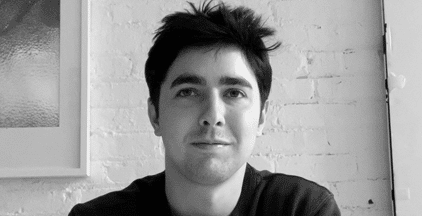
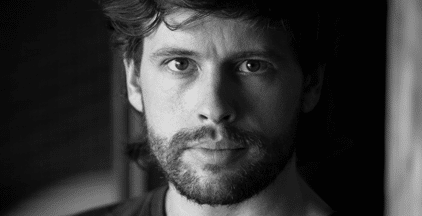
“You don’t have to be in an office to be productive”
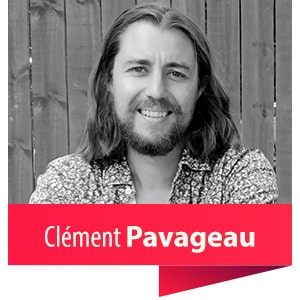 Wellington, December 16th 2020
After diverse work experiences in Europe and the United States, in agencies like North Kingdom, Watson DG and for clients such as Google, Netflix, Lucas Film and Lionsgate.
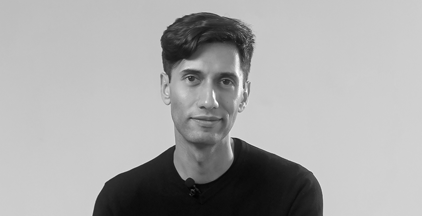
Clément Pavageau is now based in Wellington, New Zealand, working as an independent Designer & Art Director.
With more than 10 years in the industry, he offers unique, innovative and customized digital solutions to all his clients, with top level quality acting as his driving focus.
In an interview with TIA, Clément described the benefits and challenges of working independently, a role he has enjoyed so far.
He said with the pandemic companies are now realizing you don’t have to be in an office to be productive, highlighting the importance of communication and trust when working remotely.
To kick things off please can you tell us a little bit about your city and why is a great place to work
Wellington is a really chill city, just like the Kiwis (New Zealanders). I like that it has the cultural dynamism of a major city, whilst having nature in the heart of it and all around it. This atmosphere is perfect for what I’m looking for in my work environment: inspiration from the city and the natural world.
What’s a regular day like in Clément Pavageau’s shoes?
Well I’m afraid to say it’s nothing extraordinary! Mostly just working, exercising, cooking something barely edible and then relaxing by reading or watching something (I’m currently watching the Picasso series by National Geographic which is a great one). Yes, I’m that boring!
What made you decide to become an independent Designer and Art Director?
Back in 2015, I was moving from LA to London and I was planning to create my portfolio before applying for a full time job. Getting it ready took me longer than I thought it would, so I started to work on some freelance projects in the meantime.
Once I finished my portfolio, I actually never applied for any full-time jobs and kept freelancing instead. I just liked too much (and still do) the freedom of being a freelancer.
There are obviously pros and cons, but just being able to choose the projects and the people I want to work with is a major pro and one of the main reasons I’m still freelancing. The major con is definitely the stress and uncertainty of not knowing when my next freelance project will be, and therefore my next income.
COVID-19 is a first-of-its-kind disruption, one that leaves no community, government or business untouched. What challenges were you facing before the pandemic and how are you dealing with them right now?
The biggest challenge I ever faced from being a freelancer is not having enough projects coming in. So, I don’t know if I’m more fortunate than others or not, but the pace of projects coming in has, weirdly enough, increased a bit more than before the pandemic.
One of the challenges I always faced before the pandemic was agencies and clients not always being comfortable with me working remotely, either from home, from a different city, or more commonly from another country and timezone.
Now with companies worldwide having no choice but to introduce working from home policies for their own employees, it’s changing the perspective that they used to have about remote work.
This is definitely a great opportunity to show that you don’t have to be in an office to be productive. I’ve always struggled with open spaces throughout my career. I never understood why this is the norm, and wonder why it takes so long to consider that employees could be more productive and less stressed working in their own environment, away from the distractions of open spaces.
What do you feel are the keys to success when working remotely with a client?
It can seem obvious, but communication and trust are the keys to success when working remotely. The more involved the client is in the progress of each step of the project, the more likely it is that trust will follow.
Earning trust is always the hardest part, not only with clients that are not familiar with design but also with industry peers. That makes me reflect on the hiring process: don’t hire someone if you don’t intend to trust their skills. The best projects are the ones where people collaborate at the same level. Unfortunately, hierarchy and egos often jeopardize that.
The perfect client brief: Does it exist?
Yes, when there is no client! But seriously, client briefs are very rarely perfect. What matters most isn’t how ‘perfect’ the brief is, but what can be created with it. And a brief doesn’t have to be ‘perfect’ for a project to be great. It’s a matter of having enough perspective about it – for instance, how to turn what can be seen as constraints into strengths.
Tell us about a recent project you’ve worked on that you’re proud of, what particularly brought out the best in you?
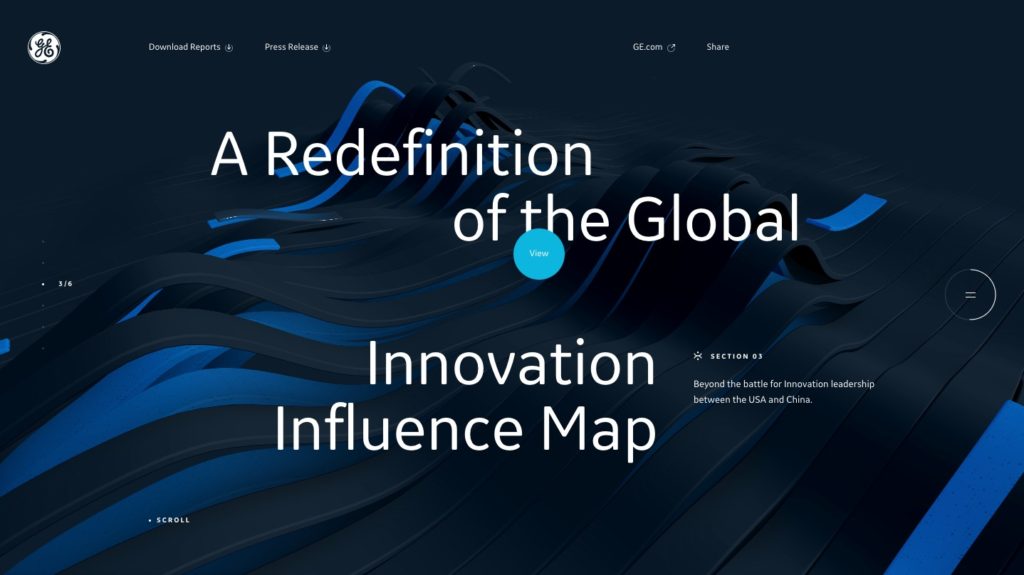
It has actually been freshly released : https://www.ge.com/innovation-barometer/
This project for General Electric is a special one as it has been such a long run to the finish line. It kicked off in February, but was paused just before the initial release date (because of covid) for half the year. It’s always frustrating when projects are cancelled, but luckily, it wasn’t the case for this one as it went live in the end!
GIB20 was a very challenging project, involving a lot of abstract and complex data that needed to be presented in the most playful, easy to understand way possible while reflecting the General Electric brand.
I’ve been leading every stage of the project and got to build the entire team (which is a rare opportunity as most of the time the team is appointed to me).
Working with like-minded people is the most important thing to me. People that share your vision, ambition, and passion. People you can truly rely on to bring value to the project.
What’s the best piece of advice you’ve ever received?
Black is always in style – Batman.
No really, I can’t remember anything specific, but I’m grateful to my parents for passing on to me the value of hard work, which is possibly better than any single piece of advice.
Three top tools you can’t live without?
Photoshop, After Effects, Cinema 4D
How do you keep up to date on industry trends?
Twitter is where I catch up on the latest trends and design drama.
Can you name a fun-fact people would be surprised to learn about you?
My web career didn’t get off to a great start. I grew up in the countryside, in a tiny village in the west of France near Nantes. My parents were not into technology, and didn’t see why we needed the Internet at home.
So I had to wait until 2005 to get my personal Internet connection, at the age of 18, when I moved out of home for my studies… (yes, they do have the Internet now).
Thanks Clément!
Follow Clément Pavageau on social media:
Clement’s Working Preferences:
Home Office, coffee shop or coworking space:
Home office
Wake up time:
8 am
Usual breakfast:
Steroid Injection
Most quoted book or movie:
I'm not really into quoting, but lately I surprised myself by quoting The Mandalorian "I have spoken". "This is the way"
Last downloaded app:
Flamingo scooters
Favorite digital brands:
Spotify
Unusual Hobbies:
Swearing in French, whistling the lord of the rings theme song (I can't help it in this country, sorry NZ... and it's perfect to annoy my gf)
Preferred spot in your town:
Wellington Marina
If you could solve one problem in the world, what would it be?:
Stop climate change
Agency to watch

Best in Breed since 1998. Lounge Lizard is a Digital Agency that Specializes in Brand Strategy, Website Design, Web Development, Mobile APP Development, Online Marketing, Social Media, Ecommerce, and SEOdigital experiences that move brands and businesses from now to next.
Featured agencies

135037 Views

115590 Views

109357 Views

91839 Views

88318 Views

83115 Views

74742 Views

61549 Views