User Experience First: How Nixa Puts Technology to Work
AI is going to have a huge impact, but not in the way most people think. It will never be a replacement for highly skilled people.
 Montreal, February 13th, 2025
Nixa is an agency specializing in developing innovative technological solutions for businesses across various industries. It focuses on creating robust technological architectures that enable clients to fully leverage cloud capabilities, automation, and best practices in the software industry. Through its proactive approach to design, development, and support, Nixa has established itself as a leader in implementing high-availability and scalable solutions, as evidenced by its collaboration with leading platforms such as Digital Ocean.
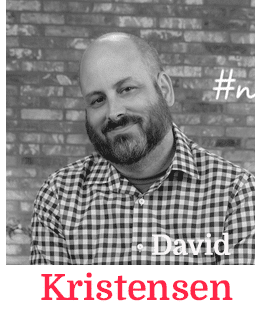
David Kristensen is the Chief Technology Officer, a professional with over a decade of experience in the telecommunications and technology sectors. His experience has allowed him to lead teams in creating technological solutions that are not only innovative but also centered around real client needs. With a clear focus on redundancy, security, and integrating new technologies, In an interview with TIA, he shares his perspective on how emerging trends are shaping the future of web and application development, as well as reflecting on the industry’s challenges in scalability, quality, and efficiency.
We’re excited to have you here, David. To start, can you tell us a bit about where you’re based in Canada and what you enjoy most about working in such a creative environment?
Thanks for having me, I’m based in Montreal, Quebec. I grew up here, but over the years I have also spent time living in Ontario and working in lots of different countries, but Montreal has always been home.
As a resident of Montreal, what are some hidden gems or local spots that people might not know about but are worth checking out?
There’s been many places that have come and gone over the years. I’m kind of a junk food guy (I’m working on it) but these days I really like Uniburger. I also love Japanese food, so I’ve been trying as many of the Japanese places I can find. I really liked Restaurant Chillax on Parc.
One of my favorite restaurants has always been Maison VIP in Chinatown. I’ve been going there for over 25 years. They were always open late, so you can get together with a bunch of friends after going out or working late and get great quality Chinese food in a casual environment.
For those who aren’t familiar with your career, can you provide an overview?
Sure, I graduated in Computer Science from Trent University in Ontario and through a group project got hired directly into a municipal government in Ontario. While there I worked with multiple departments to build software for healthcare (vaccination tracking), and other departments like Works and HR.
I’ve always been focused on web based development, mostly because it removes the need for installation and supporting installs on different devices. The timing of my entrance into the industry really helped in that regard as the tools really started advancing at that time. At the government I worked almost exclusively in ASP.NET with C# and Oracle databases. Working with Oracle really gives you a good foundation in relational databases, because at scale it is kind of unforgiving, so you have to make sure you understand how to optimize.
After working there for almost 5 years I had a friend recommend a job at Ericsson in telecom in Montreal. It was the shortest interview I’ve ever had, they hired me in about 15 minutes, so that’s when I moved back to Montreal. Telecom was going through a huge transition from telecom specific technologies into TCP/IP and open software so again the timing worked out quite well. I was focused on integration and provisioning and worked there for just over 10 years. I was able to spend a lot of time working in Unix style environments there including Solaris and Linux, but because of the integration domain, I also spent a lot of time with XML and getting systems to talk to each other. I wrote a few tools that used XSLT to translate messaging between systems.
I got promoted to solution architect after a few years, and I worked with some of the biggest Telecom operators around the world. One of the cool projects I was fortunate to work on was a multicast project that was launched at the Indy 500.
After just over 10 years I left Ericsson and started a startup with some friends. We self funded and built a tool that focused on integration as a service. Essentially a low code tool for building integrations between systems using a flow chart like interface. We also built two ERP systems for customers in eastern Europe and Japan that used our tool as a backend for a web based front end. I was able to travel to Japan and many countries in Europe several times, and eating real Kobe beef at a small local restaurant in Kobe was a career highlight for sure.
About 5 years ago I decided to join Nixa, seeing that Nixa was so strong and well placed in web based software it just seemed like a perfect fit. A couple of years after joining Nixa as Technical Lead they asked me to be CTO and of course I accepted, so here we are. We’re producing some amazing things for such a diverse customer base, it’s very exciting.
Where do you spend most of your time, and what does a typical day entail?
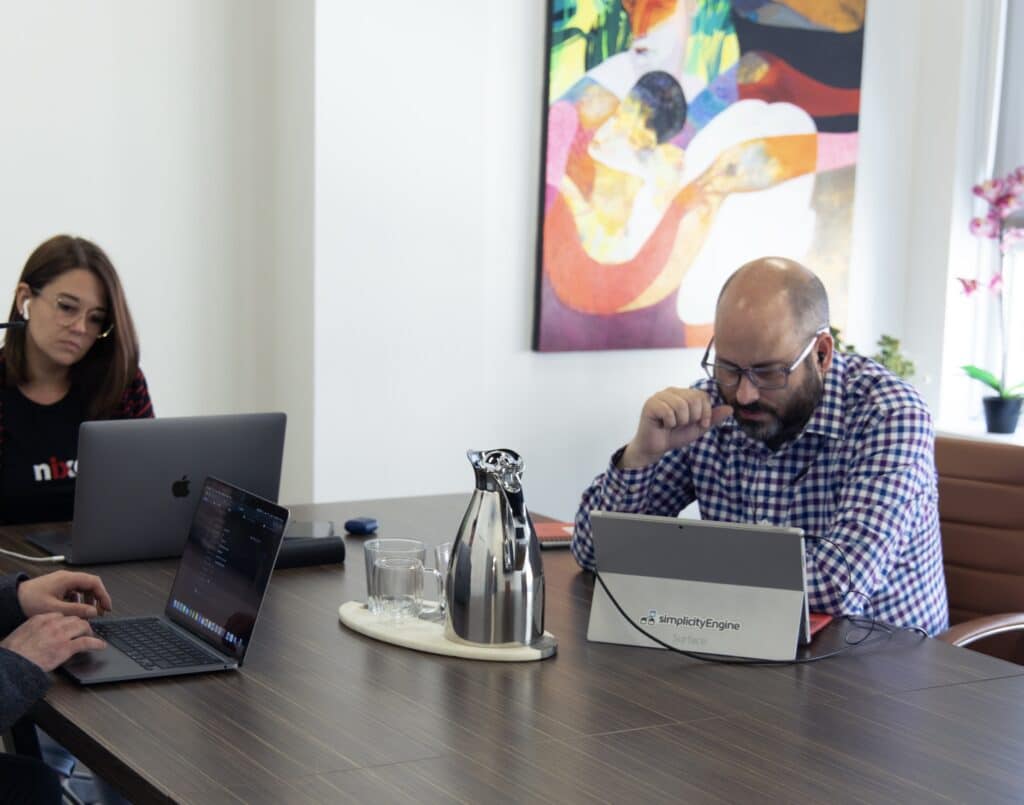
Of course I spend most of my time in front of my computer, which is to be expected, but I do get out to meet customers quite often, even in this time of video call based meetings.
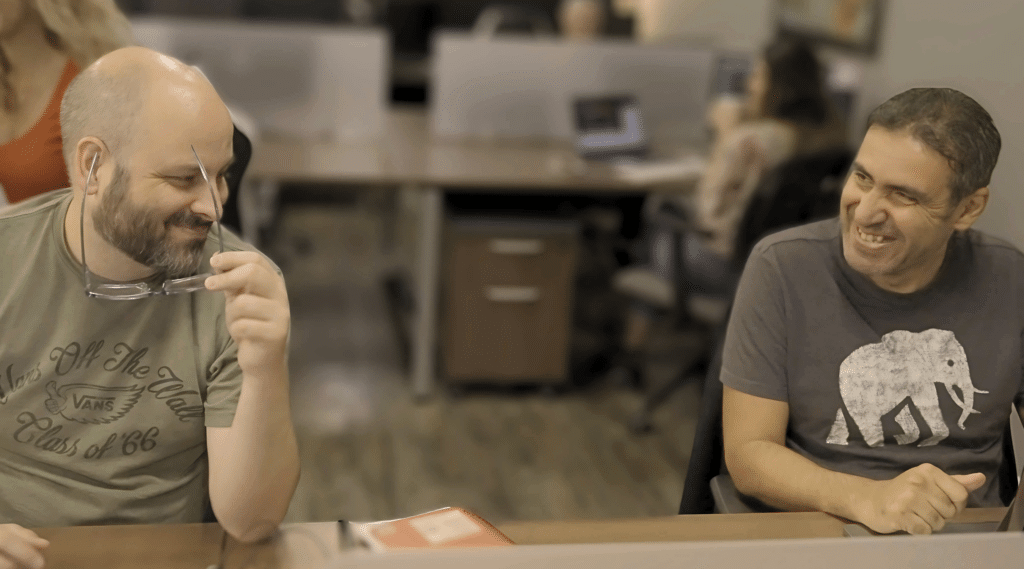
A typical day at Nixa usually involves a few video call meetings with customers and then working with the solution architect team in the design phase of projects, and also working with the Business Development team on new opportunities. My colleague from Ericsson and our start up (Abe Challah) heads the Business Development team, so we tend to work closely together. It’s one of the highlights of the job to help solve our customers’ challenges and see the positive changes that we can bring.
I’m also frequently working with the CEO (Marc Adam) and Director of Operations (Mathilde Charbonneau) on strategy.
What are your main focuses at the moment?
My father bought us a computer (TRS80) when I was in grade 2 and I started learning to program by myself. I once pretended to go to the bathroom during dinner so I could troubleshoot a bug in my Basic code, so as you can imagine, technology is kind of a passion for me. I basically can’t help myself from staying on top of the latest trends at this point.
Since Nixa’s focus is on web based technologies, we’re lucky that there has been a new revitalization the last few years in that space with javascript frameworks. As a company we focus on Python for the backend, because of the amazing tooling, but that timing has also been quite fortuitous with AI and machine learning. A lot of the popular AI libraries are written in Python so that really gives us a head start in those types of projects.
At the end of the day it’s the team that builds the projects that really make the difference. I view technology as a tool to enable the teams to perform, even with the latest AI tooling in development work, if you look beyond the hype, these are just tools and you really need good people to drive and direct the tools to be effective.
What criteria do you use to prioritize projects and technologies when planning the roadmap, and what factors influence these decisions?
The main drive for the technology choices in my mind has to be efficiency and effectiveness.
We look at the challenges of a project and choose the best technology to solve those challenges. We want our technology choices to stay out of our way, and make things simpler for our customers, since making something simple to use is often quite challenging.
When prioritizing projects I always try to focus on realistic and achievable results that will have the greatest impact.
How do you manage communication between the technical and non-technical sides of the company to make sure everyone is on the same page?
I’ve always liked explaining technology in plain language, even early in my career I was always the one asked to do demos to stakeholders. We’re also fortunate that everyone at Nixa is quite knowledgeable and passionate about technology, even in the non-technical roles.
I think a key to success in this space is to not focus on buzz words and technical jargon, since even some of the most complex technical concepts can be explained in plain language if needed, but also to focus on the results of a technology, rather than its inner workings helps a lot.
The user experience is a priority for Nixa. Can you explain how you balance innovation with simplicity when developing solutions for clients?
At the end of the day, user experience is the main product we sell at Nixa, and the technology just enables those user experiences.
When we deliver a working product to a customer, in many cases those customers will use our product for multiple hours a day over many years. So when we look at the latest innovations and technologies, we are always focused on how our users will benefit from them, and how we can offer that functionality in a simple, clear and user-friendly way, whether that’s an innovative AI algorithm or an internal search result score.
Technical leadership often involves making critical architectural decisions. What are the key considerations you evaluate when designing the architecture for large-scale, mission-critical systems?
Working in Telecom for about a decade has really helped in this area. Redundancy is key. A lot of the hardware technologies I worked with and architected at telecom providers around the world such as geographically redundant load balancers and redundant power supplies has been abstracted to the software layer now because of the cloud. So we leverage those types of technologies into our cloud environments for our customers. Oftentimes the details are hidden behind the scenes, and what the customer experiences are the results in the form of great uptimes. The cloud has made high availability and redundancy a lot more accessible to everyone if you have a partner like Nixa who knows how to leverage it. We’re proud to be an official partner of Digital Ocean and we use their technologies (and others, of course) to build these architectural environments for our clients.
The Confluence Outdoor project helped Pelican International centralize operations across multiple locations. How do you ensure scalability and future-proofing when developing complex systems?
The Confluence Outdoor project was a great example of using technology to solve specific problems. We used a lot of different vendors behind the scenes to build a cohesive product. The challenge was making sure that everything played well together and that there were no single points of failure using caching and other techniques. To ensure future proofing we used a composable architecture so that we can swap portions of the solution out if needed, which we have already utilized when the customer decided to change out their third party CRM for a Nixa built solution which ended up saving the customer significant amounts of money in licensing fees.
How do you handle documentation and problem-solving during the development process to ensure both quality and efficiency?
At the start of a project we typically build two main documents, a High Level Design document and a Low Level Design document. These documents then become the basis for any other documentation we build in the development phase, including the project plan, individual user stories and design mockups. From there we build automated test cases and project tasks with acceptance criteria. We essentially create a closed loop that feeds back test results into the developers’ workflow so they can make adjustments and fixes as needed. We’re also starting to leverage AI to do the documentation in our actual code, which it is actually quite good at, if a little verbose.
What role does client feedback play in your process?
At Nixa we typically work in a hybrid model of Agile scrums but with design documentation and architecting early in the project, essentially a cyclical waterfall with sprints. The sprint reviews happen every two weeks with the clients and we review what’s been done and what will be done based on the project plan. Clients provide lots of feedback early in the project as we build out the design docs, with workshops and ad hoc meetings, as well as a custom built interactive client dashboard. This early feedback sets us on the right track, so hopefully there isn’t too much course correction once we actually start development, and at that point all client feedback goes into acceptance and minor changes.
With the increasing importance of data security, how do you manage security considerations in your development process?
Obviously security is a key priority for Nixa, we consider the security implications of our choices at every step of the development, from the low level of managing access and sandboxing each client environment to building role based authentication and multi factor authentication for our clients. Agencies like Nixa have a particular challenge because we often deal with diverse technology stacks depending on the project, so we have to be extra aware of the security implications for our clients, and it also factors into the technology recommendations we make. We work on a “Need to know” style for everything, for example, we only store the data we need for an application to function, and encrypt sensitive data. We have a pretty detailed internal monitoring set up so we have awareness across all our environments. Essentially we have to have a continuous improvement process so that we’re always staying on top of security.
Looking ahead, what are some key trends or emerging technologies that you believe will shape the future of web and application development?
There’s quite a few trends these days, obviously AI is going to have a huge impact, but not in the way most people think. It will never be a replacement for highly skilled people. It’s a tool that helps people perform better, and you need people with domain experience to pilot the tools. At the end of the day, the developers who understand what a customer wants will always be the most effective developers, no matter what tools they are using. I think the next wave of advancements will be a simplification or abstraction of some of the overly complex javascript frameworks. I’m very interested in HTMX for example.
Which aspect of your work puts a smile on your face?
Appreciation is what drives me, so seeing customers’ challenges resolved and their satisfaction keeps me going.
From a personal perspective, what do you think are the most pressing global problems we face today, and how can technology help solve them?
The way I see it, the world will continue to get smaller because innovation is an almost natural force which brings solutions, but also can cause new problems. In the long run, as technology keeps making communications, shipping, travel, energy generation and connectivity easier and faster, it becomes less and less possible to isolate ourselves and our markets from each other. We all have to make sure technology is accessible, distributed and democratized as much as possible.
Outside of your professional life, what are some of your personal hobbies or interests that help you unwind and stay inspired?
Travelling as much and as far as possible!
Can you name a fun-fact people would be surprised to learn about you?
I like to collect retro video game consoles and games.
David’s Working Preferences:
Early Bird or Night Owl?:
Definitely a night owl. If I’m really focused at night, I’ll forget to go to bed.
Food you can’t live without:
Cheeseburgers, fries and iced tea, but also ramen and gyudon.
Most quoted book, TV Show or movie:
Shows: Simpsons, Futurama, Mighty Boosh, Red Dwarf
Book: The Innovator’s Dilemma
Next travel destiny in your list:
Okinawa
Favorite sneaker brand:
Vans or Adidas
Preferred spot in your town:
Anywhere with good food and friends.
Favorite video or mobile game:
Shadow Dancer for Sega Genesis, and all Metroidvanias.
What is something on your bucket list that you haven't done yet?:
Visit every Disney park on the planet. I’m only missing Shanghai.
Agency to watch

Best in Breed since 1998. Lounge Lizard is a Digital Agency that Specializes in Brand Strategy, Website Design, Web Development, Mobile APP Development, Online Marketing, Social Media, Ecommerce, and SEOdigital experiences that move brands and businesses from now to next.
Featured agencies

135086 Views

115631 Views

109379 Views

91873 Views

88362 Views

83151 Views

74775 Views

61573 Views