“Leading teams and creating great products is all about human interactions”
Everyone, from interns to senior leadership, has their own unique perspectives, and the passion that each individual brings is constantly pushing our teams and our work
 Denver, November 8th, 2023
Code and Theory is the network balance of 50% creative and 50% engineers at scale. Comprising 2,000 people, the technology-first group within Stagwell Group is built to partner with businesses to navigate the complexity of changing consumer behaviors, emerging technologies, and AI.
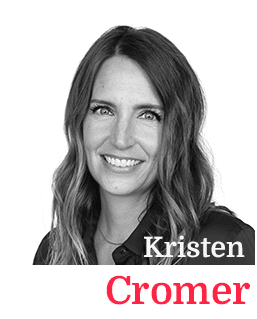
Kristen Cromer is Head of Strategic Accounts at Code and Theory, based in Denver. In an interview with TIA, she described her interest in experience design and her current role at the agency. She also explained the things that make the agency stay ahead and listed the critical elements of a best-in-class customer experience.
To start, what would you say you like the most about Denver?
The views! Seeing the amazing mountains every day never gets old. They’re always changing with the seasons, and always beautiful.
If you’re an active visitor, I recommend checking out the many hiking trails in the area. You don’t have to wander far from Denver to get a fun and scenic hike in. You can even hike at Red Rocks when there’s not a show (just watch out for rattlesnakes on hot summer days!).
If you’re a foodie, there are lots of great restaurants in Denver. Some of my favorites: El Five for the views and cocktails, French onion soup dumplings at ChoLon, Pony Up for cocktails and to-die-for French dips, and the perennial classic Sushi Den (yes, there’s excellent sushi in Denver!)
What led you to have a career in Experience Design?
I studied computer science as an undergrad, and started my career as a developer, building media-rich, choose-your-own-adventure style tools for corporate training. I knew that what I was building was functional, but it bothered me that I didn’t know if it was effective. I went back to school for a master’s degree, studying cognitive psychology, adult learning theory, and front-end design, which was a great complement to my tech background, before the field of user experience really took off. I continued designing experiences, defining strategic approaches for different training and software applications, conducting user research, and defining strategic product roadmaps, really evolving my career as the world of user experience design came into its own and matured. After a career of about 27 years, I’ve learned that there is always so much more to learn.
Could you explain to us briefly what your role as Group Director at Code & Theory is?
I focus on a number of things:
1. XD Team Leadership – I have Experience Strategy, Interaction Design, and Visual Design experts on my team. I work to inspire and energize the team, ensure cohesion of the team, as each discipline needs to work closely with each other, and continuously evolve our practice and our skills to meet the changing needs of our clients. I don’t do this alone – I have amazing leaders on my team, and individuals at all levels with passions and interests that help us learn from one another.
2. Client Work – I work on several accounts in an Executive Sponsor capacity, where I meet with our team to make sure everything is on track, that they have what they need to do great work, and that the work is effectively driving to our clients’ goals. I also build relationships with our clients’ executives to make sure we’re delivering on their expectations and to identify additional needs that we may be able to help with and grow our work with the client.
3. I also support net new growth, meeting with new and potential clients to talk about how our experience, expertise, process, and innovative thinking can serve their business needs.
4. Organizational Leadership – I serve on our Senior Ops team, a cross-disciplinary team of leaders, where we work together to drive growth, and set and execute on the direction of the organization.
In your opinion, what makes Code & Theory “stay ahead”?
As with any agency, it’s our people! I recognize I’m biased, but we have the smartest, most talented team in the business. Everyone, from interns to senior leadership, has their own unique perspectives, and the passion that each individual brings is constantly pushing our teams and our work. When someone shares an idea, a “what if,” a bit of inspiration they found outside our work, the team feeds off of that energy and grows that seed into something great together. We’re also constantly pushing each other and asking the hard questions that make each of us up our games and bring innovative thinking into our work.
Does the agency have its eyes on any particular new market?
Code and Theory is comprised of about 50% creative talent and 50% engineers, which gives us a massive advantage in how we approach work. It’s an exciting interplay where the evolving affordances of technology push the limits of what’s possible, and the creativity that’s manifested in project work in turn pushes on technical capabilities, resulting in some of the most interesting and innovative work in the industry. Specifically, we’re incorporating a lot of AI into our work in ways that bring real value, from business intelligence, to AI-generated content, to automation, we’re guiding our clients in wading through the hype and how best to use the technology to drive their businesses.
In your opinion, what are the critical elements of a best-in-class customer experience, and how do these elements contribute to a brand’s overall success and customer loyalty?
Every quality experience requires the table stakes – interaction best practices, beautiful modern visual design, accessibility – those things are not optional. There are two things that are critical in making those basic elements of an experience truly effective:
1. A relentless passion for the intersection of users, technology, and business goals. If we don’t understand the user’s needs, motivations, and pain points, we’ll miss the opportunity to serve them, and they won’t be engaged. If we’re not continuously keeping up with changing technology, we won’t know what’s possible to craft a better experience. On the flip side, if we don’t know the constraints of technology, we’re going to spend way too much time trying to make something work that’s not reasonably feasible. If we don’t understand why the business is investing in the experience and what they need to accomplish from it, there won’t be a reasonable return on investment. Focusing on these areas is also where the most innovative ideas can come from – meeting needs that we initially didn’t know existed, leveraging technology to create something that’s never been done before, and driving toward business goals in a unique way.
2. There’s no way we can have empathy and consideration for the audiences we serve without diverse teams. We all experience the world differently, and creating quality experiences that resonate with our users mandates a diverse team of professionals coming together, asking questions, pushing one another, and ultimately considering the diverse user groups we serve. The next time you’re working on a project or pitch, look around, ask your team questions, be curious about different ideas. And if everyone looks the same or has the same background, you’re going to end up with a solution that’s less effective than it could have been.
As a mentor and manager, what leadership philosophy or principles have guided your approach to nurturing and growing great teams?
Empathy and vulnerability are at the top of the list, with a solid dose of setting high expectations. I’m a Brené Brown fan, and I’m inspired by her confidence in leaning in to the difficult and uncomfortable. Leading teams and creating great products is all about human interactions, and let’s face it, humans are all quirky. We all have our insecurities, our fears, and our motivations that either drive us or hinder us every day. The key to tapping into the greatness of teams is truly understanding each individual, acknowledging (and sometimes helping them find) their superpowers, while continuously setting the bar higher to guide toward growth.
In your experience, what are some common challenges or obstacles you’ve encountered when building and leading teams, and how have you overcome them?
Leading teams through change has been a theme on repeat in my career, and I imagine for most leaders. From changes that seem small, like moving offices, going through a rebrand, and establishing new leaders as managers, to big changes, like mergers and acquisitions, managing through Covid and major social issues, staff reductions, and shifting to remote work – it all takes intention and care, but one thing is certain: there will always be change and we always need to be ready to lead teams through it. I go back to that balance of empathy, vulnerability, and setting high standards – leading through change requires an understanding of how individuals are experiencing the change, planning for what we want things to look like on the other side of the change, and setting expectations for how we support and interact with each other throughout. It’s also important to note that we as leaders experience change as well, and we can’t forget ourselves in the process. We need to check in with ourselves regularly, identify and acknowledge what we’re feeling and take care of ourselves so we’re able to lead others effectively.
What key performance indicators (KPIs) or metrics do you use to measure the success and effectiveness of your teams?
There are some quantitative measures of team success and effectiveness: retention, rate of level/promotion progression, ranked performance against role expectations, and the success driving to KPIs on project work are a few. However, since we’re in such a human business, I find the qualitative measures more helpful. I look at peer feedback and reviews relative to the expectations we have for each role, and anecdotal feedback (praise or challenges) from team members. I’m overseeing quite a few projects and accounts at once, so it can be difficult to have enough context to assess the effectiveness of all of the work, but there is one question I like to: “Why did you make that design decision?” If a team can’t justify their decisions, and point to a rationale (e.g., impact to business goals, serving specific user needs, helping a brand stand out in the market, technical drivers, proven best practices), it signals a problem. Our work can only be effective if we’re making decisions that are grounded in the reality of our clients’ business, user, and technology landscape.
What do you believe are the key qualities that make a professional successful in the technology-first creative industry?
Curiosity is an absolute requirement for creativity.
Curiosity makes us ask “why” or “why not,” “what if,” “what do you think of,” and “I wonder.” That type of thinking opens us up to exploration and can lead us to ideas that we can iterate on together.
Do you have a message for young creatives considering a career in this industry?
Find and follow people in the industry who inspire you. Find people whose design aesthetic you admire, or whose process is unique, or whose Figma tips and tricks are really helpful. Most importantly, find people whose mindsets and attitudes inspire you, and be sure to seek out inspiration from those who are different than you, whose ideas make you think differently than you have before.
In this industry or in your life, have you had any particularly influential mentors?
It was difficult starting my career as a developer. I was the only woman in my undergrad classes, and never really connected with anyone in the industry. While I felt like an outsider, I have always been resilient and self-reliant. I felt that I needed to navigate my career solo, and I probably wasn’t open to the possibility of a mentor until much later in my career, when I met the CEO of EffectiveUI about 10 years ago, Rebecca Flavin. I instantly gravitated to her leadership style. She’s always shown a great balance of empathy while maintaining high standards, strong decision-making while considering input of other leaders, and clear direct communication while energizing and inspiring teams to do great work. My abilities improved significantly as I finally saw a model of what great leadership can be. I remember distinct moments of advice she shared that changed the way I think about leadership and what I’m capable of, and I still ask for her advice regularly.
Outside of your professional life, what are some of your greatest passions or interests that you enjoy pursuing?
I like to apply my creative energy to the gardens around my home. Designing new landscape layouts, and selecting native, water-wise plants that work beautifully together is so rewarding. I also grow herbs and some vegetables, including peppers which I’ve had fun trying new ways to pickle.
Weekends often involve great meals. Do you have a favorite dish or restaurant that you love to indulge in during your downtime?
I love grilling homemade pizzas with my family on the back patio, with some Grateful Dead tunes playing as the soundtrack. It’s a relaxing oasis without screens, and the pizza is delicious.
Can you name a fun-fact people would be surprised to learn about you?
I don’t have anywhere that I call my hometown. When people ask where I’m from, I’m never sure how to answer because when I was young, our family moved around quite a bit for my Dad’s job. We always saw it as a fun adventure, being able to experience and explore different parts of the country. My longest stints so far have been Philly and Denver, two very different cities, and I love them both.
Kristen’s Working Preferences:
Early Bird or Night Owl?:
Early Bird
Favourite type of cuisine:
Sushi
Most quoted book, TV Show or movie:
The Princess Bride and Mean Girls
Last place traveled:
Lake Powell
Favourite vacation spot:
Any National Park
Favorite design tool:
Good ol’ fashioned paper and pencil
Unusual Hobbies:
Following the fat bears of Fat Bear Week
Preferred spot in your town:
Red Rocks
If you could meet anyone, dead or alive, who would it be?:
Condoleeza Rice or
Claudia Goldin
If you could solve one problem in the world, what would it be?:
Equality for women in
society and business around the world
Thanks Kristen!
- Learn more about Code & Theory
- Follow Kristen on social media:
- Follow Code & Theory on social media:
Agency to watch

Best in Breed since 1998. Lounge Lizard is a Digital Agency that Specializes in Brand Strategy, Website Design, Web Development, Mobile APP Development, Online Marketing, Social Media, Ecommerce, and SEOdigital experiences that move brands and businesses from now to next.
Featured agencies

135038 Views

115591 Views

109358 Views

91840 Views

88320 Views

83116 Views

74742 Views

61549 Views