‘The objective is for clients to understand what UX is and the value it creates’
London, July 2nd, 2020
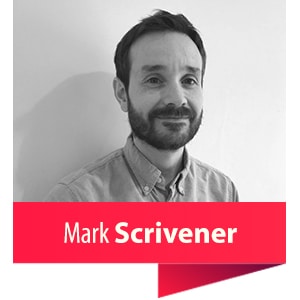
For an outstanding agency, it’s not all about having great thinkers, designers or developers. A general manager also has a big role to play, making sure that the projects are delivered on time and budget and grounded in reality and purpose. If that doesn’t happen, problems can appear quickly.
That’s the role of Mark Scrivener at the London’s office of Momentum Design Lab, a design thinking-based and technology driven agency.
In an interview with TIA, Mark described the changes brought in by the coronavirus pandemic and looked at the recent success stories at Momentum.
Why is your city a great place to do business?
London has a positive investment attitude when it comes to product transformations and combine this with the mix of great highly talented resources, forward thinking projects that facilitate this exciting creativity coming out of all areas of the city, be that soho, shoreditch, london bridge, the city or canary wharf.
This multi-cultural nature and different languages means the diverse thinking converging into organizations wanting to make actual change. The businesses that have, or are embracing change are the ones we see succeed. It’s exciting times for those who are taking these progressive strides forward even in these uncertain times.
What challenges were you facing before the spread of COVID-19?
It’s a compelling time for digital products to take that lead in driving the organization’s agenda and ultimately, profits. In the pre-COVID-19 world; previously we would have to wait weeks to organize in the clients diaries some suitable times to run face to face kick off sessions, 2 day workshops and user testing at our offices in Moorgate or client side, pitches and presentations would also need to be done in person and then there’s the travel times. Now this can all take place over Zoom, Skype, Slack, Teams and in an instant.
We can “hop on a call” to play out our ideas, present to teams all over the world at the same time and who can’t make the call, can simply view the recordings afterwards at their convenience.
In which ways, do you think COVID-19 changes current and future consumer online behavior?
The challenge for bricks and mortar businesses is to get the products into the customers hands. Digitally, we can help this process to a certain extent, but will always need the human touch and support. Streamlining digital tools to make this experience smoother is the expected norm now. Touch payments in stores, non-contact deliveries and remote customer service teams supporting e-commerce are the obvious shifts.
The marketing budgets everywhere have been cut and these depts are usually the first to suffer in economic downturns, therefore organizations have to do more to retain their customers, think smarter, grow the outreach, improve engagement, by creating more intuitive user experiences.
Taking this all online is essential, your reach is so much greater and if you can communicate the value and benefits of your organization to your users, allowing them to digitally self-serve as much as possible, customizations, machine learnings and AI all play a big part in this.
How do you evaluate results in this context?
Momentum’s clients span healthcare, fintech, e-commerce, social, media and entertainment and heavy data businesses; so internally, we access our performance on our client’s sentiments during and after a project is completed.
When our clients come to us setting out objectives such as 200% conversion increases, or targeting x amount of investment, x amounts of new sign ups, or rolling out the next feature we have a challenge to convince them that this has no real purpose unless these metrics are grounded in a continual build, measure and learn loop as an actionable insight: i.e what will you do from these metrics and why are you collecting these figures?.
Products and services are never complete! Before we come to that, our objective is for our clients to understand what UX actually is, and how this can be a huge culture shift into their organization, not just in the design department. UX is not about creating pretty visual work, art direction is not in our remit, anyone can have a subjective opinion taken from the current market trend. Nowadays, everything can be measured, and as such tying these metrics to an overall objective, grounded in real life purpose to help organizations run faster, smarter is an absolute must. Imagine taking out a step in a process that you do every day at work, that saves you 10 minutes, and improves the quality of your output to your clients too, whilst then adding that layer of visual design on top of this for emotional impact, would that make a difference – yes. Those are the types of intuitive metrics that we like to work in, the amount of aha moments we can spot and roll into our work is key here.
Build, measure, learn. This principal even goes as far as ordering the weekly office snacks!
Of the most-recent projects Momentum Design Lab has produced, which one makes you really proud?
If we are talking about digital transformations; then a 25-year-old middle eastern bank has just recently undergone their first omni-channel transformation off the back of our Momentum teams CX ground work, that’s great to see the start of a journey and how the culture is embracing of change, which now is rippling through their departments and new customers.
If we are talking about organizational transformations we have just completed a 6-month engagement where UX has now become an essential part of every aspect of one of our UK clients, in not only product, but marketing, sales, ops, customer success. We have helped this data organization hire and create their very own UX internal team to take the mantle going forward.
Another example is a new COVID-19 version of a product that has been launched from one of our HR product transformation UK clients a few weeks ago. It’s great to see how flexible our designs have been to roll out an adaptation that best suits the current market. Also throw in a social platform for politics and a global broadcaster’s first foray into a design system implementation; and you can see how varied our work at Momentum is.
That said the most recent project that I’d like to say holds the most amount of value to its customers and the organization’s business, if implemented (currently in testing). Is a booking widget for the travel industry, intuitive by its approach and design – hopefully we see these simple but very effective experiences in place in the very near future.
Considering the current COVID-19 climate, it is a must to challenge your competitors by stripping back the complexity of forms to make your products work so much harder for you. We all have to think about how to help our rail, air, travel and entertainment clients get through the financial pandemic crisis.
How did you find yourself working for Momentum as London’s General Manager?
Having been in the digital product space for the past 12 years, I have come full circle from UX and CX when it was all about experimental customer experiences that were more based on marketing gimmicks than actually creating long term organizational & business value.
Previous to running design and development teams in agencies; I was running property renovations in West London, architecting some great spaces all around the user’s lifestyle and needs, including an underground cinema in Chelsea, a glass rooftop patio in South Kensington, alongside designing and supplying clothing to the likes of TopShop Arcadia and Camden market small independents. This varied past has always had the users at the fore, labelled as human centered design, which I am astounded that for the 22 years plus, since Nielsen Norman Group started to trailblaze UX, we still have agencies, designers and companies not knowing about these beneficial processes and practices that gives users humongous amounts of value to any business. I came to Momentum to better expand on my UX knowledge, learning from the best whilst bringing home my project manager hat for projects to be delivered on time, on budget with quality insights and outputs as a given.
Which commonly misconceptions people have about your role?
If we look at delivery leads (also known as project managers, producers) there’s always the perception that we add extra bureaucracy, slow things down, complicate matters and mis-interpret information relayed on. I have to be honest, this is because of people’s experiences in the past. Not all projects need a full-time project manager and that’s why at Momentum we call ourselves delivery leads. We are here to deliver the projects on time, on budget, but also make sure that a project is grounded in reality and purpose.
I have seen projects fundamentally flawed from the offset and the project quickly escalates into calamity with the project manager at the coal face taking the heat, but trying to turn it around. Being a good delivery lead is about tackling the issues quickly and swiftly, freeing up your really skilled team’s time to be working on their work and not yours, a non-fussy highly efficient secretarial role but knowing the industry you are in. We will challenge you for the benefit of the project, not to the detriment of its perceived value.
It’s also worth taking time to know your client, what they are after personally within their career, their personal goals, and as an organization, to align with what we can offer. So many times I have seen project managers go full steam ahead on their own assumptions and how their organization works without listening to the client who is left behind. That’s why I make it imperative to work 1 week ahead at the start of the project to understand the purpose, obtain the information, align the objectives then loop in my expert team of UX designers and strategists to the client for a kick off. Imagine getting to the kick off where everyone has different opinions, objectives and processes, the billing clock is wasting money and time for everyone and how many times have you seen this end in tears. “The expert 7 red lines sketch” on YouTube is the perfect example.
In your opinion, what’s the most exciting part of working in digital at the moment?
Digital has to certainly help your users, with machine learning, AI, it’s easier to strip back manual tasks, auto suggest, filters, advanced search, saving time and money. Given the COVID-19 pandemic, this has also shifted the cultural work/life balance to be working from home more, flexible time, the need to supplement this with digital assistance is key. Take Alexa for example, set timers, order your food, ask a question, play music. As users we are often consuming three devices in one go, shopping on your phone, listening to music, watching tv, Facetime with friends and family. The big challenge here, and what I strive for for every project or action that I take at home or at work is… will this simplify my life? Anything we introduce into our lifestyle that creates technical debt adds frustration, tension and anxiety, so we must always be looking for those intuitive solutions. AirBnB, UBER, Netflix, Amazon get this and that’s why they are thriving in these digital times. Convenience.
What’s the best piece of advice you’ve ever received and from who?
I was about 8 or 9 and having fallen off my bike the day before, then lost my favorite action figure over the waterfall, down the river, whilst playing in the stream at the bottom of my garden, my dad sat me down and told me the hard truth and reality; that “sometimes life is s**t” and it’s how you deal with it that makes it worthwhile”. From therein, I started to look at pain points, problems and issues as challenges, ones that can be tackled and turned into great experiences given a little tweaking within the right context. As my dad put it – “just deal with it”, I took this as everyone goes through experiences and challenges and if we can create better meaningful solutions for the masses; then that can only help. It’s even more relevant in today’s ‘me too’ & black lives matter movements and the COVID-19 world that we need to be striving for a better experience for everyone.
Can you share an experience that shaped the way you are today?
Having grown up in the hills of the countryside, moving alone to London in the late 90’s for university has given me a resolute and independent persona. I look at everything as possible and accept the challenges that arise, with nothing daunting to me. There’s a certain empathy I have with many of my clients and their end users, being from differing circumstances in my life also, getting to where I am now.
I see the importance in building teams and trust in the relationships with friends and colleagues to achieve the combined goals, and don’t like to see others struggling. I have a degree in product design and an engineering background, but found my forte in recognizing and utilizing those skilled resources all around the world to bring together on a joint mission, be that a data platform, an analytics tool, a delivery app or a new website.
What do you like doing in your free time?
Living in North London, I’m a family man so there’s nothing better than a local park, relaxing with the family and the pets at home and a Sunday morning stroll with a coffee and croissant. Having worked on a few projects with the likes of Virat Kohli, David Beckham, Garath Bale, Channel4 Racing, The JockeyClub, SkySports, Ladbrokes, Chelsea, Coral etc you will have guessed that i’m an avid sports fan (just don’t ask about my football team).
My garden frustratingly is a little overgrown considering we are still in lockdown, but that’s because there’s so many compelling series on Netflix at the moment. More surprisingly, from creating experiences in collaboration with Elton John, Paul McCartney, Ed Sheran, Paul Weller, and managing Abbey Road’s crossing live webcam, launching a fun music promotional app with the Rizzle Kicks for a drinks brand and working with the O2 Academy on numerous digital projects over the years i’m still led by my daughters on what music to listen to. My fashion style can somewhat be questionable, but has grown to be more respectable in recent times considering working with the likes of the majority of Savile Row including Gieves and Hawkes, Kent and Curwen, Hardy Amies, plus Mulberry, Hermes and Liberty to name a few.
Thanks Mark!
Learn more about Momentum Design Lab
Follow Mark Scrivener on social media:
LinkedIn
Mark’s Working Preferences:
Android vs iOS:
iOS but Android was fun back in the day
Preferred social media channel:
LinkedIn
Coffee vs. tea:
Tea is the second-best endorsement on my Linkedin behind Project Management
Favorite work snack:
Edamame beans
Sitting vs. standing desk:
Sitting at my standing desk (don't ask)
Most quoted book:
The Phoenix Project
Treasured TV show or movie:
Game of Throne
Name 3 artist on your office playlist:
David Bowie, Arctic Monkeys, The 1975
Actual project management application:
Jira Basecamp, Teams, Drive, Slack anything and everything
Preferred business meeting restaurant in your city:
The Aviary, Montcalm Hotel Rooftop
Favorite sneaker brand:
Vans
If you could work anywhere in the world, where would it be?:
Rome in the Spring, Paris in the Summertime, London in the Autumn, Home in the Winter
Agency to watch

Best in Breed since 1998. Lounge Lizard is a Digital Agency that Specializes in Brand Strategy, Website Design, Web Development, Mobile APP Development, Online Marketing, Social Media, Ecommerce, and SEOdigital experiences that move brands and businesses from now to next.
Featured agencies

135035 Views

115587 Views

109356 Views

91837 Views

88316 Views

83114 Views

74740 Views

61546 Views