“SEO isn’t rocket science, but there are a lot of moving parts”
London, November 1st, 2019
With offices in London and Oxford, Ridgeway is a full-service digital agency that offers expert web development, support and content marketing services, helping brands get stronger.
The agency has a team of 45 experts, including developers, account and project managers, designers and UX architects, among others.
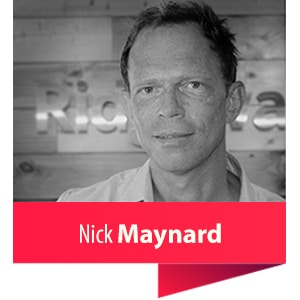
A key part of Ridgeway’s daily work is digital marketing, with Nick Maynard playing a key part as SEO Performance Specialist.
In an interview with TIA, Maynard described the role played by SEO, data and analytics at the agency and the way they engage with clients on these areas. Maynard also looked at the changes seen over the years and the future of SEO.
What experiences led you to the position you currently hold?
I have a unique skillset that combines a love of editorial with a love of technology. I started my career working as an English teacher before taking a post-grad in periodical journalism and eventually ending up on the web.
I got involved in SEO about twenty years ago, long before it was even called SEO, when we made the rules up as we went along. Over the years I’ve worked at a number of digital agencies and came to Ridgeway because of the challenges of working with big brands such as Twinings, hmv and YO!
You mentioned you’ve been working on SEO for 20 years. How was the transition from SEO back then to its current stage?
Today SEO is unrecognizable from the pioneering days, it’s a much slicker machine with many more moving parts. In the early days’ publishers didn’t understand the real marketing potential of their websites, then along came Google Ads and publishers realized they could easily monetize content and began to up their game.
When SEO was born it didn’t have a rule book. At first gaming Google was a walk in the park, but they learned quickly and soon Google’s algorithms were strong-arming SEOs to clean up their act.
What are Ridgeway’s main features that differentiate it from other agencies?
At Ridgeway we bring together a diverse range of expertise, from design and build to performance, under one roof. It means we can act as a single point of contact and a true digital partner who’s not afraid to challenge clients’ assumptions as well as hold their hands.
What role does SEO play on the agency’s daily work?
Digital marketing is central to Ridgeway’s DNA and plays a key part in everyday agency life. SEO is arguably the most effective ingredient in the marketing mix so it’s hardly surprising that it’s baked into every stage of a project lifestyle from shaping strategy to technical best practice and beyond.
How do you incorporate SEO when working with a project?
We take a belt and braces approach with SEO best practice documents to guide every project phase and detailed checklists to make sure everything’s been covered. We also hold regular sessions where our performance and technical teams get together to discuss evolving best practice. SEO isn’t rocket science, but there are a lot of moving parts, so you’ve got to get to grips with spreadsheets.
Do clients have realistic or unrealistic expectations regarding data?
Data’s big and it’s only going to get bigger which presents challenges and opportunities to clients. Everyone knows the value of data, but with so much available it’s sometimes difficult knowing where to begin.
The key is to have a clear digital strategy so you know exactly which metrics are core to your goals and which can be ignored. By providing focus, data suddenly becomes much more manageable and it’s much easier to interpret and add insight.
On a day-to-day level data is an invaluable decision-making and strategy-shaping tool. It can help validate and articulate decisions within a business and to external to stakeholders. Clients are always keen to explore what they can do with data and Ridgeway can make it understandable.

What tools do you use to manage data?
The majority of our analytical data comes straight from Google, although we do use other data sources including server statistics and third-party analytics tools such SEMrush and Ahrefs.
Our team knows the suite of Google tools inside-out and if you combine Analytics, Search Console and Google Tag manager with the visualization capabilities of Data Studio then you’ve got a powerful set of tools.
How do you filter the information and process results?
We set-up customized reporting dashboards via Google Data Studio so we can keep a close eye on the metrics, KPIS and goals we are targeting. We check-in on a daily basis to make sure it’s ‘business as usual’ and get together with clients every two to four weeks to discuss issues and opportunities.
Regular analysis and insight combined with a clear SEO roadmap, means everybody knows what they are doing and provides flexibility that delivers real results.
How do you keep up-to-date?
It’s a bit of a myth that SEO changes every ten minutes, while technical aspects do change the underlying principles of search have stayed the same.
If your site is search-friendly and performant, and your content is engaging and authoritative, you’ve in good shape.
To stay on top of technical developments and industry news, I’m a member of a couple of insiders’ WhatsApp groups and follow Google Webmaster Central and Search Engine Journal, although you have to take everything you read about SEO with a large pinch of salt.
Thanks Nick!
Follow Nick Maynard on social media:
LinkedIn
Follow Ridgeway on social media:
Facebook
Twitter
Instagram
LinkedIn
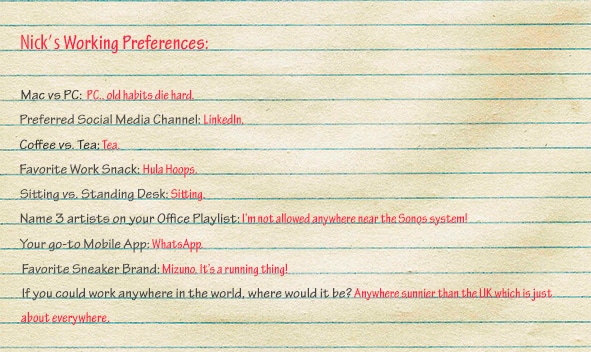
Nick’s Working Preferences:
Mac vs PC:
PC, old habits die hard
Preferred social media channel:
Linkedin
Coffee vs. tea:
Tea
Favorite work snack:
Hula Hoops
Sitting vs. standing desk:
Sitting
Name 3 artists on your office playlist:
I'm not allowed anywhere near the Sonos system!
Your go-to Mobile App:
Whatsapp
Favorite sneaker brand:
Mizuno. It's a running thing!
If you could work anywhere in the world, where would it be?:
Anywhere sunnier that the UK which is just about everywhere
Agency to watch

Best in Breed since 1998. Lounge Lizard is a Digital Agency that Specializes in Brand Strategy, Website Design, Web Development, Mobile APP Development, Online Marketing, Social Media, Ecommerce, and SEOdigital experiences that move brands and businesses from now to next.
Featured agencies

135035 Views

115588 Views

109356 Views

91837 Views

88316 Views

83114 Views

74740 Views

61546 Views