“I try to create attractive design even from oversea”
Tokyo, October 16th, 2019
With headquarters in Tokyo, SHIFTBRAIN is a branding, design and digital creative company. The agency has over 16 years of history and has helped to create better experiences and ideas to stand out in the digital world, using new and innovative communication standards.
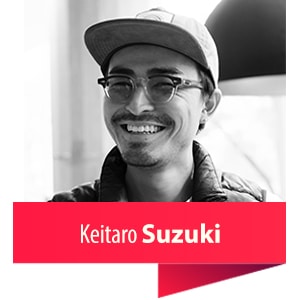
SHIFTBRAIN has worked for big firms over the years, including Denso Corporation, New Balance Japan, Shiseido, Toppan Printing Co and Yahoo Japan. As Design Director, Keitaro Suzuki has played a key role on that work, helping make connections between brands and people.
In an interview with TIA, Suzuki described his role at SHIFTBRAIN and the main characteristics of the agency. At the same time, he recalled specific projects he worked on and gave his opinion on the digital scene in Tokyo.
Could you describe in brief your career-path so far? Did you know as a kid that you wanted to work with design?
I didn’t know that I would be a designer when I was a kid. But my grandfather was a painter, so he sometimes taught me a drawing. I think this memory affected my identity as a designer. I liked to watch movies when I was young, so I wanted to be a film director. But I thought it was hard because film business is small in Japan.
I majored in Economics when I was a university student for finding what I wanted to be. In the second year at university, I started to make a collage on Photoshop as I couldn’t give up being a maker. Then I was interested in design, so I started to study graphic design during the weekend. From the fourth year in university, I worked as a freelance designer and started to study web design for myself. After that, I worked as a designer in some companies.
According to your personal site, your goal is to make emotional connection with brands and people by integrating economy, culture and design. How you do it? Do you have a personal method to ensure it?
I have a personal brand design method that is improving. The brand always needs people who love it, also people want to know what they love. I believe design can connect both sides by using visual and emotion.
For connecting brands and people, it’s important for the design to express and communicate exactly the atmosphere of the brand to those who want to reach. So, I always dive deep into the brand from vison and history, their business strategy to find their DNA. Then I make brand personality by their DNA for making the design.
What are the essential elements to bear in mind to have a super brand identity?
I think the most important element is the vision or philosophy of the founders. It wouldn’t be changed forever.
Please briefly describe the operational structure at SHIFTBRAIN – from the moment a client walks in, to the brand design deployment.
Firstly, we find out the project scope. The client sometimes asks us to make their website, but they want to make not only visual but also content. I often start from the “Research Phase” which we learn the client through interview and research. Then I move to the “Strategy Phase” where we organize the brand DNA of the client and make brand personality and brand message. After that, we begin to make brand identity, tools, and the website.
What types of clients do you find especially interesting?
The client often needs to think about their business field and target group when we build brand design and content. The business field and target affect visual design and contents.
I’m interested in clients who are startup or historic. For a startup, we need to imagine their future and make their identity from nothing. For a historic client, we have to take care of their identity which has already been built, and adjust their identity to the modern age.
What do you think is the best way to get people engaged in the project?
I think the best way to get people engaged is to share the process of thinking.
Could you name one of the hardest or proudest projects you ever challenged?
It’s difficult to choose one, but I just finished one of the projects which was proud of. It’s a spatial design for one of the brands of Shiseido in the duty-free area at Ginza Mitsukoshi, Tokyo.
We delivered an interactive experience that is integrated with sound, interior and video contents. The challenge is to focus on tourists from oversea who are not Japanese because this space is the duty-free area.
I wanted to let them feel brand atmosphere by look and sound, not only understand the function of products. I collaborated with a digital developer, an interior designer, a sound designer and a film director to create an immersive space.
How would you describe the digital industry in Tokyo compared to other major cities or design capitals? Which are the cross‐cultural influences on brand identity? How can you manage them?
When I compared the digital industry in Tokyo to other cities, I feel there are many more digital productions and agencies here. Each of the companies are connected and have good relationship. We sometimes collaborate with each other because the strength of each company is subdivided.
I’m interested in the cross-cultural influences of design, but we normally don’t think about it on the projects in Japan because Japanese client usually focus on Japanese target. But I try to create attractive design even from oversea.
In your opinion, what are the key factors that have helped bring Japanese agencies to this level? What is your opinion of the audiences in Japan?
One of the factors is to have seen good designs regardless of nationality. And another factor is to get some international awards because Japan has only a few awards for digital design.
Most people can use high-speed-internet and also have smartphones. So, we can try new technology for design. But I feel some people get bored easily because we can get many pieces of information by advertisement and SNS.
When you look around at the technological landscape today, what surprises you the most?
The speed of change. After released iPhone, people became to be able to use technology easier than before. The way of communication has been changing every year. 10 years ago, the client wanted to make their company brochure first, but now, they want to make a website firstly to communicate with people.
Thanks Keitaro!
Follow Keitaro Suzuki on social media:
LinkedIn
Follow SHIFTBRAIN on social media:
Facebook
Twitter
Instagram
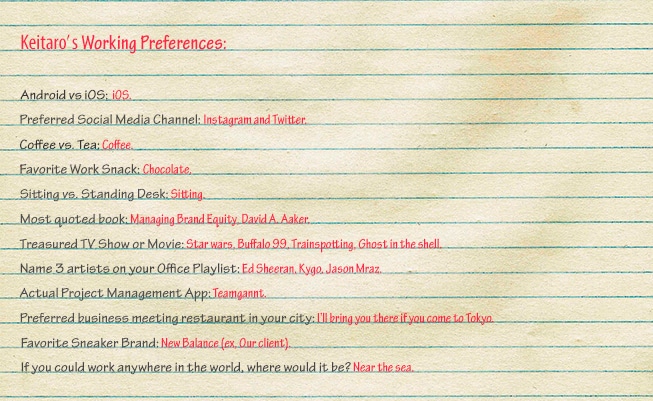
Keitaro’s Working Preferences:
Android vs iOS:
iOS
Preferred social media channel:
Instagram and Twitter
Coffee vs. tea:
Coffee
Favorite work snack:
Chocolate
Sitting vs. standing desk:
Sitting
Most quoted book:
Managing Brand Equity, David A. Aaker
Treasured TV show or movie:
Star Wars, Buffalo 99, TRainspotting, Ghost in the shell
Name 3 artists on your office playlist:
Ed Sheeran, Kygo, Jason Mraz
Actual project management application:
Teamgannt
Preferred business meeting restaurant in your city:
I'll bring you there if you come to Tokyo
Favorite sneaker brand:
New Balance (ex our client)
If you could work anywhere in the world, where would it be?:
Near the sea
Agency to watch

Best in Breed since 1998. Lounge Lizard is a Digital Agency that Specializes in Brand Strategy, Website Design, Web Development, Mobile APP Development, Online Marketing, Social Media, Ecommerce, and SEOdigital experiences that move brands and businesses from now to next.
Featured agencies

135038 Views

115590 Views

109357 Views

91840 Views

88320 Views

83116 Views

74742 Views

61549 Views