“Accessibility can be expensive if it becomes a last-minute tick box”
London, August 17th, 2022
Established in 2005, Cyber-Duck is a leading digital transformation agency that works with globally recognised brands such as Cancer Research, Cadbury, Bosch, the Bank of England and the NHS. Combining strategic service design, optimisation expertise, and proven open-source technology implementation to deliver innovative, accessible, high-performing digital solutions that help clients work more effectively and improve the lives of their customers and stakeholders.
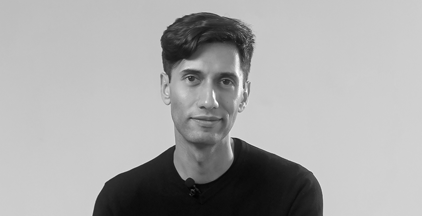
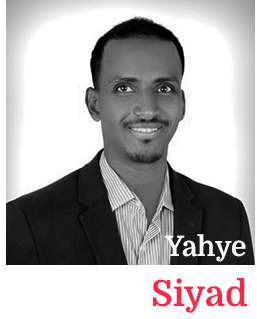
A former Team GB Paralympian, Yahye Siyad is Cyber-Duck’s Diversity and Accessibility lead. In an interview with TIA, he described his life in London as a visually impaired person and the importance for businesses to consider inclusivity and accessibility in their operations. He explained his role at the agency and gave some recent examples of his work.
Can you describe what you enjoy most about living in London?
I enjoy the sheer connectivity and the options that are available in London. For someone like myself who is visually impaired, I love the independence that London gives me to move around. I can take buses, trains, underground, taxis and so on, any time of the day and night without the need to ask for help. I’ve been living here for 20 years.
How did you first become interested in digital experiences?
My first interaction with the IT world was back in 2002 when I moved to the UK. Somebody at university suggested me to take some IT classes. I was hesitant, as I thought I needed English to learn IT, but I found that you actually learn computing no matter the language – it’s universal in so many ways. It’s a great way to learn other skills. I had to learn how to use computers with a screen reader and to navigate websites, to use email applications. And for someone who is blind like me, this is out of sheer necessity to participate in life. An added necessity was when the pandemic hit in 2020. Everything became digital and remote, so I became fully immersed as a consultant in digital inclusion, looking into issues that prevented people from being digitally included – from accessibility to skills to affordability.
When did you start working at Cyber-Duck and what does your role entail?
I started working in April 2021. I became the Diversity Lead formally six months after my first engagement with them, helping them to assess accessibility for its Sport England website project. What I look at is how to bring inclusivity aspects in all aspects of our business, from recruitment to policies. And I also work to make sure that what we design is as inclusive and accessible as possible for our end users.
Could you describe the difference between accessible and inclusive?
They are both interlinked heavily as they affect each other. But, there’s a subtle difference. Accessibility is impact-oriented, and typically means following certain formal, technical design guidelines such as Web Content Accessibility Guidelines (WCAG) to make sure digital products theoretically provide access to all users with disabilities in various different formats (noting that this is a starting point and may not deliver a brilliant user experience in actual practice). Inclusive design is process-orientated and broader, considering in a more holistic design process how to give equal access and opportunities to digital for as many possible people of different backgrounds and user needs.
What is your main focus at the moment?
We’ve really built a lot of awareness around digital accessibility and we are now at the stage of creating a bigger impact. In addition to my continuing accessibility work, what takes most of my time is creating solid partnerships with businesses, clients and other partners to improve digital inclusion in the broader sense. We are looking at issues around skills for people, affordability, and connectivity, among others.
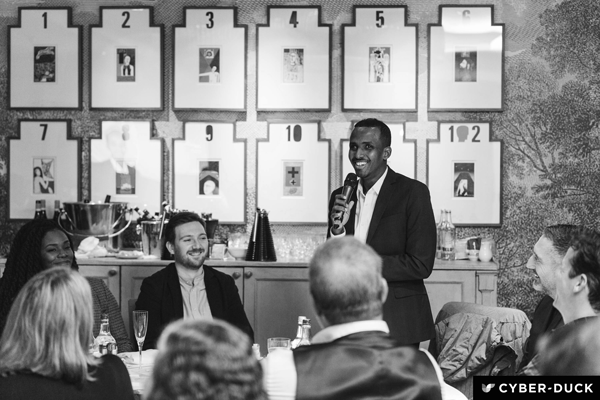
Can you give me some key points to make sure employees and applicants have equal access to opportunities?
It’s about understanding a lot of things that have become more visible after the pandemic. We have to make sure that we when are recruiting we move away from the conventional tick boxes of who is the best candidate. Historically, there was a tendency of hiring based on tick boxes, like whether a person has a degree or not. Instead, we need to hire and develop talent based on a wide range of approaches. We have to give opportunities to people that might not fit with traditional conventions and really focus on the set of skills and the match between the job description and the person’s experience. For example, our CV screening process kicks off with a very simple email about notice period, salary expectations and right to work in the UK, no questions about formal qualifications up front. We also actively recruit from diverse range of settings. Lastly, we provide job descriptions in multiple formats and offer candidates, especially those with assisted digital needs, with support applying for roles.
Could you give me your take on the industry’s landscape on accessibility?
I’m an optimist by nature. But I realise I’m privileged in my position compared to other people with disabilities. I’m seeing a lot of things changing, just by comparing today with 15 years ago. Back then, I couldn’t use a smartphone and apps like Google Maps, which allow me to be more independent. We’ve seen a lot of progress. One of the benefits of the pandemic is that it highlighted the benefit of inclusion more than ever. Everybody felt excluded at some point because of the pandemic. It made the agenda of inclusion go beyond ethnic minorities, women, and people with disabilities.
Accessibility can be difficult to acknowledge. How do you make sure at Cyber-Duck that your clients understand what you are recommending and the importance of it?
Accessibility definitively can be difficult to be understood. That’s because of a lack of empathy and understanding. It’s important for us to highlight the problems of not being accessible. On a financial, social, reputational, and legal level it can have a negative impact, whether that’s lost sales or even legal action. But more positively, we always highlight how accessible and inclusive design, well tested with a variety of stakeholders, delivers great user experience and high-performing digital products, benefitting all users.
Is it more expensive to make accessible products?
It’s one of the biggest misconceptions. Accessibility can be expensive if it becomes a second thought and a last-minute tick box. I.e. if you are about to deliver a project and then only at the last minute you consider how to make it accessible. As a result, you need to go back to the beginning to make things accessible. Accessibility is always best to consider from the start, and baked into projects throughout, it makes it much cheaper. If you spent 20% upfront, you save 80% later. If you don’t, you are losing 80% – or more! – later.
How does the process of making sure a digital product is accessible go?
We start with auditing. Every organization or client has a different journey of accessibility. We need an audit first to understand what’s required to be fixed. We have to identify where they are in their journey. Then we help them to understand their audience. And we also look at the design aspects of it. What kind of technical skills are needed to design with accessibility in mind? We must involve designers, developers and product owners; we need the input of everyone both client- and agency-side. Then finally, testing with different end users to ensure we’ve got it right and to make any improvements necessary.
Does any recent project of the agency come to mind that you are proud of?
With SportEngland, one of our clients, there were over 100 non-compliance issues on the site, and after we completed the accessibility improvement project there was a 613% increase in traffic on their website. And there was an increase of 50% of funding applications from end users, opening up access to sport. I was proud to be part of the team that made this happen.
What do you think the digital industry has to offer to people with disabilities or impairments?
I really like what the tech giants are doing with accessibility. Google, Apple, Amazon and others have a big impact. They design and determine the digital landscape. They are pushing the agenda of accessibility and inclusivity beyond the regulation, which from my perspective is a bit slow. They are taking a lead and that makes me excited. If you build your website more accessibly you appear higher in Google. So it’s doing a lot to make sure people take accessibility more seriously.
In this industry or in your life have you had any particular influential mentors?
I don’t have any one person in mind that I think as a mentor. To me, mentorship is an informal learning from somebody that offers you something and that has happened to me with different people. With the technicality of digital there’s a practitioner called Regine Guilbert who wrote a book called Inclusive Design for a Digital World. I was able to connect and chat with her too. On the brand aspects of digital, a friend of mine, Fatima, she really showed me the impact of brands when it comes to digital and made me passionate about that. And beyond digital work, on a more personal level, there’s Nouman Khan. Most people don’t know this, but I am quite spiritual and he is somebody of my own Muslim faith, who talks about the role of empowering youth as well as psychology. I listen to him a lot and took the spirituality/morality aspects from him. So I have different people that I can relate to in each different field.
What is the greatest challenge of our time?
Unfair distribution of wealth is something that really bothers me. How can you have 80% of the world’s resources consumed by 20% of the world’s population? It’s an ongoing humanity challenge that always existed and will keep on existing. But it’s becoming bigger and wider. Unless we do something serious about the lack of distribution of world resources we will have a problem. A lot of people talk about how we are seven billion people in the planet and we have to reduce the birth rate. That’s a wrong approach. There’s nothing wrong with having 15 children if you want to. The problem is the lack of distribution. There are plenty of resources; we could cover the needs of two times the size of the population. The problem is not the number, but the fair distribution of it. Unless each one of us pledges a small but consistent thing, rather than expecting politicians to solve this issue, we will push more people further into poverty.
Can you name a fun fact people would be surprised to learn about you?
I’ve travelled to 54 countries in the world. I’m blind but I’m a certified scuba diver.
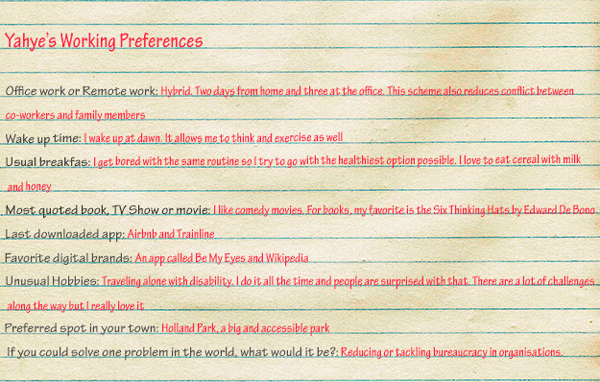
Thanks Yahye!
- Learn more about Cyber-Duck at https://www.cyber-duck.co.uk/
- Follow Cyber-Duck on social media:
- Follow Yahye:
Agency to watch

Best in Breed since 1998. Lounge Lizard is a Digital Agency that Specializes in Brand Strategy, Website Design, Web Development, Mobile APP Development, Online Marketing, Social Media, Ecommerce, and SEOdigital experiences that move brands and businesses from now to next.
Featured agencies

135040 Views

115591 Views

109358 Views

91841 Views

88321 Views

83116 Views

74743 Views

61550 Views