Five must-try content marketing tools
While no content marketing tool can replace a solid strategy and talented humans, having the right tech stack can certainly help you get the job done better, easier, and more efficiently. There are hundreds of content marketing tools available that serve different purposes, from content ideation to optimization.
The content marketing technology landscape is growing every year. This is exciting, since it means that if you have a problem, you can probably find a software solution to help you solve it. But it’s also overwhelming. How do you know which of the couple hundred tools are worth trying?
This post will help clarify those decisions. We have outlined five marketing tools that are a must-try for anyone looking for software solutions.
-Wordpress
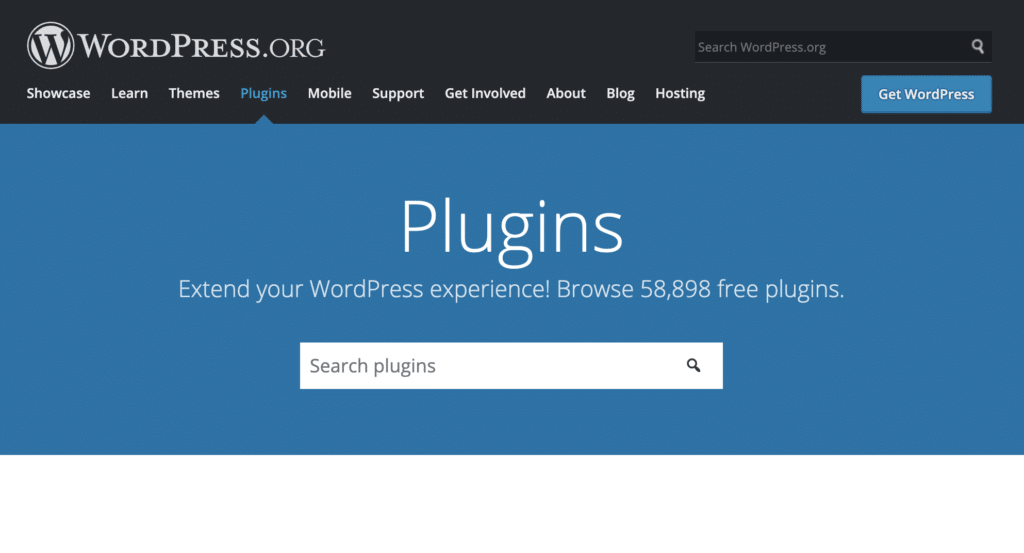
WordPress is the most widely used content management system in the world. It’s a powerful tool, both at the beginning stages and also as you grow your content marketing program. At its core, WordPress is an open-source CMS that allows you to host and build websites. You can self-host or host your site via WordPress.com.
WordPress has plugin architecture and a template system so you can customize any website to fit your business, blog, portfolio, or online store. It’s a highly customizable platform and is widely used by bloggers. Other advantages include unlimited pages and posts and flexible post scheduling.
 -HubSpot
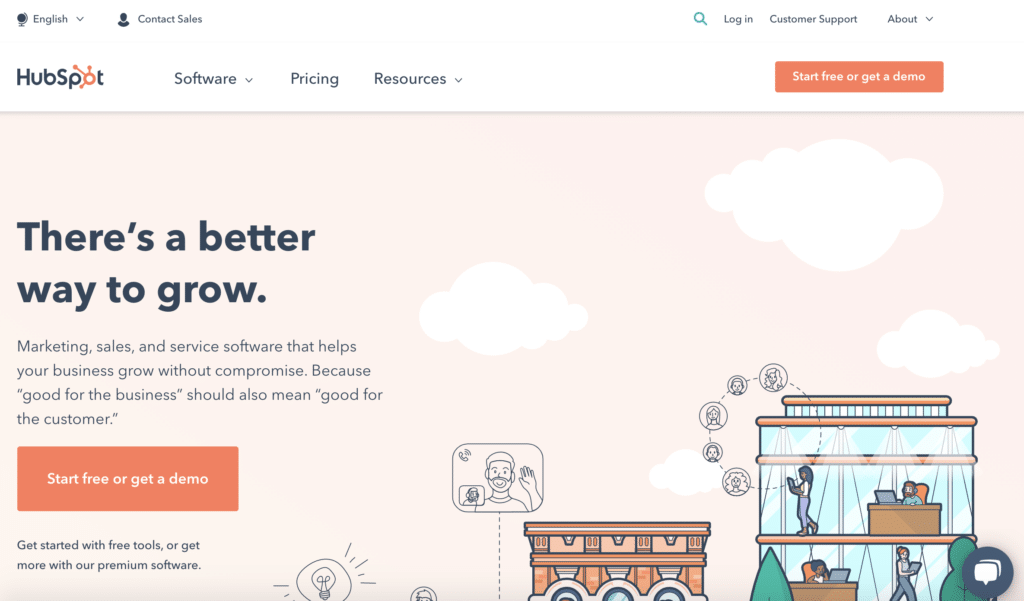
HubSpot is an all-in-one inbound marketing, sales, and CRM suite that provides content marketers with all the tools they need to create actionable content that generates sales and drive leads. It is s the perfect way to manage content and provide the target audience the solution they’ve been searching for.
The marketing suite provides content marketers with resources that enable them to create content, optimize it, and make sure it reaches the right audience. Once you’ve created your account and distributed your content, HubSpot analyzes your marketing strategy in terms of sales and overall performance.
-Contentools
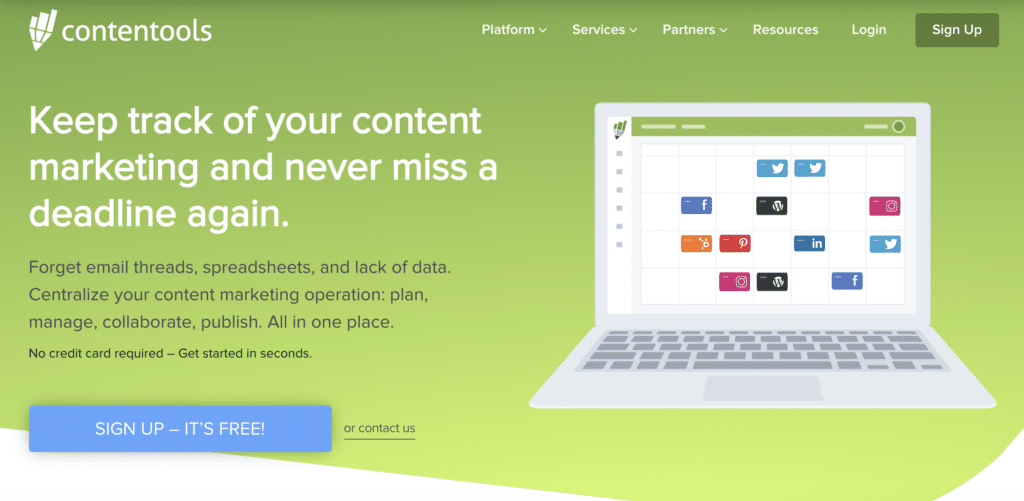
Contentools is an efficient content marketing platform for creating, publishing, and analyzing content for marketing campaigns. The app also comes with an in-app content editor that allows you to create content with an SEO indicator in place. Some features to note are its AI-powered content insights and collaboration support.
It helps business plan, create, distribute and analyze content at scale through an intuitive and integrated content marketing automation platform and a database of talented content professionals. Companies can brainstorm and approve their editorial lines and create content for blogs and social media.
-Postoplan
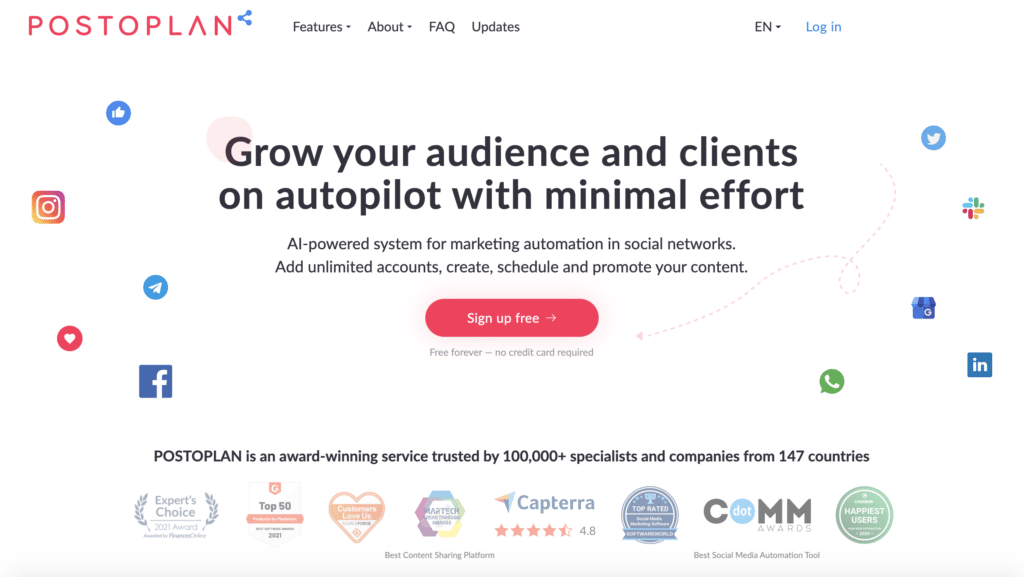
Postoplan is a smart, automated social media and messengers marketing platform that allows users to create, schedule, and promote content. It helps small and medium-sized business owners to create content for their social media pages, promote their services and products, and get even more clients.
With Postoplan you can schedule and post content for multiple social media pages, so more people can find out about them. Users easily design pictures in a graphics editor with prepared templates and create content plans, planning their publications. Postoplan has all the needed instruments for successful marketing in social media.
-Scoop.it
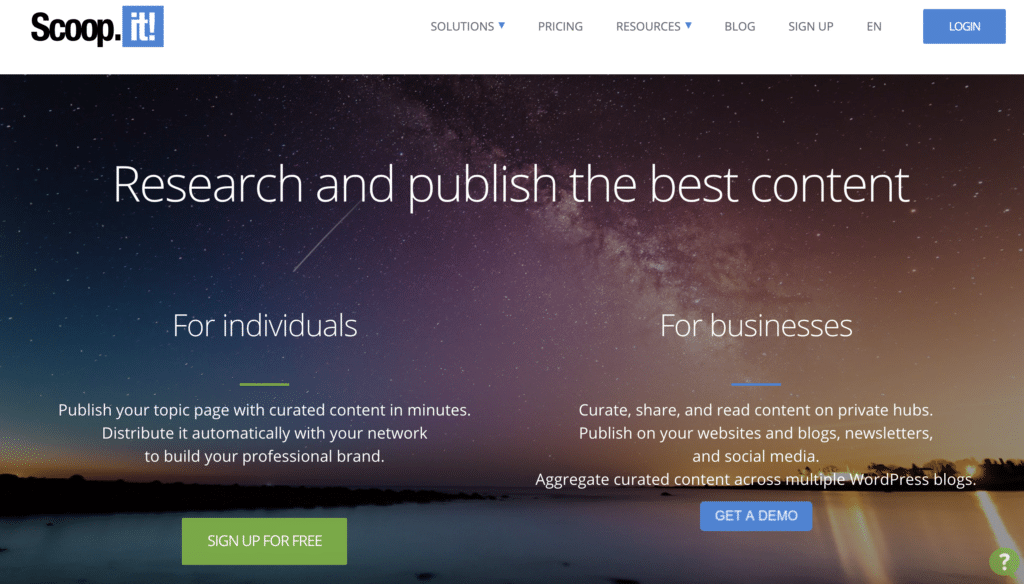
Scoop.it fills the need that a growing number of people have to publish content in an efficient and impacting way. By combining a data semantic technology that helps them quickly find relevant content with a publishing platform, Scoop.it helps them show their expertise, develop their online visibility and enrich their blogs.
Its Pinterest-like boards provide the headline, image and the first few lines of copy, allowing for a quick scan of content. Scoop.it’s suggested content is always spot on, and regardless of how you choose to scoop items, it’s easy (and the integration with other social networks is great).
blogsContent marketingcontent marketing toolsInbound MarketinginsightsmanagementmediaplanpublishingSEOsocialwebsites
Agency to watch

Best in Breed since 1998. Lounge Lizard is a Digital Agency that Specializes in Brand Strategy, Website Design, Web Development, Mobile APP Development, Online Marketing, Social Media, Ecommerce, and SEOdigital experiences that move brands and businesses from now to next.
Featured agencies

135193 Views

115718 Views

109444 Views

91944 Views

88472 Views

83235 Views

74867 Views

61628 Views