“Being Dangerous Isn’t About Being Loud or Weird: It’s About Being Structurally Inconvenient” — Bob Froese of Bob’s Your Uncle
“Being Dangerous Isn’t About Being Loud or Weird: It’s About Being Structurally Inconvenient” — Bob Froese of Bob’s Your Uncle
Most brands assume they have far more attention and affection from consumers than they actually do
Toronto, November 5th, 2026
 Operating from Toronto, Bob’s Your Uncle is an independent creative and advertising agency built on a single, provocative mandate: while many shops launch challenger brands, Bob’s Your Uncle makes them genuinely dangerous. Refusing polite, risk-averse marketing and hollow aesthetic rebellion, the agency helps ambitious companies transition from plucky underdogs into category-ruling operations. By picking structural fights that category incumbents cannot join without wounding their own businesses, Bob’s Your Uncle carves out unshakeable mental real estate on crowded retail shelves and in consumer culture.
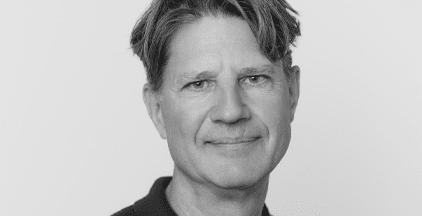
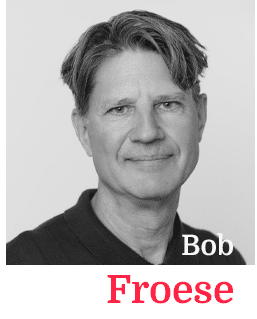
At the helm of this unsparing creative philosophy is Bob Froese, Founder and Chief Creative Officer of Bob’s Your Uncle. Raised in a strict Mennonite community in rural Manitoba with zero exposure to commercial television until his teenage years, Bob developed an early fascination with the raw power of emotion, irreverence, and focus over safe, consensus-driven logic. For Bob, building lasting brand power in an automated, AI-saturated market isn’t about generating more disposable assets or playing polite defense—it’s about applying sharp strategic judgment, understanding that taste is the new media budget, and having the operational discipline to sell the safety of the dangerous idea.
Key Takeaways
- Underdog Is a Feeling, King Is an Operation: Adoration at a 2% market share is often an excuse for losing. Stealing the throne requires operational muscle: distribution discipline, pricing power, a repeatable idea that scales, and a point of view that survives the founder stepping out of the room.
- Outmean the Incumbents with Radical Specificity: When outspent ten to one, challengers cannot play the budget game. Legacy brands must cater to everyone and end up meaning nothing in particular. Challengers win by owning one hyper-specific truth with total commitment.
- Aesthetic Rebellion Is Just Challenger Cosplay: Sans-serif type, candy palettes, and quirky Instagram feeds are not points of view. Authentic substance requires an enemy and a refusal: holding a position that costs the brand real money or sales if compromised.
Welcome, Bob! Let’s start at the beginning: you were born in Steinbach, Manitoba, before establishing yourself in the creative industry. Were there early childhood experiences or regional influences from Manitoba that first sparked your eye for storytelling, sharp creativity, and an independent mindset?
I grew up in a Mennonite community in Steinbach, rural Manitoba, Canada. In our home, television, radio and movies were forbidden. Not to mention alcohol or cigarettes! I now run an advertising agency, and I didn’t see a commercial until I was almost a teenager.
The storytelling I was exposed to was single-minded and sharp: believe or face eternal damnation. That gave me an early understanding of the power of focus and emotion over facts and logic in how people make up their minds.
This will sound ridiculous, but I can still recall a moment that upended my world. I was up late, lying on the floor with a forbidden portable radio pressed to my ear, listening to Monty Python’s Life of Brian. Brian is mistaken for the Messiah; he isn’t Jesus. What hit me was the irreverence: people could make fun of something I had been taught was holy. It opened a world I had no idea existed, where people didn’t live in fear of what religion had taught them. I went strongly in that direction. It accelerated my curiosity and my acceptance and understanding of other beliefs and ways of being. Pretty dramatic for a clip from Monty Python. Still my all-time favourite comedy!
Steinbach was also a front-row seat to entrepreneurs. It was a very successful, very enterprising community. My grandfather built a large feed and hatchery business from nothing. So I grew up around people who built things, without much fuss, and with deep suspicion of anyone who talked more than they worked. That’s the independent streak. It’s less a creative philosophy than a family trait.
The creative part was an accident. I came out of business school expecting a life in a dark blue suit, took a consulting job, and then answered a job ad for an advertising agency mostly out of curiosity. I walked into a brick-and-beam office full of smart people not wearing suits and thought, ‘What is this place, and how do I never leave?’ It turns out that growing up with zero exposure to advertising is decent training for making it. You never learned the conventions, so you don’t feel obliged to follow them.
You’re now based in Toronto, one of North America’s most competitive creative and culinary landscapes. For someone visiting the city for the first time, what is one local neighborhood spot or food ritual that best captures Toronto’s ambitious, diverse energy?
Ossington. It’s a street and neighbourhood that went from a place people avoided to a place they sought out with the opening of Boehmer, the restaurant founded by chef Paul Boehmer in a neighbourhood most people were afraid to visit. That bravery and vision started a movement that, over a decade, made Ossington one of the coolest neighborhoods in the world. Boehmer recently closed, but there are plenty of other choices: restaurants and small bars of all sorts, from hole-in-the-wall pho with dirty floors to imaginative, world-class dining and speakeasies hidden behind barber shops. Not a single franchise or formula on the street. Lively from lunch to 3 a.m.
Bob’s Your Uncle operates on a provocative premise: “Many agencies launch challenger brands. Bob’s Your Uncle makes them dangerous.” In an industry full of polite, risk-averse marketing, what specifically makes a challenger brand genuinely dangerous to category incumbents?
Many agencies make challenger brands likeable. The incumbent does not lose sleep over likeable.
A challenger is dangerous when the leader has to respond. That’s the whole test. Did the big brand change a price, launch a defensive SKU, rewrite a tagline, or call a meeting with your name in the agenda?
Getting there means picking a fight the incumbent can’t join. You find something true about the category that the leader can’t say without wounding its own business, and you say it first and loudest. Being dangerous isn’t about being loud or weird or edgy. It’s about being specifically, structurally inconvenient to someone bigger than you. Polite marketing avoids that on purpose. We go looking for it.
Your agency’s stated mission is helping ambitious companies move from “hero to king” and actively threaten market leaders. What is the fundamental strategic difference between being a plucky underdog that people casually root for and actually building the muscle required to dethrone the king?
Underdog is a feeling. King is an operation.
People love to root for underdogs, and that’s the trap. Rooting is free. Rooting doesn’t show up on a velocity report. Plenty of challengers get comfortable being adored at 2% share because the story is flattering and it excuses the losing. The scrappy narrative becomes a place to hide.
Building the muscle to dethrone someone looks a lot less charming. It means your point of view has to survive the founder leaving the room. It means distribution discipline, pricing power, a repeatable idea instead of a lucky one, and the willingness to stop doing the cute things that got you noticed but don’t scale. It also means deciding you actually want the throne, which sounds obvious and is not. A surprising number of founders want to be loved more than they want to win. We ask that question early, and the answer tells us whether we’re building a brand or a fan club.
The food, beverage, and CPG aisles are notoriously brutal, dominated by legacy conglomerates with massive distribution networks and bottomless budgets. How do you carve out distinct mental real estate on crowded retail shelves when a client is outspent ten to one?
You can’t outspend them, so don’t play that game. Outmean them.
By mean I don’t mean nasty. I mean specific. Legacy brands have to be for everyone, which means they end up for no one in particular. A challenger can be the single most specific thing on the shelf. One truth, said with total commitment, beats six benefits said with a committee’s enthusiasm. Mike’s Hard Lemonade is the example I keep coming back to. In 1999 the alcohol aisle belonged to beer, and a sweet lemon drink was the easiest thing in the world to dismiss. We didn’t argue with that. We made the lemons the story. The whole campaign treated them as victims of a crime: deadpan police-report spots, caution tape, wanted posters, and one line we never let go of: “Lemons were hurt real bad in the making of this product.” Awareness went from about 20% to 85%, and the brand went from a punchline to the number one ready-to-drink brand in Canada and the U.S., with the beer giants scrambling to launch their own. You don’t need ten-to-one budgets to make people remember one thing. You need the discipline to only say one thing.
The other lever is behaviour. Incumbents buy attention. Challengers have to earn it, and earned attention is cheaper and stickier. For Second Harvest, we developed Been a Slice pro bono, turning surplus bread into beer with proceeds going to the food rescue charity. The idea itself gave people a reason to talk about food waste. Shelf space is rented. Mental real estate is bought with nerve.
As Founder and Chief Creative Officer, you focus on pushing your team to get sharper work into the world. During the creative process, how do you prevent bold, disruptive ideas from getting sanded down by client caution or committee consensus?
You don’t prevent it. You price it.
The mistake agencies make is treating client caution as the enemy. It isn’t. It’s a cost of doing business, and the trick is to make the cost visible. When an idea starts getting sanded down, we put the sanded version right beside the original and ask the client to choose on purpose. Not ‘Can we soften this?’ but ‘Here is the safe one. Here is the one that will get you noticed. Which problem would you rather have?’ People will quietly dilute an idea in a feedback round. Very few will stand up in a room and pick the boring one out loud.
The best lesson I ever got on this came from a client. Kurt Kane ran marketing at Molson Coors in Denver. Ex military. After we’d presented to his team a couple of times, he called me and said, ‘Bob, if you have something to present, just present it. Don’t sugarcoat anything. And if we say something you think is shit, tell us it’s shit.’ Then he said the line I’ve been living on ever since: ‘Don’t be so Canadian.’ Committee consensus is just the average of everyone’s fear, and the average is always beige. The cure is getting the decision-maker in early enough that the bold idea is theirs too, and then being un-Canadian enough to defend it in the room.
Today, many brands adopt the visual shorthand of a challenger—quirky copywriting, bright color palettes, cheeky social feeds—without having a defensible point of view. How do you distinguish authentic challenger substance from surface-level aesthetic rebellion?
Challenger cosplay. There’s a whole generation of brands wearing the costume: the lowercase sans serif, the wink in the copy, the colour palette that looks like a candy store had a baby with a tech startup. None of it is a point of view.
Our starting point with every brand is the same and it’s not flattering: no one cares. Not about you, not about your packaging, not about your cheeky Instagram. Most brands assume they have far more attention and affection from consumers than they actually do. So the first job is to find the few people who do care, figure out exactly why, and build everything on that. Aesthetic rebellion skips that step entirely. It’s a way of looking like you have an answer before you’ve asked the question.
The test I use is simple. What would it cost you to hold this position? A real challenger has an enemy and a refusal. Something it won’t do, a customer it won’t chase, a convention it won’t follow, and holding that line costs real money or real sales at some point. If your rebellion costs nothing, it’s decoration. And if the category leader can lift your look in a quarter and nobody notices the difference, you never had substance. You had a style guide.
In an era where generative AI allows anyone to spin up product copy, packaging concepts, and campaign assets in seconds, digital noise has exploded. How do you use modern tools without sacrificing the human bite, cultural intuition, and distinct voice that gives a brand real teeth?
We use it constantly and I’m not going to pretend otherwise. It’s fast, it’s tireless, and it’s very good at the middle.
That’s the point, though. Generative AI gives you the average of everything that’s ever been made. A challenger brand, by definition, has to live outside the average. So the tools are useful for exactly the part of the job we’re trying to get past faster: the obvious options, the hundred versions, the first draft nobody should ever see. We use it to kill the predictable ideas so we can spend our time on the one that isn’t.
What it can’t do is want something. It doesn’t have a grudge against a category, it hasn’t stood in an Albertsons noticing something stupid, it doesn’t know why a joke lands in New York and dies in LA. That’s taste, and taste is cultural, lived, and slightly irritable. When everyone has the same tools, the output gets cheaper and the judgment gets more expensive. Taste is the new media budget.
When dissecting an entrenched category leader in food or CPG, where do legacy brands almost always leave themselves blind and vulnerable to an aggressive challenger?
Their own success. A category leader has spent twenty years protecting a P&L, and protection is a posture that eventually blinds you. They can’t say anything sharp because sharp things offend someone, and they have everyone as a customer. So they drift into language that’s technically true and emotionally empty. ‘Quality you can trust.’ Trust from whom? About what?
The specific blind spot is almost always the thing that’s annoying about them. Every big brand has a tax it charges its customers, whether it’s a compromise in the product, a condescension in the tone, or a convenience they stopped offering because it wasn’t efficient. The leader can’t see it because inside the building it’s called ‘the way we do it.’ A challenger walks into the aisle, points at it, and says the quiet part out loud.
The other one is line extensions. Leaders extend because extension is how you defend shelf, and every extension slightly dilutes the reason the brand existed. Incumbents defend the shelf and forget to defend the reason. That’s the opening.
In five years, when programmatic ad buying, asset variation, and standard brand collateral can be largely automated by AI platforms, what will be the single most valuable strategic capability an agency partner provides?
The ability to decide what not to make.
When variation, buying, and collateral are automated, production stops being where the money is, and the agencies that built themselves on volume are going to find that out painfully. What’s left is judgment. Which fight to pick. Which truth to build the brand on. Which of the four hundred generated options is the one that will make the category leader nervous, and which is just competent noise.
Honestly, I think it’s clarifying. For years agencies got paid for the build and gave away the thinking for free, which is backwards. In five years it flips. The strategic point of view becomes the product and execution becomes a utility, like electricity. Agencies will be paid for the brief, not the build. The ones who can write a brief that makes a client slightly uncomfortable, and then hold the line on it, will be fine. The ones who can only make more stuff will be competing with a subscription.
Looking across the brands Bob’s Your Uncle has built and sharpened, is there a specific project or campaign that best captures this philosophy of taking on an industry heavyweight and winning?
Canon at the Vancouver Olympics. Canon was number two in cameras at the time, and Panasonic was the official sponsor, which meant Canon’s name was legally banned from the Games. Meanwhile, their global CEO was flying in from Tokyo to attend an Olympics with zero Canon presence, and they had five hundred of their own pro photographers on the ground who needed to get around.
So we registered a shuttle company. Legitimate business, real pickup stops, briefed drivers, and fifty Minis wrapped in Canon livery with oversized camera moulds on the roof, running in fleets of five through Vancouver for the whole Games. It took four months of legal work to make it bulletproof. Two days in, the Olympic Committee summoned Canon and threatened to pull every one of their photographers’ credentials. Canon’s lawyers walked them through what we’d done, and the committee’s response was, ‘Would you mind running convoys of three instead of five?’ We said absolutely. People in Vancouver still remember those cars.
The more recent one is Church’s Texas Chicken. We found out Colonel Sanders had lived on Melton Drive in Mississauga, pitched a campaign around the house the same day, then the house sold and the idea collapsed. So we pivoted to doorhangers on the Colonel’s old street inviting his former neighbours to try the better chicken. Budget of roughly a tank of gas, coverage in Ad Age, LBB, Strategy and Campaign. Different decade, same move: put the challenger on the incumbent’s doorstep and make the incumbent the straight man.
To a young creative director or strategist looking to build brands that take real risks: what is one insider truth about brave creative work that isn’t taught in advertising courses?
Bravery is mostly logistics.
In school, the brave idea dies in the presentation. In real life it survives the presentation just fine and dies six weeks later in a production estimate, a legal review, a retailer’s planogram, or a quiet email from someone in finance. Nobody teaches you that the sale is the easy part and the defence is the job. Selling a bold idea is a Tuesday. Keeping it bold through to launch is a career.
The other thing nobody says: clients don’t buy brave. They buy certainty. So your job isn’t to be the person pitching the risky thing. It’s to be the person who has done enough homework that the risky thing feels like the responsible choice. Build the proof, know the category cold, anticipate the objection before the room has it. Sell the safety of the dangerous idea. That’s the whole trick, and it’s the opposite of how brave creatives usually behave.
When you completely step away from client pitches, brand strategies, and creative reviews, what is your favorite way to spend a weekend to recharge your creative battery?
Twenty-five years ago I bought a cottage on a small island on Upper Stoney Lake in the Kawarthas, and now I spend most weekends from May to October there. I love to tackle big outdoor projects, like rebuilding decks and docks and moving rocks around for no good reason. It’s also our gathering place for family and friends.
Looking beyond grocery aisles, shelf space, and market share, from your personal standpoint, what do you see as one of the most pressing systemic challenges facing our society today?
Human connection. Gabe Bullard wrote a book called Against Convenience, and in a recent interview he put his finger on it better than I can: “The idea of a third space is people meet, they gather, they sit, they talk. When the business is oriented to some large degree around serving people who are ordering online then that space is gone.” His parents had reasons to leave the house: the bank, the drugstore, the hardware store. We’ve optimized those trips out of existence, and with them most of the accidental conversations a day used to contain. That’s the systemic part. We are designing the people out of our own lives, one convenience at a time, and nobody voted for it.
Two rays of hope. One is that younger generations are doing what they’ve always done, rejecting what came before them, and there’s a lot I can’t wait to see rejected. The other is that people like Bullard are now saying out loud that convenience has a cost. Once you can name the tax, you can decide whether to keep paying it.
Finally, can you share a little-known fact, secret talent, or unexpected obsession of yours that wouldn’t appear on your agency bio or a pitch deck?
It took me ten years to get bobsyouruncle.com. A gift shop in Boston owned it, and every year I sent the owner one polite email asking how he felt about selling. Ten emails. Ten years. People think I’m impatient. I’m just impatient about things that don’t matter.
Bob’s Working Preferences:
Morning ritual:
Coffee, then coffee again. I keep trying to adopt a ‘healthy’ ritual, but if a ritual is what I actually do, I go straight to work for an hour or two before anyone else wakes up.
Risk appetite:
It’s always been high. Now I’m tempering some of it, mostly where it affects health and safety.
A quote you live by:
"Don't be so Canadian." A client told me that after a presentation where I'd been too polite about my own work. Best creative direction I ever got.
Last place that inspired you:
I’m inspired every morning I can see the sunrise over the water.
The non-negotiable in my workflow:
Mission Monday and Finish Friday. Everyone names three things they intend to get done that week, out loud, and on Friday we find out. Not a project list. Intentions. It's uncomfortable in exactly the right way.
The "noise" I filter out first:
Industry hot takes. Current example: how well video works on LinkedIn, and how LinkedIn is the ‘must’ for AI visibility. Neither is remotely true.
My "guilty pleasure" brand:
Coke. I avoid soft drinks and carbonated beverages like the plague, but sometimes there is absolutely nothing better than an ice-cold Coca-Cola in a glass bottle.
The best piece of bad advice I ever got:
Fake it until you make it. Sounds bad when said like that. My interpretation is simply not underestimating your own ability.
Thanks Bob!
Learn more about Bob’s Your Uncle
Follow Bob Froese on social media:
https://www.linkedin.com/in/bobfroese1/
Follow Bob’s Your Uncle on social media:
Dangerous Challengers and Strategic Nerve: Lessons from Bob Froese at Bob’s Your Uncle
- Underdog Is a Feeling, King Is an Operation: Adoration at a 2% market share is often an excuse for losing. Stealing the throne requires operational muscle: distribution discipline, pricing power, a repeatable idea that scales, and a point of view that survives the founder stepping out of the room.
- Outmean the Incumbents with Radical Specificity: When outspent ten to one, challengers cannot play the budget game. Legacy brands must cater to everyone and end up meaning nothing in particular. Challengers win by owning one hyper-specific truth with total commitment.
- Aesthetic Rebellion Is Just Challenger Cosplay: Sans-serif type, candy palettes, and quirky Instagram feeds are not points of view. Authentic substance requires an enemy and a refusal: holding a position that costs the brand real money or sales if compromised.
- Dangerous Challengers Force a Response: Incumbents don't lose sleep over likeable brands. A challenger is genuinely dangerous only when category leaders are structurally forced to respond—changing prices, launching defensive SKUs, rewriting taglines, or holding emergency board meetings.
- Taste Is the New Media Budget: Generative AI is exceptionally good at automating the average. As automated execution becomes a commoditized utility, agency value shifts from the build to the brief—deciding what not to make and possessing the cultural taste to live outside the predictable.
AdvertisingBrandStrategyChallengerBrandsCPGMarketingCreativeLeadershipMarketingStrategy
Agency to watch

Best in Breed since 1998. Lounge Lizard is a Digital Agency that Specializes in Brand Strategy, Website Design, Web Development, Mobile APP Development, Online Marketing, Social Media, Ecommerce, and SEOdigital experiences that move brands and businesses from now to next.
Featured agencies

136264 Views

116680 Views

110193 Views

92557 Views

89467 Views

84000 Views

75817 Views

62300 Views