“We pursue the human eye in everything we touch”
“We pursue the human eye in everything we touch”

Montreal, August 26th, 2021
Sid Lee is a borderless creative agency applying storytelling, design and technology to build customer experiences that matter.
Its multi-disciplinary team of 900 professionals works as one out of offices in Montreal, Toronto, New York, Paris, London, LA and Seattle. The agency deploys its creative capabilities across several disciplines.
Working in the Montreal office, Corina Boland is Sid Lee’s Senior Director of Growth and Innovation. In an interview with TIA, Boland highlighted the main things that make Sid Lee an unique agency, starting with human touch.
She went through the hiring process and described the role innovation plays at the agency.
To kick things off, what do you love most about your country?
Born and raised in Newfoundland until my mid-twenties, with icebergs in my front yard and that smell of saltwater in the air, I have a special appreciation for Canada—and a love of fishing. Living in Montreal now, I always recommend people go straight to the top of Mount Royal to look out over the city and the St. Lawrence River. Not everyone remembers that Montreal is an island.
Tell us about your personal journey. How did you become Sid Lee’s Senior Director of Growth and Innovation?
Music and art were central to my upbringing. It definitely wasn’t obvious that I would wind up in the brand agency world, in sales, with a focus on technology. But the passion that led me to pursue my career came naturally from a love of connecting people and ideas. That and a deep fascination for how things work—the nuts and bolts—led me to a career with a technology focus, making Sid Lee the perfect melting pot.
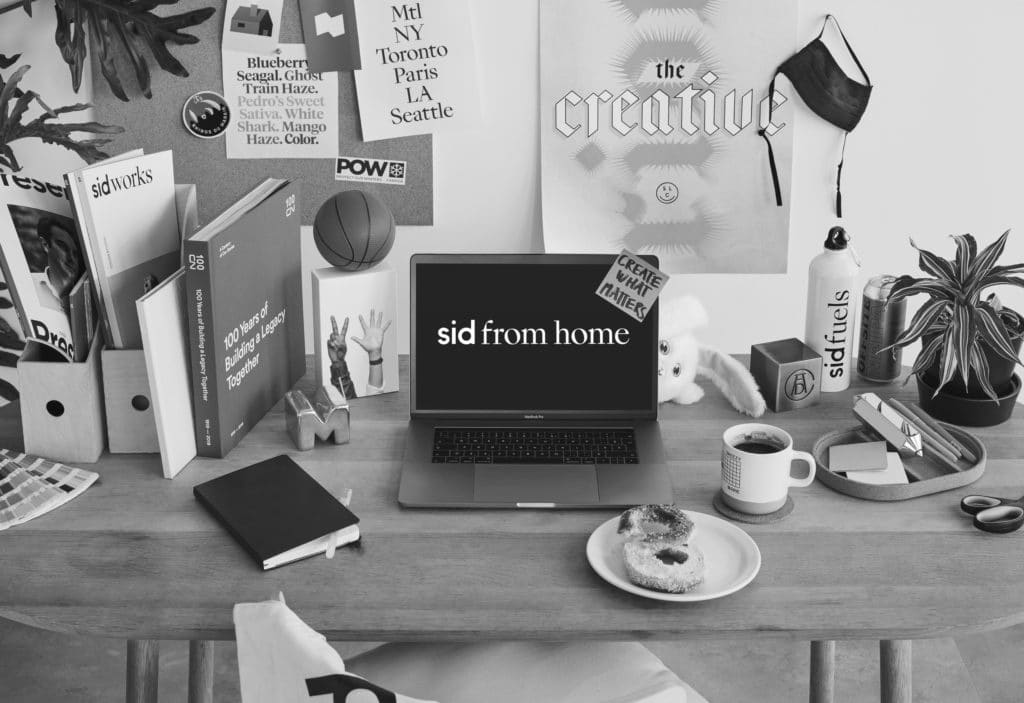
What attributes do you want people to associate Sid Lee with, and how do you align business decisions with your values every day?
It doesn’t take long to gauge Sid Lee’s personality as a creative partner or client. We are a 25+ year company built on keeping the human element in every project through fairness, respect and kindness. Sid Lee pursues the “human” side, in everything we touch.
Smart teams drive agency growth. What’s your approach to hiring?
At Sid Lee we hire according to the obvious skills needed for the role—but also for so much more. Sid is built on a culture of humans enjoying both the workplace and the work they dedicate themselves to. We seek to craft stories that make a difference and that’s reflected in the people we hire: self-starters who are passionate. I think from Sid’s early beginnings in the 90s, the DNA has stayed consistent—the idea that you can achieve business success with a people-first approach. The agency hierarchy is horizontal in the way all levels of the organization work together, collaborate and craft.
Please name some steps that you have put in place over the years to encourage innovation in the workplace.
At Sid Lee, we empower people to create what matters. It’s how we thrive. To encourage innovation, we created the “Sid Lee Collective,” a creative incubator that helps fund, produce and exhibit the passion projects of fearless, global artisans. To ensure that all employees can have time to create, they can have up to 10% of their time covered by Sid Lee, to make sure those innovative projects come to life.
In your opinion, what’s the most important factor that leads companies to create successful overseas experiences and engage at a global scale?
To achieve success on a global scale, a company must hit the human factor. The common denominator of any human group is a need for love—for empathy, importance, fairness and patience. When that need informs the creative, people connect to the brand, to the product, to the experience.
Of all the recent projects your agency has produced, which one are you most proud of in terms of accessible and inclusive design?
We abide by industry standards for inclusive design in all our work. Reveraliving.com, for example, is a revised and refreshed user experience to better reach older audiences and their families when searching for long-term residences and retirement homes. The inclusive design on this project led to a beautiful, clean and simple navigation that brings the most important content to the forefront and unlocks a better experience across devices. What is truly important for today’s digital world is to design for everyone, not create a secondary experience just for accessibility compliance purposes
We are living through the most important pandemic in recent world history. How has digital changed marketing product launches?
The pandemic turned the world on its head overnight. Many businesses had to ask themselves “How do we stay relevant? Connected? How do we maintain momentum and revenue? What business processes do we need to re-engineer to function digitally? Do we have a loyal consumer base and what do they need from us?”
Product launches now live and die on digital platforms, driven by the power of social influence. The pandemic highlighted the power of digital communities and the value of public opinion, which grew exponentially for brands in the last year (and it already held much weight). For product launches and beyond, the past year highlighted a long-overdue priority: reaching people through equality, inclusion and diversity, and tapping into those communities.
The acceleration of digital transformation for businesses goes beyond marketing launches—it’s all about the user experience. With consumers increasingly going digital, brands need to reduce friction as much as possible in order to elevate the level of desire in digital human experiences.
When looking at the technology landscape today, what makes you think “Wow”?
We now have the technology to connect every human and every device. To that, I say wow.
Yet we are more and more removed from simple living, less educated about how to grow and harvest our food, sustain our world and stay connected to one another in meaningful, respectful ways. To that I say wow.
What new ideas in immersive experiences are you excited about?
An immersive experience that removes the human experience of connection to the natural world isn’t exciting. But innovations that push progress, enabling collaboration and co-creation and meaning for the human condition, such as adding value to the lives of those with disabilities and challenges, where disruption is needed, should make headlines. A great example would be EyeMusic, a technology that allows the user to input eye movements in sequence to create electronic music with many different instruments—an incredible inclusive tool. A company that always stands out for using technology to push back boundaries and change culture is Not Impossible Labs, founded by Mick Ebeling.
With shopper behavior changing, what impact do you believe machine learning and big data will have on the world of creative production?
Developments in ML and big data are having a huge impact on the world of creative production. Buyer behaviours evolve—that’s been especially true in the last year and a half of the pandemic—and that evolution allows for deeper insights, predictive modelling and better targeted marketing. All that is a catalyst for new ideas—a spark for inspiration. The closer we come to understanding why people buy, how they engage, and what purpose is fulfilled, the better we become at crafting an environment to facilitate that interaction.
Are we legally obligated to be accessible?
Yes, we are legally obliged to be accessible. It is the essence of the power of the Internet—to offer information and resources that can be equally accessed at all times and in all circumstances. Moreover, we are ethically obliged to be accessible. The moral fiber of any brand is compromised when we don’t design with everyone in mind. While the checklist evolves, there are several free online web audit tools that identify and score areas for compliance, such as Siteimprove.com. The main categories of impairment to consider here are physical, neurological, auditory, visual and cognitive.
What do you think is currently the biggest issue facing the digital and tech industry in Montreal?
Montreal is known globally as an innovation center for AI and digital and marketing technologies, particularly video gaming. With that, our city fosters many networks, business opportunities and learning programs that attract a diverse demographic. But it goes without saying that in any industry, the same leaders who forge a path in the opportunity are also the first to face the challenges that come with the territory. Montreal’s success in the digital space—on both the enterprise and entrepreneurial levels—does help position Canada amongst its peers, but studies continue to show Canada lagging on the global stage in tech education and accessibility. The challenge across the board nationally comes from a lack of funding to re-engineer business processes to make them more digital.
As soon as the pandemic hit, efforts to bring commerce to the consumer ramped up, inverting the traditional model. Now, with over one year of the pandemic to measure evolving consumer behaviours, we see that Canada has risen to the challenge of identifying the need to become more digital, but budgets have yet to meet the demand. The economics in Canada, in both the for-profit and NPO sectors, remains a barrier to entry.
Can you outline three of the most crucial skills any creative technologist should possess?
Creative technology has become somewhat of a buzz term in industry-speak. There are plenty of assumptions about what it is, but as a category it evolves year after year. I think of a creative technologist as someone who can make their ideas tangible. We hear it called “art meets tech.” Boiling it down to three crucial skills, I would say it takes: a technical eye. a creative eye and client’s eye.
Know your platforms, your mediums. Be a little more than a generalist because you need to produce work beyond just the storyboard.
Know your creative. Your inspiration—the joie in the vivre. What is the art factor that elevates the idea?
Know your client. More often than not, we take our ideas so far left that we forget the original ask. What you deliver to the client must solve the problem—not simply have novelty appeal.
In this industry or in life, have you had any particularly influential mentors?
My greatest influences are people who have focused on their true purpose in life, who are not easily swept up by the latest trend or shaken by circumstance. Their counsel and the lessons I’ve learned have helped me stay disciplined and focused on living my life to serve others and foster a sense of love. Leave everything better than how you found it.
Do you have a message for young women considering a career in digital?
The message I have for young women is the same I would offer anyone for any career pursuit. Know who you are. Identity is not found in the likes and follows of social media. Pursue the right kind of wisdom so that emotions and circumstances won’t deter you from real purpose.
Can you name a fun fact people would be surprised to learn about you?
I’d rather go shopping at Lowe’s than the mall. Lumber over leather any day.
Thanks Corina!
Follow Corina on social media:
Follow Sid Lee on social media:
Corina’s Working Preferences:
Early Bird or Night Owl?:
Both
Usual breakfast:
Coffee, smoothie
Favorite sneaker brand:
Function over fashion
The game you're best at:
Connect 4
Preferred spot in your town:
Bord du Lac
Unusual Hobbies:
Woodworking, writing, but neither feel unusual to me
If you could solve one problem in the world what would it be?:
I would do away with hate
Agency to watch

Best in Breed since 1998. Lounge Lizard is a Digital Agency that Specializes in Brand Strategy, Website Design, Web Development, Mobile APP Development, Online Marketing, Social Media, Ecommerce, and SEOdigital experiences that move brands and businesses from now to next.
Featured agencies

135155 Views

115687 Views

109418 Views

91915 Views

88433 Views

83202 Views

74836 Views

61606 Views