“At B14, there’s a short distance from from thought to action”
“At B14, there’s a short distance from from thought to action”
We have a very flat structure in the office, and everyone has a strong ownership of our products.
Copenhagen, March 12th
 B14 is a Copenhagen-based design agency established in 2006 that works strategically with its clients to create sophisticated and strong solutions. Being a multidisciplinary agency, B14 brings drops of clarity to a complex and increasingly digital world by working, evolving and nurturing the intersecting fields of design and technology.
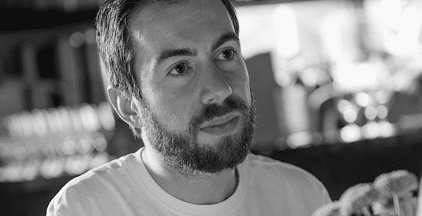
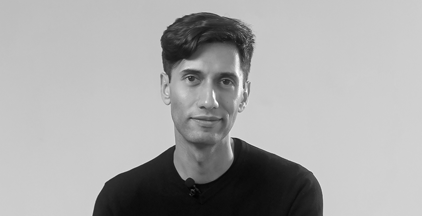
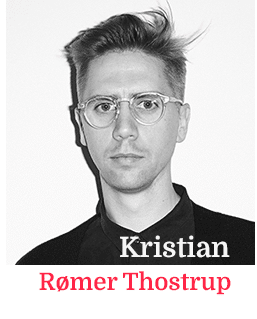
Kristian Rømer Thostrup is a frontend developer at B14. In an interview with TIA, he described his first steps at the agency, where he joined after graduating from university. He highlighted that the agency doesn’t spend much time and energy on meetings and project management and listed some of the things needed to be a frontend developer.
As we start our interview, I’d love to explore your roots. What are some of the fondest memories from your childhood that you think have influenced your career and passions?
I have a lot of good memories of creating something with others. For example, a magazine or a fashion show as school projects. I’ve been in several bands and have always loved the process of creating something – both alone and with others. Additionally, math was a favorite subject from the beginning of my schooling. Getting things to add up and figuring out how to arrive at the result has always given me great satisfaction.
If someone were to visit Copenhagen with a focus on cultural and creativity, what places or events would you recommend they explore?
I would recommend attending a concert at the venue Vega. It’s an incredibly beautiful building. The halls are a good size, and there is always great sound.
How did you become a Frontend Developer in B14?
I had just finished my education at the It University of Copenhagen in 2013 and was looking for my first job. I really wanted to try to build a career as a frontend developer, but I didn’t have much experience. B14 was hiring, and for me, they were the perfect match. Both in terms of their visual profile, their approach to coding, and their ideas on how to create a good workplace. So, I was fortunate that they apparently thought it was a good match as well and they were committed to giving me the needed time to develop.
Describe a typical workday in your shoes.
I am for the most part involved in two projects that are under development. Additionally, I’ll have a moderate flow of adjustments and updates for existing sites. I like to dive into a single project for several days at a time, so the majority of my workday is often spent on a single project. The tasks themselves vary greatly depending on where we are in the project’s process. We don’t spend much time in meetings but engage in discussions and collaboration with each other when the need arises. So, the day also often consists of a series of smaller discussions with my colleagues.
In a crowded field of creative agencies, what do you believe is the distinctive factor that sets B14 apart, and how does this uniqueness contribute to the success of the team?
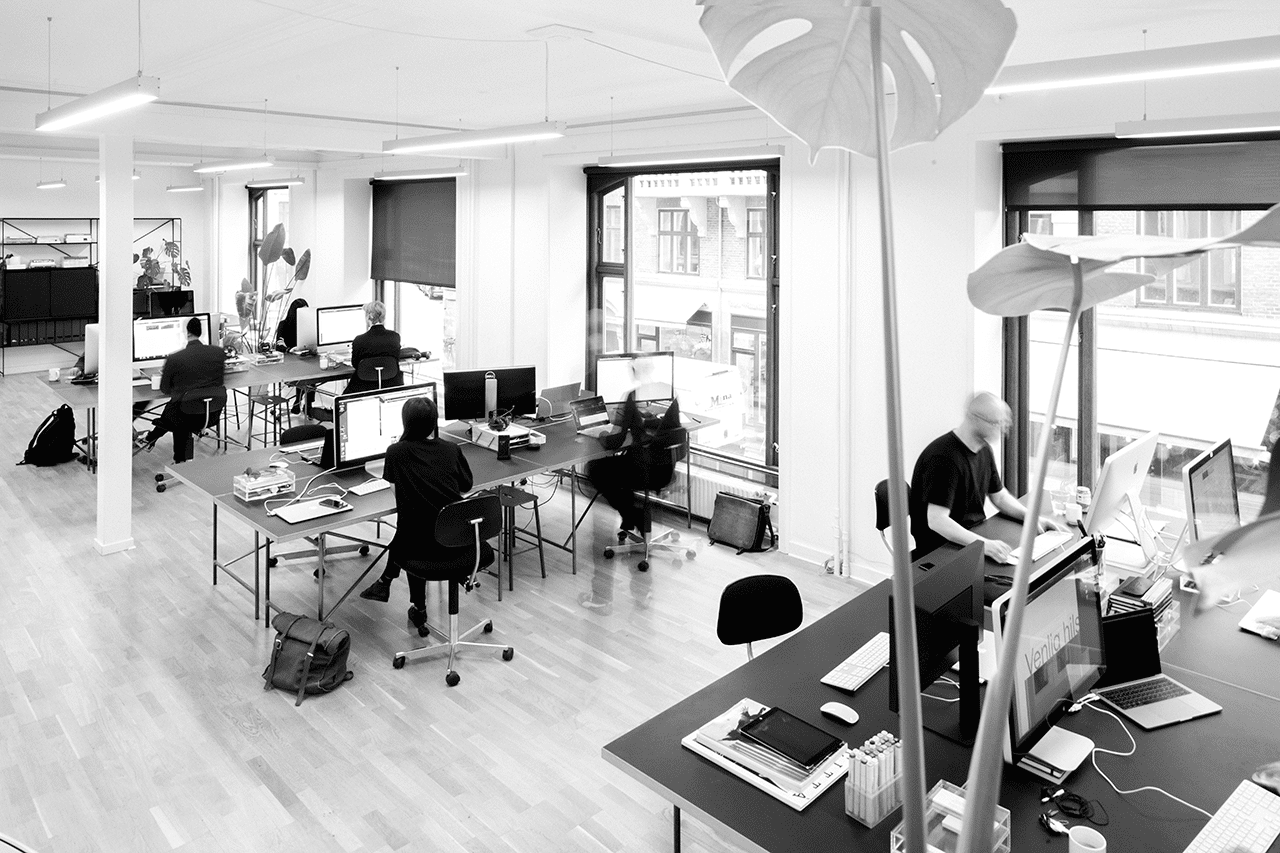
As mentioned, we have a workflow without excess and do not spend much time and energy on meetings and project management. This means that there is a short distance from thought to action, and it is not a slow process to test a good idea. We are a relatively small team, so we all work closely together and know each other very well. If you face a challenge, you grab a colleague right away, and we have good and frequent sparring across our work areas and expertise. We have a very flat structure in the office, and everyone has a strong ownership of our products. All these things combined ultimately result in very cohesive products.
Every project comes with its unique challenges. Could you share a particularly challenging moment in one of your projects, and how did you overcome it?
One of the things I love about being a frontend developer is the constant evolution of the field, always offering new and better ways to solve a task. Recently, we built a site where there was a need to display the same content in two contexts, each with its own visual identity. Here, the use of custom properties (a variable that can have different values in different contexts) allowed us to structure our SCSS much more efficiently and write significantly less code.
What tools or software do you find indispensable in your daily work as a Frontend Developer?
I use Visual Studio Code as editor, which I’m really happy with. It has many features that make my work easier and more time-efficient.
I’m also very fond of Codepen for quickly testing solutions to layout challenges, animations, new techniques, and the like. It’s a great tool for rapidly testing if something works and for showcasing and sharing ideas with others in the team.
What measures do you take to address any potential usability challenges during the UI design phase?
There is a clear line between the client type and how closely we adhere to common UI standards. We have clients with an artistic focus, where we like to challenge conventional standards and try out new things. But, we also have clients where the opposite is true, but where there is no need to challenge the standards. There is still plenty of room within to create a strong identity.
Reflecting on B14’s recent portfolio, is there a particular project that you believe best encapsulates the agency’s values and showcases its strengths?
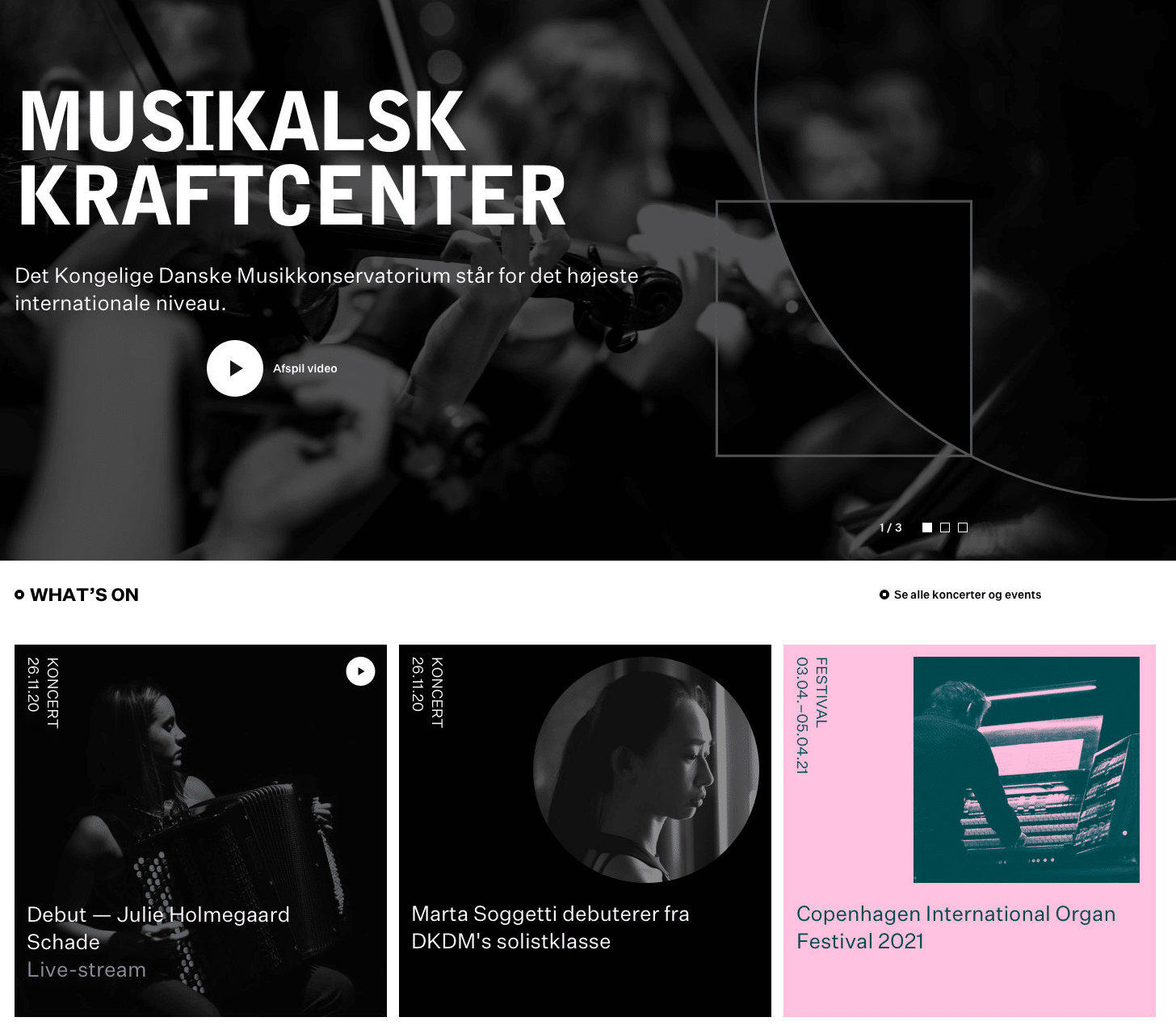
The site we created for the Royal Danish Academy of Music is a good example. It has a bit more color and vibrancy than some of our other projects but still maintains a clean and solid design. There is good coherence through the various components of the site, as well as in the interactions and animations, which is something we always aim to achieve.
We take great pride in creating something that is long lasting and can feel fresh for a long time – both for visitors and editors. I think this site is a good example of this. We have delivered a system here that meets the client’s current and hopefully future needs by not being confined to rigid templates, and still respecting the design system and presenting it clearly on the screen. When this is achieved, it becomes easy to maintain and expand the site, allowing it to endure for a long time.
In your opinion, what are the essential skills or qualities that make a Frontend Developer successful in today’s competitive market?
It certainly depends on the type of work you want to do. However, with the type of websites we create and the kind of frontend work I do, where a significant portion of my work is also backend-oriented, I believe there is great strength in understanding the entire product. This includes both the customer’s needs, the technical challenges, and the design system. If you have this understanding, it will be reflected in the code, making it much easier to maintain and build upon.
Which aspect of your work puts a smile on your face?
When we succeed in finding a simple and clean solution to a problem.
How did your experience at the University of Copenhagen shape your skills and perspectives as a Frontend Developer?
When I started at IT University, I had a bachelor’s degree in Danish literature, media, and communication from Roskilde University. So, I already had some analytical skills, which were strengthened at the IT University, and additionally expanded with practical skills in coding and design understanding.
But the most significant influence came from my fellow students, especially two with whom I did several projects and started a web design company during our studies. The things I learned in that process and from them are clearly what has shaped me the most.
What are your favorite ways to decompress outside of work?
I play drums in a band and sometimes guitar by myself in my basement.
Please share something you’ve always wanted to try but haven’t yet.
To build a wooden chair from scratch.
Kristian’s Working Preferences:
Early Bird or Night Owl?:
Night Owl
Usual breakfast:
Coffee, bun with cheese
Most quoted book, TV Show or movie:
Seinfeld
Last place traveled:
Sj. Odde (Denmark)
Last downloaded app:
GoMore
Favorite design tool:
Codepen
The game you’re best at:
Soccer, though I haven’t played for the last 15-20 years, so maybe not anymore.
Preferred spot in your town:
Bartof Café
What's something that always makes you smile?:
Listening to the band Felt and my kids.
If you could solve one problem in the world, what would it be?:
There's plenty to choose from these days, but I would probably go with the climate challenges first.
Thanks Kristian!
Follow Kristian Rømer Thostrup on social media:
LinkedIn
Agency to watch

Best in Breed since 1998. Lounge Lizard is a Digital Agency that Specializes in Brand Strategy, Website Design, Web Development, Mobile APP Development, Online Marketing, Social Media, Ecommerce, and SEOdigital experiences that move brands and businesses from now to next.
Featured agencies

135153 Views

115686 Views

109416 Views

91915 Views

88432 Views

83201 Views

74836 Views

61606 Views