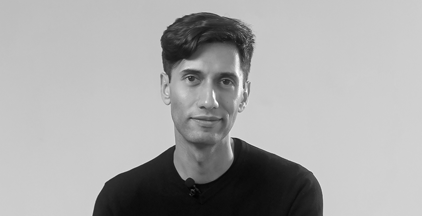
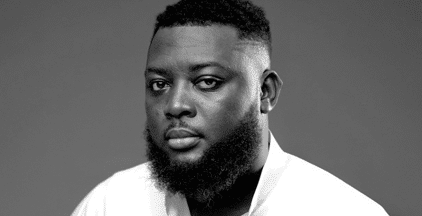
“Startups Don’t Need Ten Months of Theory — They Need Momentum” — Ohad Shalev on Prioritizing Speed, Clarity, and Real-World Testing
When you work fast, things stay exciting. You avoid the fatigue that kills creativity.
Tel Aviv, November 27th, 2025
 hello. is a Tel Aviv–based agency specialising in digital products, UX/UI design, and branding for technology-driven companies and early-stage startups. Built around a mindset of speed, clarity, and iteration, the studio helps founders craft scalable products, agile strategies, and visual identities that fuel growth. Their philosophy is simple: work fast, test early, and refine based on real users. Through a process grounded in design thinking, data, and rapid execution, hello. delivers work in weeks—sometimes days—that most agencies would take months to complete. No noise, no ornamentation—just meaningful design that moves companies forward.
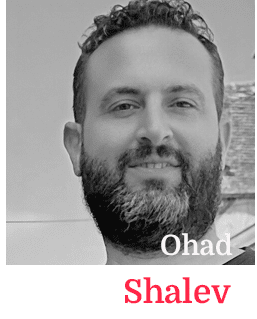
Ohad Shalev, Co-Founder and Head of Design at hello., brings a unique mix of branding expertise, product thinking, and cultural insight to the startup world. With a background in visual communication, social sciences, and film history, Ohad combines strategic storytelling with practical execution to help founders turn complex ideas into powerful, memorable brands. Recognised early in his career as “Man of the Year (Design)” by McCann Tel Aviv, he has since become a trusted partner to entrepreneurs navigating their first steps out of stealth—guiding them from uncertainty to identity with a process that is fast, honest and refreshingly no-nonsense.
Ohad, it is great to speak with you. You are based in Tel Aviv, a city known for its startup energy and design culture. How has living and working there influenced the way you think about brand building and digital experiences?
Thank you so much for having me. I am really happy to speak with you and share a bit about myself and about hello.
Tel Aviv shapes my work in more ways than I can count. It is a young, fast-moving, constantly shifting city, and you feel that energy the moment you step outside. Things happen quickly here. People move with intention. Ideas spark everywhere. You almost cannot help but keep up.
What I love most is the contrast. On one side, you have a city with over a hundred years of history, full of old streets, stories, and traditions. On the other, you have constant reinvention: new startups popping up every week, tech offices opening overnight, and a general sense that anything can happen at any moment. That tension between the old and the new is inspiring. It reminds me that you can evolve fast without forgetting where things come from.
This is exactly the mindset founders need, and it is one I try to bring to every project: move quickly, stay curious, appreciate your roots, and pursue progress rather than perfection.
For someone visiting Tel Aviv with a focus on creativity, startups, and design, what local spaces or events would you recommend?
I always tell people to explore Tel Aviv on foot. It is the best way to absorb its rhythm. Mesila Park and Beit Romano, the side streets of Florentin, the Sarona district, Rothschild Boulevard, and the Lev Haair area each have their own creative pulse. Jaffa Port is another place I love — it has history, calm, chaos, color, and something about it always sparks ideas in me.
Culturally, the Tel Aviv Museum of Art and the Steinhardt Museum of Natural History are must-visits. The city is also full of surprising pop-up exhibitions in unexpected locations — an old dairy factory, a historic mill, or a warehouse suddenly turned into an art space.
A short drive away, the Design Museum in Holon is one of my favorite places to recharge visually. And of course, Tel Aviv constantly hosts meetups, tech gatherings, and industry events: AI Week, Cyberweek, Devweek, Google Campus gatherings, startup mixers, and more. There is always something happening.

You work closely with early-stage companies. What first drew you to startup branding and product design?
Yes. The moment I worked with my first tech founder, something clicked. I immediately understood that these were the people I connected with most. Focused, practical, no unnecessary drama — just forward motion. Decisions that took weeks with traditional clients suddenly took minutes. That speed felt natural to me.
But the real defining moment happened when we worked with a group of founders who had just raised their seed round. They had almost nothing — no name, no product, no materials. We built everything together from scratch. We were with them through every doubt, every win, every late-night idea. And when the company was eventually acquired, it felt personal. I felt like part of the team.
That experience made me realize that I do not just love working with founders — I belong in that world. Their passion, energy, and belief in something that does not yet exist is where I feel at home.
As Co-Founder and Head of Design, what does your day typically look like?
My mornings always start the same: a coffee and a walk with my dog, June. It’s a small ritual, but it clears my head and gives me a moment to breathe before everything begins.
Then I review emails, check open tasks, and sit with the team to align on priorities. I like understanding what everyone is working on — it keeps us connected and moving as one unit.
Throughout the day, I read, learn, and stay updated. I try to learn at least one new thing every day — a tool, an idea, a trend, anything. Staying hands-on is essential to me. I enjoy the craft. I enjoy getting my hands dirty. I enjoy experimenting even before I fully understand a tool. It keeps me sharp.
Balancing strategy and execution is not always easy, but I would not give up either side. I love understanding the reasoning behind the work, challenging our designers, and especially those moments when they surprise me with a direction I didn’t think of.
hello. is known for its fast, lean, adaptive process. How did this methodology develop, and why does it work so well for early-stage companies?
It developed from experience and from honesty.
Long processes drain everyone. Designers lose energy. Clients get lost in overthinking. When you work fast, things stay exciting. You avoid the fatigue that kills creativity.
The bigger truth is that perfection does not exist. When something is good enough, it needs to meet real users. Real feedback beats theoretical feedback every single time.
Over the years, we removed everything unnecessary. No decorative elements that look nice but serve no purpose. No slides that no one will ever use. Only what founders truly need.
This is how our Micro Branding process was born — not as a trend, but as a practical response to real needs. Fast, focused, dynamic, and extremely hands-on. It works because startups don’t need ten months of theory — they need momentum.
Many startups come to you as they emerge from stealth. What should founders absolutely get right in their first public appearance?
Confidence and a story.
The first public moment is emotional — exciting, stressful, chaotic. The challenge is to look mature and ready even when you are still early. With minimal budget, you need maximum impact.
Founders must speak clearly and confidently. People follow confidence — but more importantly, they follow stories.
Technology alone is not memorable. Stories are. People remember the company with the octopus. The one with the polar bear. The climbers. The bright pink video. If the story is strong, people will carry it forward for you.
How do you help startups refine their message into something simple, memorable, and scalable?
We take complex technology and make it simple enough that anyone can understand it in seconds. That is the real challenge. People give brands only a few seconds of attention.
We start by asking founders to explain their product in the simplest possible way — often with examples from daily life. Sometimes it is the first time they are asked to explain it that way, and those conversations reveal insights they have never articulated before.
From there, we focus on differentiation: colors people remember, visual characters, perspectives, and a point of view. Then we repeat that message everywhere. Consistency builds memory.
Design sprints and rapid testing are central to your approach. How do they help early teams save time and resources?
Time is a startup’s most valuable asset. Moving fast reduces uncertainty. The faster you launch, the faster you learn — and the better your decisions become.
For teams still searching for product-market fit, that speed is critical. It is the only way to answer the most important question: does this actually work?
What are the main differences between branding for traditional companies and branding for tech startups?
Traditional companies arrive with a world of materials — images, references, examples. You can see what worked.
Startups are different. Technology is abstract — often invisible. Many times it is the first solution of its kind. Visualizing concepts like network traffic, cloud security, or compute optimization requires imagination and storytelling.
Our role is to make the invisible visible — to turn something abstract into something unforgettable.
Your team handles everything from naming and logos to UX, MVPs, websites, and content. How do you keep all touchpoints aligned?
We run daily reviews and maintain clear ownership. Every brand has a designer responsible for its visual language. Our team sits together, making collaboration natural and fast. No silos.
We also ask clients to review materials — not for formality, but because every new set of eyes adds clarity.
Brand launches involve pressure and unknowns. How do you create brands that can evolve as companies grow?
Startups change quickly. A one-page site can become an ecosystem overnight. We build brands that stretch and adapt.
We anticipate needs, prepare checklists, and make sure founders are ready for last-minute requests. Planning ahead reduces stress and makes the journey smoother.
hello. is known for its no-nonsense, no-added-sugar philosophy. How does this show up in daily work?
We are honest with our clients — sometimes brutally. We only create things that will actually help them, even if it means earning less.
We never show slides that look impressive but will never be used again. No fluff. No games. Just clarity. Clients love that.
Could you share a recent project that reflects how your team builds brands fast and effectively?
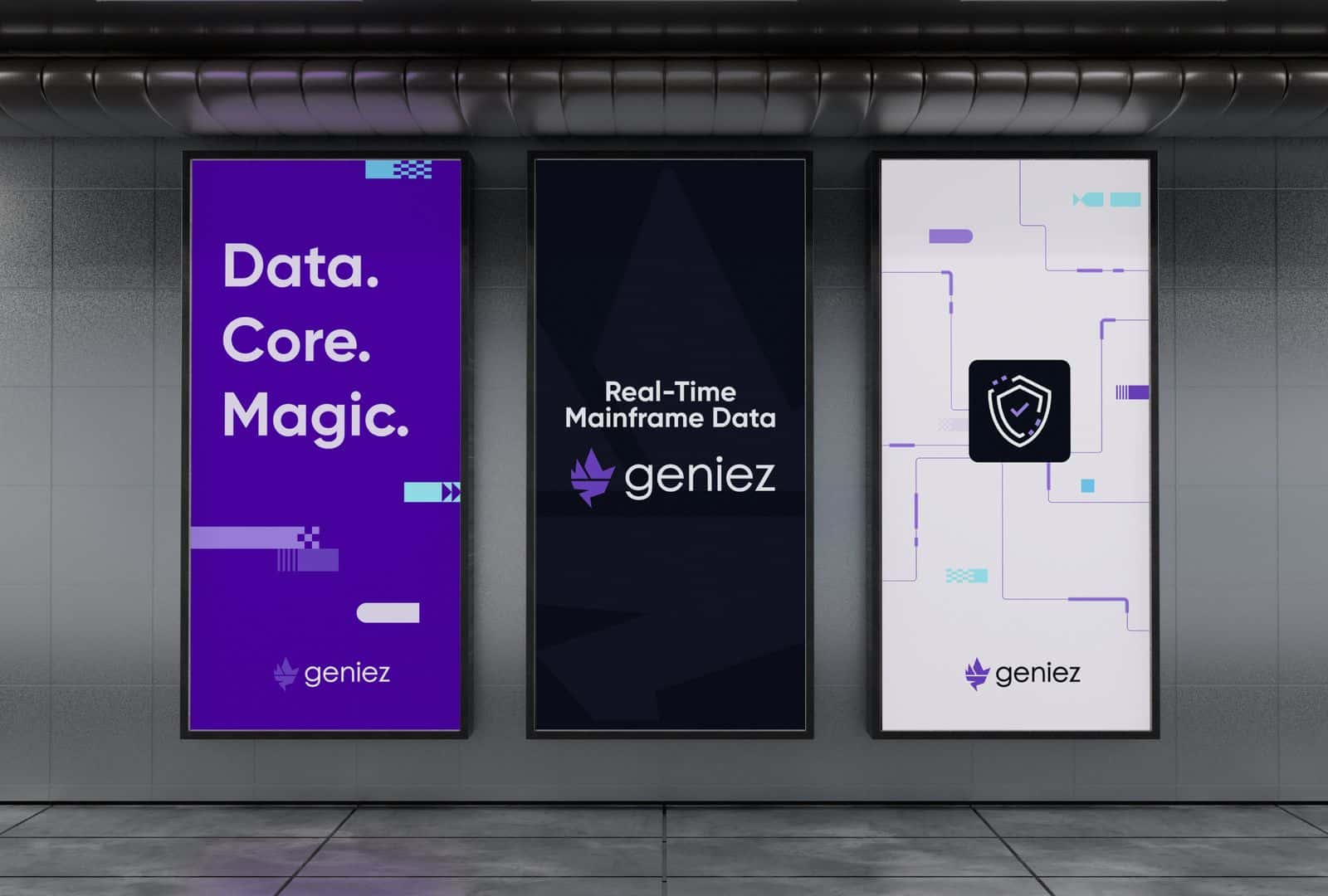
GeniezAI is a great example. Their technology connects AI tools and language models to mainframe systems — it sounds impossible, but works beautifully.
We had to bridge two different worlds: the structured mainframe community and the bold, evolving AI space. We built a brand that respects both — bringing in color, movement, and innovation.
To explain something so abstract, we created visual stories based on real use cases. That clarity made the biggest impact.
For founders transitioning out of stealth, what are the most common mistakes you see?
The biggest mistake is not preparing for what happens after launch. Startups evolve quickly and need ongoing support.
Another mistake is not preparing materials in advance. During launch, everything happens at once. Suddenly you need presentations, one-pagers, media assets, and more. Being prepared makes everything smoother.
Looking ahead, how do you think startup branding will evolve as AI and new tools become the norm?
Timelines will shrink. Repetitive tasks like research or inspiration gathering will be automated. That leaves more time for real creative thinking.
Execution will become easier and more accessible. The gap between small and large companies will shrink. Ideas and stories will become the true differentiators.
Outside of the design world, where do you find inspiration or recharge creativity?
Movies and cooking. I love science fiction and comic films — Guardians of the Galaxy is one of my favorites. Even the soundtrack is inspiring.
Cooking is another creative outlet. Experimenting with new flavors resets my mind.
And to finish on a lighter note, is there a fun or unexpected fact about you that most clients would not know?
I go fishing from time to time. Standing in front of the sea clears my mind like nothing else. I am still learning — the gear, the bait, the techniques. It is harder than it looks, and that challenge is exactly why I enjoy it.
Ohad’s Working Preferences:
Early Bird or Night Owl?:
Early Bird when possible. Night Owl when needed.
Favourite season of the year?:
Winter.
Food you can’t live without:
Sushi, Asian food, and fresh raw fish.
Do you prefer brainstorming in groups or thinking solo first?:
Solo first and then with the group.
Do you work best with silence, background noise, or a playlist?:
Lots of background noise with all kinds of sounds mixed in.
Preferred spot in your town:
The Coffee food truck at the park
Last travel destination?:
Paris and Dijon
What's something that always makes you smile?:
My dog and my kids. Or to be exact, when my dog plays with my girls.
If you could be any fictional character, who would you be?:
Tony stark of course.
Agency to watch

Best in Breed since 1998. Lounge Lizard is a Digital Agency that Specializes in Brand Strategy, Website Design, Web Development, Mobile APP Development, Online Marketing, Social Media, Ecommerce, and SEOdigital experiences that move brands and businesses from now to next.
Featured agencies

135036 Views

115589 Views

109356 Views

91839 Views

88317 Views

83115 Views

74741 Views

61547 Views